Updated July 27, 2026

3D Roofs Editorial Team
Editorial Standards
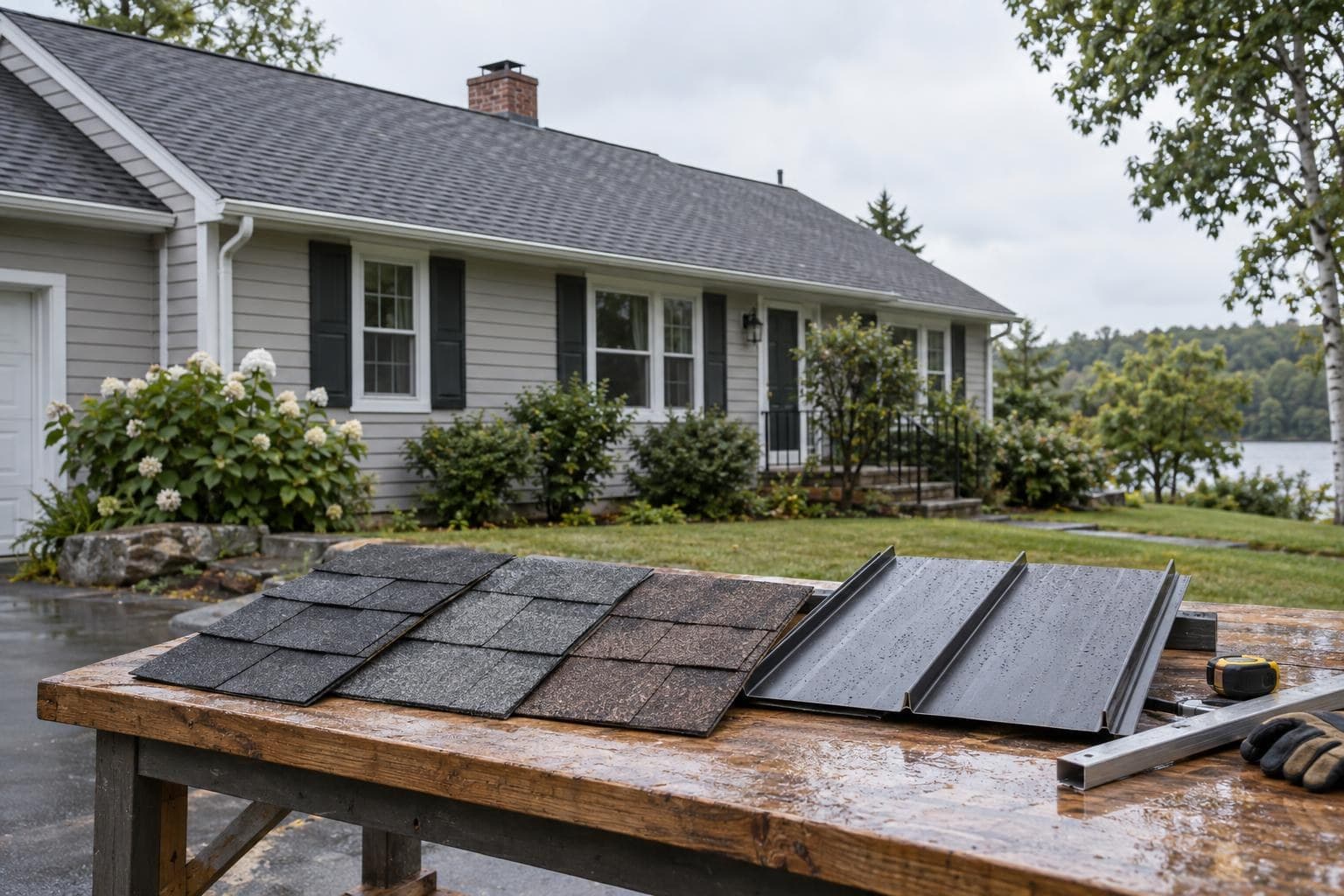
The best roof for Maine is usually the one that matches your actual exposure, not just the lowest price. For many homeowners, Class 3 shingles are the value choice. If your home sees falling limbs, storm debris, or you want to ask about possible insurance discounts, Class 4 is often the smarter step up. If you want a premium roof built for harsh weather and can handle the higher upfront cost, standing seam metal is the top-end option. Maine roofs deal with snow load, wind-driven rain, freeze-thaw cycles, and storm debris. Those conditions can loosen shingles, open pathways for water at flashing and roof penetrations, and turn small defects into interior leaks. In coastal areas, wind exposure and salt air can add more wear. In wooded parts of the state, falling limbs and tree impact are also part of the risk picture. If you are replacing a roof here, it makes sense to focus on durable materials, clean flashing details, and attic ventilation that helps manage moisture and winter ice issues.
What roof type is best for most homes in Maine?
For most homes in Maine, Class 3 asphalt shingles are the practical starting point, and Class 4 is often the better upgrade if your property has more impact risk. The reason is simple: Maine weather puts pressure on the whole roof system, not just the field shingles. Snow load, freeze-thaw cycles, and wind-driven rain make installation quality matter as much as material. A roofing contractor you are considering should pay close attention to flashing, penetrations, and ventilation, because that is where small issues can become interior leaks over time. If your roof is in a wooded area or takes regular storm debris, Class 4 can give you more peace of mind than standard architectural shingles.
How much does a new roof cost in Maine in 2026?
For current Maine planning prices related to best roof for, use the cost guide and calculator, then compare the contractor's property-specific written scope. Those numbers make the tradeoff clear. Class 4 costs more than Class 3, but not by as much as metal. Metal is a much bigger upfront investment, so it usually makes sense for homeowners who want the material benefits enough to justify that jump. For best roof for in Maine, treat a steep or difficult-to-access roof as a scope variable that the contractor should measure and price explicitly.
Is Class 3 shingle enough for Maine weather?
Yes, Class 3 is enough for many Maine homes, especially if your budget matters most and your home is not in a high tree-fall or high-exposure spot. It is the value option because it keeps replacement costs lower while still giving you a modern roofing system when paired with solid underlayment, clean flashing details, and good ventilation. In Maine, that full system matters because freeze-thaw cycles and wind-driven rain can exploit weak points around valleys, chimneys, vents, and wall intersections. If your roof replacement is straightforward and you want to control cost, Class 3 is often the right answer.
Talk to a roofer today
Planning ranges, scope details, and a direct path to request a roofing quote.
When is Class 4 worth the extra money in Maine?
Class 4 is worth it when impact resistance is a real part of your risk picture. In Maine, storm debris and falling limbs are part of the risk, especially in wooded areas. A Class 4 shingle can make sense if you want more resilience against that kind of damage, or if you are already replacing a roof after a storm and want to upgrade. There is also an insurance angle. For best roof for in Maine, any insurance credit depends on the carrier, policy, address, and exact product; get the amount and documentation requirements from the insurer in writing. That does not mean every policy will save the same amount. If you are considering a Class 4 impact-resistant shingle, ask your carrier whether it offers a homeowners discount for that product and what documentation it requires. Discounts are set by each carrier and policy, so you should not assume a standard savings amount. A roofing contractor you are considering can help you gather product information for your insurer, but your carrier decides eligibility and any discount.
Is standing seam metal the best roof for Maine?
Standing seam metal is the premium choice in Maine, but it is not automatically the best choice for every home. It fits the state well because Maine roofs face snow load, wind-driven rain, freeze-thaw cycles, and in some areas stronger coastal exposure. Metal can be a strong fit when you want a durable material and plan to stay in the home long enough to justify the higher upfront cost. The issue for many homeowners is price. If your budget is tight, that money may be better spent on a well-installed shingle roof with attention to flashing, ventilation, and moisture control details.
What matters more in Maine, material or installation details?
Installation details matter just as much as material in Maine, and in some leak situations they matter more. Snow load and freeze-thaw cycles can stress flashing and penetrations. Wind-driven rain can push water into weak transitions. Coastal exposure can add wear. That is why the best roof for Maine is not just Class 3, Class 4, or metal on paper. It is the system your roofer installs correctly. Focus on durable materials, clean flashing details, and attic ventilation that helps manage moisture and winter ice issues. If you compare estimates, make sure scope and materials are clearly spelled out so you can see what is actually being installed, not just the shingle label.
What should you know about storm damage claims in Maine?
For best roof for in Maine, coverage depends on the policy language, cause of loss, exclusions, and the insurer's decision; verify those terms in your own documents. Maine says homeowners and property insurance generally cover storm damage, including wind. For roof losses, homeowners policies generally will cover wind damage to the roof. Coverage for interior water damage can depend on the policy type. The most common policy will cover the interior water damage, while another type will only cover water damage to the structure if the wind has made an actual opening through the roof or wall. Water damage to personal belongings caused by a windstorm is generally only covered if there is an actual opening through the roof or wall, unless you purchased additional coverage. Temporary repairs can include boarding up broken windows and covering holes in the roof. Keep your receipts to document to your insurer the cost of materials and labor. Permanent repairs must wait until the insurance adjuster has had a chance to inspect the damage, or the claim may be denied. If possible, take photos or videos before making repairs.
How do roof contracts work in Maine?
If your project costs more than an amount that must be confirmed for the written scope, Maine says a written contract is required for any home construction or repair work that costs more than an amount that must be confirmed for the written scope. The contract must include certain provisions, including the total contract price, estimated dates when the work will begin and end, a description of the work and materials, and an express warranty of good workmanship. The contractor cannot require more than 1/3 of the contract price as a down payment unless you both agree to exempt yourselves from that requirement. Any change in work or materials that changes the contract price must be stated in a written change order signed by both parties. That matters when you compare Class 3, Class 4, and metal, because the material choice can affect both price and scope.
How do you choose the right roofer for a Maine replacement?
In Maine, your own screening process matters. Start with a detailed written estimate that clearly spells out cost, scope of work, and materials. If your project costs more than an amount that must be confirmed for the written scope, make sure you get the written contract Maine requires, with the total price, estimated start and end dates, description of work and materials, and warranty language required by state guidance. Ask that any change in scope or price be handled in a written change order signed by both sides. If storm damage is involved, ask your roofer for line-item detail that matches what your insurer will need. Maine says estimates and invoices should be detailed so the insurer can see that the work is in line with policy coverage. You should also keep photos, receipts, and all claim documents in one file.
So which roof should you choose for your Maine home?
- Choose Class 3 if you want the lowest upfront cost and your home has average exposure.
- Choose Class 4 if you want better impact resistance for storm debris or tree-related risk, and you want to ask your carrier about possible premium discounts.
- Choose standing seam metal if you want a premium material for Maine weather and are comfortable with the much higher upfront cost.
- No matter which material you choose, pay close attention to flashing, penetrations, ventilation, and contract details.
If you want the short answer, Class 3 is the default value pick for Maine, Class 4 is the smart upgrade for many wooded or storm-prone properties, and standing seam metal is the premium option when budget is less of a concern. The right answer depends on what your home actually faces, how long you plan to stay, and how much upfront cost you want to carry. When you compare options, use 2026 market pricing, ask for a detailed scope, and look beyond the shingle label to the installation details that keep water out when Maine weather turns rough.
Maine roofing costs
Sources reviewed
- Maine Attorney General, Home Construction and Repair
- Maine Bureau of Insurance, Homeowners/Renters Claims
- Asphalt Roofing Manufacturers Association: Residential Asphalt Roofing Manual: Ventilation Best Practices
- Metal Construction Association: Standing Seam Best Practices: Clips
- UL Solutions: UL Solutions and IBHS Drive Trust in Residential Roofing Shingles
Related services
Updated July 27, 2026
3D Roofs Editorial Team
Editorial Standards