Updated July 10, 2026

3D Roofs Editorial Team
Editorial Standards
There is no single best roof for every Maryland home. For a Maryland property, start with its actual weather exposure and roof geometry, then compare complete assemblies on water control, attachment, ventilation, repairability, local availability, warranty terms, and installed cost. The sections below use Maryland-specific guidance to show which questions matter before choosing a material. For a roof system comparison in Maryland, use the linked Maryland Insurance Administration, What to do After a Natural Disaster reference as the state-reference checkpoint and test the recommendation against the address's coastal wind where applicable, inland tree exposure, freeze-thaw cycles, drainage, and complex wall details.
What roof material is best for most Maryland homes?
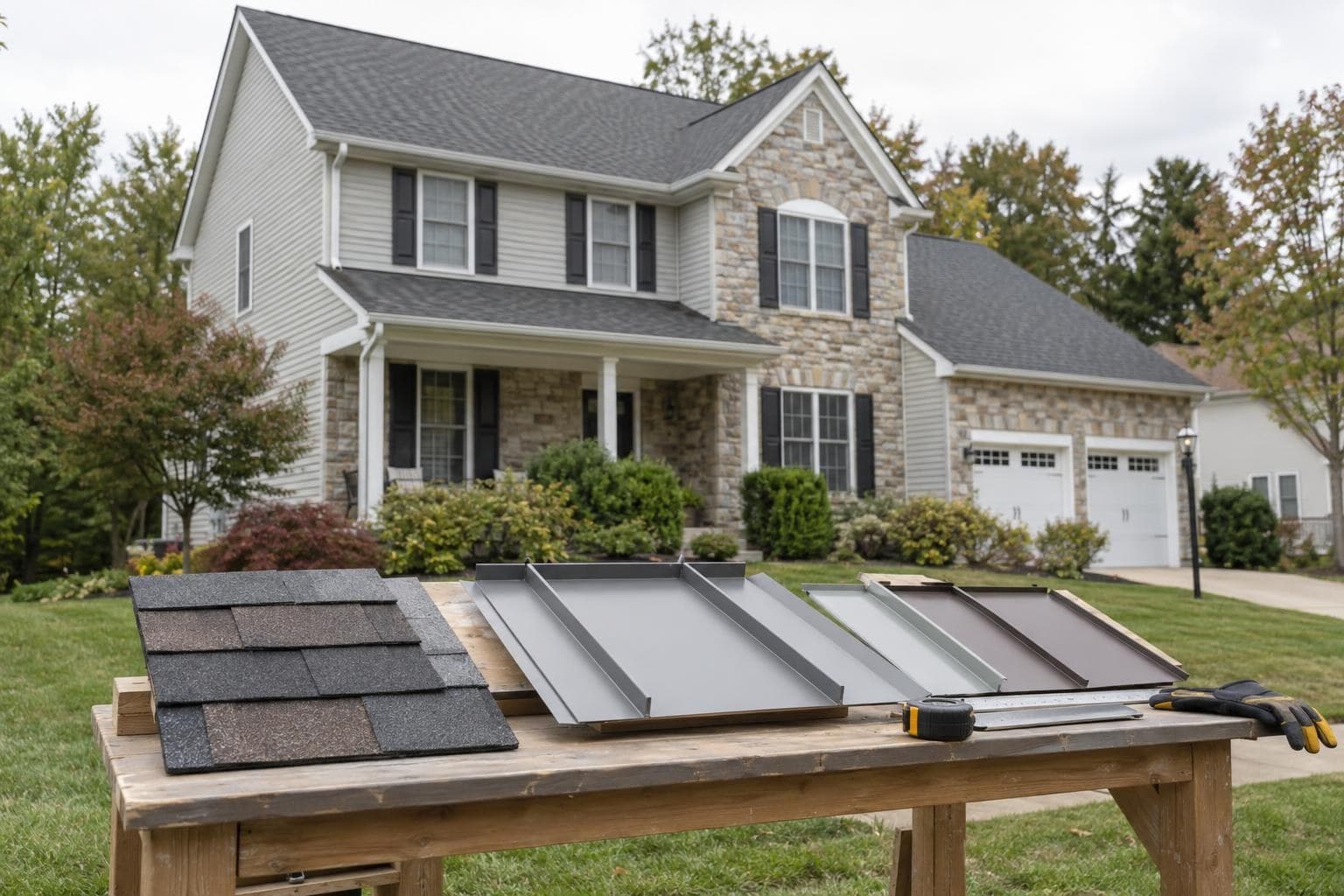
Class 4 asphalt shingles are the best overall pick for most Maryland homes because they match the state's mix of hail, wind-driven rain, storm debris, moisture exposure, and freeze-thaw stress without jumping all the way to metal pricing. They give you a stronger impact-resistant option than Class 3, which matters when storms bring hail or fallen branches. They also keep the look and installation style many homeowners already want from shingles. If your goal is to improve storm durability while staying in a more manageable price range, Class 4 is usually the strongest middle ground.
When does Class 3 make the most sense in Maryland?
Class 3 makes the most sense when your budget is tight but you still want a roof that steps up from basic architectural shingles. For an early budget on a roof-system comparison in Maryland, compare the Maryland cost page with a proposal that identifies measurements, products, accessories, and exclusions. That lower entry price can matter if you are replacing an aging roof after repeated leaks, lifted shingles, or flashing trouble and need to control upfront cost. Class 3 can still be a practical fit for homes with less storm exposure or for homeowners who want solid protection now and plan to keep a closer eye on maintenance after severe weather.
Why do many Maryland homeowners move up to Class 4?
Many Maryland homeowners move up to Class 4 because the added cost is often easier to justify once you look at the actual weather risks. That is a step up from Class 3, but not a jump on the scale of standing seam metal. If your home sees more exposure to storm hits, tree debris, hail, or strong coastal weather, the extra impact resistance can be a smart trade. When comparing a roof-system comparison in Maryland, use a written insurer response rather than a sales estimate for any impact-resistant roof credit. You should still ask your insurer whether it offers a discount and what documentation it requires, because eligibility and savings are carrier-specific.
Talk to a roofer today
Planning ranges, scope details, and a direct path to request a roofing quote.
Is standing seam metal worth it in Maryland?
Standing seam metal can be worth it in Maryland if you want a premium roof and you are comfortable paying for it. That is far above Class 3 and Class 4, so the decision usually comes down to budget first. For homeowners in more exposed areas, especially where coastal weather and repeated storm systems are a bigger concern, metal can be appealing. But for many homes, Class 4 delivers the more balanced value because it addresses common Maryland weather threats at a much lower price point.
How does Maryland weather change the right roof choice?
Maryland weather pushes you toward durability over the cheapest sticker price. Storms can bring wind-driven rain, hail, and fallen tree damage. Hurricanes and coastal weather can add another layer of exposure, especially in areas closer to the Chesapeake Bay and Atlantic coast. Winter storms can also stress older roofs with ice, snow, and repeated freeze-thaw cycles. That means the best roof is usually the one that helps reduce the kinds of problems Maryland homes often see after severe weather: leaks, lifted shingles, flashing problems, and gutter strain. If your home is in a more exposed spot or surrounded by trees, paying more for Class 4, or even metal, can make more sense than it would in a milder setting.
What should you expect to pay for roof repair or replacement in Maryland?
For replacement, your material choice drives the budget. The schedule for a roof-system comparison in Maryland should explain access, material staging, weather protection, inspections, and the process for discovered deck work. If you want a fuller local breakdown, your next step is to check the Maryland cost page and the calculator for local pricing.
Can insurance make Class 4 a better deal?
Yes, Class 4 can become a better deal if your carrier offers a discount, but you need to confirm it before you count on savings. If you are considering a Class 4 impact-resistant roof, ask your insurer whether it offers a discount and what documentation it requires. A local contractor whose credentials you verified can help you understand product documentation, but your carrier decides eligibility and savings.
What should you do if storm damage leads to an insurance claim in Maryland?
Start by documenting the damage and contacting your insurer as soon as possible. The Maryland Insurance Administration says you should report property damage as soon as possible, ask your insurer about an advance payment if you need help quickly, and ask about living expenses. The Maryland Insurance Administration advises policyholders to ask the insurer which additional living expenses apply when covered damage makes the home uninhabitable. The Maryland Insurance Administration also tells homeowners to get multiple bids from contractors and compare them with the adjuster’s report before settling the claim. It also advises you to be there when the adjuster visits and point out all damage.
- Do not agree to a settlement before you compare contractor bids with the adjuster report.
- Be present for the adjuster visit and point out all visible damage.
- Ask about an advance payment if you need help quickly after covered storm damage.
- Ask about living expenses if covered damage makes your home hard to live in.
- Remember that deductible waivers are illegal, and your insurer can ask for proof you paid the deductible.
How do you choose the right roofer for a Maryland roof replacement?
Start by checking the contractor or salesperson license status through the state resource before you sign anything. In Maryland, roofing work on a home generally falls under home improvement. The Maryland Home Improvement Commission says it licenses and regulates home improvement contractors and salespersons, and that home improvement work includes repair or replacement of a building or part of a building used as a residence. It also says only MHIC licensed contractors may enter into contracts with homeowners to perform home improvement work. You should also know the Maryland Home Improvement Commission says a home improvement contractor may prepare an estimate for storm repair, but may not prepare the insurance claim for you, negotiate the claim with the insurance company, or advise you on policy coverage unless that person is licensed as a public adjuster by the Maryland Insurance Administration.
If you want the clearest recommendation, use this simple rule. Choose Class 3 if you need the lowest current planning prices and want a practical replacement. Choose Class 4 if you want the best overall fit for Maryland weather and a chance at an insurance discount from your carrier. Choose standing seam metal if you want a premium roof and the higher upfront price works for your budget. If you are comparing options now, review the Maryland cost page and the calculator to see local pricing, then talk with a roofer whose credentials and written scope you checked about what your home is actually exposed to.
Sources
- Insurance Institute for Business & Home Safety: Roof 101
- Asphalt Roofing Manufacturers Association: Residential Asphalt Roofing Manual: Ventilation Best Practices
- Maryland Insurance Administration, What to do After a Natural Disaster
- Maryland Insurance Administration, Consumer Advisory on obtaining homeowners insurance and the JIA
Reviewed technical references for Maryland
Related Maryland roofing guides
Related services
Updated July 10, 2026
3D Roofs Editorial Team
Editorial Standards