Updated July 10, 2026

3D Roofs Editorial Team
Editorial Standards
There is no single best roof for every Massachusetts home. For a Massachusetts property, start with its actual weather exposure and roof geometry, then compare complete assemblies on water control, attachment, ventilation, repairability, local availability, warranty terms, and installed cost. The sections below use Massachusetts-specific guidance to show which questions matter before choosing a material. For a roof system comparison in Massachusetts, use the linked Obtaining Payment for Your Home Insurance Claim reference as the state-reference checkpoint and test the recommendation against the address's cold eaves, freeze-thaw transitions, snow and rain drainage, masonry details, and attic moisture.
What roof offers stronger impact resistance in Massachusetts weather?
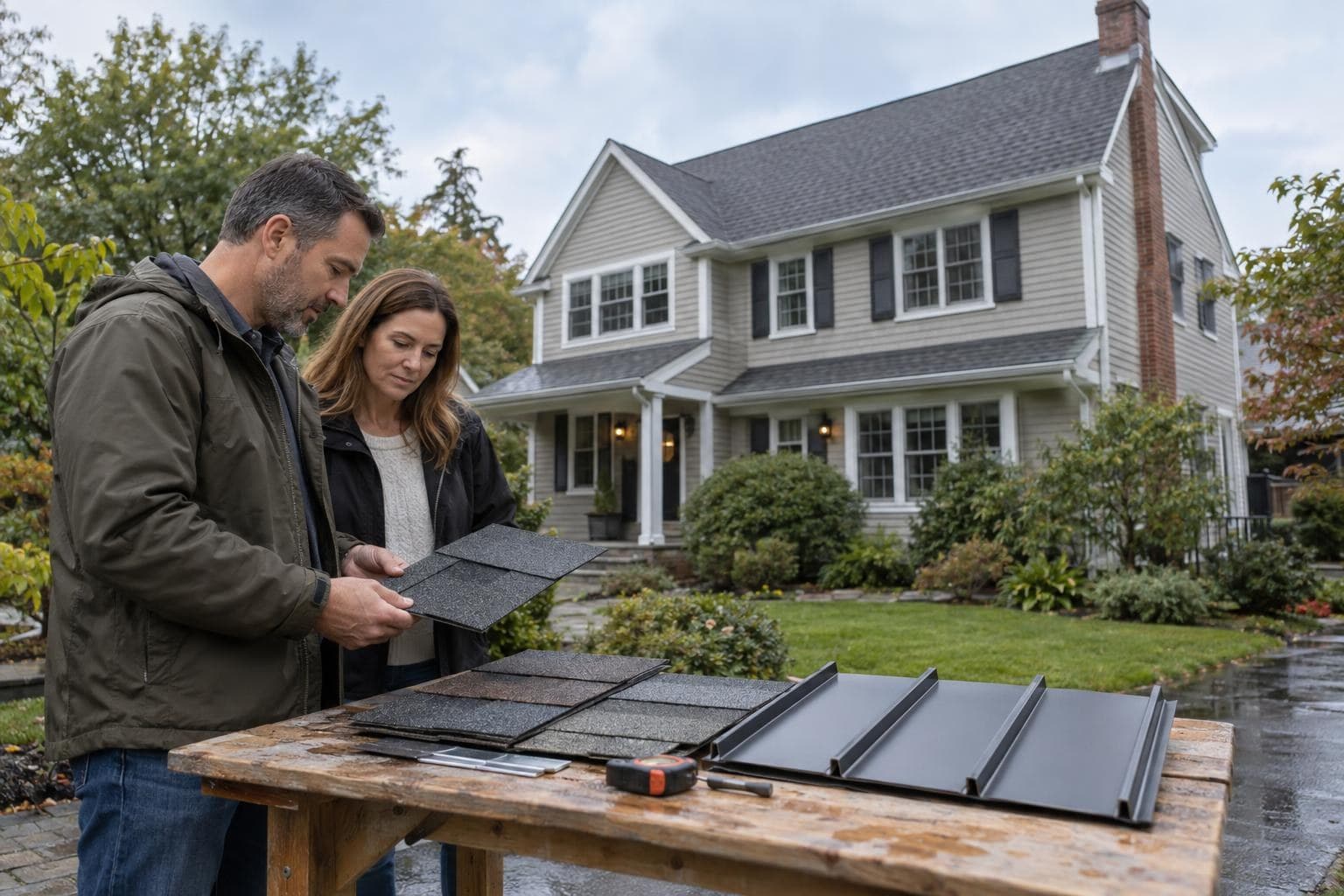
Class 4 shingles usually give you the best fit for Massachusetts weather. They offer stronger impact resistance than Class 3, and they cost far less than standing seam metal. That matters in a state where winter moisture can turn small roof weaknesses into leaks, snow load and ice can stress shingles, flashing, and roof edges, and wind can lift aging materials, especially near the coast. If you are trying to make one smart move for both protection and budget, Class 4 is often the cleanest answer.
- Choose Class 3 if upfront cost matters most and your roof system is otherwise well designed.
- Choose Class 4 if you want stronger resistance to storm wear and you plan to stay in the home.
- Choose standing seam metal if you want a premium material and you are comfortable with the much higher the latest local cost data.
- No matter what you choose, ask your roofer about flashing details, roof edge protection, attic ventilation, and ice-prone areas.
Is Class 3 or Class 4 better for most Massachusetts homes?
Class 4 is better for most Massachusetts homes because the weather is hard on roof surfaces and weak details. Class 3 is still a solid option when you need to control cost, but Class 4 gives you more protection against the kind of repeated weather stress this state sees. It is also worth asking your insurance carrier whether a Class 4 roof qualifies for any premium discount or underwriting credit. Discount rules are carrier-specific, and your insurer decides eligibility and savings. When comparing a roof-system comparison in Massachusetts, use a written insurer response rather than a sales estimate for any impact-resistant roof credit.
The price gap is real, but not extreme compared with the jump to metal. For an early budget on a roof-system comparison in Massachusetts, compare the Massachusetts cost page with a proposal that identifies measurements, products, accessories, and exclusions. If you want full local pricing for tear-off, roof shape, and upgrade factors, check the Massachusetts cost page and the calculator.
Is metal roofing worth it in Massachusetts?
Standing seam metal can be worth it in Massachusetts if you want a premium roof and plan to stay long enough for the higher upfront cost to make sense to you. It handles harsh weather well, and it is a strong option in places that deal with wind-driven rain and coastal salt air. But the pricing difference is major. For many homeowners, that means metal is a preference decision, not the default best value.
Talk to a roofer today
Planning ranges, scope details, and a direct path to request a roofing quote.
What roof details matter most in Massachusetts besides the material?
Flashing, ventilation, and fast repairs matter most. In Massachusetts, winter moisture can turn a small weakness into a leak. Snow and ice put stress on flashing and roof edges. Wind can lift older materials and open up vulnerable seams. That is why the best roof is not just about the shingle or the panel. It is about how the whole system is built and maintained.
- Ask for attention to flashing around chimneys, walls, valleys, and penetrations.
- Make sure attic ventilation is part of the conversation, because trapped moisture and temperature swings can shorten roof life.
- Fix small storm damage quickly before another season makes it worse.
- The proposal for a roof-system comparison in Massachusetts should price steep-slope access and slower material handling directly instead of hiding them in a standard percentage.
How much does roof repair or replacement cost in Massachusetts?
The schedule for a roof-system comparison in Massachusetts should explain access, material staging, weather protection, inspections, and the process for discovered deck work.
What should you do after roof storm damage in Massachusetts?
Act quickly, protect the home, and document everything. The Division of Insurance says most homeowner insurance policies generally require you to give immediate notice of a possible claim, protect your property from further loss or damage, and keep records and receipts if you make temporary repairs. Massachusetts's division of Insurance also says not to dispose of damaged property until your producer, claims adjuster, or company says you can.
If the claim gets difficult, ask for everything in writing. If the insurance company denies any part of the claim, Massachusetts's division of Insurance says you should ask for the denial in writing and keep all paperwork. If you think the amount offered is not fair, Massachusetts's division of Insurance says you can first try to resolve the dispute directly with the insurance company, demand appraisal as provided by your policy, file a complaint with the Division of Insurance, file a claim in small claims court, hire a lawyer, or request review by an arbitration panel.
How do insurance payments work for a roof claim in Massachusetts?
Many roof claim payments come in stages, and your lender may be on the check for major repairs. The Division of Insurance says your full claim payment may come in multiple payments. It says the first payment will likely be an emergency advance, and that if you have replacement cost coverage, the insurance company will pay the difference between replacement cost and actual cash value once it has received proof that repairs are complete. Massachusetts's division of Insurance also says that if you have a mortgage, the insurer is obligated to include your lender on the check for major repairs.
How do you choose the right roofer in Massachusetts?
Ask about registration, oversight, and local permit requirements. In Massachusetts, you should not treat "roofer" as the whole compliance question. For residential work on an existing owner-occupied home with one to four units, Massachusetts's division of Insurance says contractors that solicit, bid on, or perform that work must be registered as Home Improvement Contractors. Massachusetts's division of Insurance also says an HIC Registration is different from a Construction Supervisor License and they are not interchangeable. For most existing 1- to 4-family owner-occupied homes, a licensed construction supervisor or a registered design professional must oversee construction, and the contractor must also register with the home improvement program.
- Ask your roofer whether the company holds current HIC registration.
- Ask who will provide the required construction oversight.
- Ask whether your city or town has added requirements.
- Remember that Massachusetts does not recognize out of state contractor licenses, and you should always check with the municipal building official where the project is located for additional licensing requirements.
What is the best roof for your Massachusetts home?
For most homes, Class 4 is the best roof for Massachusetts because it lines up well with the state's weather without jumping to metal-level pricing. Class 3 is the value choice if you need to keep the project affordable. Standing seam metal is the premium option if you want to spend more upfront for a different kind of roof system. If private coverage is not available, Massachusetts's division of Insurance says the market of last resort is the Massachusetts Property Insurance Underwriting Association, also known as the FAIR Plan. If you are comparing costs next, review the Massachusetts cost page and the calculator, then talk with a local contractor whose credentials you verified about the roof details that matter most on your home.
Sources
Reviewed technical references for Massachusetts
Related Massachusetts roofing guides
Related services
Updated July 10, 2026
3D Roofs Editorial Team
Editorial Standards