Updated July 10, 2026

3D Roofs Editorial Team
Editorial Standards
There is no single best roof for every Montana home. For a Montana property, start with its actual weather exposure and roof geometry, then compare complete assemblies on water control, attachment, ventilation, repairability, local availability, warranty terms, and installed cost. The sections below use Montana-specific guidance to show which questions matter before choosing a material. For a roof system comparison in Montana, use the linked Montana Commissioner of Securities and Insurance, Hail consumer guidance reference as the state-reference checkpoint and test the recommendation against the address's elevation, snow and ice behavior, open-edge wind, solar intensity, and safe winter repair access.
What roof offers stronger impact resistance in Montana weather?
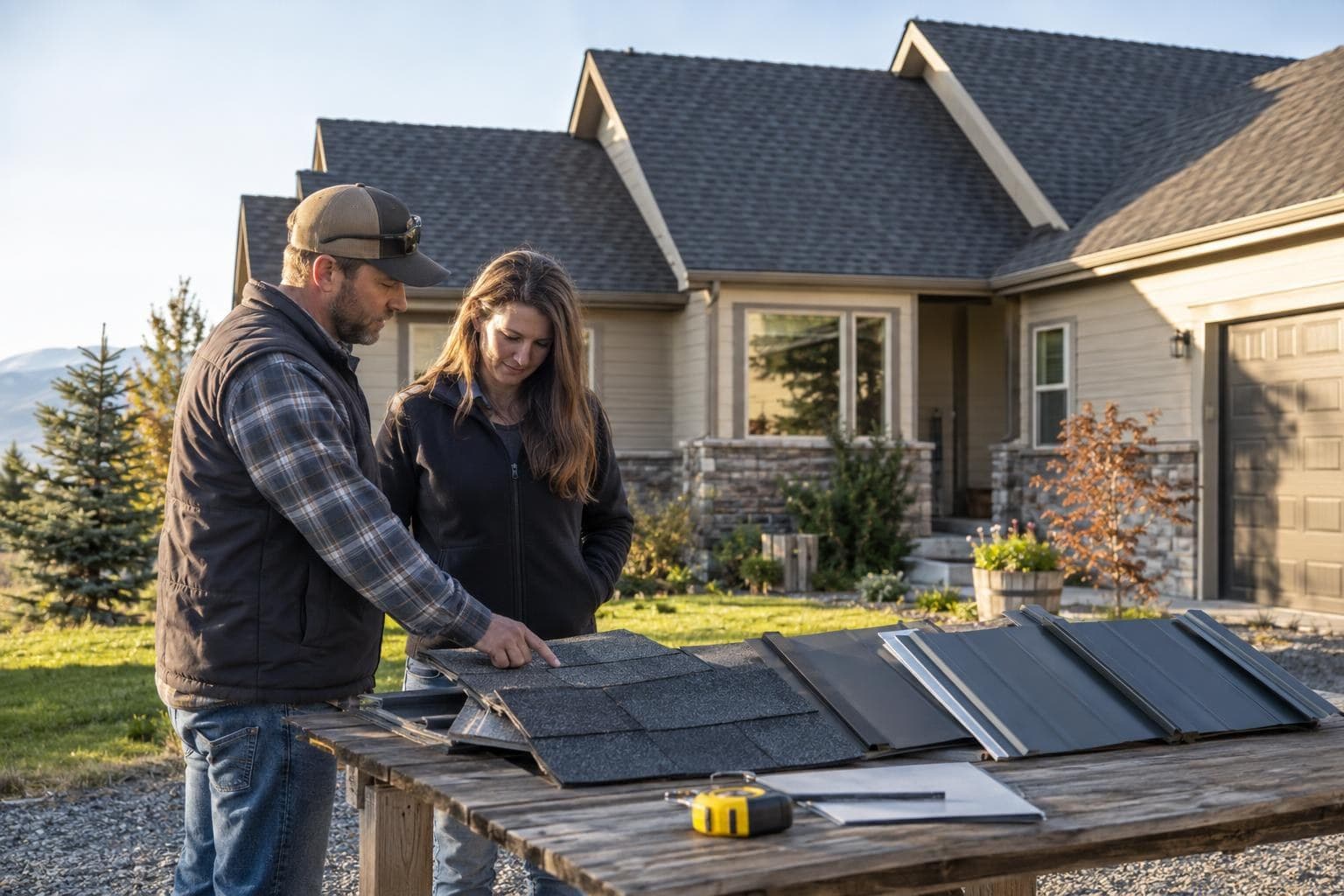
Class 4 asphalt shingles are worth comparing in Montana when impact resistance is a priority, but roof geometry, assembly details, product availability, repairability, and budget still control the choice. Even when a roof looks fine at first glance, hail can leave bruising, punctures, lifted roofing materials, and openings that let water in later. That is why impact resistance deserves a front-seat role in your decision. Standing seam metal is also a strong option if you want a premium system, while Class 3 is the value choice when budget matters most.
- Choose Class 3 if your main goal is to keep replacement cost down
- Choose Class 4 if you want better impact resistance for Montana hail risk
- Choose standing seam metal if you want a premium roof and higher upfront investment is acceptable
Is Class 4 worth it in Montana?
Yes, Class 4 is worth a hard look in Montana because it lines up with the state's real weather pattern and may also help on insurance. For a roof-system comparison in Montana, start with current Montana cost data, then test the planning range against a measured proposal that names the complete roof assembly. That price jump buys you a roof covering designed for higher impact resistance. For a roof-system comparison in Montana, treat any impact-resistant roof credit as unconfirmed until the insurer identifies the eligible product, required documentation, premium portion, and amount in writing.
For many homeowners, that makes Class 4 the practical middle ground. If your area sees repeated hail or you plan to stay in the home for a while, Class 4 is often the most sensible place to land.
Is metal roofing the best choice for Montana?
Metal can be the best choice for Montana if your top priority is a premium roof and you are prepared for the higher upfront cost. Installed price differences for a roof-system comparison in Montana vary with roof geometry, assembly details, access, and local labor, so compare complete measured proposals instead of assuming a fixed multiple.
For many homes, metal is not the automatic best value, even in a tough climate. Montana storms make durability important, but that does not mean every home needs the most expensive option. If you want strong storm-focused protection without jumping to a premium budget, Class 4 is usually the more balanced buy.
Talk to a roofer today
Planning ranges, scope details, and a direct path to request a roofing quote.
Is Class 3 good enough for Montana?
Yes, Class 3 can be good enough for Montana if you need the lower price and want a solid replacement without stretching to Class 4 or metal. That makes it the most affordable of the three options covered here.
The tradeoff is simple: Montana's storm pattern gives impact resistance real value. If hail risk is top of mind, Class 3 is the budget answer, not the strongest answer. It can still be the right move when funds are tight, especially if you need to replace a worn roof now and cannot justify the extra spend. If you are comparing total value instead of lowest invoice, Class 4 usually deserves the closer look.
How much should you expect to pay for a Montana roof?
For a roof-system comparison in Montana, require the written schedule to account for roof geometry, access, weather protection, material handling, inspections, and possible deck work.
Those tools help you compare material choices against your roof size and layout, then talk through the details with a local roofer you have vetted.
What should you do after hail or storm damage in Montana?
First, document the damage before cleanup or repairs, then protect the home from more damage. Montana's insurance regulator says you should take photos and document damage before you begin to clean up or repair. It also says you should take steps to prevent further destruction of the property, including covering broken windows and holes in roofs and placing coverings over areas that could get water or wind damage.
Then start with your policy and insurer, not a sales pitch. State guidance says you should contact your insurance company and get the claims process started, then review your policy to understand your deductible, what is and is not covered, and your responsibilities. That helps you make repair decisions based on your policy instead of pressure from a contractor.
How do you choose the right roofer after a Montana storm?
Choose a qualified local roofing contractor, slow the process down, and insist on paperwork. The Montana Commissioner of Securities and Insurance tells homeowners to beware of high-pressure sales tactics, "storm chasers," and unsolicited offers from contractors. The guidance says not to feel rushed to sign a repair contract, to get multiple bids, to check references, and to choose a contractor who will work with you and your insurance adjuster to assess damage and repair costs.
- Get written bids before authorizing work
- Get a written contract
- Do not pay in full before the work is completed
- Pay with a check or credit card, never cash
- Ask your roofer for proof of current Montana standing and verify it through the state
- Get references and make sure scope, materials, timing, and payment terms are spelled out in writing
So, what is the best roof for Montana for your home?
Class 4 is the best roof for most Montana homes, Class 3 is the best low-cost option, and standing seam metal is the best premium option. If you want the smartest mix of protection and price for a state where hail is a standout risk, start with Class 4. If your budget is tight, Class 3 keeps replacement costs lower. If you want a higher-end roof and the price works for you, metal can make sense.
Your next step is to compare the current planning prices for your roof size, then talk it through with a local contractor whose credentials you verified. You can also review the Montana cost page and the calculator for fuller local pricing, then decide which material fits your budget, your storm risk, and how long you plan to stay in the home.
Sources
- Insurance Institute for Business & Home Safety: Roof 101
- Asphalt Roofing Manufacturers Association: Residential Asphalt Roofing Manual: Ventilation Best Practices
- Montana Commissioner of Securities and Insurance, Hail consumer guidance
- Montana Department of Labor and Industry, Construction Contractor Registration
Reviewed technical references for Montana
Related Montana roofing guides
Related services
Updated July 10, 2026
3D Roofs Editorial Team
Editorial Standards