Updated July 27, 2026

3D Roofs Editorial Team
Editorial Standards
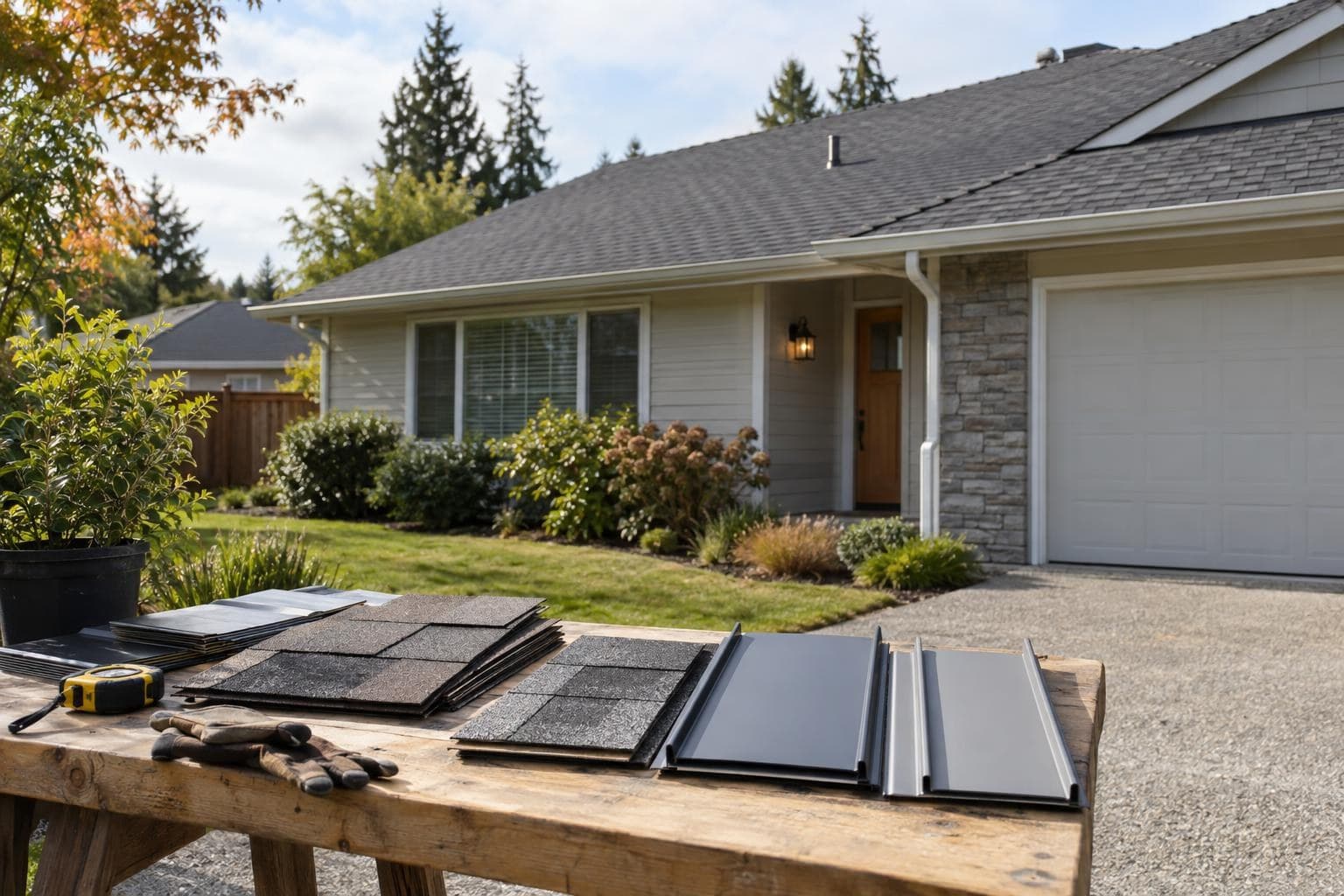
The best roof for Washington is usually the one that handles constant moisture first, then matches your budget and your home’s exposure. For many homeowners, Class 4 shingles hit the best balance of durability and cost. Class 3 can make sense if you want a lower upfront price. Standing seam metal is the premium option if you want a longer-term upgrade and are comfortable with a much higher initial investment. Your real decision comes down to rain, debris, snow risk, roof complexity, and what you want to spend in 2026 market pricing.
What roof holds up best in Washington weather?
Class 4 is the best fit for most Washington homes because it adds impact resistance while keeping the familiar look and lower price point of asphalt roofing. Washington roofs deal with frequent rain, damp conditions, wind-driven moisture, debris, and in some areas snow and ice. Even when damage does not look dramatic from the ground, constant moisture can shorten the life of shingles, underlayment, sealants, and roof penetrations. Moss and algae can also hold moisture against the roof surface. In higher elevations and colder parts of the state, snow load and freeze-thaw cycling can add stress around edges, valleys, and flashing details. If your roof is older or already has weak spots, Washington weather tends to turn small problems into leaks faster than you want.
That means the best roofing choice is not just about surviving one storm. It is about how well the whole system handles wet conditions over time, especially at penetrations, valleys, edges, and flashing. A roofing contractor you are considering can help you compare not only the shingle or panel itself, but also the details that usually decide whether your roof stays dry.
Is Class 3 or Class 4 better for Washington?
Class 4 is better if you want the stronger upgrade, while Class 3 is better if your main goal is lowering upfront cost. For current Washington planning prices related to best roof for, use the cost guide and calculator, then compare the contractor's property-specific written scope. That puts the upgrade from Class 3 to Class 4 at a meaningful but still manageable jump for many homeowners, especially if your roof sees falling debris, repeated wet weather stress, or seasonal ice and snow exposure.
- Choose Class 3 if you want a lower replacement cost and a solid step above basic roofing options.
- Choose Class 4 if you want more impact resistance and may want to ask your carrier about insurance savings.
- For best roof for in Washington, treat a steep or difficult-to-access roof as a scope variable that the contractor should measure and price explicitly.
- For best roof for in Washington, ask the contractor to put the expected working days and weather plan in writing; timing depends on roof size, material, access, crew scheduling, and conditions found after tear-off.
For Washington, the biggest reason to lean toward Class 4 is simple: roofs here take ongoing punishment from moisture and debris, and stronger shingles can give you more margin before wear turns into a leak. If you are already replacing the roof, many homeowners decide the price difference is easier to justify than paying for another replacement too soon.
Is metal roofing worth it in Washington?
Metal roofing can be worth it in Washington if you want a premium roof and are prepared for the higher upfront cost. That is far above both Class 3 and Class 4, so metal usually makes the most sense when you plan to stay in the home, want a distinct look, or have a roof design and location where water shedding and snow performance matter more to you.
Washington’s damp conditions make water management a major priority, and standing seam metal can be a strong option when installed correctly with the right flashing and trim details. But price matters. If you want the best value rather than the most premium material, Class 4 is usually the easier answer.
Talk to a roofer today
Planning ranges, scope details, and a direct path to request a roofing quote.
Can you save on insurance with a Class 4 roof in Washington?
Yes, sometimes. For best roof for in Washington, any insurance credit depends on the carrier, policy, address, and exact product; get the amount and documentation requirements from the insurer in writing. The key word is commonly, because discount availability and underwriting treatment can vary by carrier. If you are considering impact-resistant roofing materials, ask your insurance carrier whether it offers a discount for a Class 4 rated product. Your roofer can help you identify product options and documentation to discuss with the carrier.
This is one reason Class 4 often lands in the sweet spot. You are not paying metal prices, but you may get a stronger shingle and a possible insurance benefit. Before you buy, confirm the exact terms with your insurer so you know whether the discount applies to your policy and product choice.
What should you do if Washington weather already damaged your roof?
Start by getting the roof checked quickly, because small problems in Washington often become leaks fast. If the roof is older, has widespread weak spots, or has moisture-related wear in multiple areas, replacement may be the smarter move.
If you file an insurance claim, remember your rights. The Washington Office of the Insurance Commissioner says that as a policyholder, you are entitled to a clear explanation of what is covered, a prompt response from the insurance company, timely payments and a claim decision, and an appraisal if you disagree with the amount of your loss. The Washington Office of the Insurance Commissioner also says your insurer is obligated to respond to your claim. Within 15 business days, after receiving your fully completed forms, the company should accept, deny, or advise you if it needs more time to review the claim. Within 30 days, it should complete the claim investigation if possible. If the claim investigation is not completed within 30 days, the insurer must notify you within 45 days after you file a claim and explain why it needs additional time.
Can you choose your own roofer for an insurance claim in Washington?
Yes. After covered damage is identified, you have the right to select your own contractor to complete the work on your home. Your insurance company may recommend contractors, but it is not required to provide you with a list of contractors. That means you should choose carefully and keep control of the process.
- Ask your roofer for the business name and contractor registration number.
- Confirm that registration through the state verification tool referenced by L&I.
- Make sure the business name matches the registration record.
- Read every authorization before you sign it.
- Be careful with assignment of benefit forms if you are dealing with an insurance claim.
The Washington Office of the Insurance Commissioner warns that if a contractor asks you to sign an assignment of benefit, it could affect your rights. The form could allow the contractor to negotiate, make decisions, and settle the claim directly with the insurance company without your approval. The agency says to talk to your agent or company before you sign this form.
So, what is the best roof for your Washington home?
For most homeowners, the best roof for Washington is Class 4 because it matches the state’s wet, debris-prone conditions without pushing you into metal-level pricing. Choose Class 3 if you need the lower upfront cost and want a practical replacement.
The smartest next step is to compare your home’s actual exposure, your current roof condition, and your budget side by side. For broader local numbers, check the full Washington cost page and the calculator. Then talk with a roofing contractor you are considering about whether Class 3, Class 4, or standing seam metal makes the most sense for your roof, not just for Washington in general.
What should the full roof assembly do during a long wet season?
Material labels matter less when valleys, wall intersections, penetrations, intake vents, or attic exhaust are poorly detailed. Ask how the proposed assembly manages wind-driven rain, repeated wetting, debris in drainage paths, and moisture moving from the house into the attic. The scope should identify underlayment, flashing, ventilation, edge details, fasteners, and any deck repairs, not only the visible shingle or panel. A durable Washington roof is a coordinated water-management system with serviceable details, not a premium covering installed over unresolved moisture problems.
Sources reviewed
- Washington Department of Labor & Industries, Register as a Contractor
- Washington Office of the Insurance Commissioner, Filing a homeowner insurance claim
- Asphalt Roofing Manufacturers Association: Residential Asphalt Roofing Manual: Ventilation Best Practices
- Metal Construction Association: Standing Seam Best Practices: Clips
- UL Solutions: UL Solutions and IBHS Drive Trust in Residential Roofing Shingles
Plan with current pricing
Related services
Updated July 27, 2026
3D Roofs Editorial Team
Editorial Standards