Updated July 10, 2026

3D Roofs Editorial Team
Editorial Standards
A roof claim is not won by using the right phrase or bringing the biggest estimate. It is a contract process built from the policy, timely notice, a clear condition record, insurer inspections, construction documents, and written decisions. Coverage varies by policy and state, so a national guide cannot tell you whether a particular loss is covered or what it will pay. It can show you how to preserve facts, keep the roles straight, and ask questions that make the process understandable.
Protect people and limit additional damage first
Wait until the weather and property are safe. Stay away from downed lines, structural movement, standing water near electricity, broken glass, falling debris, and wet or damaged roofing. Move belongings from active drips when it is safe and contact qualified emergency help for an open roof, unsafe ceiling, tree impact, or other urgent condition. Do not climb onto the roof to collect claim photographs.
The NAIC advises homeowners to take reasonable steps to prevent further damage and keep receipts. Ask the insurer what temporary work is expected, what evidence should be retained, and whether it needs to inspect before permanent repairs. Temporary protection should be documented before and after and authorized separately from the permanent roofing contract. Coverage and reimbursement depend on the policy and facts; a receipt is evidence of an expense, not a payment guarantee.
Read the declarations, endorsements, and duties after loss
Begin with the policy documents in effect on the reported date of loss. The declarations summarize limits and deductibles, while forms and endorsements contain the operative coverage, exclusions, valuation, conditions, and special roof or weather provisions. Ask the insurer for a complete current copy if yours is missing. Do not rely on a renewal summary, contractor explanation, or neighbor's claim as a substitute for your documents.
- Covered causes and exclusions: identify the language the insurer says applies to the reported event and roof condition.
- Notice and proof duties: note reporting, cooperation, records, inspection access, sworn statements, inventories, and deadlines stated in the policy or later insurer correspondence.
- Deductible: identify the amount or percentage, the coverage value it applies to, and the event trigger selected by the insurer.
- Valuation: identify actual cash value, replacement cost, scheduled roof terms, depreciation, matching, and any conditions for additional payment.
- Endorsements: look for wind, hail, hurricane, cosmetic, roof-surface, ordinance or law, managed repair, and other property-specific changes.
- Dispute provisions: note appraisal, examination, mediation, appeal, suit limitation, or other policy and state procedures without assuming they all apply.
Build a dated condition file
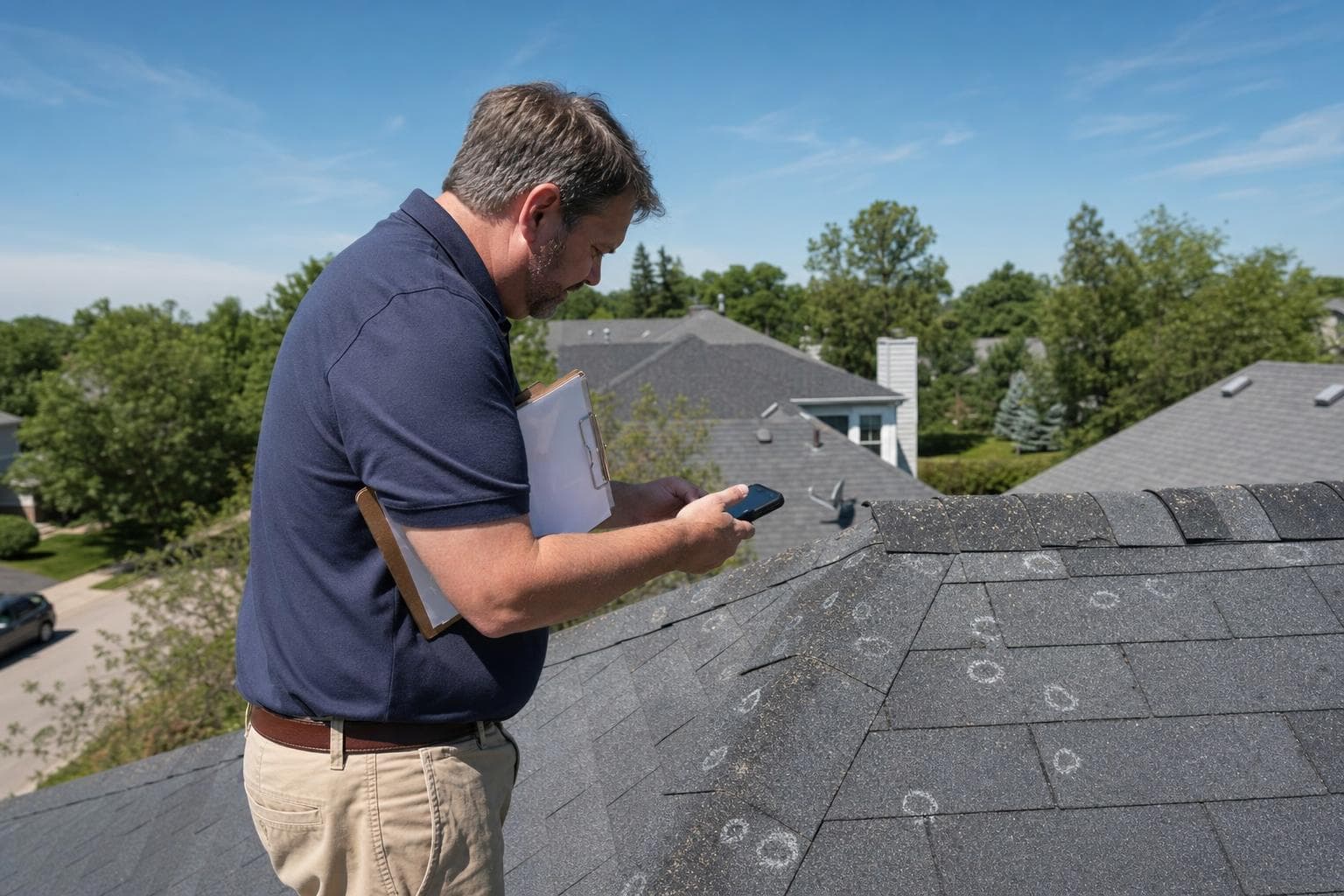
Use overview photographs to show the building and each elevation, then closer photographs tied to a location. Record interior stains, active water, damaged contents, exterior debris, displaced roof components visible from the ground, and temporary work. Save weather alerts or reports with their source and time. Weather data supports event context but does not prove the cause or extent of every roof finding.
- Create a call and document log with dates, names, contact information, claim number, promises, requests, inspections, and files sent or received.
- Keep original photographs and videos with metadata where possible, plus a simple index describing location and what is visible.
- Retain damaged material when safe and requested, or photograph it in place and during removal before disposal.
- Collect maintenance, prior repair, purchase, permit, warranty, and earlier inspection records that help establish pre-loss condition.
- Keep emergency and construction estimates, contracts, changes, invoices, receipts, proof of payment, and completion records as separate document types.
Talk to a roofer today
Planning ranges, scope details, and a direct path to request a roofing quote.
Notify the insurer and confirm the process in writing
Report the event through the insurer's stated channel and obtain the claim number, assigned contact, and next steps. Provide accurate facts you know and distinguish them from estimates or uncertain causes. Ask what date of loss the insurer is using, what inspections or documents it requires, whether temporary work can proceed, and how to send additional construction information. Keep a copy of everything submitted.
Do not delay notice because a roofer wants to inspect first or because someone predicts the damage is below the deductible. Notice duties and claim-history questions belong with the insurer and policy. A pre-claim roof inspection can still help document construction conditions, but the contractor should not decide whether notice is contractually required or guarantee the outcome.
Understand the people and their roles
- Policyholder: provides notice and requested records, protects the property when reasonable, reviews documents, and makes contract decisions.
- Insurer adjuster or representative: investigates the claim and communicates the insurer's coverage, valuation, scope, and payment decisions.
- Roofing contractor: documents roof condition, proposes and prices construction, performs authorized work, and supplies project records.
- Independent inspector, engineer, consultant, or building official: answers a defined technical or regulatory question within that role.
- Public adjuster, attorney, appraiser, mediator, or other representative: may assist where permitted and retained under applicable policy and state requirements.
Rules about claim representation, adjusting, contractor communications, assignments, deductibles, cancellation, and fees vary by state. Verify licenses and permitted services through the responsible state agency. A contractor may be highly qualified to explain a roof scope without being authorized to interpret coverage or negotiate the claim on the policyholder's behalf.
Prepare for the insurer's inspection
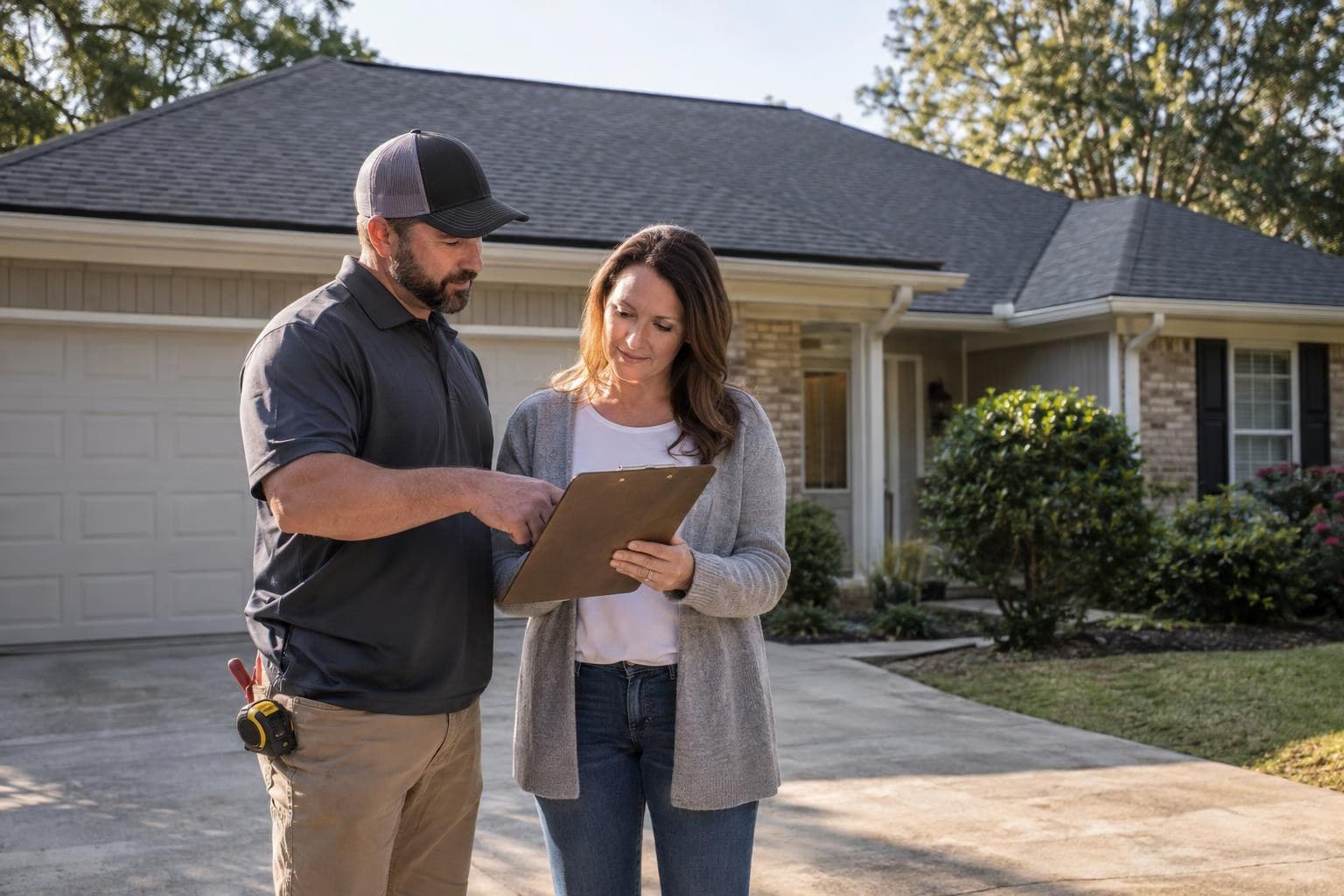
Provide safe access and the organized condition file. If a contractor attends, define the purpose: identify roof areas, construction details, photographs, measurements, repairability concerns, and proposed scope. The insurer controls its inspection and coverage process. The contractor should avoid staging damage, directing the adjuster, altering evidence, or turning an observation into a coverage conclusion.
Afterward, ask when the insurer expects to issue its written decision and estimate, what additional information it needs, and how to submit questions. Record roof areas not accessed because of weather, safety, height, snow, fragility, or other conditions. An incomplete inspection may require another visit; it should not quietly become a complete condition record.
Read deductibles and valuation from the documents
A deductible may be a stated amount or calculated as a percentage of a coverage value, and a policy may use different deductibles for different events. The declarations and endorsements control which applies. Ask the insurer to show the calculation in writing. The deductible is separate from depreciation, excluded work, elective upgrades, price differences, and other amounts that may remain the owner's responsibility.
The NAIC explains actual cash value as replacement cost less depreciation, while replacement cost coverage can pay the cost to replace with like kind and quality subject to policy terms and limits. Some replacement-cost claims involve an initial payment and later consideration of recoverable depreciation after qualifying work and documentation; others operate differently. Ask which amount is withheld, what unlocks further payment, what deadlines apply, and what proof is required.
Compare the insurer document with the construction scope
An insurer estimate and a roofing proposal can have different purposes and formats. Compare roof area, removal layers, deck terms, underlayment, leak barriers, edges, flashing, penetrations, covering, attachment, ventilation or condensation work, accessories, permits, disposal, protection, and tax where applicable. Do not compare totals until both documents describe which work and quantities they include.
- Missing construction item: ask the contractor to document why the item is needed and ask the insurer how it evaluated that evidence under the policy.
- Quantity difference: compare measurement reports, waste assumptions, layers, slopes, openings, and material units rather than assuming one total is wrong.
- Code or approval item: identify the adopted requirement, permit authority, triggering condition, and whether the policy includes applicable ordinance or law coverage.
- Upgrade: separate betterment or owner-selected material from like-kind repair so its price and coverage treatment remain visible.
- Concealed damage: use the contract's opening, photograph, pricing, and approval process and submit newly exposed evidence promptly.
Submit additional information without promising a supplement
If the construction evidence changes or clarifies the scope, send the insurer the estimate, photographs, measurements, product requirements, permit information, and explanation tied to specific roof areas and components. Ask how it wants added information submitted and when it will respond. Supplement is often used as shorthand for this process, but it is not a guarantee that the insurer will add or pay an item.
Respond to a partial or denied decision step by step
- 1Ask for the coverage decision, estimate, and the policy language or factual basis relied on, in writing.
- 2List each disagreement separately: observed condition, cause, repairability, quantity, construction requirement, valuation, or coverage.
- 3Provide focused evidence for each issue and request clarification, reconsideration, or reinspection through the insurer's stated process.
- 4Review policy dispute provisions, deadlines, and state options before selecting appraisal, mediation, complaint, professional representation, or legal action.
- 5Contact the state insurance department for consumer guidance or its complaint process when appropriate; the agency may not decide every private dispute.
- 6Verify the license, fee agreement, conflicts, and permitted role of any public adjuster, attorney, consultant, appraiser, or other representative before hiring.
Keep the roofing contract accurate and separate
The contractor's invoice should accurately describe the work, price, credits, and payments. Do not agree to a false invoice, hidden rebate, undisclosed allowance, or misstatement designed to change the claim. Deductible-waiver and insurance-funded roofing rules vary by state, but the safe national principle is straightforward: the construction and payment records should be truthful, complete, and consistent with what actually occurred.
Review cancellation, assignment, direction-to-pay, financing, claim-assistance, and contingent-payment language before signing. Do not let emergency authorization become a permanent contract without a defined scope. Confirm when payments are due, who receives insurer funds, who owns material, and what happens if coverage, price, or scope differs from expectations.
A clear roof claim file connects the policy process, located roof evidence, and an accurate construction scope without asking the contractor to promise coverage or the insurer to design the roof.
Sources
- National Association of Insurance Commissioners: What You Need to Know When Filing a Homeowners Claim
- National Association of Insurance Commissioners: Actual Cash Value Coverage and Replacement Cost Coverage
- Federal Trade Commission: Four Ways to Avoid Scams After a Weather-Related Disaster
- Insurance Institute for Business & Home Safety: RICOWI Roof Guide
Related roofing resources
Related services
Updated July 10, 2026
3D Roofs Editorial Team
Editorial Standards