Updated July 10, 2026

3D Roofs Editorial Team
Editorial Standards
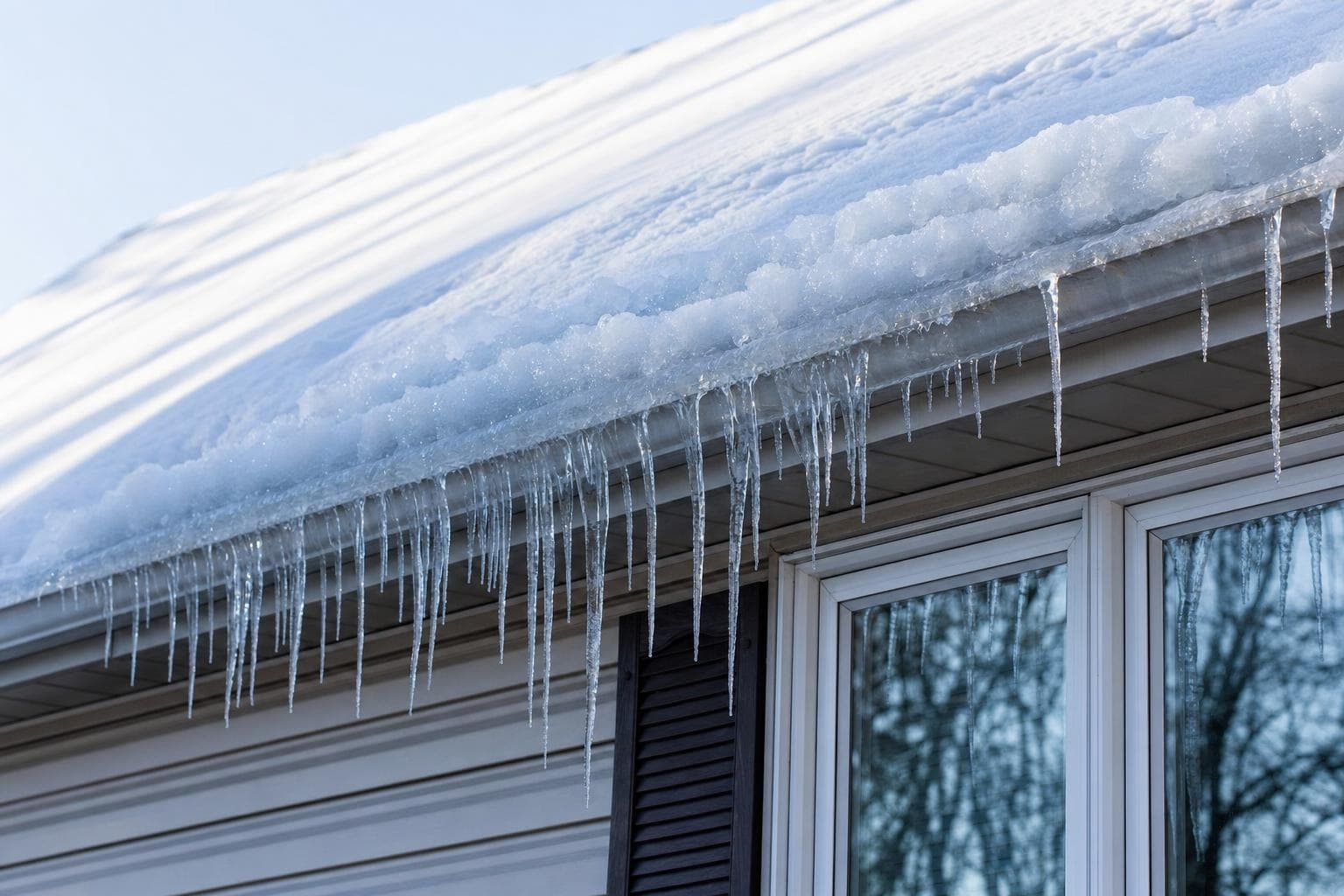
Ice at the eave and a winter ceiling stain can be related, but the visible dam is not a complete diagnosis. Snow may be melting because indoor heat reaches the roof deck, sunlight warms one roof area, equipment or ducts create a hot spot, or outdoor temperatures cycle above and below freezing. Water may enter through backed-up laps, flashing, an unprotected eave, or a separate roof defect. The durable answer begins by mapping where melting starts, where water refreezes, and where the interior evidence appears.
How an ice dam forms
Snow on a warmer part of the roof melts and moves downslope. At a colder eave, valley, gutter, shaded area, or transition, the water refreezes. Repeated melt and freeze cycles can build a ridge that slows drainage and holds water behind it. Steep-slope coverings are designed primarily to shed water moving downhill; backed-up water can reach laps, fasteners, joints, flashing, or edges that are not meant to remain submerged.
The pattern matters. A continuous band at many eaves suggests a different heat and drainage story than one small dam below a bathroom exhaust, chimney chase, skylight, valley, or complex addition. Snow depth, roof orientation, shade, gutters, wind drifting, and outdoor temperature can change the pattern. Photograph the whole roof from the ground over time rather than relying on one close-up after the ice has grown.
Respond to active ice and water safely
Do not walk an icy roof or stand below heavy overhanging ice and snow. Keep people, pets, and vehicles away from falling hazards. Move belongings from active interior drips and use containers or floor protection only where the ceiling and electrical conditions are safe. A bulging ceiling, structural movement, substantial snow load, water near electrical equipment, or falling material calls for emergency or qualified professional help rather than a homeowner repair.
- Do not chop, pry, torch, or pressure-wash ice from the roof; those methods can injure people, damage the covering, and drive water into the assembly.
- A roof rake may reduce accessible lower-roof snow when the tool, roof, surroundings, and manufacturer instructions allow safe ground use, but stay clear of falling snow and overhead utilities.
- For removal near high eaves, fragile coverings, complex roofs, heavy accumulation, or active leakage, ask a qualified provider to describe the method and roof-protection plan.
- Photograph the dam, melt pattern, interior evidence, and any temporary work, and keep receipts without assuming the insurer will cover every measure.
Trace the heat path before adding insulation or vents
The Department of Energy identifies air sealing, insulation, and appropriate assembly ventilation as important parts of controlling roof-deck heat and attic moisture. The order matters. Warm indoor air can bypass insulation through attic hatches, recessed lights, plumbing and wiring openings, wall tops, chases, and disconnected exhaust ducts. Adding insulation over active air leaks can leave concentrated heat and moisture paths in place.
- Locate dirty insulation, frost, staining, bypasses, open chases, and gaps around penetrations that indicate air movement from conditioned space.
- Confirm bathroom, kitchen, and dryer exhausts discharge outdoors and that ducts are connected, insulated where appropriate, and not leaking into the attic.
- Map insulation depth and continuity, especially near exterior wall plates, transitions, kneewalls, attic access, and areas blocked by storage or mechanical systems.
- Investigate localized heat from ducts, air handlers, chimneys, lights, and poorly separated conditioned spaces rather than treating the attic as one uniform area.
Talk to a roofer today
Planning ranges, scope details, and a direct path to request a roofing quote.
Vented and unvented assemblies need different answers
A traditional vented attic generally places the air and thermal control layers at the ceiling and uses intentional outdoor-air paths at the attic. An unvented roof assembly places those control layers differently and should not be converted casually by adding intake and exhaust openings. Identify the intended design, insulation location, existing vents, mechanical equipment, and product requirements before prescribing more ventilation.
On a vented attic, review whether intake and exhaust paths are present, continuous, balanced, and unobstructed. Baffles may be needed to preserve air movement at eaves without displacing insulation. On either assembly, ventilation does not replace ceiling or roof-deck air control, correct moisture sources, or fix a roof opening. Compare the proposed changes with applicable building requirements and the covering manufacturer's instructions.
Inspect the eave and water-shedding details
Air and thermal improvements reduce the conditions that feed many ice dams, while roof details provide backup when meltwater still occurs. The Department of Energy describes self-sealing membrane at cold-climate eaves as protection against water that backs up under the covering. The required material and extent depend on the adopted code, roof geometry, climate, product instructions, and how the interior wall line relates to the eave. Do not substitute a universal distance from an article.
- Determine whether an eave membrane exists, where it begins and ends, and whether later penetrations or repairs disturbed it.
- Review drip edge, starter, gutter attachment, fascia, soffit, and the way water leaves the roof rather than focusing only on the ice ridge.
- Inspect valleys, low-slope tie-ins, walls, skylights, chimneys, and transitions where concentrated meltwater can back up or change direction.
- Check the deck and insulation near reported leakage for older stains, decay, trapped moisture, and evidence that may point to a separate flashing or covering defect.
Does a new roof solve an ice-dam problem?
Replacement can provide access to damaged deck, underlayment, eave membrane, flashing, edges, and ventilation details. It does not automatically stop indoor heat from reaching the roof. If the same air leaks, insulation gaps, ducts, and assembly errors remain, melt patterns may return on the new covering. Include attic or roof-assembly findings in the replacement scope and identify which contractor owns each part of the correction.
Metal roofing also is not a universal ice-dam solution. Panel profile, slope, snow retention or release, eave condition, attachment, underlayment, insulation, condensation control, and pedestrian areas all matter. A roof that sheds snow can create a ground hazard, while a roof that retains it can still experience meltwater. Compare the complete assembly and property layout rather than choosing material from one winter symptom.
Build a durable correction plan
- 1Document snow, melt, refreeze, and interior patterns by roof area and weather condition.
- 2Identify active leakage and complete only the temporary protection or focused repair needed to control immediate water entry.
- 3Determine whether the attic or roof is intended to be vented or unvented and locate its air, thermal, and moisture-control layers.
- 4Trace air leaks, insulation gaps, exhaust problems, and localized heat sources before selecting products or vent quantities.
- 5Inspect eave membrane, deck, flashing, edges, gutters, valleys, and transitions for water paths and prior damage.
- 6Assign roofing, insulation, air-sealing, ventilation, electrical, HVAC, and structural work to qualified trades with one coordinated scope.
Remove immediate ice safely, but solve the recurring problem by tracing heat, understanding the roof assembly, and rebuilding the eave and drainage details that need correction.
Sources
- U.S. Department of Energy: Eaves Sealed in Cold Climates
- U.S. Department of Energy: Building America Solution Center: Durable Attics
- Asphalt Roofing Manufacturers Association: Residential Asphalt Roofing Manual: Ventilation Best Practices
- Insurance Institute for Business & Home Safety: RICOWI Roof Guide
Related roofing resources
Related services
Updated July 10, 2026
3D Roofs Editorial Team
Editorial Standards