Updated July 27, 2026

3D Roofs Editorial Team
Editorial Standards
If your roof has isolated damage, repair is usually the right first move. For roof repair vs replacement in Kentucky, do not use a fixed damage percentage as the decision rule; compare the repairable area, roof condition, material availability, code requirements, and written scopes. In Kentucky, that decision matters more because roofs here take repeated hits from wind, rain, hail, temperature swings, and severe weather, including tornado events called out by the state. That mix can turn a small problem into a bigger system-wide issue faster than many homeowners expect.
Should you repair or replace your roof in Kentucky?
Repair first if the problem is limited to one area and the rest of the roof is still in solid shape. Replace when the damage is spread across multiple slopes, when leaks keep showing up in different places, or when the roof is simply too worn for spot fixes to hold.
When is a roof repair enough?
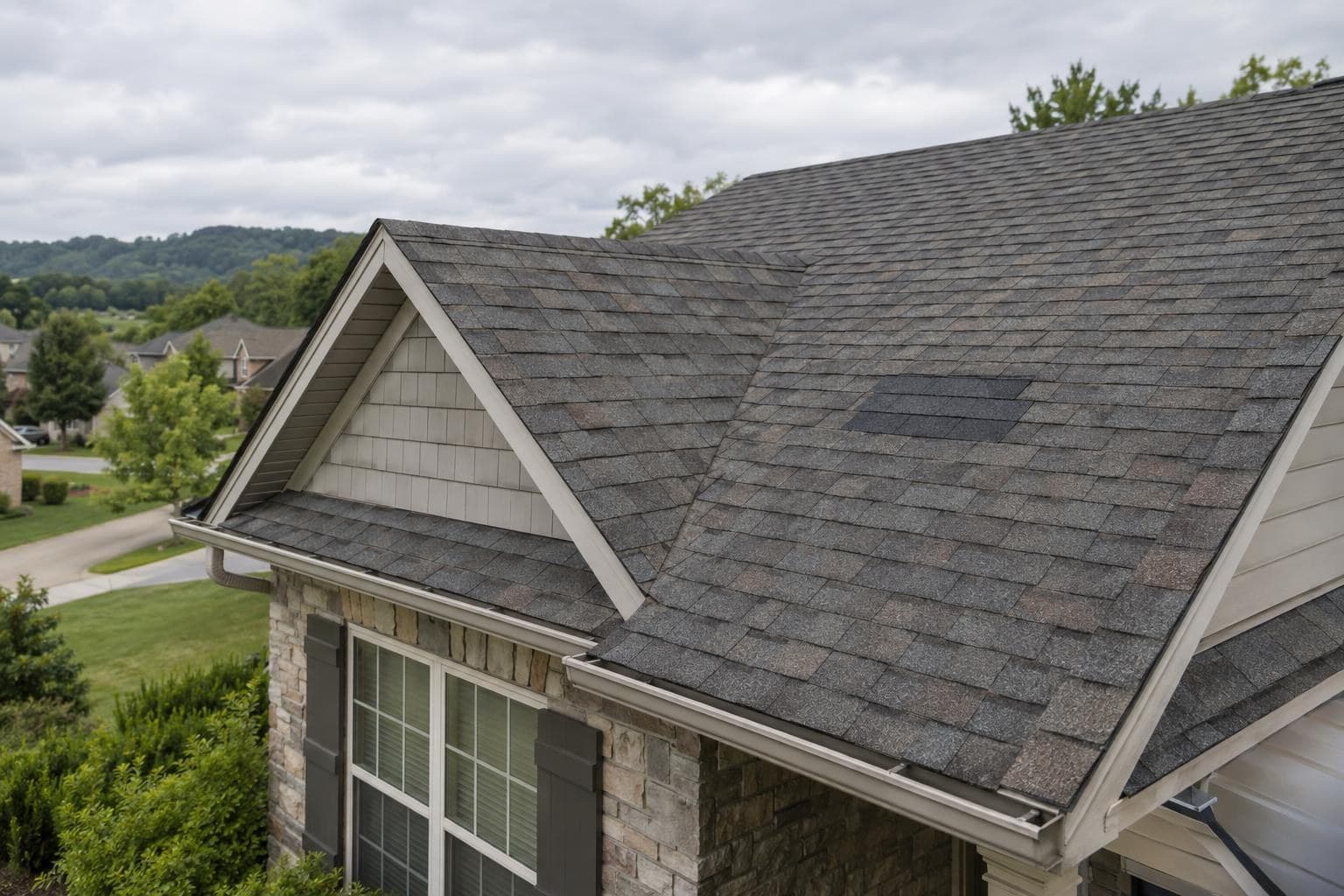
A repair is enough when the issue is specific and contained. Think a small area of missing shingles after wind, a localized flashing failure around a chimney or vent, or a leak tied to one roof penetration. In those cases, a targeted fix can restore performance without forcing you into a full replacement. For current Kentucky repair planning related to roof repair vs replacement, use the maintained cost guide, then compare the contractor's measured scope and unit prices.
- Choose repair when damage is isolated to one section.
- Choose repair when the shingles around the problem area are still holding well.
- Choose repair when the leak source is clear, such as flashing or a roof penetration.
- Choose repair when the roof is not showing broad granule loss, widespread cracking, or repeated leaks in new spots.
When is roof replacement the better choice?
Replacement is the better choice when problems are widespread, recurring, or tied to overall roof age and wear. If one repair leads to another, you are no longer buying a fix, you are buying time. Kentucky weather patterns make that gamble riskier, because wind, hail, and temperature swings tend to expose the next weak area after you patch the last one. When the roof system is breaking down in multiple places, replacement gives you a clean reset instead of a chain of temporary fixes.
- Replace when damage shows up on multiple slopes or planes.
- Replace when leaks are recurring or appearing in different rooms.
- Replace when shingles are brittle, heavily worn, or failing across broad areas.
- Replace when storm damage combines with older age-related wear.
Talk to a roofer today
Planning ranges, scope details, and a direct path to request a roofing quote.
How does roof age affect the decision?
Age matters because older roofing materials do not respond to repairs the same way newer ones do. Even if a repair is possible, matching and blending can be harder, and the surrounding materials may be close to failure. That means a repair can solve today's leak without protecting you from the next one. If your roof is already showing general wear across the field, not just at one point of failure, replacement is often the better value.
How does Kentucky weather change the repair vs. replacement call?
Kentucky weather pushes many borderline roofs toward replacement sooner. Kentucky roofs have to deal with severe weather, including tornado events called out by the state, along with the normal cycle of wind, rain, hail, and temperature swings that wear shingles, flashing, and roof penetrations over time. In practical terms, that means a roof with scattered storm hits and aging materials may not stay repairable for long. A small patch may stop one leak, but the next storm can open another weak spot a few feet away.
That does not mean every storm means replacement. It means you should look at the whole roof, not just the most obvious damage. If a roofing contractor you are considering finds isolated storm damage on an otherwise healthy roof, repair can still make sense. If the inspection shows soft spots, widespread shingle damage, multiple compromised penetrations, or broad wear after repeated weather cycles, replacement usually gives you more confidence and better long-term value.
What does roof replacement cost in Kentucky in 2026?
2026 market pricing in Kentucky depends on the material you choose. For asphalt, Class 3 runs $6.25/sq ft ($6.25 on a typical 2,000 sq ft roof). Class 4 runs $7.25 ($14,572). Standing seam metal runs $16.00 ($32,192). For roof repair vs replacement in Kentucky, treat a steep or difficult-to-access roof as a scope variable that the contractor should measure and price explicitly. For roof repair vs replacement in Kentucky, ask the contractor to put the expected working days and weather plan in writing; timing depends on roof size, material, access, crew scheduling, and conditions found after tear-off.
Is a Class 4 roof worth it in Kentucky?
For many Kentucky homeowners, Class 4 is worth a close look because hail and storm exposure are part of the decision. For roof repair vs replacement in Kentucky, any insurance credit depends on the carrier, policy, address, and exact product; get the amount and documentation requirements from the insurer in writing. The exact discount, if any, depends on your carrier. If you are considering a Class 4 impact-resistant shingle, ask your insurer whether it offers a homeowners insurance discount for that roofing material. If you are already leaning toward replacement after storm damage or age-related wear, paying the difference for added impact resistance can be a practical move.
What should you do after storm damage in Kentucky?
Start with documentation and a careful inspection, not a rushed contract. After major storms, the bigger risk is often rushed hiring and temporary repairs that eat into your claim funds before permanent work is planned well. The Kentucky Department of Insurance tornado relief guidance tells consumers: "DO NOT PAY UPFRONT - do not pay out any funds until the work has been completed and meets your standards of satisfaction." The same guidance also says to insist on a written contract that includes a description of the work, total cost and completion date.
- Take photos of visible exterior damage and any interior leaks or staining.
- Get written estimates from at least three contractors.
- Make sure the roofer comes to your home to assess the job.
- Insist on a written, detailed contract covering the work, materials, payment terms, start date, and approximate completion date.
- Be wary of door-to-door pitches, pressure to sign on the spot, requests to sign over insurance checks, or documents that give the contractor rights to your insurance claim.
- Ask for proof of coverage when money and jobsite risk are involved, because Kentucky consumer guidance tells homeowners to ask for proof of general liability and workers' compensation insurance.
What Kentucky homeowner protections should you know before signing?
You have a few important protections, and they matter most after storms. Kentucky's Division of Consumer Protection handles consumer complaints against homeowners insurance and also takes complaints regarding the actions of an agent or agency. If you run into claim handling problems, you have a state complaint path. The Kentucky Attorney General also says home repair contracts generally cannot be canceled, but there are exceptions. You have "three business days to cancel contracts which result from a home solicitation (door-to-door) sale of an amount that must be confirmed for the written scope or more and/or which result in a lien against the home unless the work is done on an emergency basis."
You should also protect yourself from payment problems. The Kentucky Attorney General explains that subcontractors or material suppliers may be able to collect from you or place a lien on your property if they are not paid, even if you already paid the contractor. The office recommends getting lien waivers and being careful with advance payments for materials. If you are choosing between repair and replacement, that is another reason to slow down, compare written estimates, and make sure the scope is clear before work starts.
The bottom line is simple: repair makes sense for isolated damage on a roof that still has life left. In Kentucky, repeated weather exposure makes the whole-roof view especially important. If you want to compare material options and current numbers before you decide, check the Kentucky cost page and the calculator for full local pricing.
Kentucky roofing costs
Sources reviewed
- Kentucky Attorney General, Home Repair and Improvement
- Kentucky Attorney General, Contractor Registration Program
- Insurance Institute for Business & Home Safety: RICOWI Roof Guide
- Florida Department of Financial Services: Homeowners Insurance Overview
- Insurance Institute for Business & Home Safety: Roof 101
Cost ranges are estimates developed from standardized project scopes and reviewed pricing inputs. Government labor and regional cost data are used where applicable. See our Pricing Methodology for the exact sources, calculations, and review date. Actual prices vary by property, scope, materials or equipment, location, and provider.
Related services
Updated July 27, 2026
3D Roofs Editorial Team
Editorial Standards