Updated July 27, 2026

3D Roofs Editorial Team
Editorial Standards
If your roof damage is isolated, a repair usually makes sense. If damage is spread across large sections, the roof is older, or the same problems keep coming back, replacement is often the better buy. In Ohio, that decision gets harder because your roof is hit by hail, high wind, snow load, ice dams, freeze-thaw cycles, humidity, and summer heat. You are not just fixing one event. You are deciding whether your current roof still has enough life left to handle the next season.
Should you repair or replace your roof in Ohio?
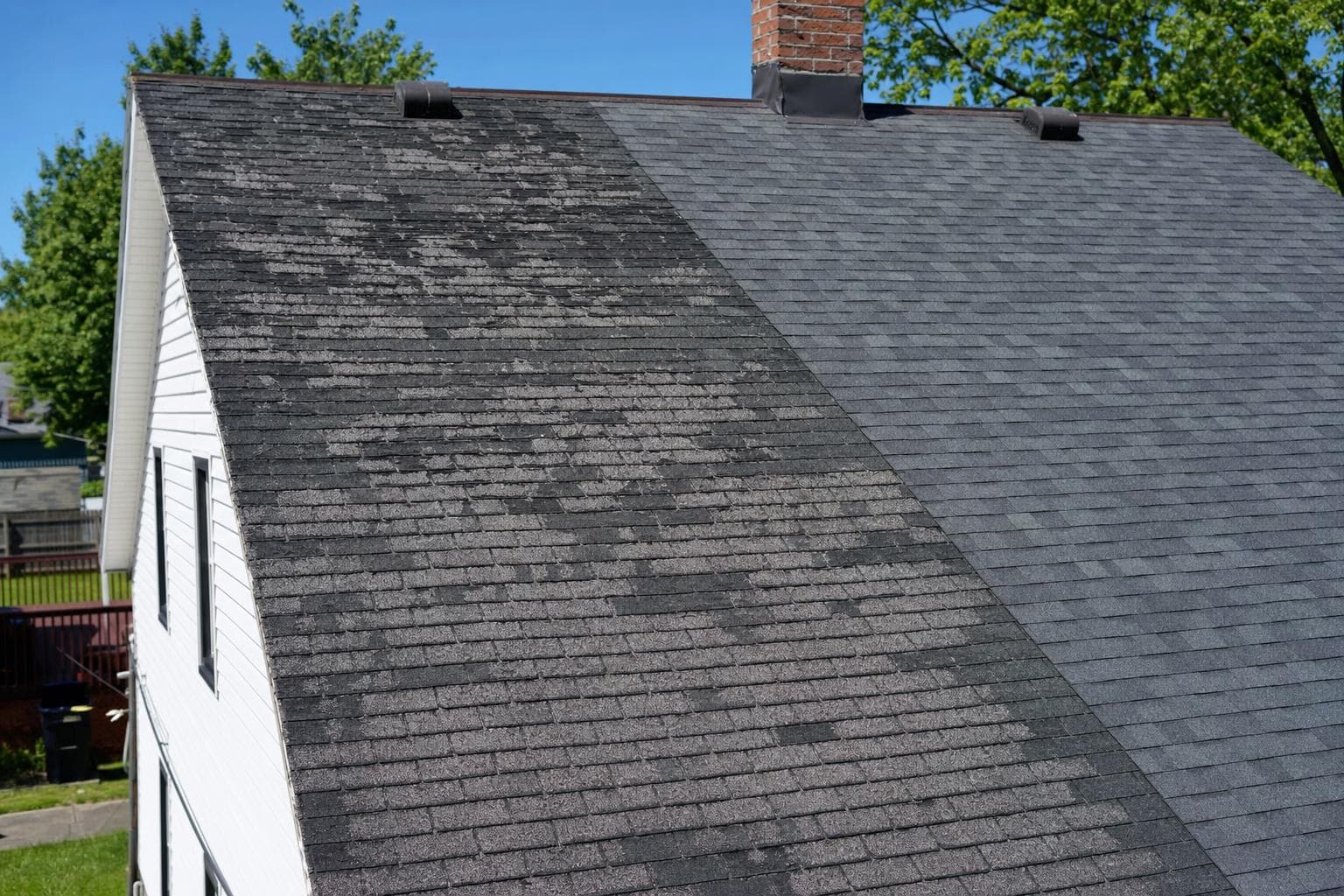
Start with the simplest answer: repair small, localized damage, replace widespread or repeating damage. A few missing shingles after a windstorm, a small flashing issue around a vent, or a leak tied to one area can often be repaired. For current Ohio repair planning related to roof repair vs replacement, use the maintained cost guide, then compare the contractor's measured scope and unit prices. But if you have damage on multiple slopes, widespread granule loss, soft decking, recurring leaks, or signs the roof system is failing in several places, replacement is usually the smarter move. Replacements also give you a chance to upgrade the full system, including underlayment, flashing, and ventilation, which matters in Ohio's mixed weather.
How much damage is too much for a repair?
For roof repair vs replacement in Ohio, do not use a fixed damage percentage as the decision rule; compare the repairable area, roof condition, material availability, code requirements, and written scopes. Once damage is spread that far, patching one area often leaves you chasing the next weak spot. In Ohio, this comes up after hail and wind events that do not fully destroy the roof but leave bruising, lifted tabs, torn edges, and loosened flashing across several sections. A repair may stop one leak today, but it may not solve what the storm did to the rest of the roof.
- Repair is usually the better fit for isolated shingle loss, one leak source, or a small flashing problem
- Replacement is usually the better fit when damage is on multiple slopes or keeps showing up in new places
- If decking feels soft or moisture has spread beneath the shingles, the problem is bigger than a surface patch
Does roof age change the repair vs. replacement decision?
Yes, age matters because older roofs are less likely to benefit from spot repairs. Even if one area is leaking, an older roof may already have brittle shingles, weakened seal strips, exposed fasteners, or worn flashing in other places. In Ohio, repeated freeze-thaw cycling can work loose fasteners and seams over time, while humid summers age shingles and grow algae. That means a repair on an older roof can become a short-term fix that delays a replacement you are likely to need soon anyway. If your roof is newer and the damage is clearly limited, repair is easier to justify. If it is aging and problems are stacking up, replacement often saves money over the next few years.
Talk to a roofer today
Planning ranges, scope details, and a direct path to request a roofing quote.
How does Ohio weather change the call?
Ohio weather pushes more homeowners toward replacement when damage is broad, because the roof has to survive stress from every season. Warm-season thunderstorms drive hail that bruises shingles and strips granules, plus straight-line and derecho winds strong enough to lift shingles and tear edges. Come winter, heavy snow load, ice dams along the eaves, and repeated freeze-thaw cycling work loose fasteners, flashing, and seams. Humid summers add the heat and moisture that age shingles and grow algae. The specification should address the exposures documented for the property instead of assuming one material solves every condition. If your roof is already weakened across multiple areas, Ohio's next weather swing can turn manageable damage into active leaks fast.
What does replacement cost in Ohio in 2026?
For 2026 market pricing in Ohio, Class 3 shingles run $6.50/sq ft, or $12,805 on a typical 2,000 sq ft roof. Class 4 shingles run $7.50, or $14,913. Standing seam metal runs $16.50, or $33,179. For roof repair vs replacement in Ohio, treat a steep or difficult-to-access roof as a scope variable that the contractor should measure and price explicitly. For roof repair vs replacement in Ohio, ask the contractor to put the expected working days and weather plan in writing; timing depends on roof size, material, access, crew scheduling, and conditions found after tear-off. If you want a deeper local breakdown, full pricing lives on the Ohio cost page and the calculator. Those numbers help frame the decision: if you are facing repeated repairs on a roof with widespread wear, putting that money toward a full replacement may protect your home better and reduce repeat service calls.
When is a Class 4 roof worth it in Ohio?
A Class 4 roof is worth a close look if hail is part of your concern and you plan to stay in the home. For roof repair vs replacement in Ohio, any insurance credit depends on the carrier, policy, address, and exact product; get the amount and documentation requirements from the insurer in writing. The credit is not automatic, though: each insurer sets its own discount, so ask your carrier in writing whether they offer one, then submit the manufacturer's certificate after the install to actually claim it. For roof repair vs replacement in Ohio, treat Class 4 as a laboratory impact classification for the exact product, not a promise that the installed roof will resist every hail event or avoid damage. If your current roof is already close to replacement territory, moving from Class 3 at $6.50/sq ft to Class 4 at $7.50 may make sense for added impact resistance in Ohio's storm pattern.
Can you just repair storm damage and file insurance?
Yes, if the damage is truly limited and your policy supports that approach. But you still need to be careful about who you hire and what they promise. For roof repair vs replacement in Ohio, do not assume a contractor can remove or hide the deductible required by the policy. Verify current state law and the written proposal with the insurer or state insurance regulator before signing. A roofer pitching a free roof by eating your deductible is breaking the law, so treat it as a red flag, not a deal. If someone shows up after a storm and pressures you to sign at the door, remember that under Ohio's Home Solicitation Sales Act, if a salesperson comes to your home and you sign a contract of an amount that must be confirmed for the written scope or more there, you can cancel until midnight of the third business day after signing.
How do you choose the right roofer in Ohio?
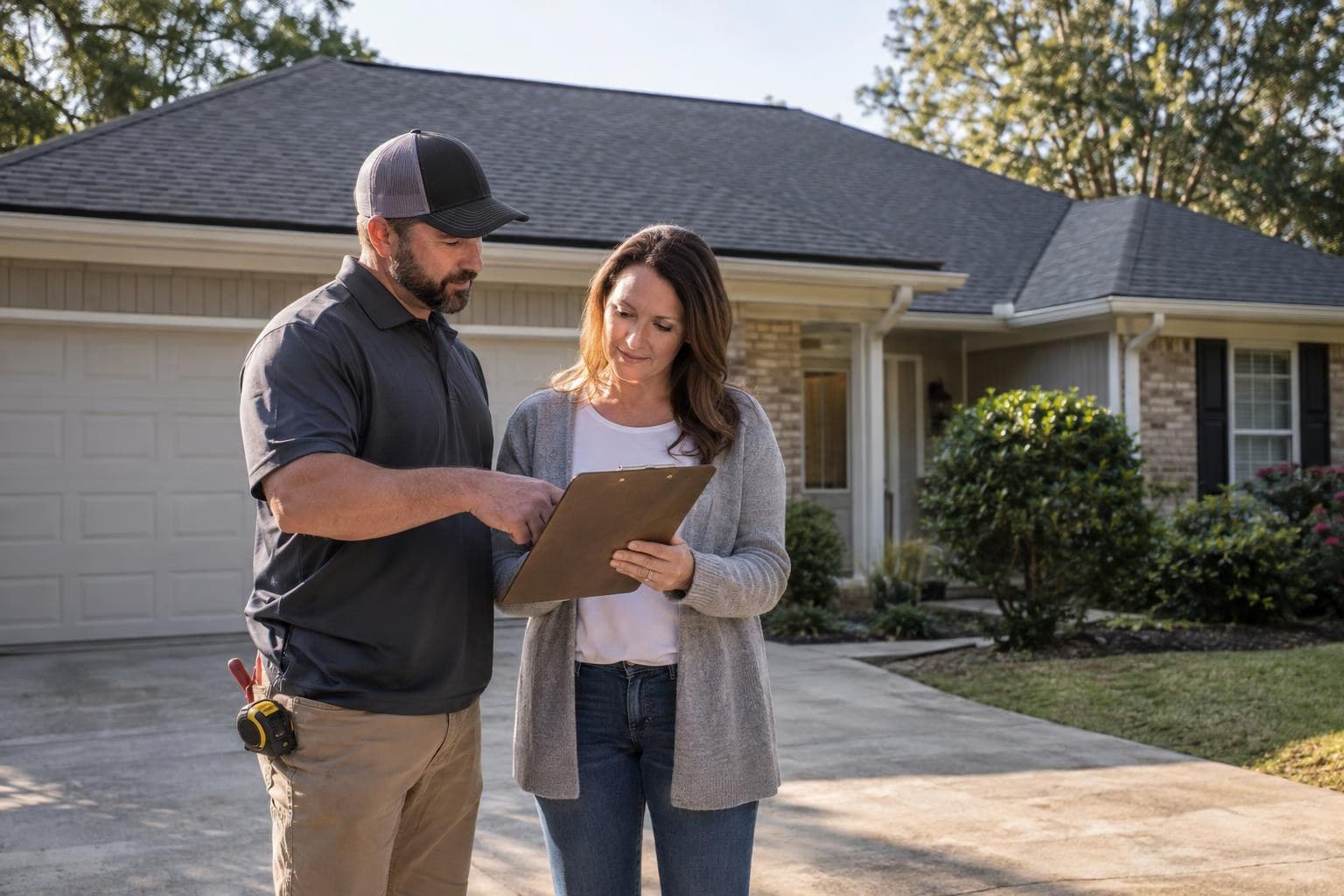
In Ohio, local compliance matters more than broad claims. Ohio does not license or register roofing contractors at the state level. Instead, licensing, registration, and permits are handled locally, and the requirements vary by city. Because there is no state credential to lean on, confirm your roofer is registered and permitted in your specific city or county before you sign. It also helps to ask for a written scope that spells out tear-off, decking, underlayment, flashing, ventilation, and cleanup. If the work is insurance-related, make sure the paperwork stays clear and specific. A roofing contractor you are considering should be able to explain whether your roof has isolated damage that is worth repairing or broader failure that points to replacement.
What is the smartest move for most Ohio homeowners?
The smartest move is to match the fix to the true condition of the whole roof, not just the leak you can see. If damage is isolated, your roof is still in solid shape, and the problem is tied to one section, a repair is usually the right spend. In Ohio, weather rarely gives a weak roof much time to recover. If you want to compare material options and current numbers, check the Ohio cost page and the calculator, then talk through the findings with a roofing contractor you are considering.
Sources reviewed
- Ohio Attorney General (door-to-door sales & 3-day right to cancel)
- Ohio Attorney General (storm-chaser home-improvement fraud)
- Insurance Institute for Business & Home Safety: RICOWI Roof Guide
- Florida Department of Financial Services: Homeowners Insurance Overview
- Insurance Institute for Business & Home Safety: Roof 101
Cost ranges are estimates developed from standardized project scopes and reviewed pricing inputs. Government labor and regional cost data are used where applicable. See our Pricing Methodology for the exact sources, calculations, and review date. Actual prices vary by property, scope, materials or equipment, location, and provider.
Related services
Updated July 27, 2026
3D Roofs Editorial Team
Editorial Standards