Updated July 10, 2026

3D Roofs Editorial Team
Editorial Standards
If the damage is isolated and the rest of the roof is in good shape, repair is usually the better buy. If damage is widespread, the roof is older, or too much of the system is failing at once, replacement usually makes more sense. In Rhode Island, that decision also gets shaped by year-round moisture, wind-driven rain, winter weather, temperature swings, and faster aging near the coast where salt air can be harder on exterior materials.
Should you repair or replace your roof in Rhode Island?
Start with the simplest answer: repair a roof when the problem is limited to one area and the surrounding materials still have solid life left. Replace a roof when the trouble shows up in multiple areas, keeps coming back, or points to broader wear across shingles, flashing, edges, and penetrations. In Rhode Island, it helps to check for missing shingles, lifted edges, damaged flashing, leaks around roof penetrations, ice-related edge damage, and water intrusion in the attic or ceilings before small problems spread.
When is a roof repair the smart choice?
Repair is usually the smart choice when the issue is small, recent, and clearly contained. Think a limited patch of missing shingles after a storm, a flashing problem around a chimney or vent, or one leak source that can be traced and fixed without disturbing large sections of the roof. For a repair-versus-replacement decision in Rhode Island, compare a diagnosed repair scope with a measured replacement proposal; both should identify affected slopes, flashing, deck conditions, and exclusions. This is often the right call when shingles still lie flat, granule loss is not widespread, and leaks are not showing up in different rooms or at different roof features.
When does roof replacement make more sense?
Replacement makes more sense when repair starts acting like a short-term bandage. If you have recurring leaks, repeated storm damage, visible wear across multiple slopes, soft decking, failing valleys, or widespread flashing issues, a new roof is often the more durable and more cost-effective move. That is especially true in Rhode Island, where moisture, winter weather, and temperature swings can turn small openings into repeat water problems. If one repair leads to another, or if new leaks appear after old ones were fixed, it is usually time to step back and look at the whole system instead of one spot.
Talk to a roofer today
Planning ranges, scope details, and a direct path to request a roofing quote.
When is roof damage too widespread for a repair?
Do not use a fixed percentage as the deciding line for a Rhode Island roof; map damage by slope and component, then determine whether a targeted repair can leave a watertight, serviceable system. The reason is simple. Once a large share of the roof has active problems, patching section by section can leave you paying for repeated labor while older materials around the repair continue to fail. If the damage is under that level and the rest of the roof is sound, repair can still be the right move. If it is at or beyond that level, a full replacement often gives you a cleaner long-term result.
How does roof age affect the decision?
Age matters because even a small leak can be a sign of broader wear when the roof is near the end of its service life. An older roof with curling shingles, widespread granule loss, brittle tabs, exposed fasteners, or repeated leak history is usually a poor repair candidate, even if the latest problem looks limited at first. A newer roof with one storm-damaged area is a much better repair candidate. If you are not sure whether the roof is simply damaged or just worn out, ask your roofer for a clear written scope that separates isolated repairs from signs of system-wide aging.
How does Rhode Island weather change the repair versus replacement call?
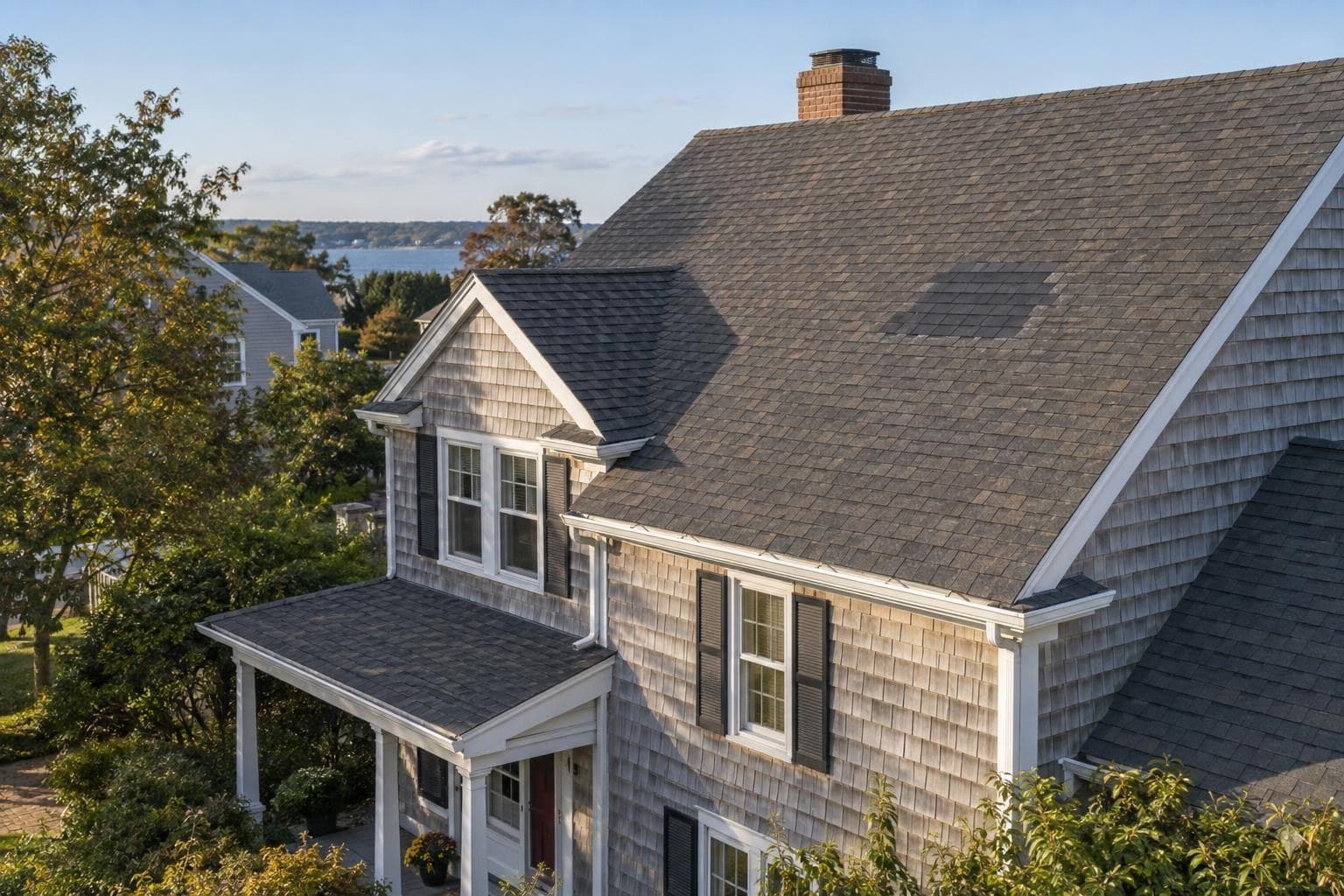
Rhode Island weather pushes many borderline roofs toward replacement sooner than homeowners expect. You need a roof system that can handle year-round moisture, wind-driven rain, winter weather, and temperature swings. Those conditions tend to expose weak flashing, worn shingle edges, and leak paths around penetrations. Ice-related edge damage can also keep returning if the roof assembly is already tired. Near the coast, faster aging can show up because salt air can be harder on exterior materials. That means a repair that might hold longer in a milder setting may be less convincing here if the surrounding roof is already weathered.
What does a new roof cost in Rhode Island in 2026?
If replacement is the better call, the next question is cost. For a repair-versus-replacement decision in Rhode Island, start with current Rhode Island cost data, then test the planning range against a measured proposal that names the complete roof assembly. For a repair-versus-replacement decision in Rhode Island, require the written schedule to account for roof geometry, access, weather protection, material handling, inspections, and possible deck work. If you want a fuller breakdown by material and roof type, the Rhode Island cost page has the local pricing details, and the calculator can help you size up your roof before you talk with a local roofer you have vetted.
Can insurance help pay for repair or replacement?
Yes, if the damage came from a covered peril, but not every roof problem is covered. Rhode Island explains that homeowners insurance pays for losses and damages to your home if it is damaged or destroyed by fire, weather, theft, or another covered disaster. The Rhode Island Division of Insurance also says you are only covered for a loss caused by a peril your policy covers, and you should review your policy limits and exclusions to understand what damage is excluded. Rhode Island also says, plainly, that homeowners insurance is not flood insurance and does not cover losses from flood. If you are considering impact-resistant shingles, ask your insurance carrier whether it offers a discount for a Class 4 rated roof covering. For a repair-versus-replacement decision in Rhode Island, treat any impact-resistant roof credit as unconfirmed until the insurer identifies the eligible product, required documentation, premium portion, and amount in writing.
How should you compare Rhode Island roofers before you decide?
Start by confirming your roofer is properly registered for residential construction work through the state's Search a Registrant/Licensee tools. Rhode Island draws a line between commercial roofing and residential roofing, and for residential work the Rhode Island Division of Insurance says anyone doing residential or commercial construction work, including repairs, needs to be registered with the Rhode Island Contractors’ Registration and Licensing Board. Then ask who will perform the work, whether any subcontractors will be used, and for a clear written scope. That written scope should spell out materials, flashing details, leak areas being addressed, what gets replaced versus reused, and cleanup terms. That makes it much easier to compare a repair option against a full replacement option on equal footing.
What is the best next step if you are on the fence?
Get two things in writing: a repair scope for the isolated problem, and a replacement scope for the full system. Replacement becomes worth comparing in Rhode Island when damage crosses multiple slopes, compatible materials are unavailable, deck or flashing work expands the scope, or repairs keep returning. If the issue is truly contained, repair can save money now. If the roof is broadly worn or weather is likely to keep exposing weak spots, replacement is usually the cleaner long-term choice. And if you run into a claim or coverage issue, the Rhode Island Division of Insurance says, "We can help." The agency says you can file a complaint online or reach the division by phone.
Sources
Reviewed technical references for Rhode Island
Related Rhode Island roofing guides
Related services
Updated July 10, 2026
3D Roofs Editorial Team
Editorial Standards