Updated July 27, 2026

3D Roofs Editorial Team
Editorial Standards
If your roof damage is isolated, repair is often the smarter move. If damage is spread across large sections, the roof is older, or repair costs are stacking up without buying much life, replacement usually makes more sense. In Tennessee, that choice gets harder because roofs here deal with hail, straight-line wind, tornado risk, humid heat, algae streaking, and occasional ice or snow stress. The goal is simple: spend the least amount of money that still gives you a dependable roof.
Should you repair or replace your roof in Tennessee?
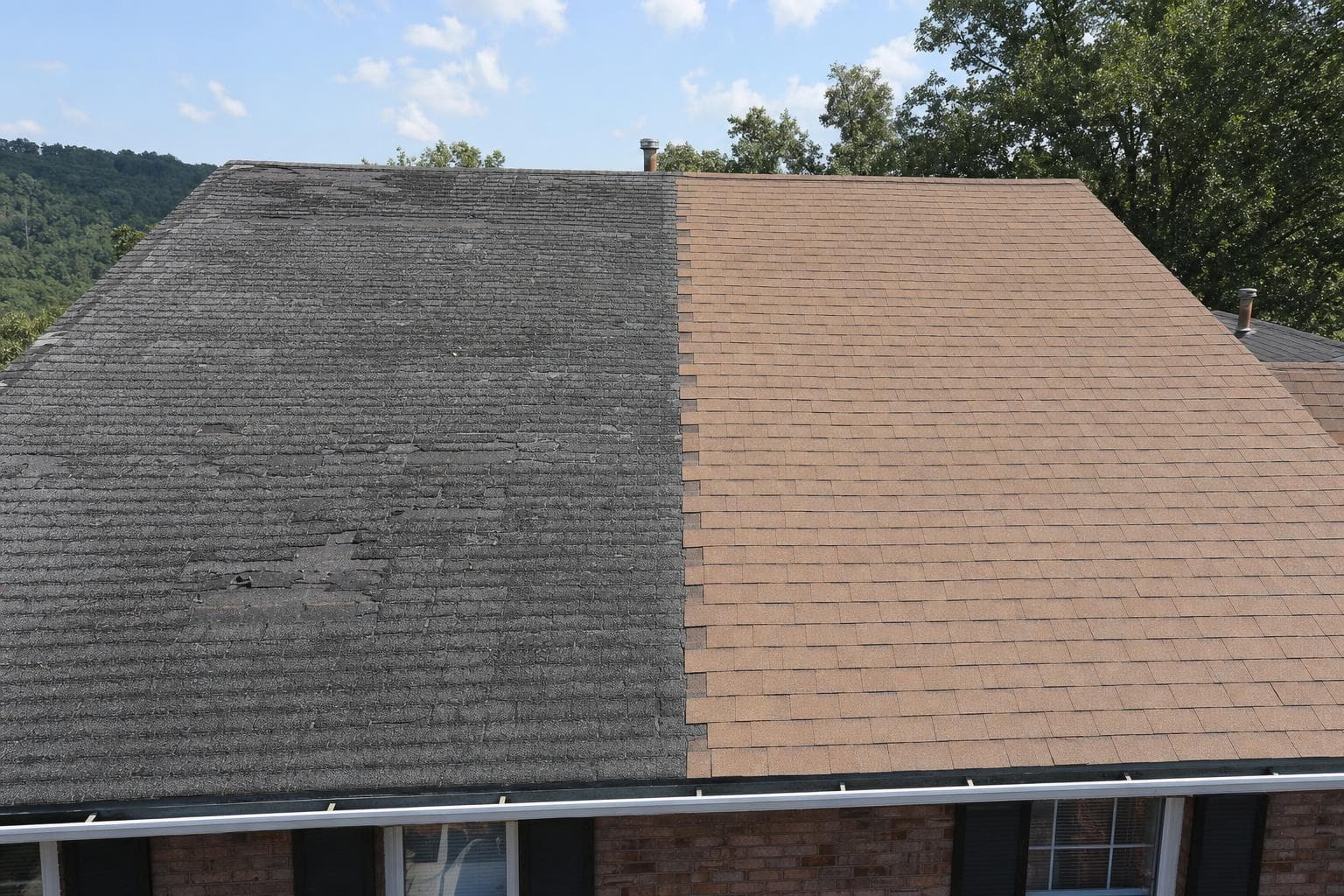
Start with the size of the problem. A repair makes sense when the issue is limited to a small area, like a few missing shingles, a localized leak around flashing, or damage from a single limb strike. Replacement makes more sense when problems show up on multiple slopes, leaks are recurring, shingles are brittle across the roof, or storm damage is widespread enough that patching one section still leaves weak areas elsewhere. In plain terms, repair works best when the rest of the roof is still doing its job.
How do you tell if the damage is isolated or widespread?
The direct answer is to look for pattern, not just one bad spot. Isolated damage usually stays tied to one event and one area. Widespread damage shows up as repeated granule loss, bruising from hail on several slopes, creased or lifted shingles after wind, multiple leak points, soft decking, or repairs scattered across the roof line. Tennessee roofs are exposed to severe weather more than almost anything else. Spring and summer thunderstorms drive large hail that bruises shingles and strips granules, along with damaging straight-line winds and a genuine tornado risk across Middle and West Tennessee. The state's long, hot, humid summers bake shingles and feed the dark algae streaks you see on north-facing slopes, and an occasional winter ice or snow event adds freeze-thaw stress and ice-dam leaks. The right roof for your home depends on how much hail and wind your area actually sees.
- Repair is usually the better fit when damage is limited to one section and the surrounding shingles are still flexible and well-sealed.
- Replacement is usually the better fit when several slopes show hail bruising, wind creasing, repeated leaks, or signs the roof system is aging out together.
- If one problem exposed others, like damaged flashing, wet decking, and brittle shingles nearby, a small repair can turn into a temporary fix fast.
Does roof age change the repair versus replacement decision?
Yes, age matters because older roofs are harder to patch well and less likely to justify repeated repair spending. Even if one leak looks small, a roof that is already worn, brittle, or losing granules broadly may not have enough remaining life to make a repair worthwhile. A newer roof with one storm-hit area is a better repair candidate. An older roof with several weak spots is usually a replacement conversation, especially if matching shingles is difficult or nearby sections are likely to fail next.
Talk to a roofer today
Planning ranges, scope details, and a direct path to request a roofing quote.
What is a fixed damage threshold for roof replacement?
For roof repair vs replacement in Tennessee, do not use a fixed damage percentage as the decision rule; compare the repairable area, roof condition, material availability, code requirements, and written scopes. The reason is simple. Once a large share of the roof is compromised, patching becomes less efficient, color match gets worse, and the untouched sections may not be far behind. It is not a law or an insurance rule. It is a homeowner budgeting rule that helps you avoid spending real money on repairs that do not solve the whole problem.
How much do repairs and replacements cost in Tennessee?
For current Tennessee repair planning related to roof repair vs replacement, use the maintained cost guide, then compare the contractor's measured scope and unit prices. For replacement, 2026 market pricing in Tennessee is Class 3 $6.00/sq ft ($12,069 on a typical 2,000 sq ft roof), Class 4 $7.00 ($14,160), standing seam $15.50 ($31,129). For roof repair vs replacement in Tennessee, treat a steep or difficult-to-access roof as a scope variable that the contractor should measure and price explicitly. For roof repair vs replacement in Tennessee, ask the contractor to put the expected working days and weather plan in writing; timing depends on roof size, material, access, crew scheduling, and conditions found after tear-off. If you want the full local pricing picture, including material options and size scenarios, check the Tennessee cost page and the calculator.
How does Tennessee weather change the call?
It pushes many borderline roofs toward replacement sooner. A roof that might limp along in a milder climate can keep taking fresh hits in Tennessee. Hail can bruise shingles without tearing them off right away. Wind can break seals and crease tabs, which may not leak the same day but can shorten the roof's life. Long humid summers age shingles faster and expose weaknesses around flashing and ventilation details. That means a repair is best when it truly fixes a limited issue. If severe weather has exposed system-wide wear, replacement is often the cleaner and less risky decision.
Are impact-resistant shingles worth it in Tennessee?
For roof repair vs replacement in Tennessee, coverage depends on the policy language, cause of loss, exclusions, and the insurer's decision; verify those terms in your own documents. Class 4 shingles are worth comparing on Tennessee homes with meaningful hail exposure. Verify the exact product's current UL 2218 classification and do not treat the rating as a guarantee against every kind of damage. Tennessee does not set one statewide insurance credit. Ask the carrier in writing whether the product qualifies, which premium portion is affected, and what documentation it requires before using a credit in the budget. For roof repair vs replacement in Tennessee, any insurance credit depends on the carrier, policy, address, and exact product; get the amount and documentation requirements from the insurer in writing. On 2026 Tennessee market pricing, Class 4 $7.00 ($14,160) versus Class 3 $6.00/sq ft ($12,069 on a typical 2,000 sq ft roof), so the upgrade is easy to compare against expected exposure and any written carrier credit.
What Tennessee insurance and contractor rules should you know before deciding?
The key points are to know your deductible, move quickly after storms, and verify the right contractor details before a big job. Tennessee is a licensing state. Under the Tennessee Board for Licensing Contractors (Tennessee Code Annotated Title 62, Chapter 6), a contractor must hold a state license before bidding or negotiating a price on any project costing an amount that must be confirmed for the written scope or more, counting both materials and labor, and roofing is specifically covered. That means most full roof replacements call for a licensed contractor, while a small repair under the threshold may not. You can confirm any license for free at verify.tn.gov before you sign.
- Some Tennessee policies use a separate wind or hail deductible instead of the standard deductible. The declarations and roof endorsements control whether it applies and whether it is a flat amount or a percentage of the insured dwelling value. Review those terms before storm season and ask the carrier to explain them in dollars for your policy. ACV, RCV, depreciation, and any roof-payment schedule also depend on the written policy language.
- Storm roof claims in Tennessee are time-limited by your policy, and many policies set a tight window (as little as one year from the date of the storm) to file, so do not sit on damage.
- The Tennessee Department of Commerce and Insurance warns homeowners that you are responsible for your deductible: any contractor offering to waive it, eat it, or hand you a "free roof" should be treated as a warning sign, not a bargain.
- Because Tennessee licenses contractors, the single most useful step is to verify the license for any job of an amount that must be confirmed for the written scope or more on the state's free lookup at verify.tn.gov, checking that it is active and in the right classification. From there, confirm current general-liability and workers'-compensation coverage, look for a real local track record and references rather than an out-of-state truck that appeared right after the storm, and get a written contract with the company's name, address, and phone, the full scope (tear-off, decking, underlayment, flashing, ventilation, and cleanup), and start and completion dates.
What is the simplest way to make the right call?
Repair the roof when the damage is truly limited, the rest of the roof is in good shape, and the fix is likely to buy dependable service. If you are comparing options, line up the repair cost against 2026 market pricing for replacement, think about whether the roof is likely to take more storm stress soon, and check the Tennessee cost page and the calculator for a fuller local budget view. The best decision is the one that solves the problem once, not the one that only looks cheaper this month.
Sources reviewed
- Tennessee Board for Licensing Contractors (overview)
- Tennessee Board for Licensing Contractors (who needs a license)
- Insurance Institute for Business & Home Safety: RICOWI Roof Guide
- Florida Department of Financial Services: Homeowners Insurance Overview
- Insurance Institute for Business & Home Safety: Roof 101
Cost ranges are estimates developed from standardized project scopes and reviewed pricing inputs. Government labor and regional cost data are used where applicable. See our Pricing Methodology for the exact sources, calculations, and review date. Actual prices vary by property, scope, materials or equipment, location, and provider.
Related services
Updated July 27, 2026
3D Roofs Editorial Team
Editorial Standards