Updated July 27, 2026

3D Roofs Editorial Team
Editorial Standards
If your roof damage is isolated, repair is usually the cheaper move. For roof repair vs replacement in Texas, do not use a fixed damage percentage as the decision rule; compare the repairable area, roof condition, material availability, code requirements, and written scopes. In Texas, that decision gets sharper because roofs here take a steady beating from hail, heat, UV, wind, and in some areas tropical rain. For current Texas repair planning related to roof repair vs replacement, use the maintained cost guide, then compare the contractor's measured scope and unit prices. Full replacement uses 2026 market pricing, and the right material depends on where you live and what your roof has been through.
Should you repair or replace your roof in Texas?
Repair if the problem is small and contained. Replace if the problem shows up across multiple slopes, leaks in several places, or the roof is near the end of its useful life. Texas roofs fail where the weather hits hardest, and that varies across the state. North and Central Texas sit in hail country, where spring storms drive granule loss and bruising. The whole state carries a heavy UV and heat load that ages shingles faster than in cooler climates. Along the Gulf coast, hurricanes and tropical systems add wind uplift and wind-driven rain on top of the hail risk. The right roof for your home depends on which of these your area actually sees.
What counts as isolated damage, and when is repair enough?
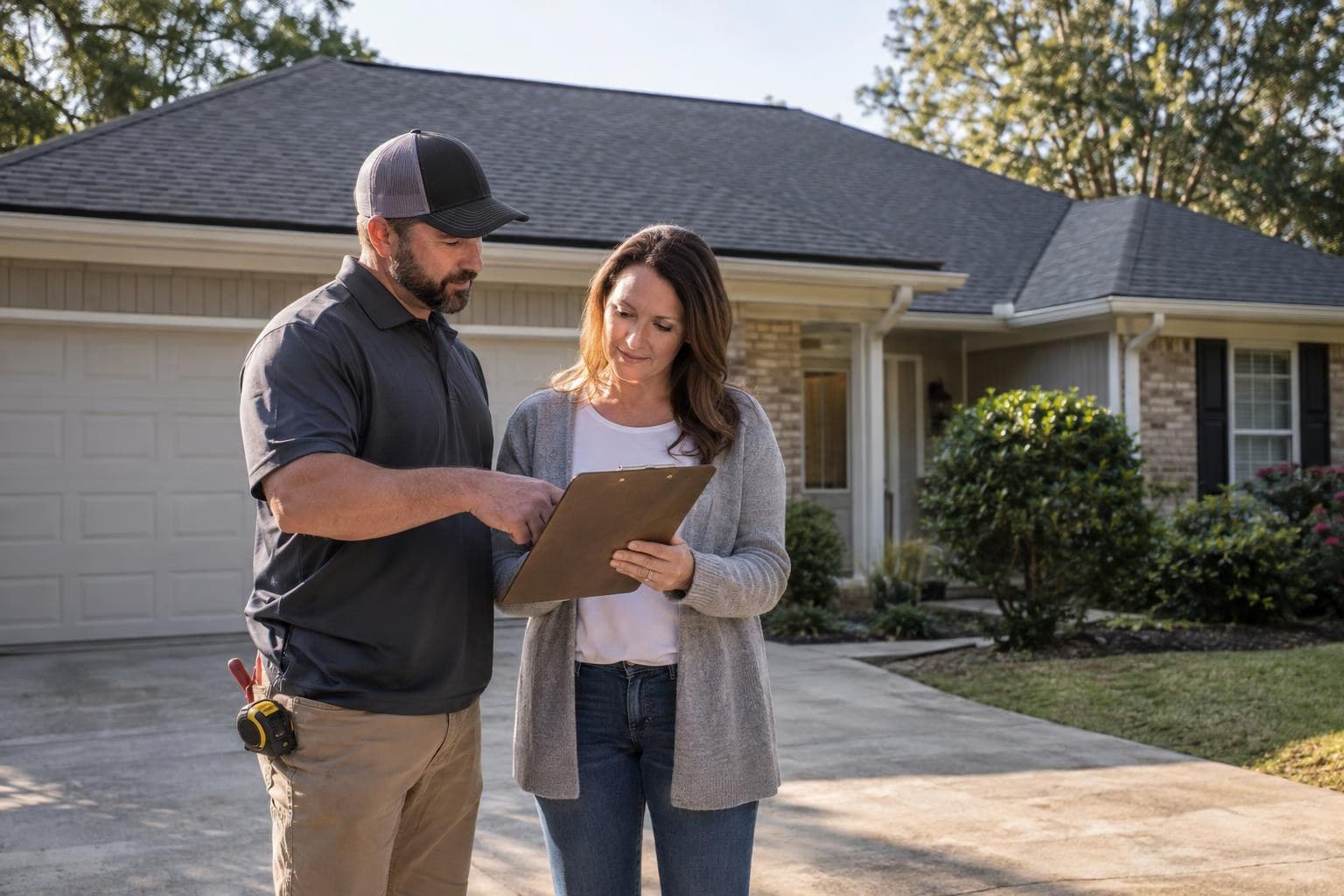
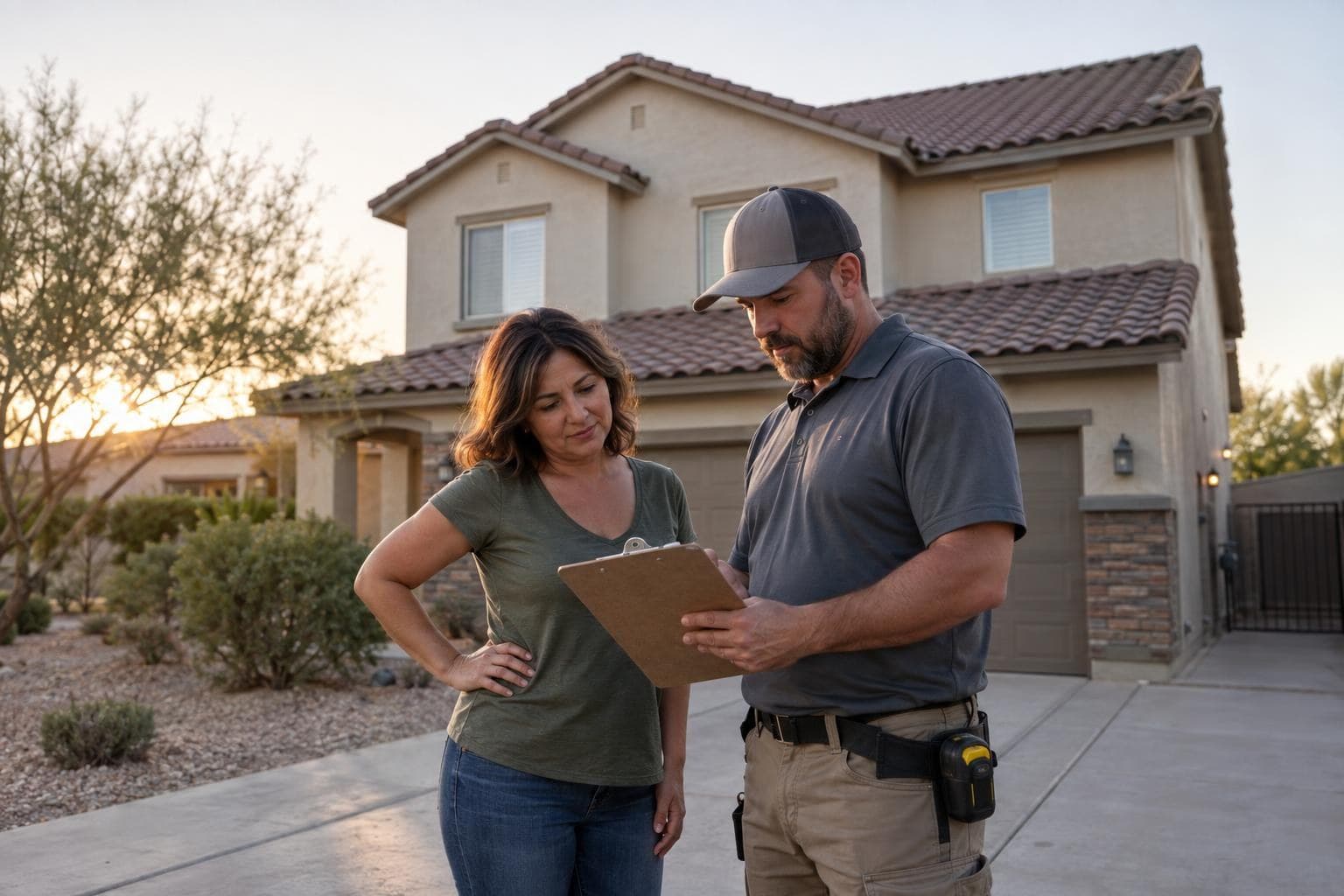
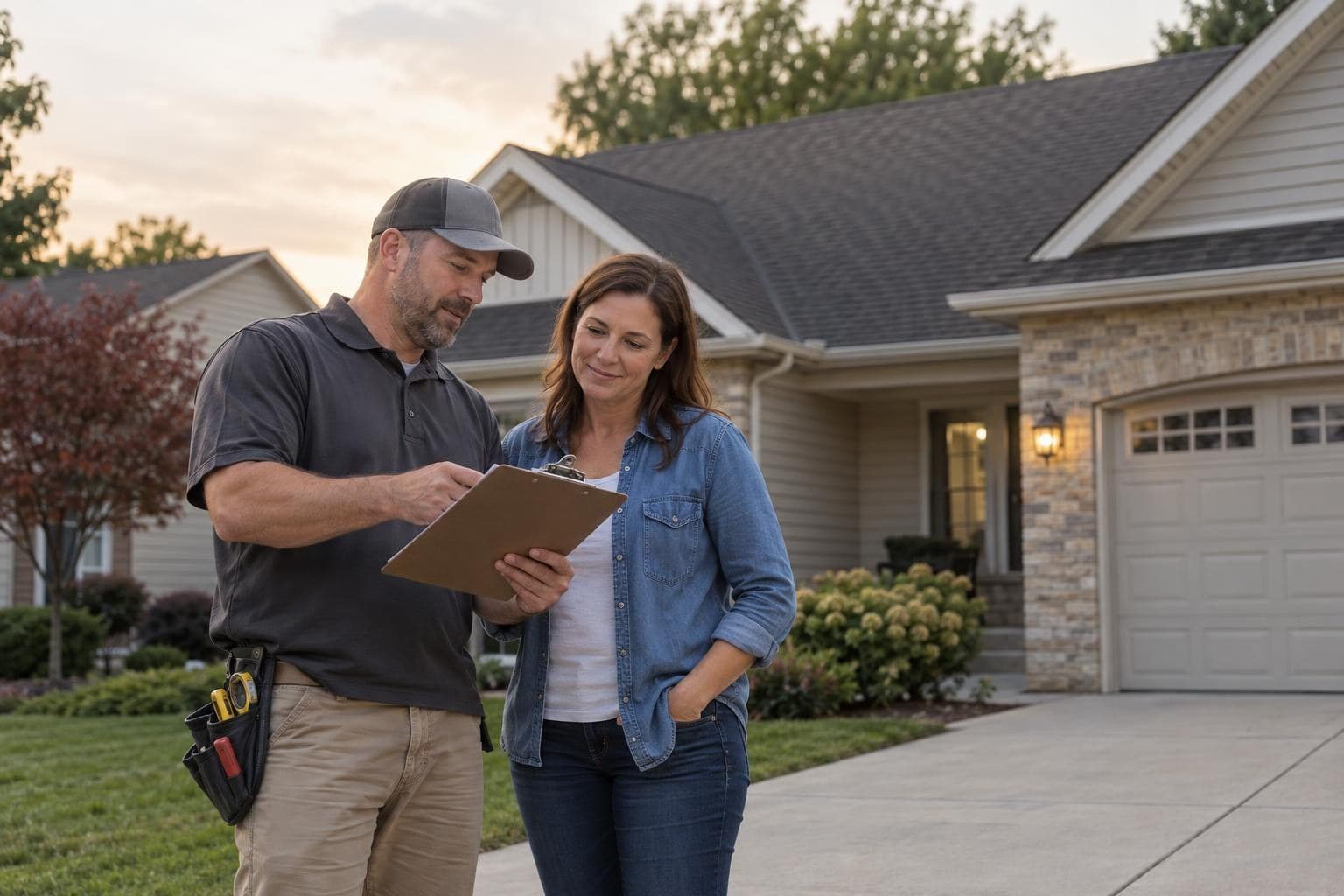
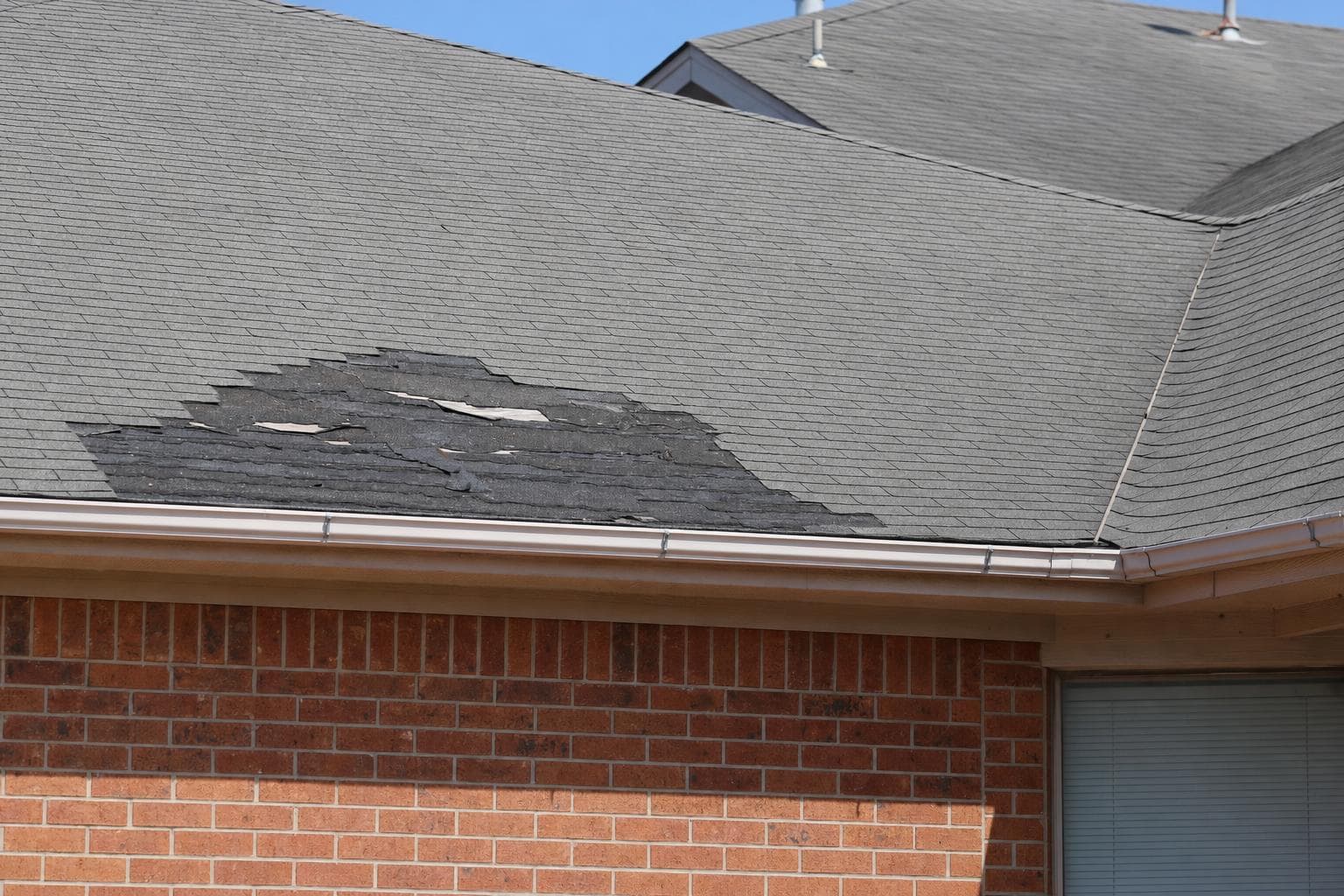
Isolated damage means the issue is limited to a small area and the rest of the roof is still doing its job. Think a few missing shingles after a wind event, flashing damage at one penetration, or one leak tied to one section. In that case, a targeted repair can make sense, especially if the roof is otherwise in solid shape and not close to replacement age. A roofing contractor you are considering should be able to tell you whether the damage is truly confined or whether the visible issue is just the part you can see from the ground.
- A few shingles are creased, missing, or lifted in one area
- One flashing detail failed around a vent, chimney, or wall
- The leak traces back to one section instead of several slopes
- The rest of the roof still has even wear and no broad granule loss
- The roof is not already showing age-related problems across large areas
When does widespread damage mean replacement makes more sense?
Replace when the damage is spread across the roof, not just concentrated in one spot. If hail bruising shows up on multiple slopes, if wind has broken the seal in many areas, or if the roof has repeated leaks, patching one section at a time can turn into paying twice. Texas weather is hard on roofing systems, so widespread damage often means the roof has lost dependable remaining life, even if a few sections still look passable. Replacement is also more practical when matching old shingles is difficult or when repairs would leave you with a patchwork roof that may keep failing in new places.
Talk to a roofer today
Planning ranges, scope details, and a direct path to request a roofing quote.
What is a fixed damage threshold for roof repair vs. replacement?
It is not a law, but it is a practical line. Once damage covers that much area, repair costs can stack up without giving you a reliable result.
How much does repair vs. replacement cost in Texas?
Repair is usually the lower upfront cost. If you are replacing, 2026 market pricing for a typical 2,000 sq ft roof is $12,255 for Class 3 at $6.25/sq ft, $14,382 for Class 4 at $7.25, and $31,601 for standing seam at $15.75. For roof repair vs replacement in Texas, treat a steep or difficult-to-access roof as a scope variable that the contractor should measure and price explicitly. For roof repair vs replacement in Texas, ask the contractor to put the expected working days and weather plan in writing; timing depends on roof size, material, access, crew scheduling, and conditions found after tear-off. If you want the fuller local picture, your best next step is to check the Texas cost page and the calculator for pricing by material and roof size.
How does roof age change the decision?
An older roof is usually a stronger candidate for replacement, even when the visible damage looks limited. That is because Texas heat and UV age shingles faster than in cooler climates. A repair can stop one leak, but it cannot reverse broad aging, brittleness, or worn-out seal strips. If your roof has already had several repairs, age should carry more weight in your decision. On the other hand, a newer roof with one clear problem area is often worth fixing rather than replacing, as long as the surrounding system is still sound.
How does Texas weather change the right choice?
The right answer depends on what your part of Texas actually gets hit with. In North and Central Texas, hail can bruise shingles across multiple slopes, making replacement more likely after a big storm. Across the state, constant sun and heat speed up aging, which means a roof that looks only partly damaged may be weaker than it appears. Along the Gulf coast, wind uplift and wind-driven rain can expose problems at edges, ridges, valleys, and flashing details. If your roof material does not fit your local weather pattern, replacement can be the better investment because it lets you switch to a system that matches your risk better.
Should you upgrade to Class 4 shingles in Texas?
If your home has meaningful hail exposure, Class 4 shingles are worth comparing. UL 2218 Class 4 is the highest classification in that impact test, but it does not make a roof damage-proof or establish how a policy treats cosmetic damage. On pricing, 2026 Texas market pricing puts Class 4 at $7.25, or $14,382 on a typical 2,000 sq ft roof, compared with Class 3 at $6.25/sq ft, or $2,127. For roof repair vs replacement in Texas, any insurance credit depends on the carrier, policy, address, and exact product; get the amount and documentation requirements from the insurer in writing. Ask your carrier in writing whether the exact product qualifies for a credit, which part of the premium is affected, and what documentation it requires.
What should you know before filing a Texas insurance claim?
Know the legal lines before you sign anything. Your roofer cannot pay your deductible, and should not offer to. In Texas it is a crime for a contractor to waive, rebate, or absorb your insurance deductible (Business and Commerce Code Sec. 27.02). Texas insurance-claim roofing contracts must state in writing that you are responsible for paying the deductible. Also, the roofer doing the work cannot also act as your claims adjuster. Texas law (Insurance Code Sec. 4102.163) bars a contractor from acting as a public adjuster, negotiating or settling your claim, on a job they are also doing. Your insurer is also on a clock. Your insurer generally has to accept or reject the claim within 15 business days of getting everything it needs to finalize the loss, with a possible extension, and a little more time after a declared catastrophe. If a weather claim ever heads to court, you have to give the insurer written notice at least 61 days first.
What is the smartest next step if you are unsure?
If the answers point toward repair, keep the scope tight and fix the actual failure point. If they point toward replacement, compare 2026 market pricing, ask about Class 4 if hail is part of your risk, and make sure the written scope spells out tear-off, decking, underlayment, flashing, ventilation, and cleanup. That gives you a cleaner decision and fewer surprises.
Sources reviewed
- Texas Department of Insurance: What to know about insurance and your roof
- Texas Department of Insurance: Roofing and Insurance: Know the Law
- Insurance Institute for Business & Home Safety: RICOWI Roof Guide
- Florida Department of Financial Services: Homeowners Insurance Overview
- Insurance Institute for Business & Home Safety: Roof 101
Cost ranges are estimates developed from standardized project scopes and reviewed pricing inputs. Government labor and regional cost data are used where applicable. See our Pricing Methodology for the exact sources, calculations, and review date. Actual prices vary by property, scope, materials or equipment, location, and provider.
Related services
Updated July 27, 2026
3D Roofs Editorial Team
Editorial Standards