Updated July 27, 2026

3D Roofs Editorial Team
Editorial Standards
A shingle roof in Arizona can last for years, but the desert usually cuts lifespan down faster than in milder places. Extreme heat and UV are the constant problem here. Roof surfaces can top 150 degrees in summer, and that constant expansion, contraction, and ultraviolet exposure break down shingles, sealants, and flashing over time. Then monsoon season adds wind-driven rain, dust, microburst winds, and in some areas hail. If you want your roof to last longer, the key is catching small failures before the next hot stretch or storm turns them into bigger leaks.
How long does a shingle roof last in Arizona?
In Arizona, a shingle roof often ages out because heat, UV, and thermal cycling wear it down before everything else does. That means the real answer is not just about the shingle itself, it is about how much direct sun your roof takes, how well it sheds water, how strong the attic ventilation is, and how much monsoon wind exposure your home gets. A roof in the low desert with full sun all day will usually have a harder life than one in a less exposed setting. The best way to think about lifespan here is condition first, calendar second.
Why do shingle roofs wear out faster in Arizona?
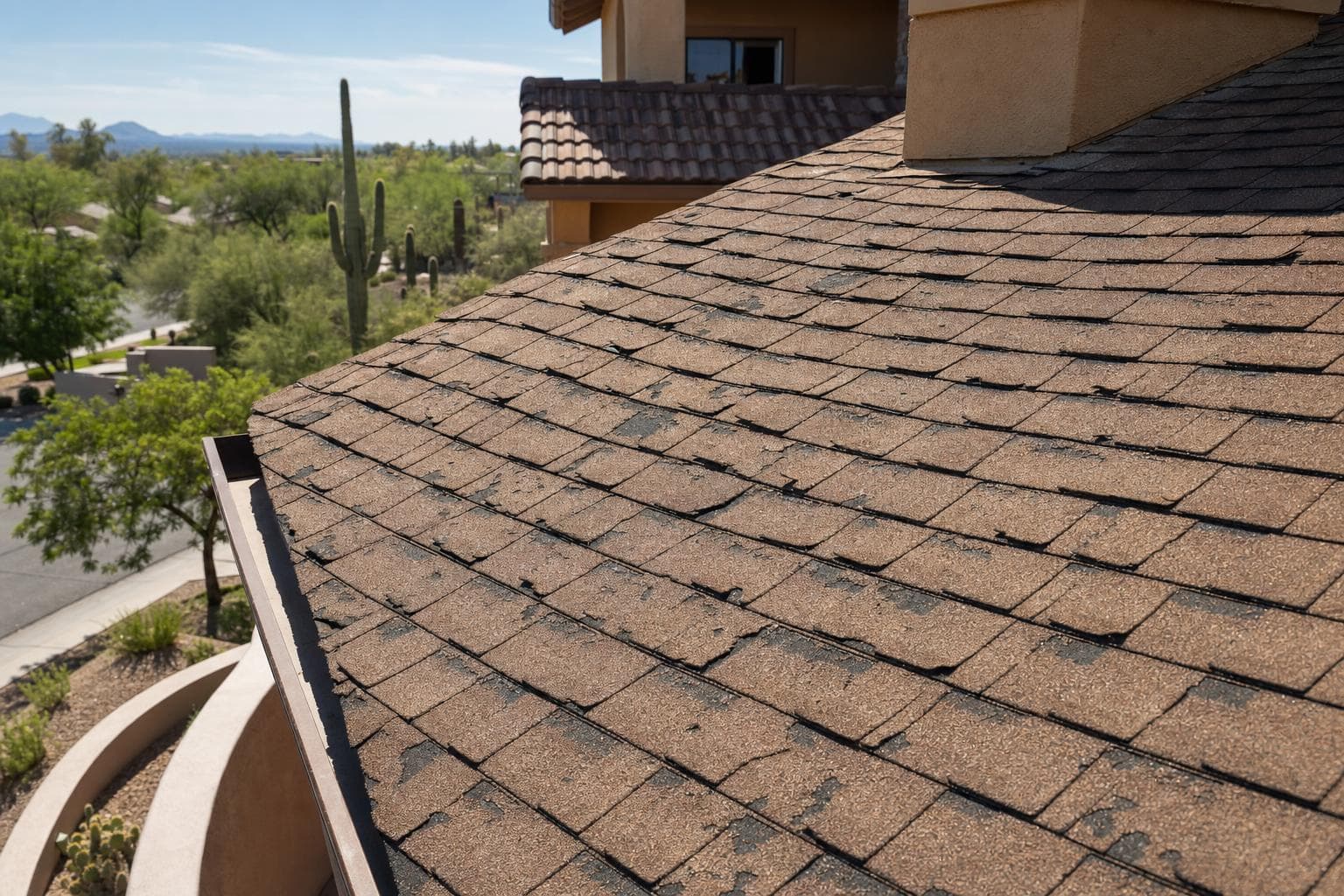
Arizona roofs fail where the desert hits hardest. Extreme heat and UV are the constant: roof surfaces can top 150 degrees in summer, and that thermal cycling and ultraviolet load break down shingles, sealants, coatings, and the elastomeric topcoat on foam roofs faster than almost anywhere else. Then the monsoon arrives, and microburst winds, wind-driven dust, and intense short downpours find any weak flashing, fastener, or seam, with some areas seeing hail too. On a shingle roof, that means granule loss, brittle shingles, loosened seal strips, exposed nail areas, and flashing points that stop staying watertight the way they should.
What shortens the life of a shingle roof in Arizona?
- Constant direct sun and high roof-surface temperatures that dry out and embrittle shingles
- Thermal cycling that makes roofing materials expand by day and contract at night
- Monsoon wind that can lift shingle edges or break the seal between tabs
- Wind-driven dust that wears surfaces and works into vulnerable details
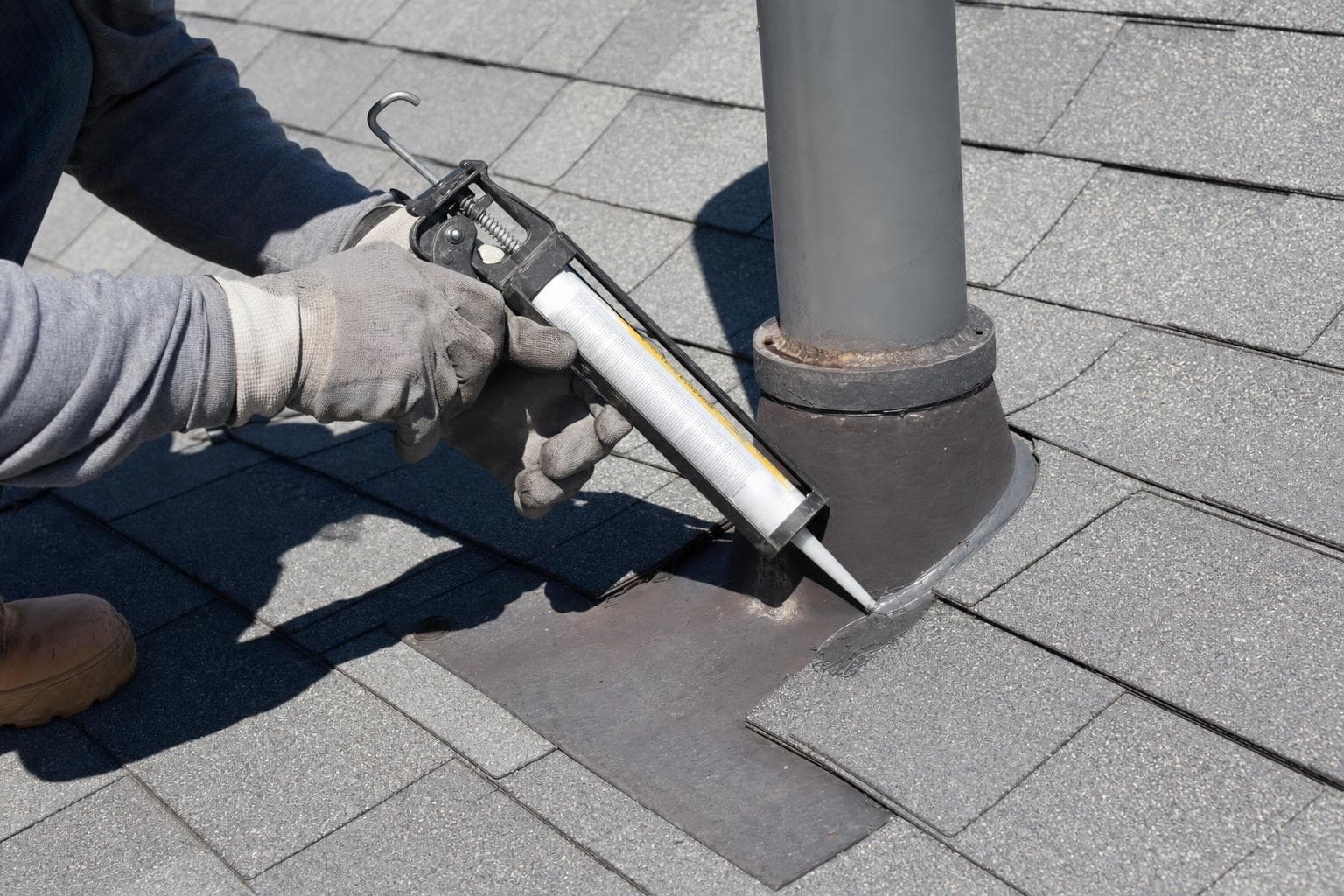
- Short, intense downpours that expose weak flashing around valleys, walls, vents, and chimneys
- Hail in some areas, which can bruise or crack shingles and loosen protective granules
- Poor attic ventilation that traps heat and increases stress from below
- Skipped maintenance, especially after summer storms
- Bad drainage or roof design details that let water sit or back up
- Low-quality repairs that patch a symptom but miss the underlying failure
Talk to a roofer today
Planning ranges, scope details, and a direct path to request a roofing quote.
What are the first signs a shingle roof is aging out?
The first signs are usually surface wear and small failures around details. Look for shingles that are curling, cracking, drying out, or losing granules. Check for bald-looking patches, dark streaks where material has worn away, lifted tabs after storms, and exposed or backed-out nails. Inside the house, water stains on ceilings or walls can point to flashing or underlayment failure before you ever see a major leak. In Arizona, these warning signs matter because strong sun and sudden storms can turn a minor weak spot into a fast-moving repair.
When should you repair a shingle roof instead of replacing it?
Repair makes sense when the roof damage is limited and the rest of the roof is still in solid condition. If a few shingles blew off in a monsoon, a flashing detail opened up, or one area is leaking, a targeted repair may buy you more time. For current Arizona planning prices related to shingle roof lifespan, use the cost guide and calculator, then compare the contractor's property-specific written scope. The problem is when repair calls keep repeating across different slopes or details. If the field shingles are brittle, the granule loss is widespread, and multiple areas are failing, repair money can start stacking up without fixing the larger issue.
When is replacement the smarter move?
Replacement is usually the smarter move when aging is widespread, leaks are repeating, or storm damage exposes how little service life is left. If your shingles are brittle across large sections, seals are failing, and flashing and penetrations keep needing work, replacement often gives you a better result than chasing one repair after another. For shingle roof lifespan in Arizona, ask the contractor to put the expected working days and weather plan in writing; timing depends on roof size, material, access, crew scheduling, and conditions found after tear-off. For shingle roof lifespan in Arizona, treat a steep or difficult-to-access roof as a scope variable that the contractor should measure and price explicitly. For homeowners comparing options, full local pricing lives on the Arizona cost page and the calculator.
What should you pay for a new shingle roof in Arizona?
In some areas where monsoon hail is a concern, a verified Class 4 shingle may be worth comparing. For shingle roof lifespan in Arizona, any insurance credit depends on the carrier, policy, address, and exact product; get the amount and documentation requirements from the insurer in writing. Any insurance credit is carrier- and policy-specific, so ask the insurer about the exact product and required documentation before using a credit in the budget. You can also review full local pricing on the Arizona cost page and use the calculator to compare roof sizes and materials.
Does insurance cover shingle roof damage from Arizona monsoons?
Usually, sudden wind and hail damage is covered, but your deductible may be larger than you expect. For shingle roof lifespan in Arizona, coverage depends on the policy language, cause of loss, exclusions, and the insurer's decision; verify those terms in your own documents. For shingle roof lifespan in Arizona, review the declarations and endorsements for any wind, hail, hurricane, or named-storm deductible. Ask the insurer to show the policy-specific calculation in writing instead of relying on a generic percentage. For shingle roof lifespan in Arizona, ask the insurer and state insurance regulator for the current notice, proof-of-loss, inspection, acknowledgment, and decision deadlines that apply to the claim.
How do you choose the right roofer for an Arizona roof inspection or replacement?
In Arizona, you should verify the contractor before you sign. Arizona requires a contractor license from the Registrar of Contractors for any roofing job of an amount that must be confirmed for the written scope or more, or any job that needs a building permit, no matter the price. Roofing is its own classification: R-42 for residential work, C-42 for commercial, and CR-42 for both. Look the contractor up on the ROC's free contractor search and confirm three things before you sign: the license is active, the classification covers roofing, and the bond is current. The same search shows the qualifying party and any complaint history. Then confirm general-liability insurance, real local references, and a written scope that spells out tear-off, decking, underlayment, flashing, ventilation, and cleanup.
What is the bottom line for Arizona homeowners?
A shingle roof in Arizona can last, but desert heat and monsoon stress make condition matter more than age alone. If your roof is showing curling shingles, granule loss, recurring leaks, or storm-related lifting, do not wait for the next season to test it. A roofing contractor you are considering can tell you whether a focused repair still makes sense or whether replacement is the better financial move. If you are budgeting now, compare 2026 market pricing on the Arizona cost page and use the calculator to size up your options before the damage gets worse.
Sources reviewed
- Arizona DIFI (homeowners insurance, storms & claims)
- Arizona Registrar of Contractors (license classifications & requirement)
- UL Solutions: UL Solutions and IBHS Drive Trust in Residential Roofing Shingles
- Asphalt Roofing Manufacturers Association: Residential Asphalt Roofing Manual: Ventilation Best Practices
- Insurance Institute for Business & Home Safety: Natural Weathering and Hazard Exposure
Plan with current pricing
Related services
Updated July 27, 2026
3D Roofs Editorial Team
Editorial Standards