Updated July 27, 2026

3D Roofs Editorial Team
Editorial Standards
A shingle roof in Georgia can wear out faster than the same roof in a cooler, milder state. The main reason is simple: Georgia roofs deal with long, hot, humid summers, along with severe thunderstorms that bring hail and damaging straight-line winds. In some parts of the state, you may also see winter ice, tropical system winds, and wind-driven rain. If you want your roof to last, you need to understand how your local weather affects it and what signs tell you the roof is nearing the end.
How long does a shingle roof last in Georgia?
In Georgia, a shingle roof often lasts less than homeowners hope because heat, humidity, hail, and wind all work against it. Long, hot summers age shingles faster than in cooler climates. Severe thunderstorms can bruise or loosen shingles even when the damage is not obvious from the ground. That means your roof lifespan depends less on a single number and more on how much weather stress your home sees, how well the roof was installed, and how quickly small problems are repaired.
Why do shingles wear out faster in Georgia?
The short answer is that Georgia gives shingles two kinds of wear at once: daily aging from heat and moisture, and storm damage from wind and hail. Heat dries and stresses roofing materials over time. Humidity feeds the dark algae streaking you see on many southern roofs, and trapped moisture can make roof systems age poorly if ventilation or flashing is off. On top of that, the Atlanta metro and north Georgia see repeated hail seasons, the whole state has tornado risk, north Georgia can get occasional winter ice, and the Savannah coast can take wind and wind-driven rain from tropical systems. Even when storms do not cause a full replacement, they can shorten the roof's remaining life.
What parts of Georgia are hardest on a shingle roof?
Different parts of Georgia stress roofs in different ways. In the Atlanta metro and north Georgia, repeated hail seasons and damaging straight-line winds are a major concern. In north Georgia, occasional winter ice can stress flashing and gutters. Along the Savannah coast, tropical systems can bring wind and wind-driven rain. Across the whole state, long hot summers and humidity add steady wear. That means the right inspection schedule and even the right shingle choice for your home depend on what your area actually sees year after year.
Talk to a roofer today
Planning ranges, scope details, and a direct path to request a roofing quote.
What shortens the life of a shingle roof the most?
- Hail impact that bruises shingles or knocks granules loose
- Damaging straight-line winds that lift, crease, or tear shingles
- Years of high heat that age shingles faster than in cooler climates
- Humidity and moisture that contribute to algae streaking and can expose weak spots in the roof system
- Wind-driven rain around roof edges, flashing, chimneys, and penetrations
- Occasional winter ice in north Georgia that stresses flashing and gutters
- Delayed repairs after storm damage, because small failures spread
- Poor installation details, especially around valleys, vents, and flashing
What are the signs a shingle roof is aging out?
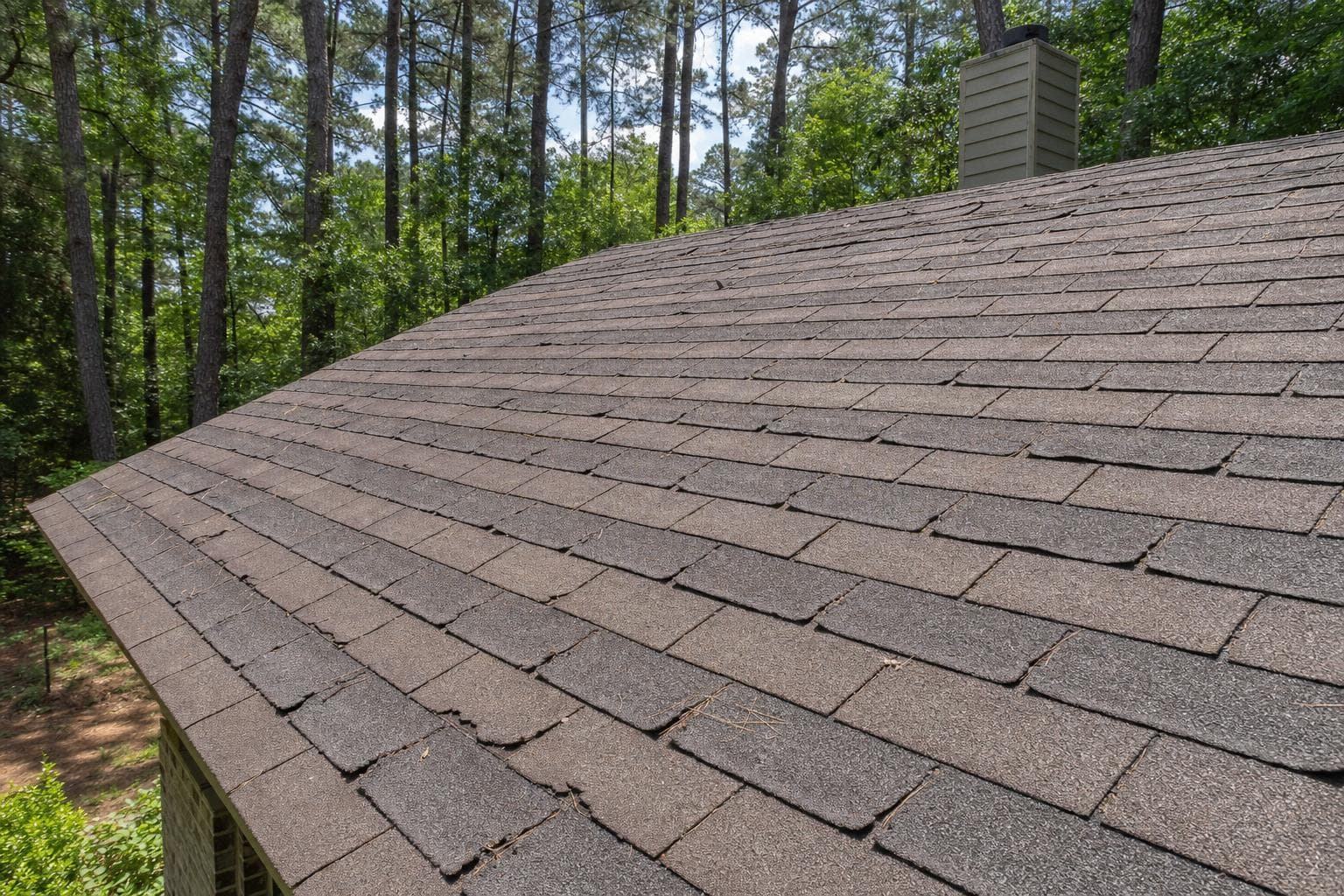
The clearest sign is that the roof is no longer shedding water and weather the way it should. You may notice missing shingles, lifted tabs, cracked or torn shingles, heavy granule loss, exposed asphalt, soft spots, repeated leaks, or visible wear around flashing and penetrations. Dark algae streaks are common in Georgia and do not always mean the roof has failed, but they can make it harder to spot other aging issues. If your roof keeps needing repairs after storms, or if problems are showing up in multiple areas at once, that often means the roof is aging out rather than dealing with one isolated issue.
Can a storm take years off your roof even if it does not leak right away?
Yes. A roof can take storm damage without showing an immediate interior leak. Hail can weaken shingles and knock off protective granules. Wind can loosen or crease tabs so they fail later. Once the protective surface is compromised, Georgia heat and humidity can speed up the aging process. That is why a roof that looked fine before storm season can seem to age quickly afterward. If your area has had hail or damaging winds, an inspection can help you find problems before they turn into bigger repairs.
Should you repair or replace an aging shingle roof?
If the problem is limited, a repair may make sense. For current Georgia planning prices related to shingle roof lifespan, use the cost guide and calculator, then compare the contractor's property-specific written scope. But if wear is widespread, leaks keep returning, or storm damage has hit multiple slopes, replacement can be the better value. For shingle roof lifespan in Georgia, ask the contractor to put the expected working days and weather plan in writing; timing depends on roof size, material, access, crew scheduling, and conditions found after tear-off. If you are comparing options, full local pricing lives on the Georgia cost page and the calculator, and those numbers are based on 2026 market pricing.
Are impact-resistant shingles worth considering in Georgia?
For many Georgia homeowners, yes. For shingle roof lifespan in Georgia, any insurance credit depends on the carrier, policy, address, and exact product; get the amount and documentation requirements from the insurer in writing. That said, each carrier sets its own credit, so you should ask your insurer what they actually discount before you count on savings. For shingle roof lifespan in Georgia, treat Class 4 as a laboratory impact classification for the exact product, not a promise that the installed roof will resist every hail event or avoid damage.
What should you do if you think storm damage shortened your roof's life?
Start by documenting the damage early and getting the roof inspected. If you file a claim, Georgia regulates how fast carriers handle first-party property claims. After you submit a completed proof of loss, your insurer generally has to confirm or deny the claim within 15 days, and within 30 days of the claim being reported if no proof of loss is required. Many Georgia policies follow the state's standard fire-policy language and ask for that proof of loss within 60 days of the loss, so photos and notes matter. Also, your roofer cannot pay, waive, rebate, or absorb your insurance deductible to get you to file a claim or buy their services. If someone offers a free roof by eating your deductible, that is not a deal you want.
How do you choose the right roofer for an aging roof in Georgia?
The best approach is to verify what you can actually check. Georgia does not issue a standalone roofing license, so there is no state roofing credential to lean on by itself. Roofing falls under the general contractor system, and a contractor only needs a residential or general contractor license once a job tops an amount that must be confirmed for the written scope in combined labor and materials. For a replacement, confirm the company holds the right residential or general contractor license. Then ask for proof of current general-liability and workers'-compensation insurance, and look for a real local track record, including references, recent addresses you can drive past, and manufacturer certifications. Be cautious after storms if an out-of-town roofer pushes you to sign fast or promises to handle everything for you.
If your shingle roof is showing wear, the main question is not just how old it is. The real question is how much Georgia weather it has already absorbed, and whether the damage is isolated or spread across the system. A roofing contractor you are considering can help you figure out whether your roof still has useful life left or whether replacement is the smarter move now. If you are budgeting for next steps, check the Georgia cost page and the calculator for full local pricing based on 2026 market pricing.
Sources reviewed
- Georgia Attorney General's Consumer Protection Division (storms and fraud / storm chasers)
- Georgia Office of Commissioner of Insurance and Safety Fire (file a consumer complaint)
- UL Solutions: UL Solutions and IBHS Drive Trust in Residential Roofing Shingles
- Asphalt Roofing Manufacturers Association: Residential Asphalt Roofing Manual: Ventilation Best Practices
- Insurance Institute for Business & Home Safety: Natural Weathering and Hazard Exposure
Plan with current pricing
Related services
Updated July 27, 2026
3D Roofs Editorial Team
Editorial Standards