Updated July 27, 2026

3D Roofs Editorial Team
Editorial Standards
A shingle roof in Ohio can last a long time, but the real answer depends on storm damage, winter stress, attic ventilation, and installation quality. Ohio roofs take hits from warm-season hail and high winds, then heavy snow, ice dams, and freeze-thaw cycling in winter. Humid summers add heat, moisture, and algae growth. If you want your roof to reach the far end of its useful life, the roof system has to handle all of that, not just one season.
How long does a shingle roof last in Ohio?
It lasts as long as the shingles and the roof system can keep resisting Ohio's year-round wear. In practical terms, a roof here may age out sooner when storms bruise shingles, strip granules, or loosen edges, even if it does not leak right away. A roof can also lose years from repeated ice damming, poor ventilation, flashing movement, and small repairs that get delayed. That is why age alone does not tell the whole story. In Ohio, condition matters just as much.
What shortens the life of a shingle roof in Ohio?
- Hail that bruises shingles and knocks off protective granules
- Straight-line winds and derechos that lift shingles and tear edges
- Tornado and hail outbreaks, including the multiple outbreaks seen across the state in 2024
- Heavy snow load that adds stress to the roof surface and structure
- Ice dams along the eaves that trap water where it should drain
- Repeated freeze-thaw cycling that works loose fasteners, flashing, and seams
- Humid summer heat and moisture that speed shingle aging and support algae growth
- Poor attic ventilation that holds heat and moisture under the roof
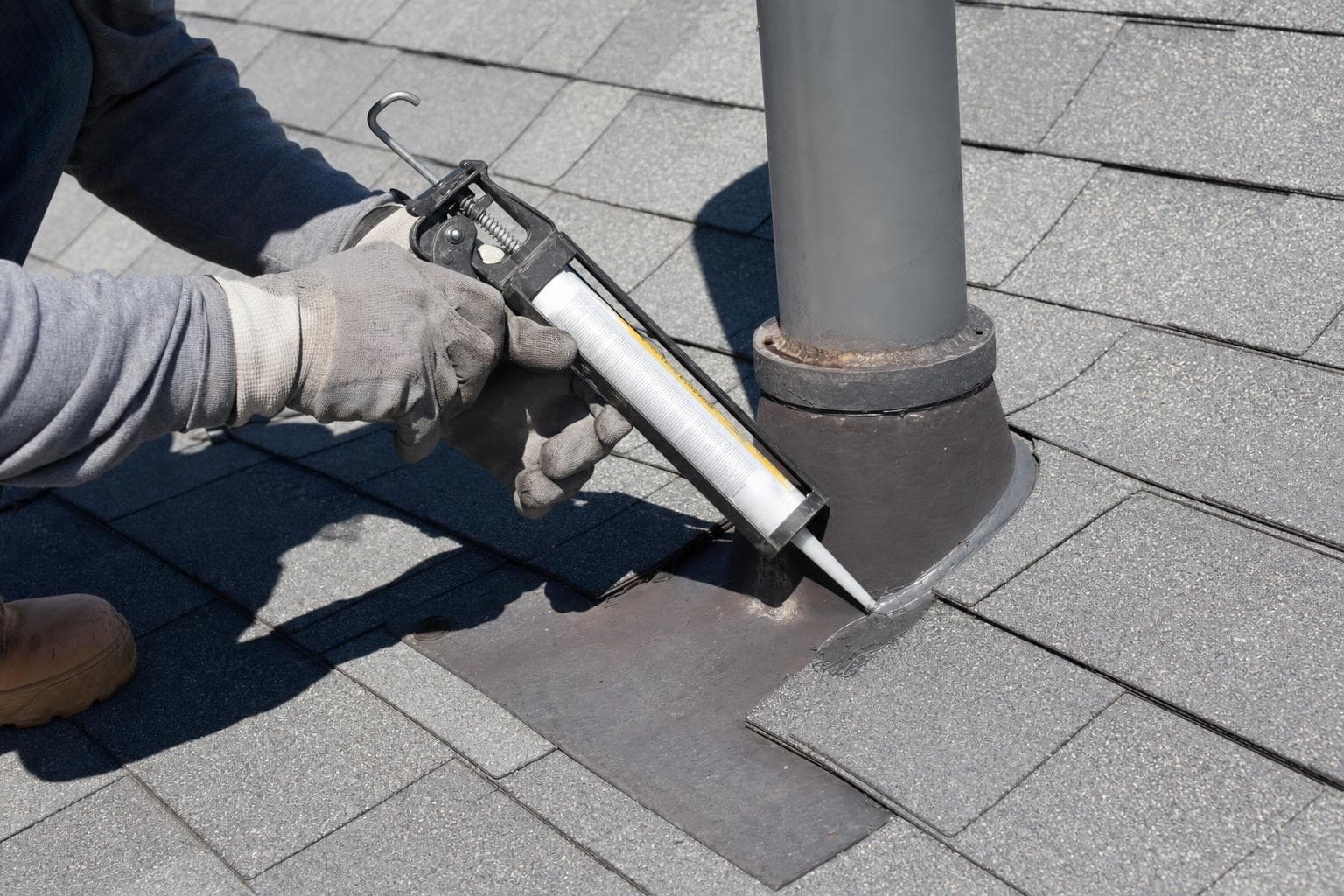
- Flashing problems around chimneys, walls, skylights, and valleys
- Delaying small repairs until they spread into larger roof-system issues
Does Ohio weather really wear out shingles faster?
Yes, Ohio weather can wear out shingles faster because it attacks the roof in different ways throughout the year. Warm-season thunderstorms can cause impact damage and wind lift. Winter can hold water at the eaves, then freeze and expand around vulnerable spots. Summer humidity adds moisture stress and biological growth. That mix matters because shingles do not fail only from one big event. They often age out from a series of smaller hits that add up over time.
Talk to a roofer today
Planning ranges, scope details, and a direct path to request a roofing quote.
What are the signs a shingle roof is aging out?
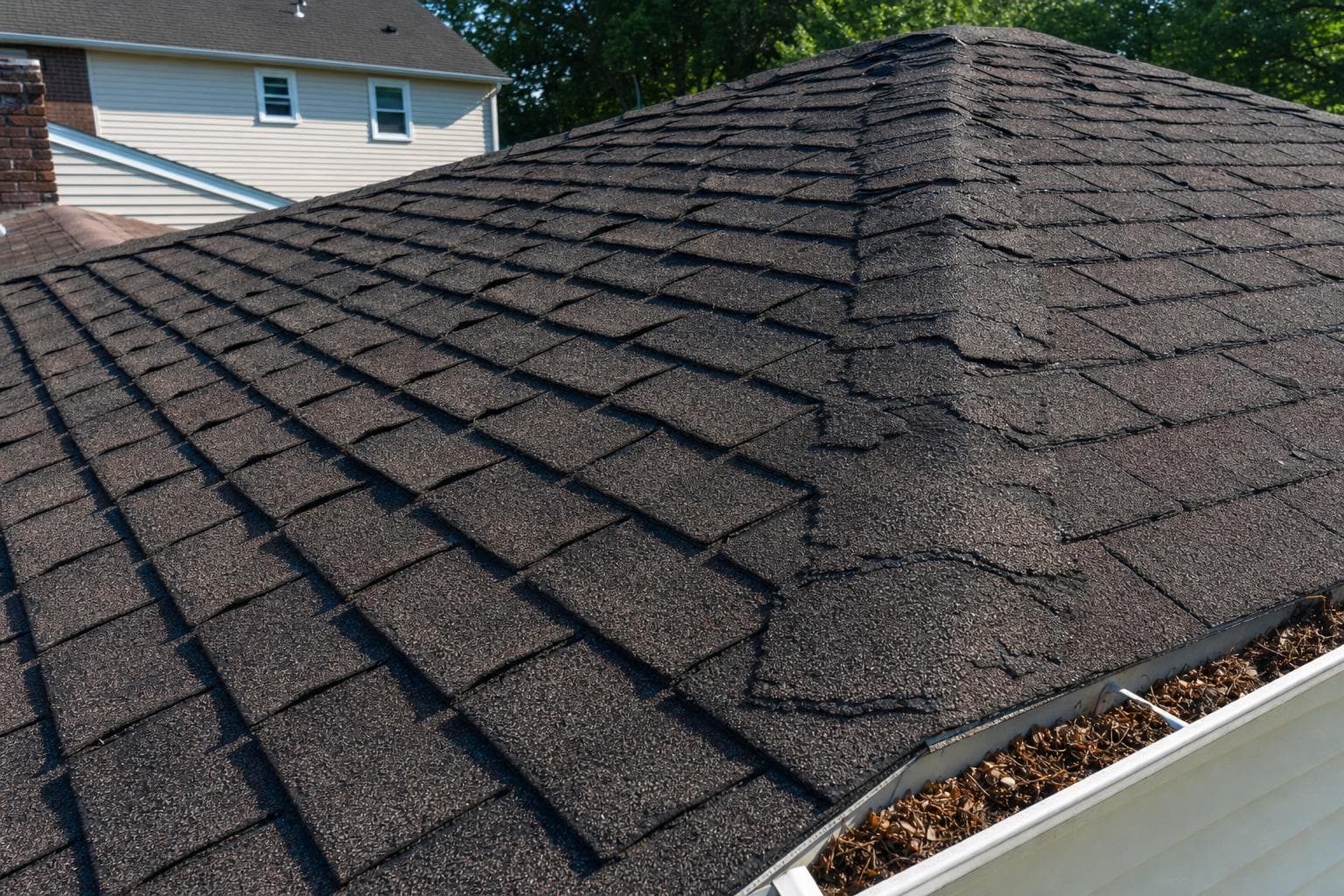
- Shingles that are cracking, curling, cupping, or losing their flat profile
- Bald spots where granules have worn away or collected heavily in gutters
- Tabs that look lifted, creased, torn, or missing after wind
- Dark streaks, algae growth, or widespread staining tied to moisture retention
- Repeated leaks or water stains that keep returning after spot repairs
- Soft or spongy areas that suggest trapped moisture or deck problems
- Damaged or loose flashing around roof penetrations and wall transitions
- Ice dam trouble at the eaves during winter
- Repairs starting to stack up instead of solving the problem once
- A roof that looks uneven or visibly tired across large sections, not just one spot
Can a roof look fine from the ground and still be worn out?
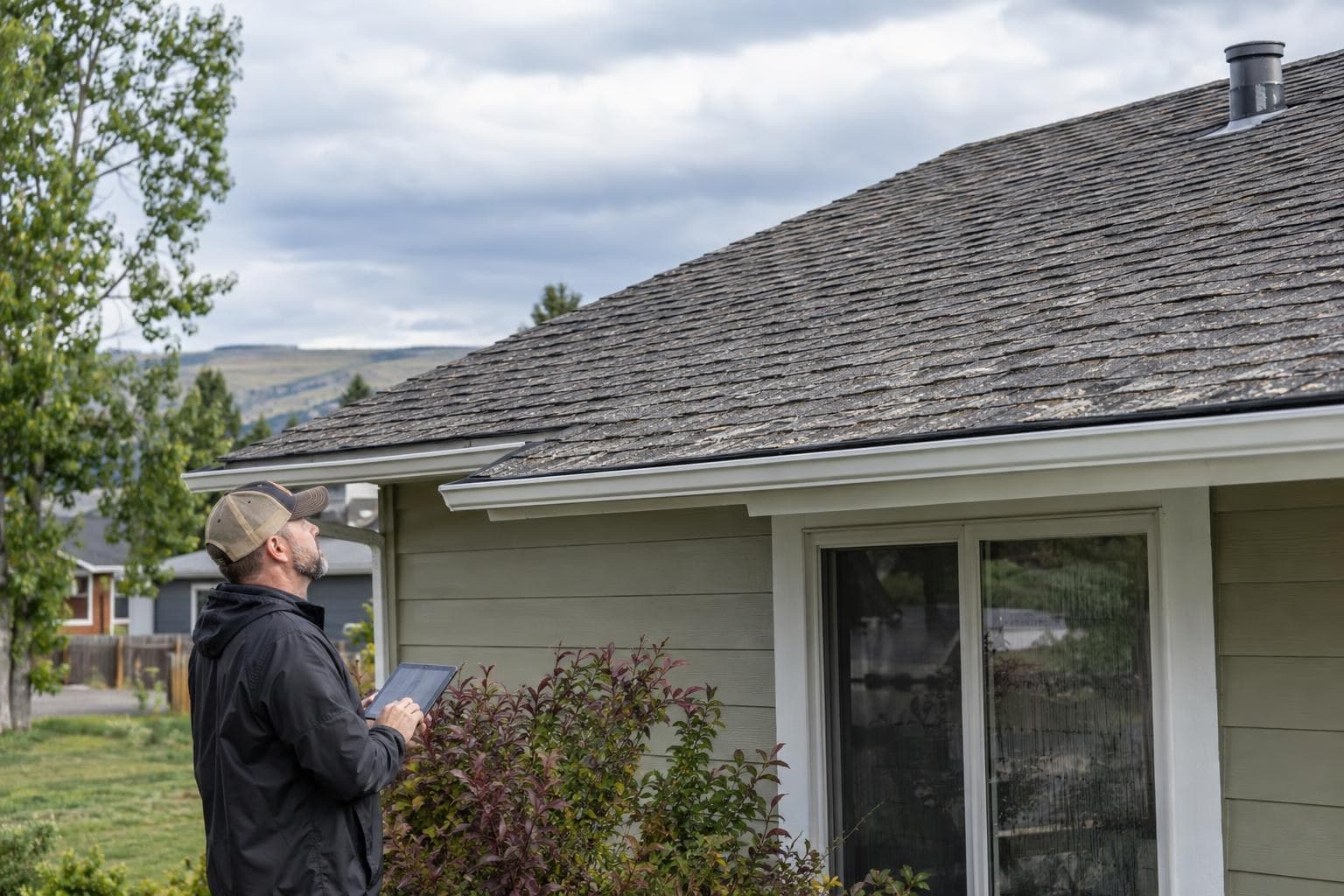
Yes, it can. Many aging problems start where you cannot easily see them, such as granule loss, hail bruising, loosened seal strips, failing flashing, or soft decking around leak paths. From the yard, the roof may look mostly normal. Up close, the damage can tell a different story. That is why a roof inspection matters after hail, high wind, winter ice damming, or any leak, even if the roof still looks decent from the street.
Should you repair the roof or replace it?
You should repair it when the problem is isolated and the rest of the roof is still in solid condition. You should replace it when damage is widespread, leaks keep coming back, or the roof is aging out across multiple areas. For current Ohio planning prices related to shingle roof lifespan, use the cost guide and calculator, then compare the contractor's property-specific written scope. But when storm damage, granule loss, and brittle shingles are spread across the roof, replacement is often the more durable move. For shingle roof lifespan in Ohio, ask the contractor to put the expected working days and weather plan in writing; timing depends on roof size, material, access, crew scheduling, and conditions found after tear-off.
Is it worth upgrading to a stronger shingle in Ohio?
For many Ohio homes, yes, a stronger shingle is worth considering because hail and wind are a recurring threat. For shingle roof lifespan in Ohio, any insurance credit depends on the carrier, policy, address, and exact product; get the amount and documentation requirements from the insurer in writing. The credit is not automatic, though: each insurer sets its own discount, so ask your carrier in writing whether they offer one, then submit the manufacturer's certificate after the install to actually claim it. For shingle roof lifespan in Ohio, treat Class 4 as a laboratory impact classification for the exact product, not a promise that the installed roof will resist every hail event or avoid damage.
If you want a closer number for your home, full local pricing lives on the Ohio cost page and the calculator.
What should you check before hiring a roofer in Ohio?
You should confirm the roofer is registered and permitted where you live, because Ohio has no statewide roofing license. Ohio does not license or register roofing contractors at the state level. Instead, licensing, registration, and permits are handled locally, and the requirements vary by city. Columbus, Cincinnati, and Cleveland each require contractors to register and carry insurance before doing residential work, for example, while smaller towns may require only a permit. Because there is no state credential to lean on, confirm a roofer is registered and permitted in your specific city or county before you sign.
You should also watch for storm-pressure sales tactics. For shingle roof lifespan in Ohio, do not assume a contractor can remove or hide the deductible required by the policy. Verify current state law and the written proposal with the insurer or state insurance regulator before signing. A roofer pitching a "free roof" by eating your deductible is breaking the law, so treat it as a red flag, not a deal. Ohio Attorney General Dave Yost has repeatedly sued out-of-state "storm chasers" who took deposits and disappeared.
If someone comes to your door after a storm, do not feel forced to sign on the spot. Under Ohio's Home Solicitation Sales Act (Ohio Revised Code 1345.21 to 1345.23), if a salesperson comes to your home and you sign a contract of an amount that must be confirmed for the written scope or more there, you can cancel until midnight of the third business day after signing. The contract must state that right in writing, and to cancel you give the seller written notice, by certified mail or in person, within that window. This matters most when a door-knocker shows up after a hailstorm and pressures you to sign on the spot.
When should you schedule a roof inspection in Ohio?
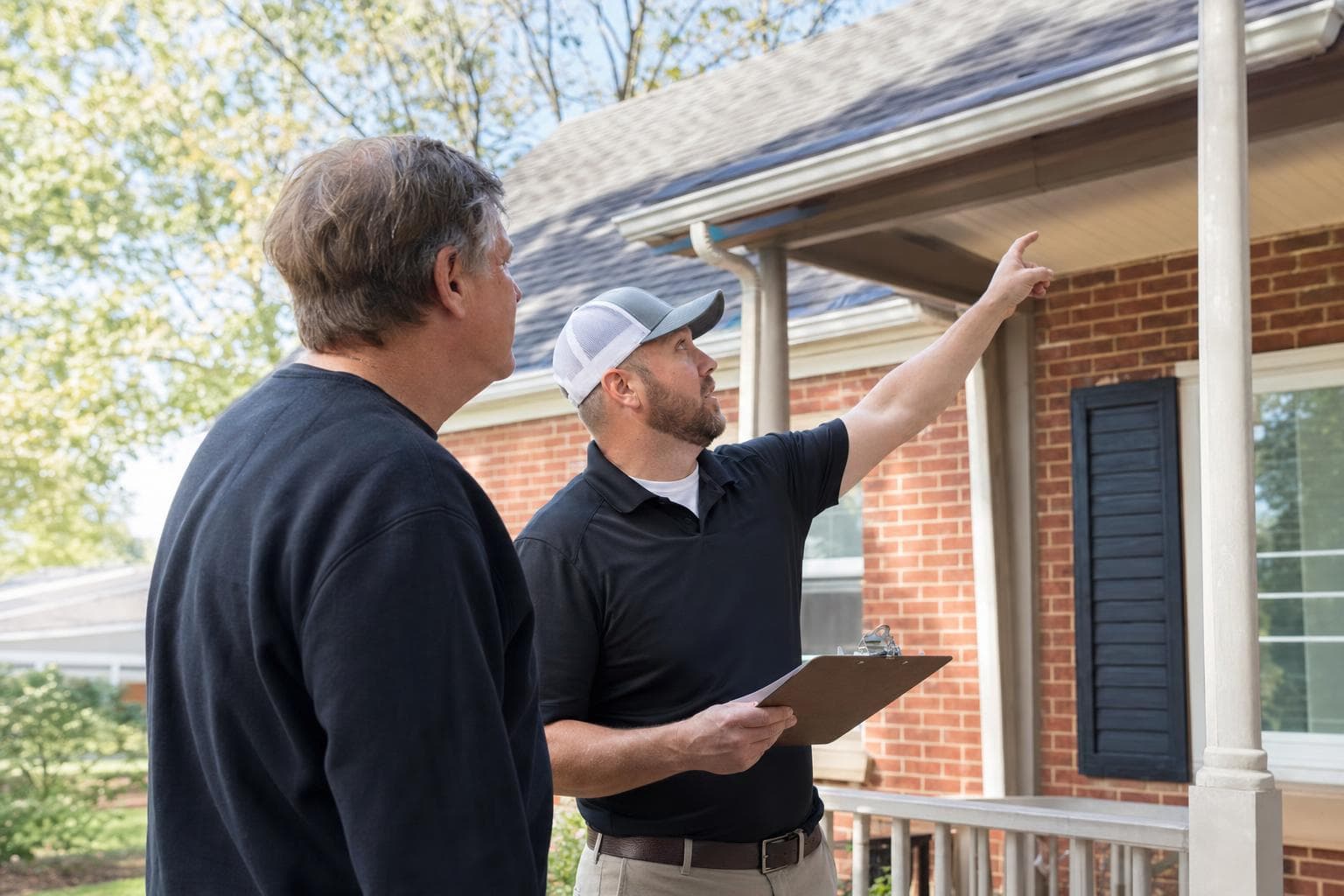
You should schedule one after hail, high winds, visible shingle damage, recurring leaks, winter ice dam problems, or whenever the roof looks uneven or worn. In Ohio, waiting can turn a repairable issue into a larger replacement. If your roof has been through recent storms or is showing multiple signs of wear, now is the right time to have a roofing contractor you are considering take a look and tell you whether you still have good life left or the roof is aging out.
Sources reviewed
- Ohio Attorney General (door-to-door sales & 3-day right to cancel)
- Ohio Attorney General (storm-chaser home-improvement fraud)
- UL Solutions: UL Solutions and IBHS Drive Trust in Residential Roofing Shingles
- Asphalt Roofing Manufacturers Association: Residential Asphalt Roofing Manual: Ventilation Best Practices
- Insurance Institute for Business & Home Safety: Natural Weathering and Hazard Exposure
Plan with current pricing
Related services
Updated July 27, 2026
3D Roofs Editorial Team
Editorial Standards