Updated July 27, 2026

3D Roofs Editorial Team
Editorial Standards
A shingle roof in Texas usually lasts as long as your local weather allows, not as long as a product brochure suggests. The biggest reason is simple: Texas roofs fail where the weather hits hardest, and that varies across the state. North and Central Texas sit in hail country, where spring storms drive granule loss and bruising. The whole state carries a heavy UV and heat load that ages shingles faster than in cooler climates. Along the Gulf coast, hurricanes and tropical systems add wind uplift and wind-driven rain on top of the hail risk. If you want a realistic lifespan for your roof, you have to judge it by what your part of Texas actually throws at it.
How long does a shingle roof last in Texas?
In Texas, a shingle roof lasts until heat, UV, hail, wind, and moisture wear it past the point where repairs still make sense. That means two roofs installed on the same day can age very differently. A home in a hail-prone part of North Texas may see faster damage from repeated storm impacts. A home near the Gulf may age out sooner from wind uplift and wind-driven rain. Even in calmer areas, the statewide heat and sun load can dry shingles out, loosen granules, and speed up aging compared with cooler climates. The practical takeaway is that Texas homeowners should think in terms of condition, not just age.
What makes a shingle roof wear out faster in Texas?
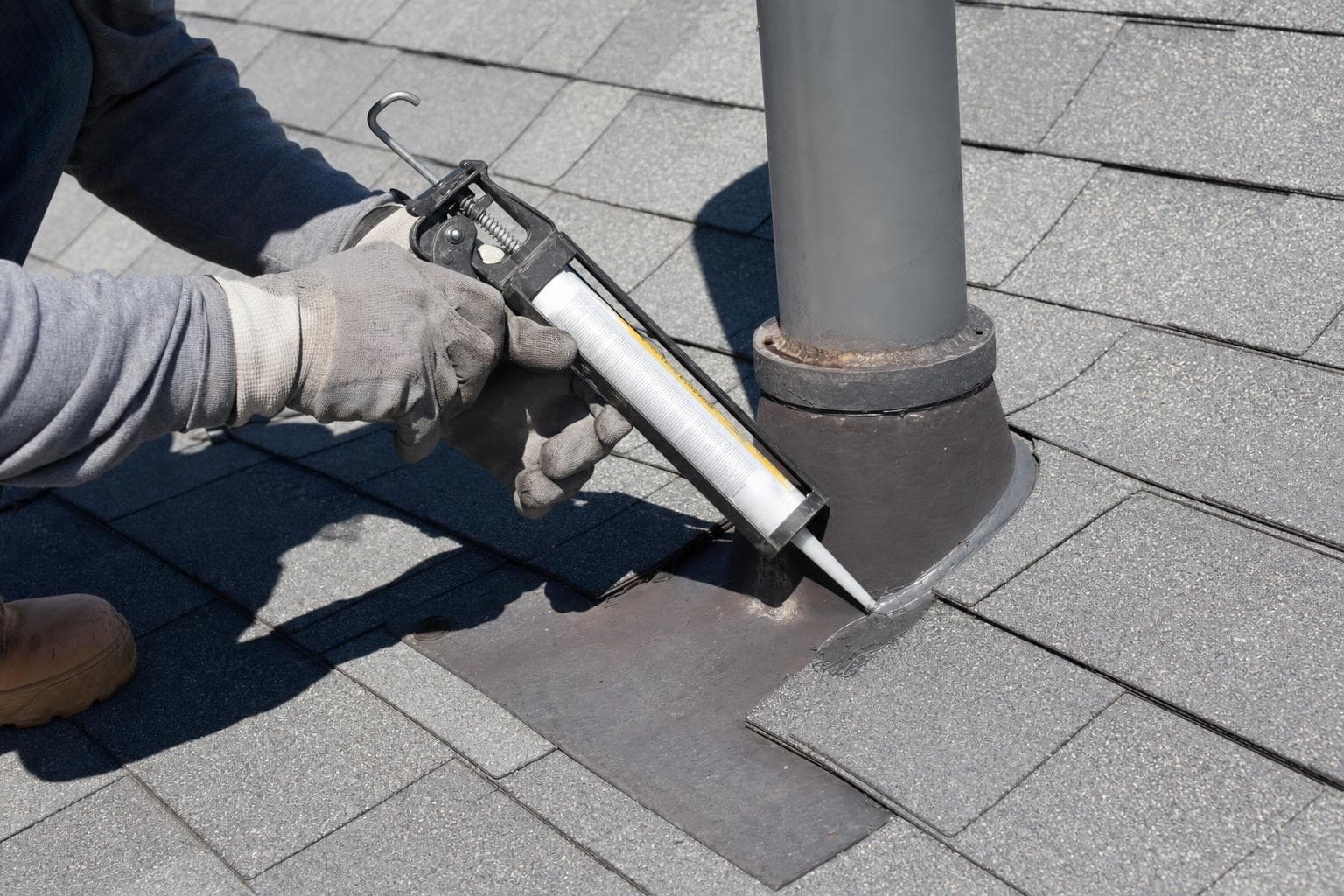
The short answer is hail, sun, heat, wind, and installation details. Hail can bruise shingles, knock off granules, and weaken the asphalt mat so the roof keeps aging faster after the storm is gone. Strong sun and long hot seasons can dry shingles out, making them less flexible and more likely to crack or curl. On the Gulf coast, tropical weather adds repeated wind pressure that can lift shingle tabs and push rain where it does not belong. Poor ventilation can make that worse by trapping heat in the attic and baking the roof system from below. Small installation problems also matter more in Texas, especially around flashing, valleys, pipe boots, and ridge areas where water and wind stress tend to concentrate.
- Hail impacts that bruise shingles or strip off granules
- Heavy UV exposure and long periods of high heat
- Wind uplift that loosens tabs or damages edges
- Wind-driven rain around flashing, walls, chimneys, and penetrations
- Poor attic ventilation that adds heat stress
- Past repairs that do not match or do not seal well
- Decking or flashing issues that let moisture spread underneath
How do hail and heat change the lifespan of a Texas roof?
They shorten it in different ways. Hail causes sudden damage, while heat and UV create steady wear year after year. In North and Central Texas, spring storms can leave a roof looking mostly intact from the ground while still causing bruising and granule loss that reduces its remaining life. Across the state, constant sun exposure slowly hardens shingles and makes them more brittle. Once that happens, normal thermal movement and future storms can do more damage than they would on a newer, more flexible roof. That is why a roof may seem fine until one storm or one hot season reveals how close it already was to aging out.
Talk to a roofer today
Planning ranges, scope details, and a direct path to request a roofing quote.
What signs show a shingle roof is aging out?
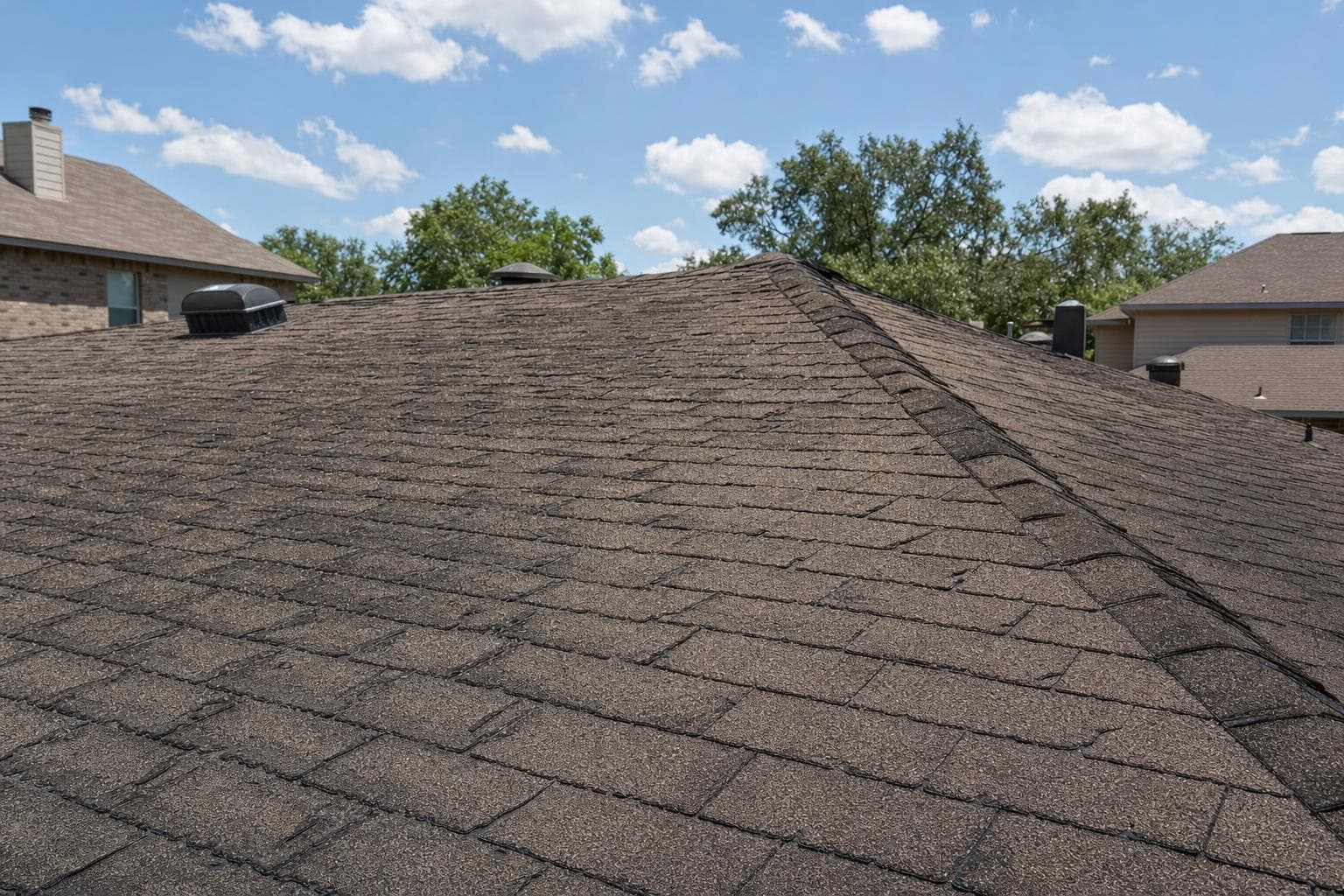
The clearest signs are visible shingle wear, repeated leaks, and storm damage that keeps coming back in the same weak spots. If shingles are curling, cracking, losing a lot of granules, or looking patchy across large sections, the roof may be nearing the end of its useful life. If you see dark areas, exposed mat, torn tabs, lifted edges, or dented soft metal around the roof after a storm, that also points to aging or impact damage. Inside the house, ceiling stains, damp attic insulation, or daylight showing through the attic are warning signs that the roof system is no longer holding up the way it should.
- Curling, cracking, or brittle shingles
- Noticeable granule loss in gutters or at downspouts
- Bare or thin-looking spots on shingles
- Lifted, torn, or missing tabs after wind events
- Recurring leaks, especially around flashing or roof penetrations
- Sagging areas or signs of moisture in the attic
- Patchwork repairs across multiple slopes
- Storm hits followed by new interior water stains
Should you repair the roof or replace it?
If the damage is limited and the rest of the roof is still in solid shape, repair usually makes sense. For current Texas planning prices related to shingle roof lifespan, use the cost guide and calculator, then compare the contractor's property-specific written scope. But when problems show up across many slopes, or when hail, heat, and age have all stacked up together, replacement can be the smarter spend. Replacing a failing roof can stop the cycle of recurring leak calls and repeated patch jobs that only buy a little time. For shingle roof lifespan in Texas, ask the contractor to put the expected working days and weather plan in writing; timing depends on roof size, material, access, crew scheduling, and conditions found after tear-off. If you are comparing materials, full local pricing lives on the Texas cost page and the calculator.
Are Class 4 shingles worth it in Texas?
If your home has meaningful hail exposure, they are worth comparing. Class 4 shingles are worth comparing on Texas homes with meaningful hail exposure. UL 2218 Class 4 is the highest classification in that impact test, but it does not make a roof damage-proof or establish how a policy treats cosmetic damage. Ask your carrier in writing whether the exact product qualifies for a credit, which part of the premium is affected, and what documentation it requires. For shingle roof lifespan in Texas, any insurance credit depends on the carrier, policy, address, and exact product; get the amount and documentation requirements from the insurer in writing. That can make the higher 2026 market pricing easier to justify in hail country, especially if your current roof has already taken repeated storm wear.
When should you get a roof inspection in Texas?
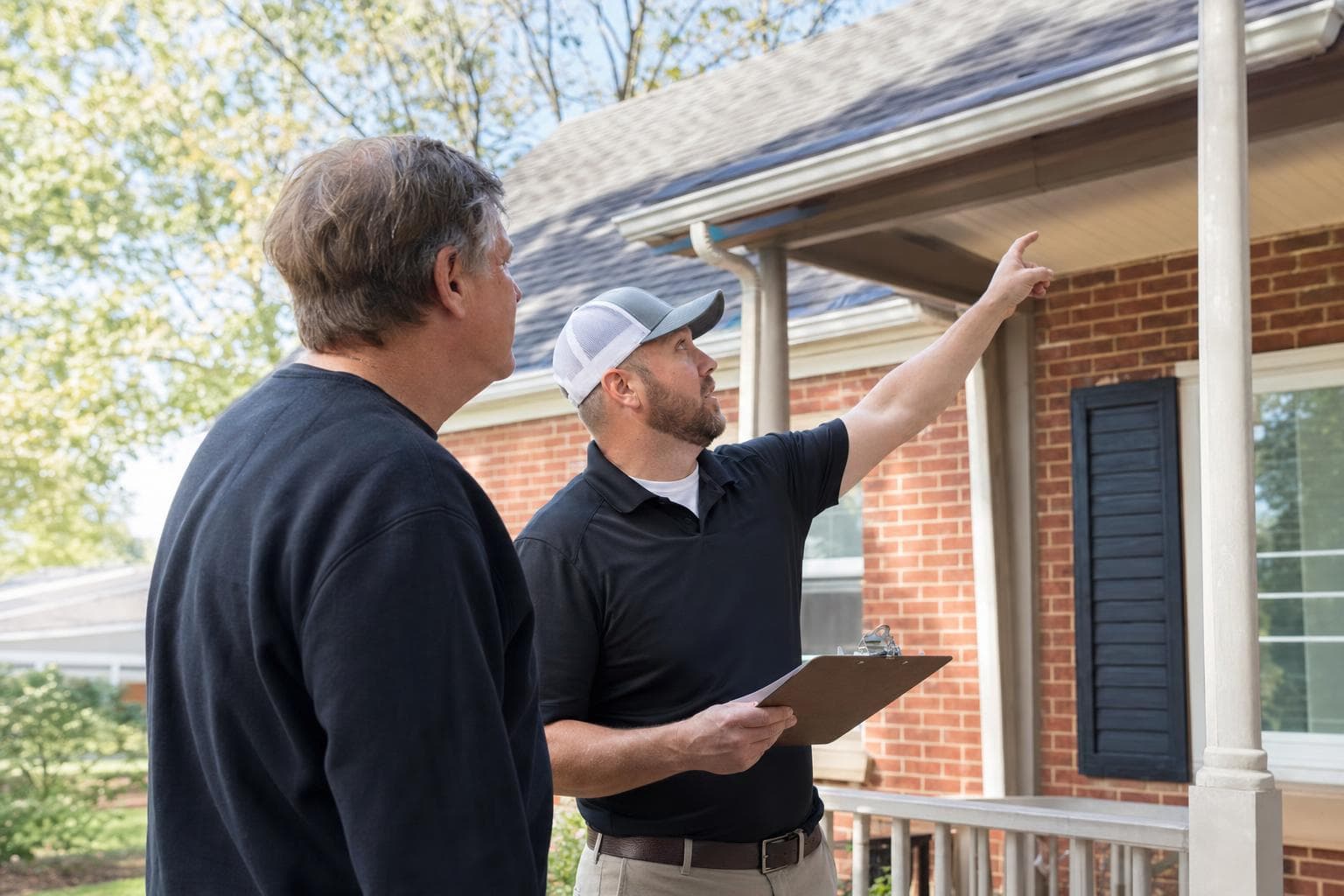
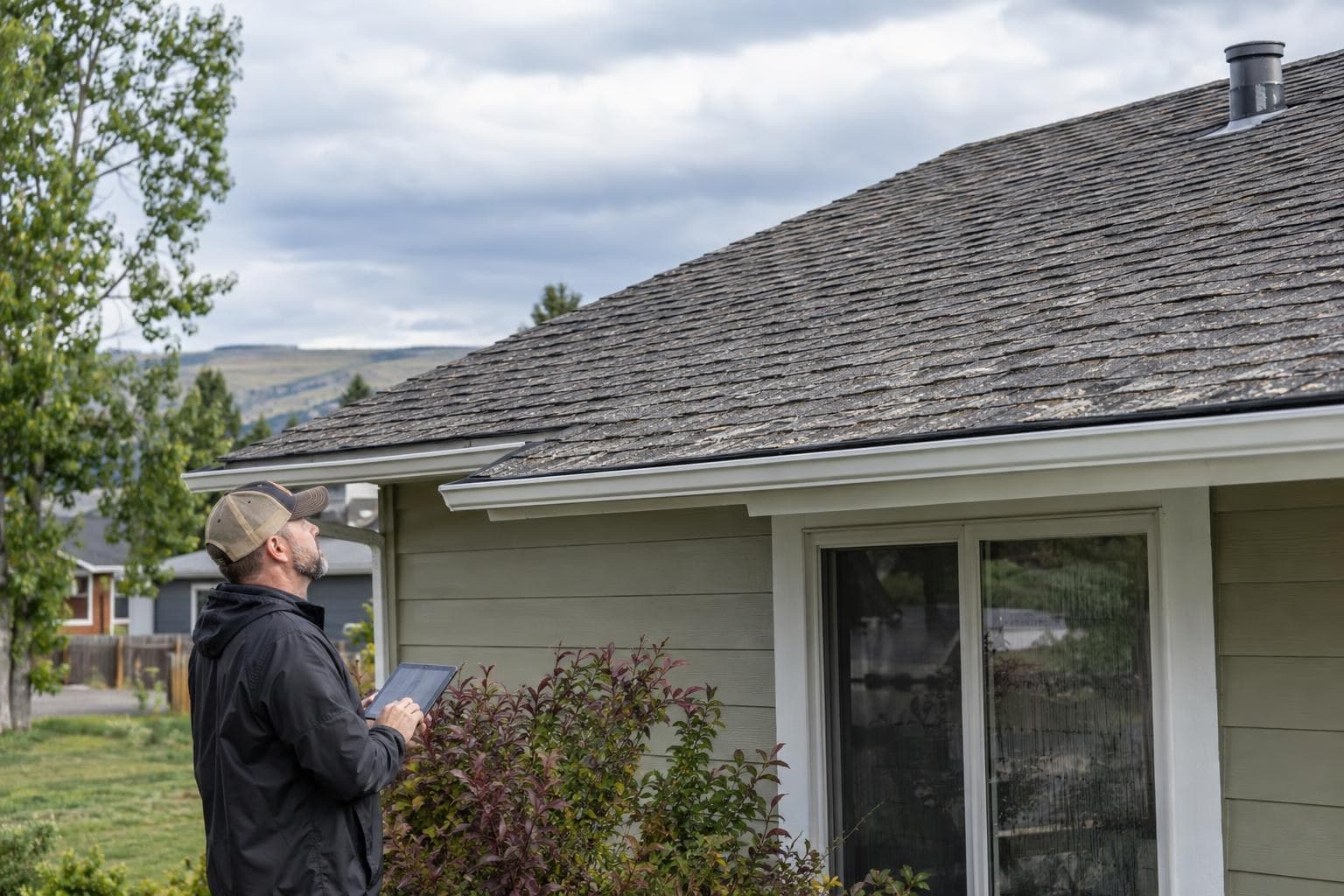
You should get an inspection after major hail or wind, when you notice interior water signs, or when the roof starts showing broad surface wear. Texas weather can cause damage that is easy to miss from the ground, especially bruising, lifted tabs, and flashing failures. An inspection helps you find out whether you are dealing with a repairable issue or a roof that is aging out across the system. It also gives you a cleaner starting point if you need to talk with your insurer after a storm.
What should you know before filing an insurance claim in Texas?
The big thing to know is that you still have to pay your deductible, and your roofer cannot act as your adjuster. In Texas it is a crime for a contractor to waive, rebate, or absorb your insurance deductible (Business and Commerce Code Sec. 27.02). Texas insurance-claim roofing contracts must state in writing that you are responsible for paying the deductible. A roofer pitching a free roof by eating your deductible is breaking the law, so treat it as a red flag, not a deal. Texas law (Insurance Code Sec. 4102.163) bars a contractor from acting as a public adjuster, negotiating or settling your claim, on a job they are also doing. The Texas Supreme Court upheld this in 2024. If a roofer offers to handle the whole claim with your insurance company, that crosses a legal line. Your insurer generally has to accept or reject the claim within 15 business days of getting everything it needs to finalize the loss, with a possible extension, and a little more time after a declared catastrophe. If a weather claim ever heads to court, you have to give the insurer written notice at least 61 days first.
How do you make a shingle roof last longer in Texas?
The best way is to catch damage early and choose the right system for your local weather. After storms, have a roofing contractor you are considering check for bruising, granule loss, lifted tabs, flashing damage, and moisture entry points. Keep an eye on gutters for excess granules and on ceilings for new stains. If replacement is getting close, compare materials based on the risks your area actually sees, not just the lowest upfront number. A roof in Texas holds up better when the install details are right, the ventilation is addressed, and the material matches the hail, heat, or coastal wind exposure at your home. If your roof is showing multiple warning signs, an inspection now can help you avoid paying for repairs on a roof that is already aging out.
Sources reviewed
- Texas Dept. of Insurance (impact-resistant roof discounts)
- Texas Department of Insurance: Roofing and Insurance: Know the Law
- UL Solutions: UL Solutions and IBHS Drive Trust in Residential Roofing Shingles
- Asphalt Roofing Manufacturers Association: Residential Asphalt Roofing Manual: Ventilation Best Practices
- Insurance Institute for Business & Home Safety: Natural Weathering and Hazard Exposure
Plan with current pricing
Related services
Updated July 27, 2026
3D Roofs Editorial Team
Editorial Standards