
Updated July 10, 2026

3D Roofs Editorial Team
Editorial Standards
How to choose the right roof inspection in Ohio
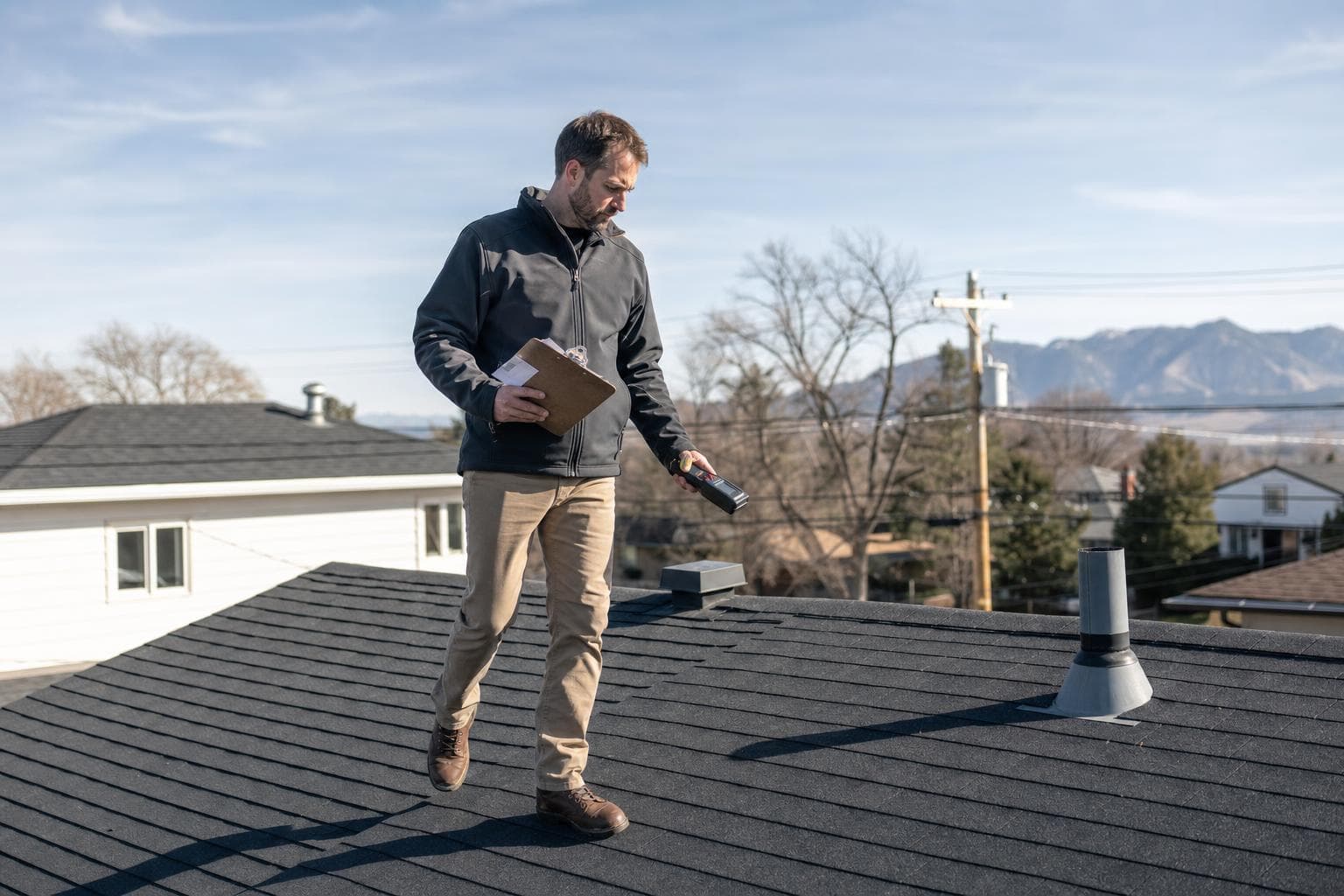
Before scheduling, state the purpose of the inspection and ask what the deliverable includes. A useful review identifies roof areas and materials, documents edges, ridges, valleys, flashing, penetrations, drainage, and accessible attic or interior conditions, and separates observations from diagnosis. Recommendations should be ranked by urgency and supported with photographs.
Confirm whether the inspector will walk the roof, use alternate access when walking is unsafe, review the attic, provide a written report, and bid the resulting work. For a transaction or dispute, consider whether you need an independent inspector with no financial interest in the repair.
How Ohio exposure changes a roof inspection
Ohio roofs take a beating from both ends of the calendar. Warm-season thunderstorms drive hail that bruises shingles and strips granules, plus straight-line and derecho winds strong enough to lift shingles and tear edges, and 2024 alone brought multiple tornado-and-hail outbreaks across the state. Come winter, heavy snow load, ice dams along the eaves, and repeated freeze-thaw cycling work loose fasteners, flashing, and seams. Humid summers add the heat and moisture that age shingles and grow algae. The right roof for your home has to handle all of it, not just one season.
Roof inspections in Ohio should reflect the hazards that actually affect the property and season. The inspector may need to look for wind attachment, hail patterns, drainage, heat or moisture stress, freeze-thaw effects, wildfire exposure, salt air, or tree damage without assuming all of them apply statewide.
What a useful roof inspection should cover
An inspection is only as useful as the question it is built to answer. Leak diagnosis, storm documentation, maintenance planning, real-estate due diligence, and specialized moisture or structural evaluation require different access, tools, and deliverables. Compare the inspection purpose, access, roof areas, attic and interior review, photographs, testing, written findings, limitations, and next-step recommendations. A verbal opinion from the driveway is not equivalent to a documented condition report.
Areas and evidence to define
- A stated inspection purpose and decision the report must support
- Accessible covering, ridge, edges, valleys, drainage, flashing, penetrations, and prior-work review
- Relevant attic, decking, insulation, and interior evidence when accessible
- Photographs located by slope or roof area with direct-observation and access limits
- Written findings that separate defects, maintenance, monitoring, and uncertain conditions
- Recommendations tied to evidence, timing, and any need for another qualified specialist
Conditions that change the inspection
- Inspection purpose and whether a written report is required
- Quote visits, storm checks, transaction reports, and specialized evaluations
- Roof size, pitch, and stories
- Documentation depth, photos, slope maps, written findings
- Attic and interior access
What to confirm before scheduling an inspection
Before booking, compare what is inspected, whether attic and interior areas are included, what photographs and written findings you receive, and whether the inspector also sells the recommended work. A verbal opinion from the driveway is not a condition report.
- The 'inspection' happens from the driveway
- No photos or written findings are provided
- Every inspection ends in a full replacement pitch
- Storm damage and normal wear are lumped together
- What decision is this inspection designed to support?
- Which roof, attic, and interior areas will be reviewed, and how will access limits be recorded?
- Will photographs be located by roof area and observations kept separate from diagnosis?
- How will urgent defects, maintenance, monitoring, and uncertain findings be classified?
- Does this purpose require an independent or differently qualified professional?
What a roof inspection costs in Ohio
Professional roof inspections commonly range from $100-$1,425 in Ohio. The method and deliverable matter: a visual condition check, drone survey, moisture scan, leak investigation, and documented real-estate or storm report are different services.
- Visual or ladder inspection
- A routine accessible-roof review with a defined set of findings
- $125-$475
- Drone inspection
- Useful when height, pitch, fragility, or access limits walking the roof
- $175-$650
- Infrared or moisture scan
- Specialized investigation for suspected trapped moisture or hidden leak paths
- $325-$1,425
- Documented report add-on
- Photographs, locations, and written findings for a transaction or claim file
- $100-$425
Cost ranges are estimates developed from standardized project scopes and reviewed pricing inputs. Government labor and regional cost data are used where applicable. See our Pricing Methodology for the exact sources, calculations, and review date. Actual prices vary by property, scope, materials or equipment, location, and provider.
Rules, claims, and contractor checks
Inspection credentials and report requirements can vary by purpose and jurisdiction. A contractor may be well suited to scope a repair, while a real-estate, engineering, appraisal, or insurance question may require a different qualified professional under Ohio rules.
Ohio has no statewide roofing license, so the rules live in your city
Ohio does not license or register roofing contractors at the state level. Instead, licensing, registration, and permits are handled locally, and the requirements vary by city. Columbus, Cincinnati, and Cleveland each require contractors to register and carry insurance before doing residential work, for example, while smaller towns may require only a permit. Because there is no state credential to lean on, confirm a roofer is registered and permitted in your specific city or county before you sign.
A roofer can't pay or waive your deductible, and offering to is fraud
In Ohio it is illegal for a contractor to absorb, waive, or rebate your insurance deductible to win a storm job, and the Attorney General treats it as insurance fraud under the Ohio Revised Code. Both the contractor and the homeowner can be charged, even if you did not start it. A roofer pitching a "free roof" by eating your deductible is breaking the law, so treat it as a red flag, not a deal. Ohio Attorney General Dave Yost has repeatedly sued out-of-state "storm chasers" who took deposits and disappeared.
You get three business days to cancel a contract signed at your door
Under Ohio's Home Solicitation Sales Act (Ohio Revised Code 1345.21 to 1345.23), if a salesperson comes to your home and you sign a contract of $25 or more there, you can cancel until midnight of the third business day after signing. The contract must state that right in writing, and to cancel you give the seller written notice, by certified mail or in person, within that window. This matters most when a door-knocker shows up after a hailstorm and pressures you to sign on the spot.
Because Ohio issues no statewide roofing license, "licensed roofer" means little here on its own. Vet an Ohio roofer on what you can actually verify: current registration and a pulled permit in your own city or county, proof of general-liability and workers'-compensation insurance, a real local track record and references, manufacturer certifications, and a written scope that spells out tear-off, decking, underlayment, flashing, ventilation, and cleanup. Be especially wary of out-of-area trucks that knock on doors right after a storm and want a large deposit up front, and remember you have three business days to cancel a door-to-door contract.
Sources: Ohio Attorney General (door-to-door sales & 3-day right to cancel) · Ohio Attorney General (storm-chaser home-improvement fraud) · Ohio Dept. of Insurance (homeowners insurance guide) · Ohio Revised Code 1345.21 (Home Solicitation Sales Act)
Common questions about roof inspections in Ohio
What should a roof inspection cover in Ohio?+
The scope should identify roof areas and materials and review accessible covering, ridges, edges, valleys, flashing, penetrations, drainage, attachments, and relevant attic or interior evidence. The report should include photographs, limitations, and prioritized recommendations.
Is a contractor quote visit the same as an independent inspection?+
No. A quote visit is designed to price work and may be enough for a straightforward repair. An independent condition, transaction, engineering, or dispute report has a different purpose and may require separate credentials, testing, documentation, and financial independence.
How often should a Ohio roof be inspected?+
Use roof age, material, exposure, prior repairs, manufacturer guidance, and insurer requirements to set the interval. Inspection also makes sense after a significant event, before buying or selling, or when stains, missing material, drainage problems, or unusual attic moisture appear.
What should the inspector say when the roof is still serviceable?+
The report should say so, identify maintenance worth planning, and distinguish conditions to monitor from defects requiring action. A useful inspection reduces uncertainty; it should not turn every aging detail into an emergency replacement.
Which Ohio rules should I check before signing a inspections contract?+
Start with the verified state guidance on this page, including Ohio has no statewide roofing license, so the rules live in your city; A roofer can't pay or waive your deductible, and offering to is fraud; You get three business days to cancel a contract signed at your door. Then confirm the permit authority and any local contractor requirement for the property address. Insurance coverage and policy interpretation remain separate from the roofing contract.
Inspections across 17 Ohio cities
Open the nearest Ohio city page to see the local climate and storm questions an inspection should address. The report should still be based on the property's materials, geometry, exposure, and condition.
