
Updated July 10, 2026

3D Roofs Editorial Team
Editorial Standards
How to diagnose a roof leak in Washington without guessing
Water can travel along decking, framing, insulation, and fasteners before it becomes visible indoors. That is why a useful leak investigation reviews the room, accessible attic, roof area above the evidence, and every transition that could admit wind-driven rain. The repair should correct the entry detail and check what the water affected on the way inside.
Document when the leak appears, which direction the weather came from, and whether plumbing or condensation could be involved. Ask the roofer to show the suspected entry point, explain how it was tested or inferred, and separate emergency protection from the permanent repair.
How Washington weather changes the leak path
Washington roofs deal with frequent rain, damp conditions, wind-driven moisture, debris, and in some areas snow and ice. Even when damage does not look dramatic from the ground, constant moisture can shorten the life of shingles, underlayment, sealants, and roof penetrations. Moss and algae can also hold moisture against the roof surface. In higher elevations and colder parts of the state, snow load and freeze-thaw cycling can add stress around edges, valleys, and flashing details. If your roof is older or already has weak spots, Washington weather tends to turn small problems into leaks faster than you want.
Leak behavior in Washington changes with storm direction, rainfall intensity, snow or ice, humidity, thermal movement, and how quickly wet materials can dry. A leak that appears only during wind-driven rain points to a different detail than steady moisture below an unvented bath duct or a plumbing line.
What a roof leak diagnosis and repair should cover
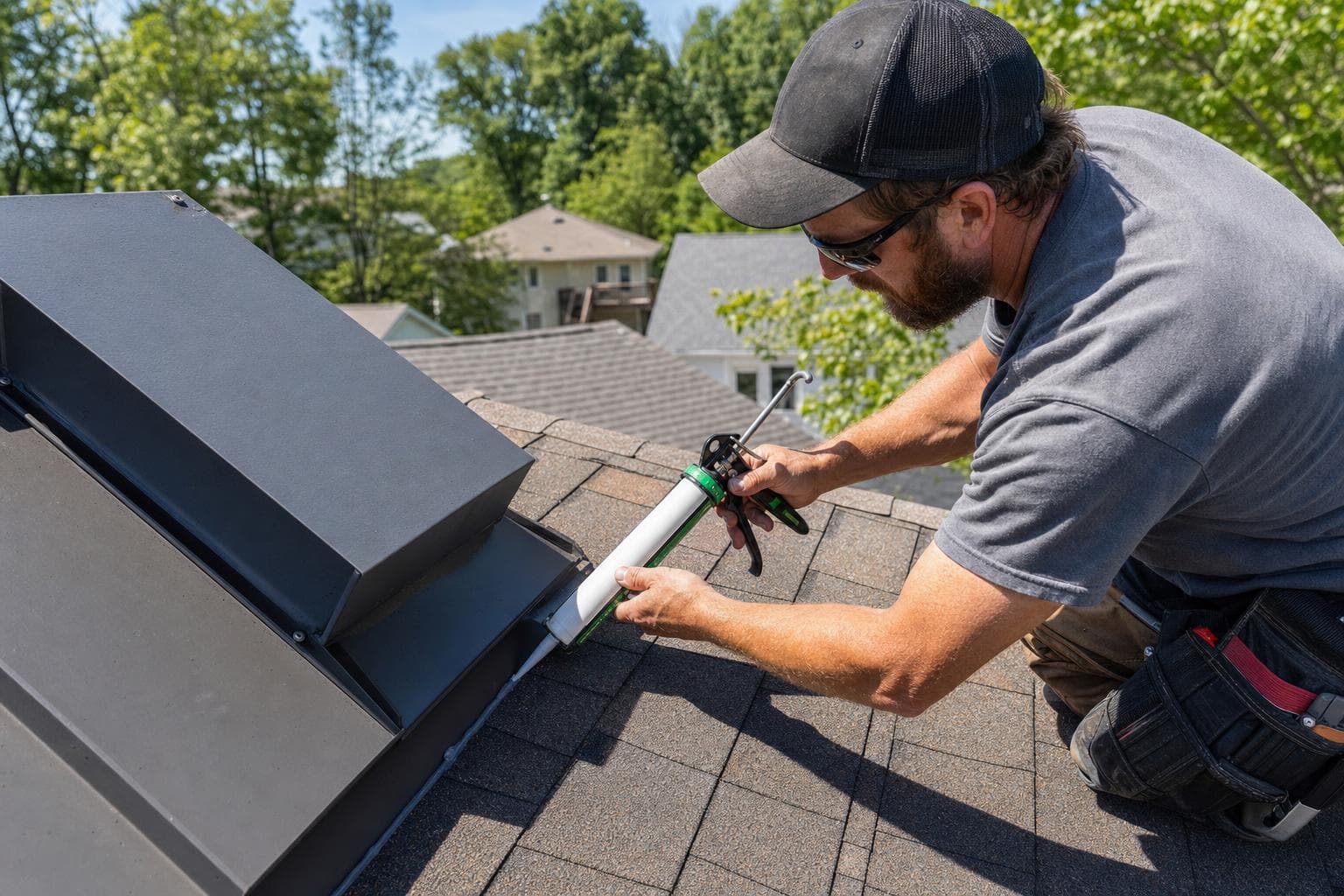
Leak repair should answer three questions in order: where water enters, how far it traveled, and whether the materials around that path remain sound. Skipping any of them turns a repair into a short-lived patch. Compare how each roofer will investigate the path, open the detail, replace damaged materials, integrate flashing or roofing, and verify the result. A tube of sealant may be part of a listed detail, but it should not substitute for a diagnosis.
Work the leak scope should include
- Interior leak review
- Attic moisture check when accessible
- Flashing, pipe boot, vent, valley, skylight, and shingle inspection
- Leak source repair
- Surrounding material check
Conditions that change diagnosis and cost
- Leak location
- Roof accessibility
- Whether water reached decking or insulation
- Whether the leak is from flashing, a penetration, or storm damage
- Whether temporary tarping is needed first
Questions to resolve before the roof is closed
Compare leak proposals by the entry point they identify and the detail they plan to rebuild. A quote that only promises to seal the leak does not tell you whether the roofer checked flashing, pipe boots, valleys, walls, skylights, vents, or wet decking.
- The contractor quotes a leak repair without looking above the leak path
- They only seal the visible stain area
- They cannot explain the actual entry point
- They do not check surrounding materials for hidden damage
- What caused the leak?
- How do you know that is the entry point?
- Will this repair hold through heavy rain?
- Is the rest of the roof still in good shape?
What roof leak repair costs in Washington
A leak repair commonly lands around $550-$3,100 in Washington, but the ceiling stain does not set the price. The entry point, roof access, material removed to expose it, and moisture found underneath determine the scope.
- Pipe boot / vent boot replacement
- One accessible penetration on a walkable roof; steep access costs more
- $250-$950
- Flashing repair at a wall or vent
- The transition is opened and correctly rebuilt, not just caulked over
- $450-$2,400
- Valley leak repair
- Both slopes are opened and the water-shedding channel is restored
- $650-$3,750
- Chimney or skylight flashing
- These transitions require careful opening, flashing, and tie-in work
- $950-$5,450
Cost ranges are estimates developed from standardized project scopes and reviewed pricing inputs. Government labor and regional cost data are used where applicable. See our Pricing Methodology for the exact sources, calculations, and review date. Actual prices vary by property, scope, materials or equipment, location, and provider.
Rules, claims, and contractor checks
If a recent event may have caused the leak, preserve photographs and temporary-work receipts before permanent work covers the evidence. Check local permit requirements and let the insurer answer policy questions while the roofer stays focused on diagnosis and construction scope.
You have the right to a clear claim explanation, prompt response, and timely claim handling
The Washington Office of the Insurance Commissioner says that as a policyholder, you are entitled to a clear explanation of what is covered, a prompt response from the insurance company, timely payments and a claim decision, and an appraisal if you disagree with the amount of your loss.
Your insurer has claim-response deadlines
The Washington Office of the Insurance Commissioner says your insurer is obligated to respond to your claim. Within 15 business days, after receiving your fully completed forms, the company should accept, deny, or advise you if it needs more time to review the claim. Within 30 days, it should complete the claim investigation if possible. If the claim investigation is not completed within 30 days, the insurer must notify you within 45 days after you file a claim and explain why it needs additional time.
You can choose your own contractor
After covered damage is identified, you have the right to select your own contractor to complete the work on your home. Your insurance company may recommend contractors, but it is not required to provide you with a list of contractors.
In Washington, construction contractors must be registered with L&I, and roofing is listed as a specialty that requires contractor registration. A practical first step is to ask your roofer for the business name and contractor registration number, then confirm that registration through the state verification tool referenced by L&I. You should also make sure the business name matches the registration record, because L&I says the contractor must use the exact business name on registration documents. For residential jobs of {{PRICE_UNAVAILABLE}} or more, L&I says the contractor must provide the Model Disclosure Statement Notice to Customer. If you are dealing with an insurance claim, keep control of the claim, read every authorization before you sign it, and avoid handing over settlement authority through an assignment of benefit unless you fully understand the consequences.
Sources: Washington Office of the Insurance Commissioner, Filing a homeowner insurance claim · Washington Department of Labor & Industries, Register as a Contractor
Common questions about roof leak repair in Washington
Why is the ceiling stain not directly below the Washington roof leak?+
Water follows gravity but can run along the roof deck, rafters, fasteners, pipes, and insulation before dropping into the room. The exterior entry is often uphill or beside the visible stain, especially around valleys, walls, vents, chimneys, and other transitions.
What should happen during a roof leak investigation in Washington?+
The roofer should review the interior evidence, inspect the attic when accessible, examine the roof area above and around the path, photograph likely entry details, and explain how the proposed repair addresses them. Moisture testing or controlled water testing may be appropriate when visual evidence is inconclusive.
Does one roof leak mean the whole roof needs replacement?+
No. A contained flashing, boot, valley, seam, or shingle failure can often be repaired when the surrounding roof is sound. Replacement deserves consideration when leak paths are multiplying, materials cannot accept a tie-in, decking damage is broad, or prior repairs keep failing.
What should I do while a Washington roof leak is active?+
Keep people away from sagging ceilings and wet electrical areas, contain water when safe, move vulnerable belongings, and photograph the condition. Do not climb onto a wet or storm-damaged roof. Arrange safe temporary protection, then schedule the permanent diagnosis when conditions allow.
Which Washington rules should I check before signing a leak repair contract?+
Start with the verified state guidance on this page, including You have the right to a clear claim explanation, prompt response, and timely claim handling; Your insurer has claim-response deadlines; You can choose your own contractor. Then confirm the permit authority and any local contractor requirement for the property address. Insurance coverage and policy interpretation remain separate from the roofing contract.
Leak Repair across 25 Washington cities
Use the nearest Washington city page to understand local storm and moisture patterns, then give the roofer the timing and location details specific to your leak.
