
Updated July 10, 2026

3D Roofs Editorial Team
Editorial Standards
How to specify a complete shingle roof in Colorado
Begin with the exact shingle and its published classifications, warranty, color, and local availability. Then compare the accessories and details required for that product and roof. A quote using a premium shingle can still be incomplete if it reuses failed flashing, ignores intake ventilation, or leaves decking and edge work undefined.
Ask the roofer to identify every system component, fastening method, deck requirement, ventilation calculation, flashing treatment, and warranty registration step. Keep manufacturer coverage separate from the contractor's workmanship obligation and ask who handles each type of problem.
How Colorado exposure changes a shingle system
Colorado roofs fail where the weather hits hardest, and hail leads the list. Spring and summer storms along the Front Range drive granule loss, bruising, and outright punctures, and storms producing very large hail have grown more common in recent years. High winds add the next layer of stress: downslope chinooks and foothills gusts can top highway speeds and peel shingles and underlayment off the edges and ridges. On top of that, thin high-altitude air filters out less UV, so intense sun ages asphalt shingles faster than at lower elevations, heavy mountain and plains snow loads and constant freeze-thaw work on flashing and seals, and homes near the foothills carry real wildfire exposure. The right roof for your home depends on which of these your area actually sees.
Shingle selection in Colorado should follow actual wind, hail, heat, freeze-thaw, wildfire, algae, tree, and moisture exposure. Impact or wind classifications describe tested performance under specific methods; they do not guarantee that a roof cannot be damaged in the field.
What a complete shingle-roofing scope should cover
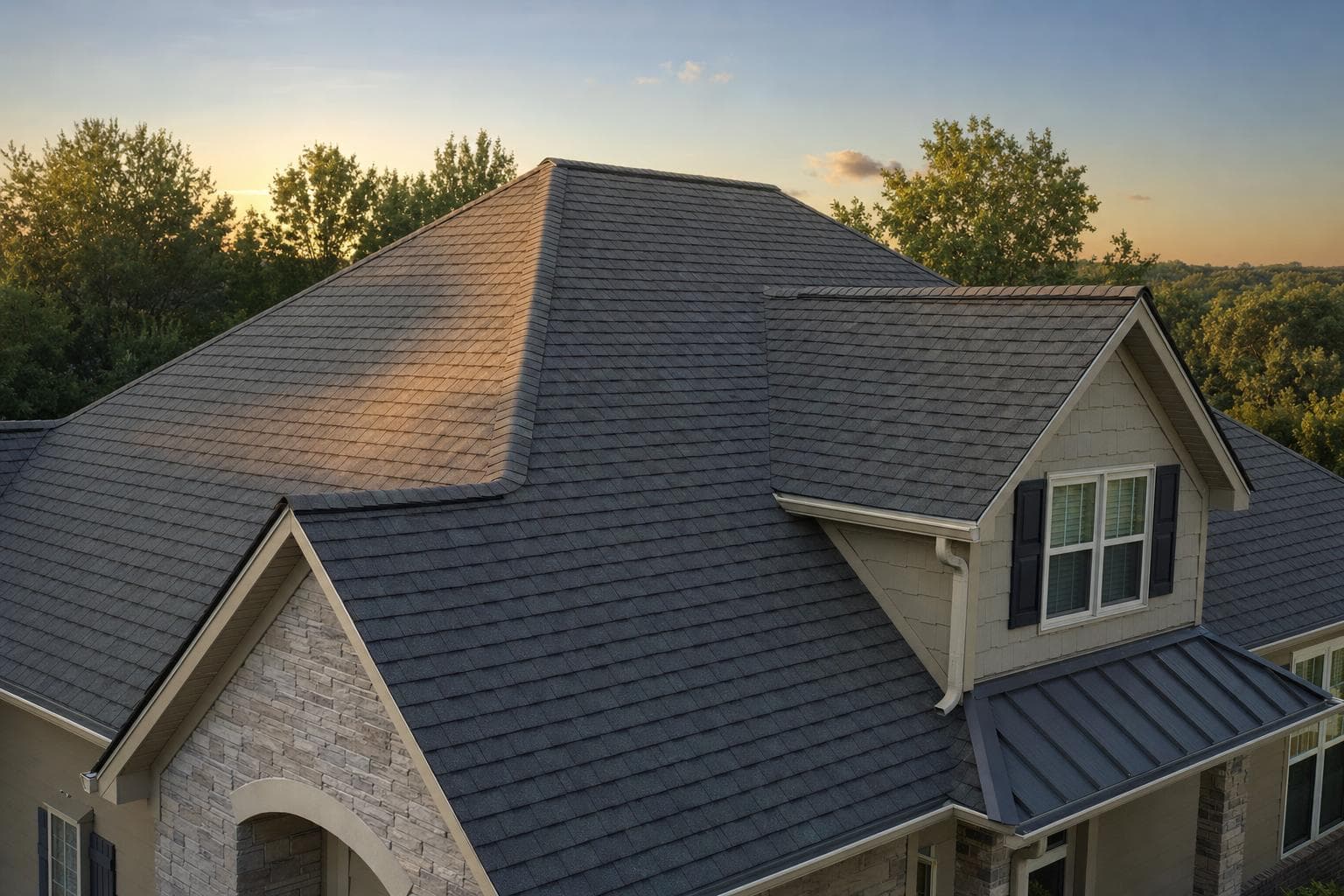
A shingle roof is a layered assembly. The named shingle, starter, ridge, underlayment, leak barriers, flashing, fasteners, ventilation, deck preparation, and installation method work together, so product comparisons make sense only when the supporting scope is the same. Compare the exact shingle system, preparation, water-shedding details, ventilation, deck assumptions, and warranty responsibilities. The checklist below helps identify bids that name the visible shingle but omit the parts that make it a roof.
Products and hidden work to define
- Measured roof, removal layers, deck condition, flashing, ventilation, and repairability review
- Named shingle manufacturer, product line, color, impact and wind classifications, and availability
- Underlayment, specified leak barriers, starter, hip and ridge, drip edge, and fasteners
- Valleys, walls, chimneys, skylights, pipe boots, vents, and other penetrations
- Decking and concealed-work prices, photographs, approvals, and open-roof weather protection
- Property protection, cleanup, permits or inspections, and closeout records
- Separate manufacturer material and contractor workmanship warranty documents
Conditions that change shingle-roof cost
- Measured roof area, waste, pitch, height, access, geometry, and removal layers
- Exact shingle line, classification, color, availability, and accessory system
- Decking, attachment, flashing, valleys, penetrations, and concealed prior work
- Underlayment, leak barriers, edges, starter, ridge, fasteners, and ventilation
- Permit, inspection, product, association, fire, or wind requirements where applicable
- Property protection, weather sequencing, disposal, cleanup, and closeout records
What to resolve before shingles are ordered
Compare the exact product line and tested classifications, not broad labels such as architectural or impact resistant. Then compare the hidden layers, accessory compatibility, warranty requirements, local availability, and price of the complete installed system.
- The quote lists field shingles but not starter, ridge, underlayment, or flashing
- No decking or concealed-work price and approval method exists before tear-off
- The exact shingle line, accessory system, or installation requirements are not named
- A Class 3, Class 4, architectural, or warranty label is treated as the complete specification
- The warranty pitch ignores the difference between material and workmanship responsibility
- Which exact shingle line, classification, color, and compatible accessory system are included?
- What deck, underlayment, leak-barrier, edge, starter, ridge, flashing, fastener, and ventilation work is specified?
- How are concealed conditions photographed, priced, authorized, and protected from weather?
- What is the written Class 4 upgrade cost, and does the insurer recognize this exact product?
- Which material and workmanship warranty terms apply, and who handles each obligation?
What shingle roofing costs in Colorado
On a 2,000 sq ft reference roof in Colorado, Class 3 architectural shingles are about $13,232 and Class 4 impact-resistant shingles are about $15,436. Compare exact product lines and the complete supporting assembly before treating the difference as an upgrade price.
- Class 3 architectural shingles
- $6.50 per sq ft on a 2,000 sq ft reference roof
- $13,232
- Class 4 impact-resistant shingles
- $7.75 per sq ft on the same reference roof
- $15,436
Cost ranges are estimates developed from standardized project scopes and reviewed pricing inputs. Government labor and regional cost data are used where applicable. See our Pricing Methodology for the exact sources, calculations, and review date. Actual prices vary by property, scope, materials or equipment, location, and provider.
Rules, claims, and contractor checks
Check local permit and product requirements, homeowner-association restrictions, and any Colorado insurance documentation needed for a product credit. Do not assume a Class 4 label creates an automatic discount; verify the exact shingle with the carrier before ordering.
You can cancel if your insurer denies the claim
Colorado's residential roofing law (C.R.S. 6-22-101 et seq., originally Senate Bill 12-038) gives you two ways out of a roofing contract. You can rescind any residential roofing contract within 72 hours of signing it, and if the work is to be paid from insurance proceeds, you can also rescind within 72 hours after your insurer notifies you in writing that the claim is denied in whole or in part. When you cancel, the roofer has to return your deposit and any payments, less the cost of any materials already delivered. So you are never locked into paying out of pocket just because the claim falls through.
Your roofer can't pay your deductible, and shouldn't offer to
Under the same law (C.R.S. 6-22-105), a Colorado roofing contractor cannot pay, waive, rebate, or even promise to pay, waive, or rebate all or part of your insurance deductible on an insurance-funded job. Your contract has to state this in writing. A roofer pitching a "free roof" by eating your deductible, or quietly inflating the estimate to cover it, is steering you toward insurance fraud, not handing you a deal, so treat it as a red flag and walk away.
There is no state roofing license, so the contract disclosures matter
Colorado does not license roofing contractors at the state level, which puts more weight on the protections written into your contract. The roofing law requires a written contract that spells out the scope and cost of work, approximate start and completion dates, the contractor's contact and insurance information, and your cancellation and refund rights. The law also requires the roofer to hold your payments and deposits until materials are delivered or a majority of the work is done, rather than taking your money up front and disappearing.
Because Colorado has no statewide roofing license, "licensed roofer" means little here on its own, and you have to verify the rest yourself. Roofing is regulated city by city, so confirm the company is registered or licensed in your jurisdiction and that it pulls a local permit before work begins, which is required for roofing work no matter how small the town. Ask for proof of current general-liability and workers'-compensation insurance so you are not on the hook if someone is hurt on your roof. Then check a real local track record: references, recent addresses you can drive past, and manufacturer certifications. Be especially wary of out-of-town "storm chasers" who appear right after a hailstorm, push you to sign on the spot, and offer to handle your entire claim, because the deductible and rescission rules above exist precisely to stop those tactics.
Sources: Colorado Revised Statutes, Article 22 (Residential Roofing Services; SB 12-038) · Colorado Roofing Association (state has no statewide roofing license; local licensing and permits) · Colorado Division of Insurance / DORA (action to lower homeowners rates; resilient roofs) · Colorado General Assembly, SB26-155 (Strengthen Colorado Homes; resilient roof discounts)
Common questions about shingle roofing in Colorado
How should I compare shingle products in Colorado?+
Compare the exact line, published impact and wind classifications, installation requirements, warranty terms, color and availability, then compare the complete accessory system. A category such as architectural or Class 4 is not enough to define the product or installed roof.
Are Class 4 shingles worth it in Colorado?+
They are worth comparing where impact exposure is meaningful and the installed premium fits your ownership plan. Class 4 is a test classification, not a hail-proof promise. Verify the exact product, local availability, warranty, and any carrier-specific credit before counting savings.
What should a shingle roof quote include?+
It should cover tear-off, deck inspection and pricing, underlayment, leak barriers, drip edge, starter, field shingles, ridge or hip products, flashing, pipe boots, ventilation, fasteners, disposal, cleanup, permits, and separate material and workmanship warranties.
How long do shingles last in Colorado?+
Service depends on the product, climate, slope, orientation, ventilation, attic conditions, installation, storm exposure, tree cover, and maintenance. Inspect by condition and follow the manufacturer's written requirements instead of treating one national age range as a guarantee.
Which Colorado rules should I check before signing a shingle roofing contract?+
Start with the verified state guidance on this page, including You can cancel if your insurer denies the claim; Your roofer can't pay your deductible, and shouldn't offer to; There is no state roofing license, so the contract disclosures matter. Then confirm the permit authority and any local contractor requirement for the property address. Insurance coverage and policy interpretation remain separate from the roofing contract.
What should Colorado homeowners know about impact-resistant roofing?+
Class 4 shingles are worth comparing on Colorado homes with meaningful hail exposure. Verify the exact product's current UL 2218 classification, the starter and ridge components, and the rest of the proposed assembly. The rating does not guarantee freedom from all damage or establish a policy credit. Ask the carrier in writing whether the product qualifies, which premium portion is affected, and what documentation it requires before using any savings in the budget.
Shingle Roofing across 20 Colorado cities
Use the nearest Colorado city page for local weather and material context. Final product selection should reflect the home's roof geometry, exposure, appearance requirements, budget, and expected ownership period.
