
Updated July 10, 2026

3D Roofs Editorial Team
Editorial Standards
How to specify a complete shingle roof in Florida
Begin with the exact shingle and its published classifications, warranty, color, and local availability. Then compare the accessories and details required for that product and roof. A quote using a premium shingle can still be incomplete if it reuses failed flashing, ignores intake ventilation, or leaves decking and edge work undefined.
Ask the roofer to identify every system component, fastening method, deck requirement, ventilation calculation, flashing treatment, and warranty registration step. Keep manufacturer coverage separate from the contractor's workmanship obligation and ask who handles each type of problem.
How Florida exposure changes a shingle system
Florida roofs live and die by wind and water. Hurricanes and tropical systems drive wind uplift and wind-driven rain that find any weak fastener, seam, or edge, and that risk runs highest near the coast. On top of that, near-constant sun, heat, humidity, and heavy summer rain age shingles and grow algae faster than in most of the country, and salt air along the shore is hard on metal and flashing. The right roof for your home depends on how exposed you are to all of it.
Shingle selection in Florida should follow actual wind, hail, heat, freeze-thaw, wildfire, algae, tree, and moisture exposure. Impact or wind classifications describe tested performance under specific methods; they do not guarantee that a roof cannot be damaged in the field.
What a complete shingle-roofing scope should cover
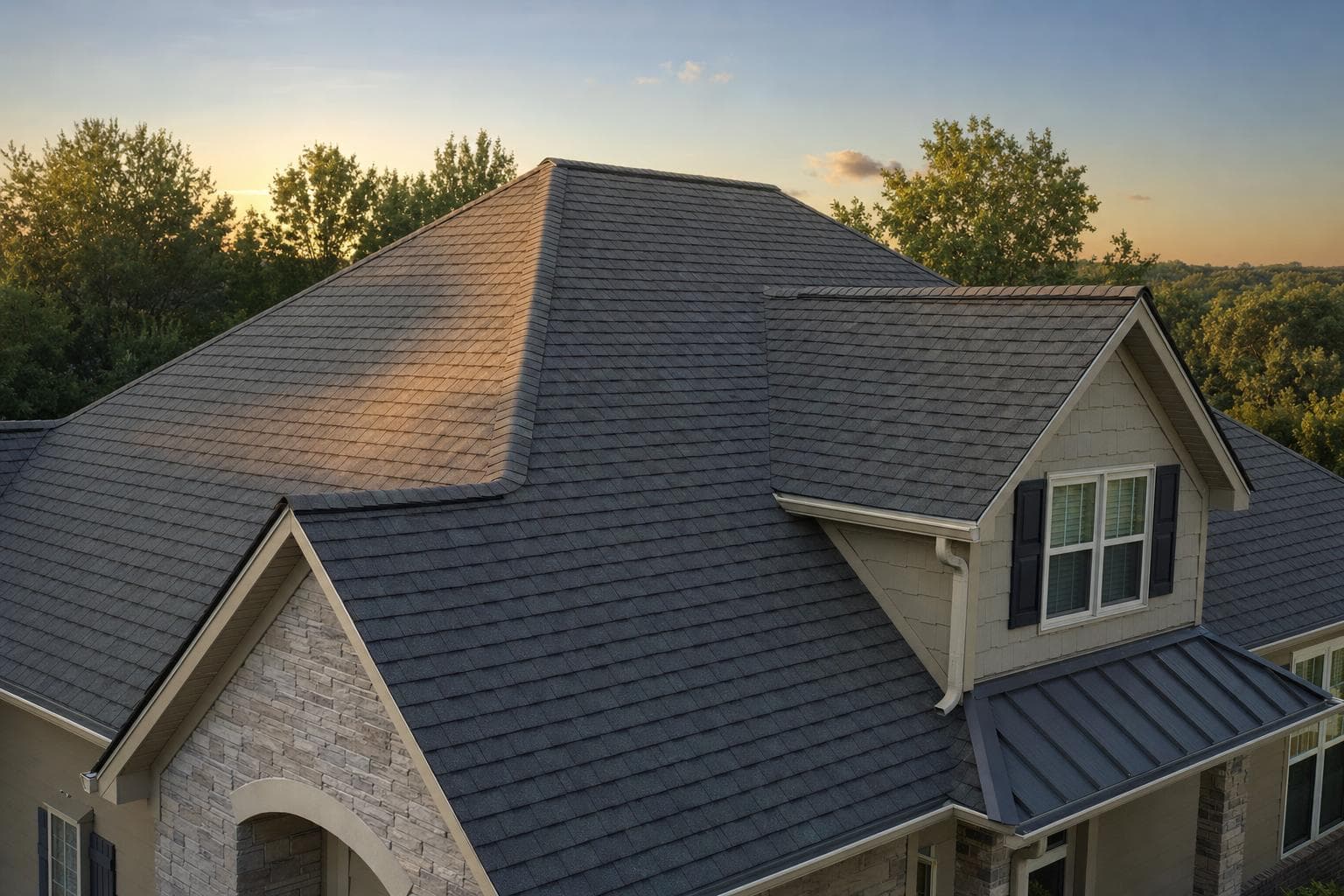
A shingle roof is a layered assembly. The named shingle, starter, ridge, underlayment, leak barriers, flashing, fasteners, ventilation, deck preparation, and installation method work together, so product comparisons make sense only when the supporting scope is the same. Compare the exact shingle system, preparation, water-shedding details, ventilation, deck assumptions, and warranty responsibilities. The checklist below helps identify bids that name the visible shingle but omit the parts that make it a roof.
Products and hidden work to define
- Measured roof, removal layers, deck condition, flashing, ventilation, and repairability review
- Named shingle manufacturer, product line, color, impact and wind classifications, and availability
- Underlayment, specified leak barriers, starter, hip and ridge, drip edge, and fasteners
- Valleys, walls, chimneys, skylights, pipe boots, vents, and other penetrations
- Decking and concealed-work prices, photographs, approvals, and open-roof weather protection
- Property protection, cleanup, permits or inspections, and closeout records
- Separate manufacturer material and contractor workmanship warranty documents
Conditions that change shingle-roof cost
- Measured roof area, waste, pitch, height, access, geometry, and removal layers
- Exact shingle line, classification, color, availability, and accessory system
- Decking, attachment, flashing, valleys, penetrations, and concealed prior work
- Underlayment, leak barriers, edges, starter, ridge, fasteners, and ventilation
- Permit, inspection, product, association, fire, or wind requirements where applicable
- Property protection, weather sequencing, disposal, cleanup, and closeout records
What to resolve before shingles are ordered
Compare the exact product line and tested classifications, not broad labels such as architectural or impact resistant. Then compare the hidden layers, accessory compatibility, warranty requirements, local availability, and price of the complete installed system.
- The quote lists field shingles but not starter, ridge, underlayment, or flashing
- No decking or concealed-work price and approval method exists before tear-off
- The exact shingle line, accessory system, or installation requirements are not named
- A Class 3, Class 4, architectural, or warranty label is treated as the complete specification
- The warranty pitch ignores the difference between material and workmanship responsibility
- Which exact shingle line, classification, color, and compatible accessory system are included?
- What deck, underlayment, leak-barrier, edge, starter, ridge, flashing, fastener, and ventilation work is specified?
- How are concealed conditions photographed, priced, authorized, and protected from weather?
- What is the written Class 4 upgrade cost, and does the insurer recognize this exact product?
- Which material and workmanship warranty terms apply, and who handles each obligation?
What shingle roofing costs in Florida
On a 2,000 sq ft reference roof in Florida, Class 3 architectural shingles are about $12,429 and Class 4 impact-resistant shingles are about $14,568. Compare exact product lines and the complete supporting assembly before treating the difference as an upgrade price.
- Class 3 architectural shingles
- $6.25 per sq ft on a 2,000 sq ft reference roof
- $12,429
- Class 4 impact-resistant shingles
- $7.25 per sq ft on the same reference roof
- $14,568
Cost ranges are estimates developed from standardized project scopes and reviewed pricing inputs. Government labor and regional cost data are used where applicable. See our Pricing Methodology for the exact sources, calculations, and review date. Actual prices vary by property, scope, materials or equipment, location, and provider.
Rules, claims, and contractor checks
Check local permit and product requirements, homeowner-association restrictions, and any Florida insurance documentation needed for a product credit. Do not assume a Class 4 label creates an automatic discount; verify the exact shingle with the carrier before ordering.
The strictest roofing code in the country, and it is strictest in South Florida
Florida builds to the Florida Building Code, and Miami-Dade and Broward counties sit in the High-Velocity Hurricane Zone (HVHZ), which carries the toughest wind-resistance roofing rules in the United States. In the HVHZ, every shingle, tile, underlayment, and fastener has to carry a Miami-Dade Notice of Acceptance or Florida Product Approval rated for that zone, and installs follow stricter fastening and underlayment standards. Whoever roofs your home has to pull a permit and meet the code for your area, so confirm they do.
You no longer always have to replace the whole roof to fix part of it
Until 2022, Florida's "25% rule" generally forced a full roof replacement if more than 25% of the roof was repaired or replaced in a year. SB 4-D changed that: if your roof was built to the 2007 Florida Building Code or later (roughly, permitted on or after March 1, 2009), now only the repaired section has to be brought up to current code, not the entire roof. That can be the difference between a repair and a tear-off, so it is worth knowing where your roof stands.
A wind-mitigation inspection can cut your premium, and the discount is required by law
Florida law (Statute 627.0629) requires home insurers to give premium credits for verified wind-resistant features, things like a hip roof shape, a sealed roof deck, and code-rated shingle attachment. A licensed inspector documents them on the state's Uniform Mitigation Verification form (OIR-B1-1802), and the windstorm savings can be substantial. If you are replacing or upgrading a roof, get the wind-mitigation inspection afterward so you actually capture the credit you are owed.
Florida does license roofers at the state level, so here "licensed" means something you can check. Verify it: state-certified roofing contractors carry a license starting with "CCC," and registered (local) ones start with "RC," and you can confirm status and any complaints free at the Department of Business and Professional Regulation (myfloridalicense.com). Then confirm current general-liability and workers'-compensation insurance, real local references, and hands-on experience with your area's code and wind-mitigation requirements. A roofer who knows the HVHZ rules and how to set you up for the wind-mitigation discount is worth far more than one who does not.
Sources: Florida Building Commission / Florida Building Code (HVHZ) · Florida Office of Insurance Regulation (wind-mitigation premium discounts) · Florida DBPR (verify a roofing contractor's license) · Citizens Property Insurance Corporation (state insurer of last resort)
Common questions about shingle roofing in Florida
How should I compare shingle products in Florida?+
Compare the exact line, published impact and wind classifications, installation requirements, warranty terms, color and availability, then compare the complete accessory system. A category such as architectural or Class 4 is not enough to define the product or installed roof.
Are Class 4 shingles worth it in Florida?+
They are worth comparing where impact exposure is meaningful and the installed premium fits your ownership plan. Class 4 is a test classification, not a hail-proof promise. Verify the exact product, local availability, warranty, and any carrier-specific credit before counting savings.
What should a shingle roof quote include?+
It should cover tear-off, deck inspection and pricing, underlayment, leak barriers, drip edge, starter, field shingles, ridge or hip products, flashing, pipe boots, ventilation, fasteners, disposal, cleanup, permits, and separate material and workmanship warranties.
How long do shingles last in Florida?+
Service depends on the product, climate, slope, orientation, ventilation, attic conditions, installation, storm exposure, tree cover, and maintenance. Inspect by condition and follow the manufacturer's written requirements instead of treating one national age range as a guarantee.
Which Florida rules should I check before signing a shingle roofing contract?+
Start with the verified state guidance on this page, including The strictest roofing code in the country, and it is strictest in South Florida; You no longer always have to replace the whole roof to fix part of it; A wind-mitigation inspection can cut your premium, and the discount is required by law. Then confirm the permit authority and any local contractor requirement for the property address. Insurance coverage and policy interpretation remain separate from the roofing contract.
What should Florida homeowners know about impact-resistant roofing?+
Wind-rated and impact-resistant materials matter more in Florida than almost anywhere: products approved for the High-Velocity Hurricane Zone are engineered to survive extreme wind, and stronger roof attachment and sealing are exactly the features the state's wind-mitigation discount rewards. Ask which roofing systems carry the right Florida Product Approval or Miami-Dade Notice of Acceptance for your county, and ask how the install will score on the wind-mitigation form before you sign.
Do coastal Florida requirements change this roofing work?+
Along the Florida coast, windstorm risk drives everything. Homeowners who cannot get wind coverage on the private market often turn to Citizens Property Insurance Corporation, the state-backed insurer of last resort, which can write wind-only or multi-peril policies but does not cover flood, so you still need separate flood insurance. A code-compliant roof and a clean wind-mitigation inspection are your best levers on both eligibility and price here, and in Miami-Dade and Broward your roof must meet the HVHZ rules. Make sure a coastal roofer builds to your county's wind code and sets you up to claim the wind-mitigation credit.
Shingle Roofing across 62 Florida cities
Use the nearest Florida city page for local weather and material context. Final product selection should reflect the home's roof geometry, exposure, appearance requirements, budget, and expected ownership period.
