Updated July 27, 2026

3D Roofs Editorial Team
Editorial Standards
If your roof is damaged in Georgia, ACV and RCV can change how much money you get from your claim. ACV means actual cash value, which usually pays the value of your older roof after depreciation. RCV means replacement cost value, which is built to cover what it costs to replace the roof at current 2026 market pricing, minus your deductible and subject to your policy terms. For many homeowners, the gap between those two can mean paying much more out of pocket.
What is the difference between ACV and RCV roof coverage?
ACV pays for the roof you had at the time of loss, after age and wear are factored in. RCV pays based on the cost to replace the roof with a comparable new roof, again subject to your deductible and your policy terms. For acv vs rcv roof coverage in Georgia, actual-cash-value and replacement-cost settlements depend on the policy's definitions, depreciation method, deductible, limits, exclusions, documentation, and payment stages; ask the insurer to explain the calculation in writing.
Why does ACV vs RCV matter so much in Georgia?
It matters because Georgia roofs take a lot of abuse. Severe thunderstorms bring hail and damaging straight-line winds, with the Atlanta metro and north Georgia seeing repeated hail seasons and the whole state exposed to tornado risk. Long, hot, humid summers also age shingles faster, and north Georgia can get occasional winter ice that stresses flashing and gutters. Along the Savannah coast, wind and wind-driven rain from tropical systems can be part of the picture. When roof damage happens in conditions like these, the kind of coverage on your policy can decide whether the claim feels manageable or financially painful.
How does depreciation work on an ACV roof claim?
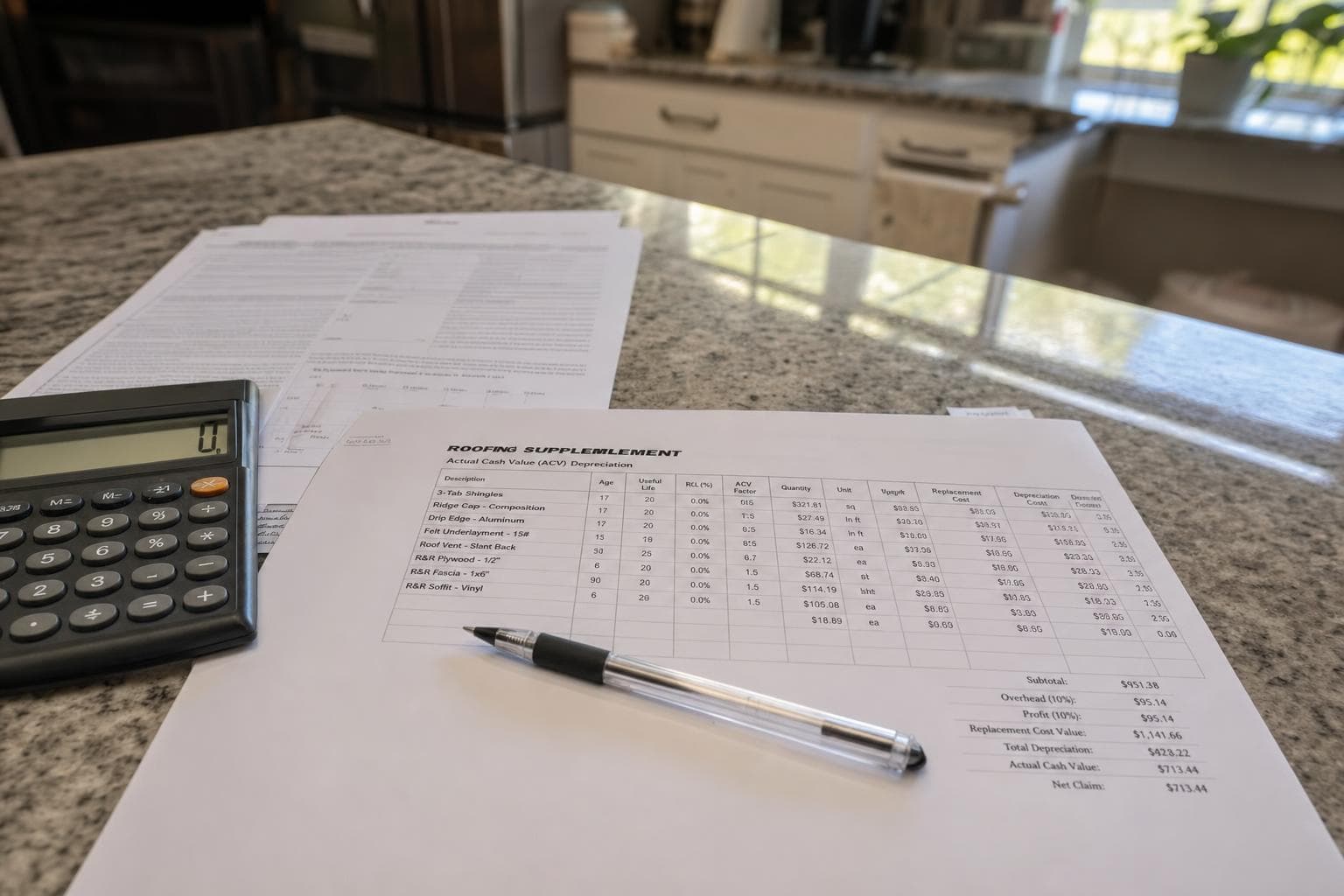
Depreciation is the amount your insurer subtracts for age, wear, and used condition. On an ACV claim, that depreciation is usually not paid back to you. That means your settlement reflects the remaining value of your existing roof, not the full cost of putting on a new one. If your roof is older, the difference can be large. The key point is simple: ACV is not based on what a new roof costs today, it is based on what your used roof was worth right before the damage.
Talk to a roofer today
Planning ranges, scope details, and a direct path to request a roofing quote.
What does an RCV roof claim usually pay for?
In many cases, insurers first issue an initial payment and then release any recoverable depreciation after the work is completed and documented. The exact process depends on your policy, so you want to read the settlement section carefully before storm season and again before signing a replacement contract.
What is a simple ACV vs RCV example for a Georgia roof?
Here is the cleanest way to think about it. For current Georgia planning prices related to acv vs rcv roof coverage, use the cost guide and calculator, then compare the contractor's property-specific written scope. Under RCV coverage, the claim is built from that replacement cost, minus your deductible and subject to your policy terms. Under ACV coverage, the carrier starts from that same replacement cost and then subtracts depreciation for the roof's age and condition, plus your deductible and any policy limits or exclusions. Because depreciation is different from roof to roof, the exact ACV payout depends on your home and policy. What does not change is the structure: RCV is based on replacing the roof now, while ACV reduces that amount for the roof's used value.
- Bottom line: with the same damaged roof, ACV usually leaves you paying more out of pocket than RCV.
Should you choose ACV or RCV for your roof if you live in Georgia?
ACV may lower premium costs in some cases, but it can leave you with a much bigger share of the bill after hail or wind damage. That tradeoff matters in Georgia, where storms are a real part of roof ownership. If your roof already has age on it, ACV can become especially risky because depreciation will likely take a larger bite out of the claim.
How do impact-resistant roofs fit into this decision?
A Class 4 impact-resistant roof can make sense if hail is one of your main concerns. For acv vs rcv roof coverage in Georgia, any insurance credit depends on the carrier, policy, address, and exact product; get the amount and documentation requirements from the insurer in writing. There is no fixed statewide percentage, though, because each carrier sets its own credit, so ask your company what they actually discount before you count on a number. For acv vs rcv roof coverage in Georgia, treat Class 4 as a laboratory impact classification for the exact product, not a promise that the installed roof will resist every hail event or avoid damage. If you want to compare more materials, full local pricing lives on the Georgia cost page and the calculator.
What Georgia insurance rules should you know before filing a roof claim?
Your insurer is on a clock once you file, and your deductible is your responsibility. After you submit a completed proof of loss, your insurer generally has to confirm or deny the claim within 15 days, and within 30 days of the claim being reported if no proof of loss is required. Many Georgia policies follow the state's standard fire-policy language and ask for that proof of loss within 60 days of the loss, so document hail and wind damage early. Also, under Georgia law, a contractor cannot pay, waive, rebate, or absorb your insurance deductible to get you to file a claim or buy their services. If someone offers a free roof by eating your deductible, walk away.
How should you choose a roofer after storm damage in Georgia?
Choose a roofing contractor you are considering and verify what you can. Because Georgia has no standalone roofing license, a licensed roofer does not mean much on its own in Georgia. Roofing falls under the general contractor system run by the State Licensing Board for Residential and General Contractors at the Georgia Secretary of State, and a contractor only needs a residential or general contractor license once a job tops an amount that must be confirmed for the written scope in combined labor and materials. That means most full roof replacements should be done by a licensed contractor, but licensed alone says little about quality, so verify the rest before you sign. Ask about recent local jobs, references, and manufacturer certifications. Be careful with out-of-town storm chasers who push you to sign fast right after hail or wind events.
What is the best next step if you are comparing ACV and RCV right now?
Start by checking the declarations page of your policy and looking for the settlement language on the roof. You want to know whether your roof is covered at actual cash value or replacement cost value before the next storm, not after. Then compare that coverage to current 2026 market pricing for the roof you would actually install. If you need a ballpark for materials or upgrades, full local pricing lives on the Georgia cost page and the calculator. If your roof already has storm damage, get a roofing contractor you are considering to inspect it, document the condition, and help you understand the scope before you move forward with a claim.
Sources reviewed
- Georgia Office of Commissioner of Insurance and Safety Fire (file a consumer complaint)
- Georgia Secretary of State (Public Adjusters, Roofing Contractors and Homeowners; HB 423 / deductible law)
- Georgia Attorney General Consumer Protection Division: Beware of Roofers Scamming Storm Victims
- Illinois Department of Financial and Professional Regulation: Find a Licensed Roofer: State Law and Consumer Guidance
- Arizona Department of Insurance and Financial Institutions: Homeowners Insurance
Plan with current pricing
Related services
Updated July 27, 2026
3D Roofs Editorial Team
Editorial Standards