Updated July 27, 2026

3D Roofs Editorial Team
Editorial Standards
For acv vs rcv roof coverage in Ohio, actual-cash-value and replacement-cost settlements depend on the policy's definitions, depreciation method, deductible, limits, exclusions, documentation, and payment stages; ask the insurer to explain the calculation in writing. If your Ohio roof is damaged by hail, wind, ice, or winter wear, that difference can decide whether your claim check covers most of the job or leaves you with a much bigger out-of-pocket bill.
What is the difference between ACV and RCV roof coverage?
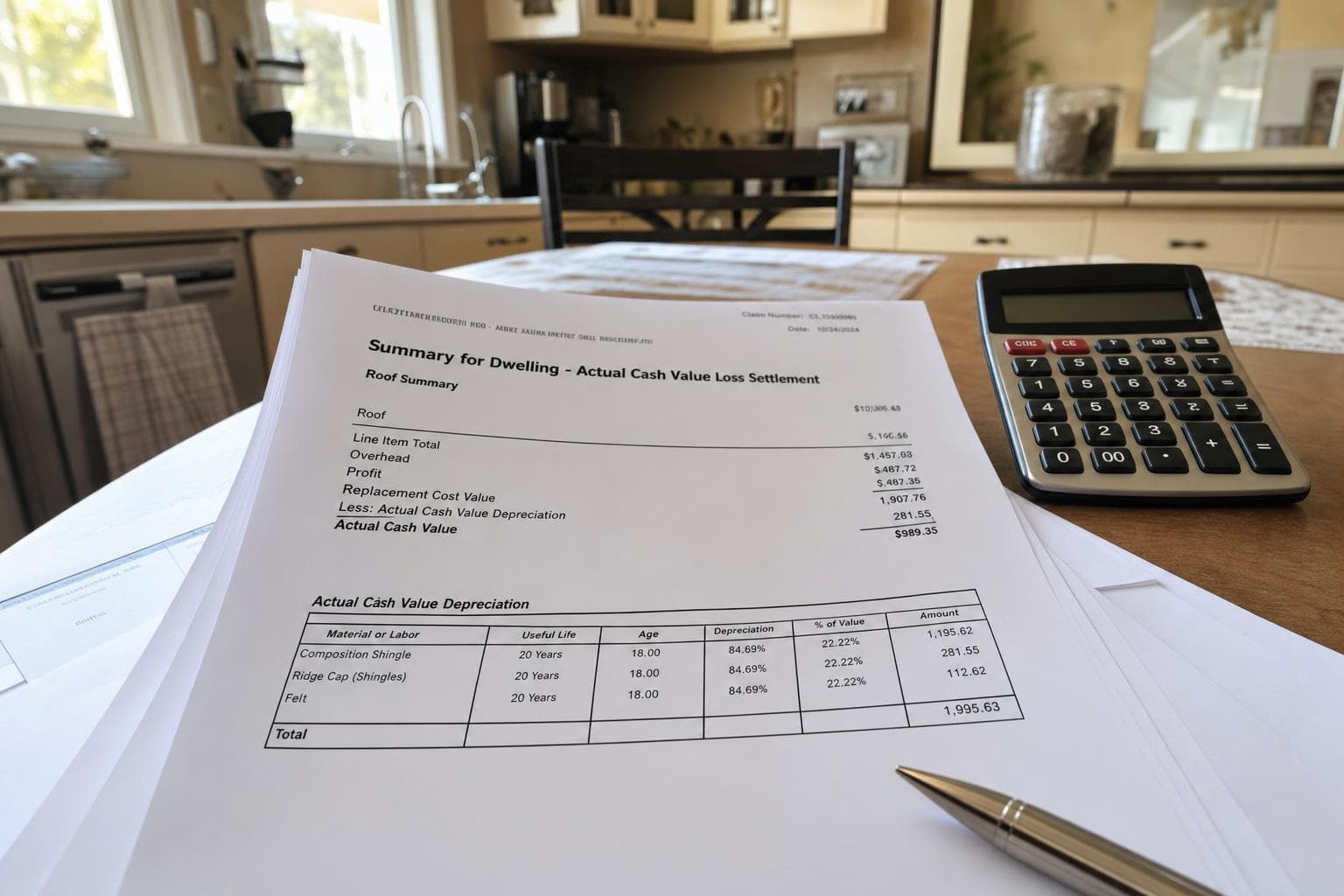
ACV means actual cash value. In plain terms, your insurer looks at what your older roof was worth right before the loss. They subtract depreciation for age and wear, then pay that amount, subject to your deductible and policy terms. RCV means replacement cost value. That coverage is built to pay what it costs to replace the damaged roof with like kind and quality, again subject to your deductible and policy terms.
Which roof coverage usually gives Ohio homeowners better protection?
Warm-season thunderstorms drive hail that bruises shingles and strips granules, plus straight-line and derecho winds strong enough to lift shingles and tear edges. Come winter, heavy snow load, ice dams along the eaves, and repeated freeze-thaw cycling work loose fasteners, flashing, and seams. Humid summers add the heat and moisture that age shingles and grow algae. The specification should address the exposures documented for the property instead of assuming one material solves every condition. Because those conditions age roofing materials over time, ACV policies can cut your payout hard once depreciation is applied. RCV coverage usually gives you a clearer path to restoring the roof without carrying as much of the replacement cost yourself.
How does an ACV vs RCV roof claim work in a real Ohio example?
Here is the cleanest way to compare them. Use one replacement total and apply the coverage type. For current Ohio planning prices related to acv vs rcv roof coverage, use the cost guide and calculator, then compare the contractor's property-specific written scope. Under RCV coverage, the claim is based on the cost to replace the roof, subject to your deductible and policy terms. Under ACV coverage, the same roof starts from that same replacement figure, but your insurer subtracts depreciation first, then applies your deductible and policy terms. The key point is not a made-up payout number. The key point is that both claims start from the same replacement need, but ACV cuts that number down for age and wear while RCV is designed around the full replacement cost.
- RCV claim basis: replacement cost, then deductible and policy terms apply
- ACV claim basis: replacement cost minus depreciation, then deductible and policy terms apply
- Result: ACV usually leaves you with more to pay out of pocket than RCV
Talk to a roofer today
Planning ranges, scope details, and a direct path to request a roofing quote.
Why does depreciation matter so much on an Ohio roof claim?
Depreciation matters because Ohio weather exposure can affect roof condition. A roof that has handled hail bruising, wind uplift, snow load, ice dams, freeze-thaw cycling, humidity, and algae may still be serviceable one day and then fail after the next storm. On an ACV policy, all that prior aging can reduce what the insurer pays for a full replacement. That is why two homeowners on the same street with similar storm damage can end up with very different checks if one has ACV and the other has RCV.
When should you expect repair instead of replacement?
You should expect repairs when damage is limited and your roof system is still broadly sound. That can make sense for a few lifted shingles, minor flashing damage, or a localized leak source. Replacement becomes more likely when hail impact is widespread, wind has creased or torn shingles across multiple slopes, or age and storm damage together make spot fixes a short-term patch. For acv vs rcv roof coverage in Ohio, ask the contractor to put the expected working days and weather plan in writing; timing depends on roof size, material, access, crew scheduling, and conditions found after tear-off. If you want a fuller picture of material options and current numbers, full local pricing lives on the Ohio cost page and the calculator.
Can a stronger shingle change your insurance picture in Ohio?
Yes, it can. For acv vs rcv roof coverage in Ohio, any insurance credit depends on the carrier, policy, address, and exact product; get the amount and documentation requirements from the insurer in writing. The credit is not automatic, though: each insurer sets its own discount, so ask your carrier in writing whether they offer one, then submit the manufacturer's certificate after the install to actually claim it. For acv vs rcv roof coverage in Ohio, treat Class 4 as a laboratory impact classification for the exact product, not a promise that the installed roof will resist every hail event or avoid damage.
What Ohio insurance and contract rules should you know before signing?
Three rules matter right away. First, Ohio has no statewide roofing license, so the rules live in your city. Ohio does not license or register roofing contractors at the state level. Instead, licensing, registration, and permits are handled locally, and the requirements vary by city. Columbus, Cincinnati, and Cleveland each require contractors to register and carry insurance before doing residential work, for example, while smaller towns may require only a permit. Because there is no state credential to lean on, confirm a roofer is registered and permitted in your specific city or county before you sign. Second, a roofer cannot pay or waive your deductible, and offering to is fraud. For acv vs rcv roof coverage in Ohio, do not assume a contractor can remove or hide the deductible required by the policy. Verify current state law and the written proposal with the insurer or state insurance regulator before signing. Third, you get three business days to cancel a contract signed at your door. Under Ohio's Home Solicitation Sales Act, if a salesperson comes to your home and you sign a contract of an amount that must be confirmed for the written scope or more there, you can cancel until midnight of the third business day after signing.
How do you choose a roofing contractor you are considering after storm damage?
Ohio does not issue one statewide roofing license, so use the project address as the starting point. Ask the city or county whether contractor registration and a permit are required, then verify the answer yourself. Request current insurance information, recent references, manufacturer credentials where relevant, and a written scope covering tear-off, decking, underlayment, flashing, ventilation, cleanup, and change-order pricing. After a storm, be cautious with an unfamiliar company that demands a large deposit or a same-day signature. If the sale occurred at your home, read the contract's cancellation notice and confirm the applicable deadline before work begins.
So, is ACV or RCV better for your Ohio roof?
ACV can lower your premium, but it also raises the odds that age and depreciation leave you covering a bigger share of the bill. If you are comparing policies, ask one direct question: is your roof settled at actual cash value or replacement cost value? Then compare that answer against real 2026 market pricing for your roof type. If you want help planning the numbers, check the Ohio cost page and the calculator, then talk with a roofing contractor you are considering about what your roof would likely need after a storm.
Sources reviewed
- Ohio Dept. of Insurance Consumer Services
- Ohio Attorney General (door-to-door sales & 3-day right to cancel)
- Georgia Attorney General Consumer Protection Division: Beware of Roofers Scamming Storm Victims
- Illinois Department of Financial and Professional Regulation: Find a Licensed Roofer: State Law and Consumer Guidance
- Arizona Department of Insurance and Financial Institutions: Homeowners Insurance
Plan with current pricing
Related services
Updated July 27, 2026
3D Roofs Editorial Team
Editorial Standards