Updated July 27, 2026

3D Roofs Editorial Team
Editorial Standards
ACV pays less than RCV when your roof is older, because ACV subtracts depreciation. RCV pays based on the cost to replace the roof, then usually holds back depreciation until the work is done. If you own a home in Texas, that difference matters because hail, heat, UV, and wind can wear a roof fast, and your claim payment can look very different depending on which coverage you have.
What is the difference between ACV and RCV roof coverage in Texas?
ACV means actual cash value. In plain terms, it is the replacement cost minus depreciation for age and wear. RCV means replacement cost value. In plain terms, it is coverage based on what it costs to replace the roof with similar materials at current pricing. For acv vs rcv roof coverage in Texas, actual-cash-value and replacement-cost settlements depend on the policy's definitions, depreciation method, deductible, limits, exclusions, documentation, and payment stages; ask the insurer to explain the calculation in writing.
How does Texas weather make ACV vs RCV more important?
Texas roofs fail where the weather hits hardest, and that varies across the state. North and Central Texas sit in hail country, where spring storms drive granule loss and bruising. The whole state carries a heavy UV and heat load that ages shingles faster than in cooler climates. Along the Gulf coast, hurricanes and tropical systems add wind uplift and wind-driven rain on top of the hail risk. The right roof for your home depends on which of these your area actually sees. Because Texas weather can age a roof quickly, depreciation becomes a bigger issue on ACV policies.
How much could ACV leave you paying out of pocket?
The direct answer is that ACV can leave you paying the deductible plus the depreciated value that your insurer does not cover. The exact depreciation depends on your policy and the condition and age of your roof, so the amount is not one fixed number. What you can compare today is the replacement total itself, because that is the starting point for both ACV and RCV.
- For current Texas planning prices related to acv vs rcv roof coverage, use the cost guide and calculator, then compare the contractor's property-specific written scope.
- For acv vs rcv roof coverage in Texas, ask the contractor to put the expected working days and weather plan in writing; timing depends on roof size, material, access, crew scheduling, and conditions found after tear-off.
- For acv vs rcv roof coverage in Texas, treat a steep or difficult-to-access roof as a scope variable that the contractor should measure and price explicitly.
Talk to a roofer today
Planning ranges, scope details, and a direct path to request a roofing quote.
What does a simple ACV vs RCV example look like on a Texas roof?
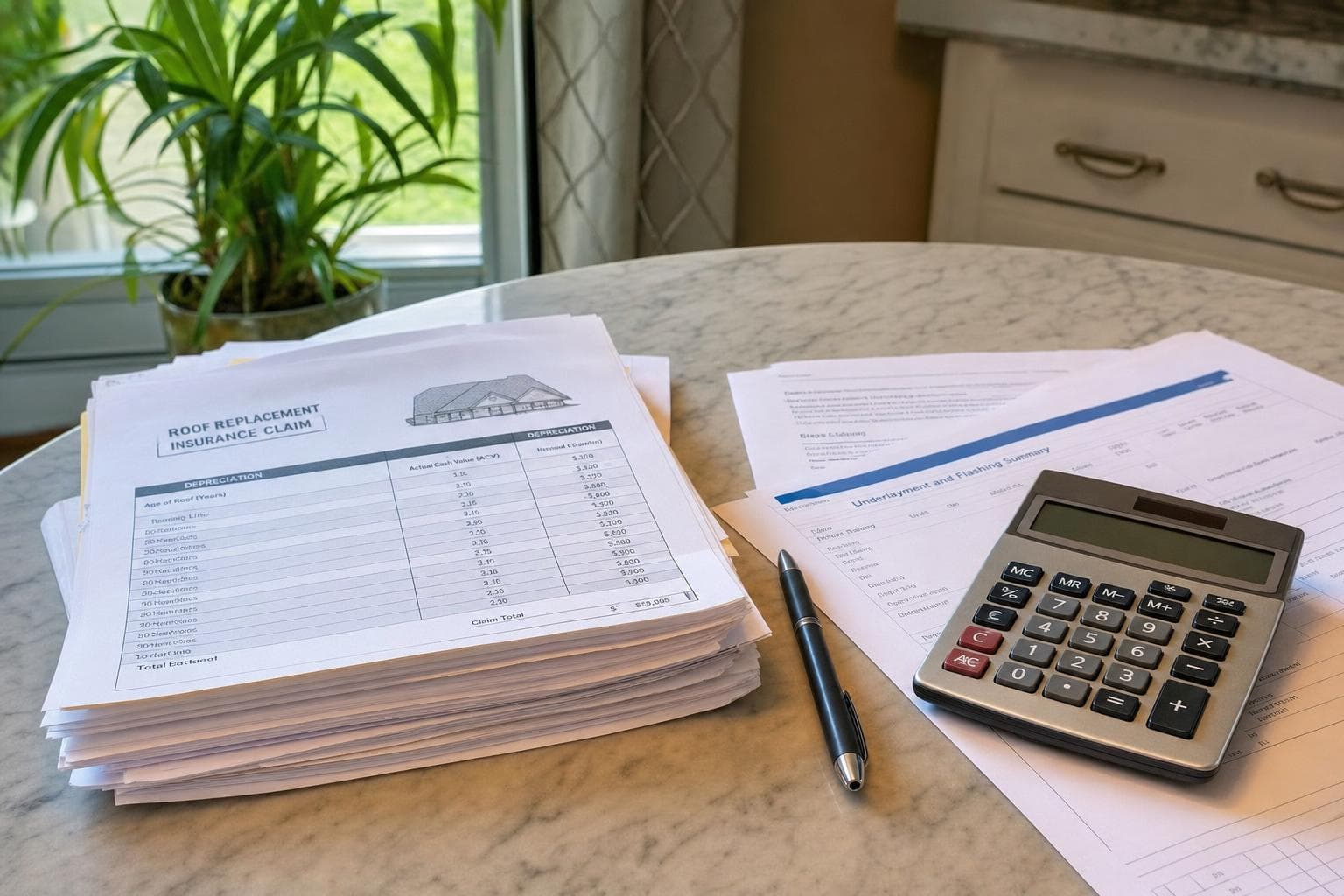
Start with the replacement total, because that is the cleanest way to understand the difference. Under RCV, the claim is built from that replacement cost, subject to your policy terms and deductible. Under ACV, the claim also starts from that replacement cost, but then depreciation is subtracted before payment. That means the ACV payment is lower than the RCV basis whenever the roof has measurable age or wear.
Does RCV mean your insurer writes one full check right away?
Usually, no. RCV often works in stages. The insurer may first pay the actual cash value amount, then release recoverable depreciation after the work is completed and documented, subject to your policy terms. That is why homeowners are often surprised. They hear that they have replacement cost coverage, but the first payment still looks smaller than the full replacement total. The important difference is that RCV can allow you to recover that depreciation later, while ACV usually does not.
Is Class 4 roofing worth comparing for Texas insurance?
Yes, if your home has meaningful hail exposure, Class 4 is worth comparing. Class 4 shingles are worth comparing on Texas homes with meaningful hail exposure. UL 2218 Class 4 is the highest classification in that impact test, but it does not make a roof damage-proof or establish how a policy treats cosmetic damage. Ask your carrier in writing whether the exact product qualifies for a credit, which part of the premium is affected, and what documentation it requires. Texas does not set one statewide credit amount.
- For acv vs rcv roof coverage in Texas, any insurance credit depends on the carrier, policy, address, and exact product; get the amount and documentation requirements from the insurer in writing.
- The savings, if any, depend on your carrier and the exact product documentation
What Texas insurance rules should you know before you sign anything?
First, your roofer cannot pay your deductible, and should not offer to. In Texas it is a crime for a contractor to waive, rebate, or absorb your insurance deductible (Business and Commerce Code Sec. 27.02). Texas insurance-claim roofing contracts must state in writing that you are responsible for paying the deductible. A roofer pitching a "free roof" by eating your deductible is breaking the law, so treat it as a red flag, not a deal.
Second, the roofer doing the work cannot also act as your claims adjuster. Texas law (Insurance Code Sec. 4102.163) bars a contractor from acting as a public adjuster, negotiating or settling your claim, on a job they are also doing. The Texas Supreme Court upheld this in 2024. If a roofer offers to "handle the whole claim with your insurance company," that crosses a legal line.
Third, your insurer is on a clock. Hail and wind claims fall under Insurance Code Chapter 542A (from HB 1774). Your insurer generally has to accept or reject the claim within 15 business days of getting everything it needs to finalize the loss, with a possible extension, and a little more time after a declared catastrophe. If a weather claim ever heads to court, you have to give the insurer written notice at least 61 days first.
How should you compare roof options and next steps in Texas?
Start with the replacement total, then compare how your policy pays it. For many homeowners, the practical question is not whether ACV is cheaper on paper, but whether they can comfortably absorb depreciation after a storm. If not, RCV may be easier to live with when a real claim happens. To compare materials and local 2026 market pricing, check the Texas cost page. If you want to test a roof size and material against current pricing, use the calculator. When you are ready to move forward, a roofing contractor you are considering can inspect the roof, explain the scope, and help you compare the work to your policy paperwork.
Sources reviewed
- Texas Windstorm Insurance Association (coverage eligibility)
- Texas Department of Insurance: What to know about insurance and your roof
- Georgia Attorney General Consumer Protection Division: Beware of Roofers Scamming Storm Victims
- Illinois Department of Financial and Professional Regulation: Find a Licensed Roofer: State Law and Consumer Guidance
- Arizona Department of Insurance and Financial Institutions: Homeowners Insurance
Plan with current pricing
Related services
Updated July 27, 2026
3D Roofs Editorial Team
Editorial Standards