Updated July 10, 2026

3D Roofs Editorial Team
Editorial Standards
There is no single best roof for every Alabama home. For an Alabama property, start with its actual weather exposure and roof geometry, then compare complete assemblies on water control, attachment, ventilation, repairability, local availability, warranty terms, and installed cost. The sections below use Alabama-specific guidance to show which questions matter before choosing a material. For a roof system comparison in Alabama, use the linked Alabama Department of Insurance, Consumer's Guide to Homeowners Insurance reference as the state-reference checkpoint and test the recommendation against the address's wind-driven rain, humid drying, tree debris, shaded slopes, and coastal exposure where it applies.
What roof type is best for Alabama weather?
Class 4 shingles are usually the best overall answer for Alabama weather. Alabama roofs take a steady beating from severe weather and year-round moisture. Thunderstorms, hail, wind-driven rain, and high humidity can shorten shingle life, expose weak flashing, and turn small leaks into decking or attic problems. Heat and strong sun can age roofing materials faster, while coastal homes can face added salt air and storm exposure. In that setting, a roof upgrade should do more than just cover the house, it should better handle repeated storm seasons and help limit damage from impacts and water entry.
- Choose Class 3 when you need a lower upfront cost and still want a stronger shingle option than basic architectural roofing.
- Choose Class 4 when you want the strongest impact-resistant shingle option in this comparison and a better fit for hail-prone and storm-heavy areas.
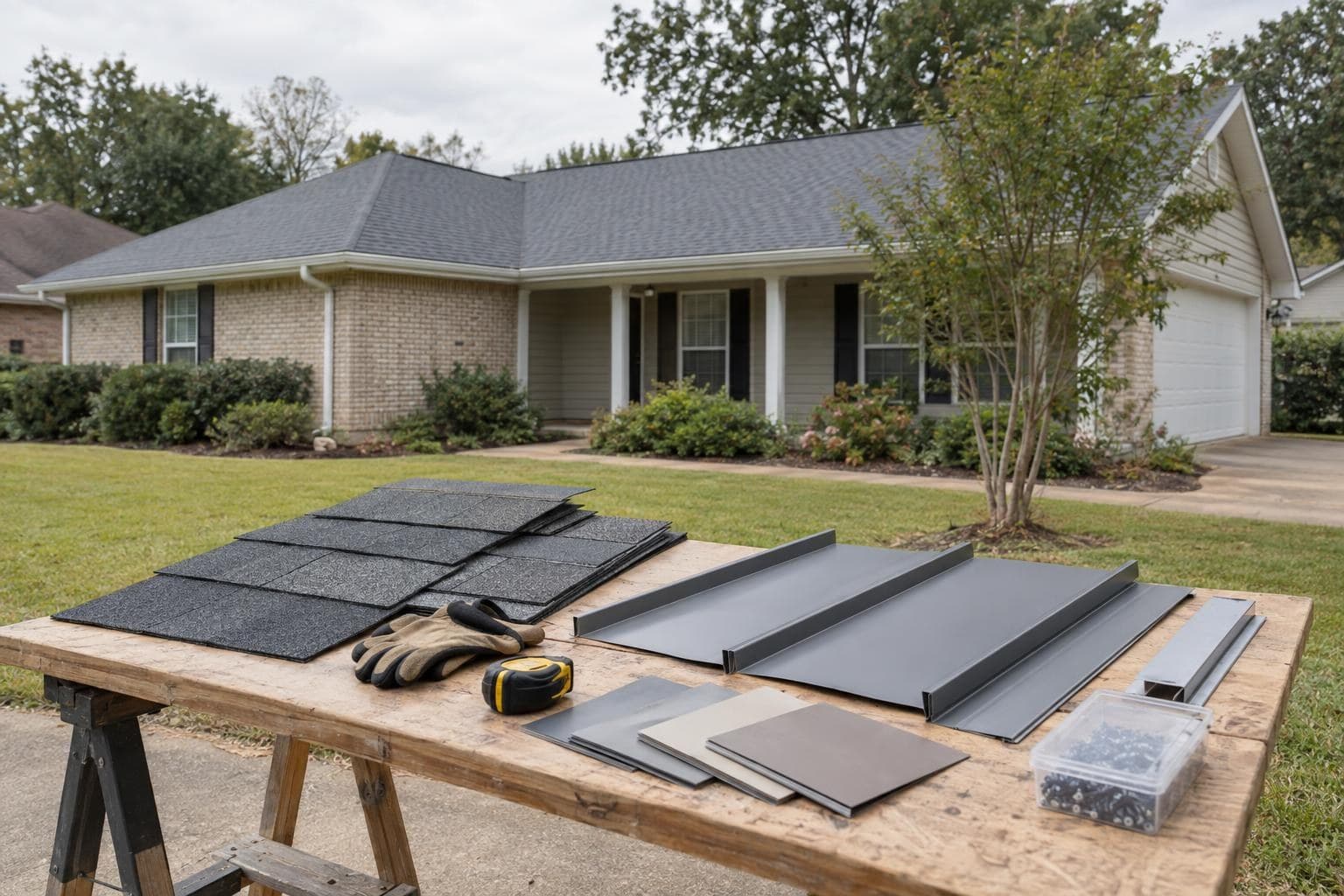
- Choose standing seam metal when you want a premium material and accept a much higher initial investment.
- If your home is near the coast, moisture, salt air, and storm exposure make careful material and flashing decisions even more important.
Is Class 3 or Class 4 better for Alabama homes?
Class 4 is better for most Alabama homes if your budget allows it. The price jump from Class 3 to Class 4 is meaningful, but it is not close to the jump to standing seam metal. Use the current Alabama cost page and calculator to plan a roof-system comparison in Alabama, then require the measured scope to explain any meaningful difference. For many homeowners, that puts Class 4 in the sweet spot: a moderate step up in cost for a roof type that better lines up with Alabama’s hail and storm pattern.
Class 3 still has a place. If you need a full replacement now and want to control upfront cost, Class 3 can be the right move. That is especially true if you are replacing an older roof before small leaks become decking or attic problems, or if you expect to move sooner rather than later. But if you plan to stay in the home and want more protection against impact damage, Class 4 is often the stronger long-term choice.
Is a metal roof worth it in Alabama?
Standing seam metal can be worth it in Alabama, but only if you want a premium roof and are comfortable with the higher initial price. That is far above Class 3 and Class 4. For some homeowners, that premium makes sense. For others, it does not, especially when Class 4 already addresses the biggest concern many Alabama owners have, storm resistance, at a much lower entry cost.
Metal deserves a serious look if you plan to stay put for a long time, want a distinct look, or have a home style that suits it. But if your main goal is to match your roof to Alabama’s real weather without overspending, Class 4 shingles are often the more practical answer. If you want to compare your home size and roof shape in more detail, check the full local pricing on the Alabama cost page and the calculator.
Talk to a roofer today
Planning ranges, scope details, and a direct path to request a roofing quote.
Can Class 4 shingles help with insurance in Alabama?
Yes, they can, but you should verify the details with your carrier before you choose materials. Do not assume a statewide Class 4 credit in Alabama; ask the carrier to verify eligibility and paperwork for the exact product and policy. That can matter in Alabama, where hail and wind are part of the real risk picture. The key is to confirm exactly what your carrier requires, because discount availability and underwriting rules can vary by carrier.
- Ask whether your policy offers a Class 4 discount.
- Ask what product documentation is required.
- Ask how your deductible, exclusions, actual cash value versus replacement cost terms, and any roof-related endorsements affect a future claim.
- Remember that homeowners policies are package policies, not just roof coverage, so roof damage can connect to interior water damage or temporary living costs depending on your policy terms.
It also helps to remember how Alabama insurance works. The Alabama Department of Insurance says home insurance is not required by law in most states, but if your home is mortgaged, your lender may require insurance on the home. The Department also says, "To get the best value for your money, you must take responsibility for your home insurance purchase and make your own decisions." That means you should not assume a roofing upgrade changes coverage automatically. Ask direct questions before the work starts.
How much does the best roof for Alabama cost?
When planning a roof-system comparison in Alabama, ask how roof shape, staging, weather, inspections, and concealed deck conditions affect both duration and labor. Ask how pitch changes fall protection, staging, access, and production for a roof-system comparison in Alabama; the adjustment should come from the job plan, not a universal percentage. Those numbers make the tradeoff clear: Class 4 costs more than Class 3, but it is still far closer to standard shingle pricing than to metal pricing.
If your current roof is older, delaying the decision can get expensive in a different way. Alabama’s humidity and repeated storms can let minor damage grow. A small leak can become wet decking, attic issues, or interior staining. In many cases, paying for the better-fit roof now is easier than paying for repeated repairs and then replacing the roof anyway. For more exact local pricing, use the Alabama cost page and the calculator.
How do you choose the right roofer for an Alabama roof replacement?
Start by confirming the Alabama credential for your project and making sure the paperwork matches the business doing the work. In Alabama, you can check whether your roofer appears in the Home Builders Licensure Board system and whether the contractor is using the right license type for residential roofing. The Board has a dedicated roofers license application, and its FAQ says an Unlimited Home Builders License holder may engage in residential roofing without a separate roofers license, while a Limited Home Builders License holder must get a Roofers License to engage in residential roofing.
The same Board FAQ also says the law regulating residential home builders does not address insurance. For you, that means do not assume anything from a sales pitch alone. Ask your roofer which Alabama credential they hold for your project, confirm it through the Board, and make sure the name on your paperwork matches the name tied to that credential. A qualified local roofing contractor can also help document the product information you may need if you are asking your carrier about a Class 4 discount.
So what is the best roof for Alabama?
For most homeowners, Class 4 shingles are the best roof for Alabama because they best match the state’s weather at a price that is still realistic for many budgets. Class 3 is the value option when cost comes first. Standing seam metal is the premium option when you want a different material and can justify a much higher upfront spend. If you want the short version, choose Class 4 for the best balance, choose Class 3 for the lower price, and choose metal only when you specifically want metal and are ready for the cost.
Sources
- Insurance Institute for Business & Home Safety: Roof 101
- Asphalt Roofing Manufacturers Association: Residential Asphalt Roofing Manual: Ventilation Best Practices
- Alabama Department of Insurance, Consumer's Guide to Homeowners Insurance
- Home Builders Licensure Board, New Roofers License Application Packets
Match the assembly to the Alabama address
Treat coastal salt, inland trees, low-slope additions, and roof geometry as address-level questions rather than statewide assumptions. Eliminate products that do not fit slope, structure, drainage, permit requirements, or exposure before comparing appearance and price. The recommended material should be connected to the roof geometry and the conditions observed during inspection. For a Alabama property, treat coastal salt, inland trees, low-slope additions, and roof geometry as address-level questions rather than statewide assumptions.
Reviewed technical references for Alabama
Related Alabama roofing guides
Related services
Updated July 10, 2026
3D Roofs Editorial Team
Editorial Standards