Updated July 10, 2026

3D Roofs Editorial Team
Editorial Standards
There is no single best roof for every Connecticut home. For a Connecticut property, start with its actual weather exposure and roof geometry, then compare complete assemblies on water control, attachment, ventilation, repairability, local availability, warranty terms, and installed cost. The sections below use Connecticut-specific guidance to show which questions matter before choosing a material. For a roof system comparison in Connecticut, use the linked Connecticut Insurance Department, Homeowners Storm Claims reference as the state-reference checkpoint and test the recommendation against the address's cold eaves, freeze-thaw transitions, snow and rain drainage, masonry details, and attic moisture.
What roof works best in Connecticut weather?
Class 4 asphalt shingles are worth comparing in Connecticut when impact resistance is a priority, but roof geometry, assembly details, product availability, repairability, and budget still control the choice. Your roof in Connecticut has to handle snow, ice, wind, rain, and coastal storm conditions. Winter weather can push water back under shingles when ice builds up along eaves. Wind-driven rain can test flashing, ridge details, and older seal strips. In warmer months, storm seasons and humid weather can expose weak spots around penetrations, valleys, and roof-to-wall transitions. Near the shoreline, hurricane-related deductibles and coastal exposure can matter more, so material choice and installation details become even more important.
- Choose Class 3 when you want solid protection at the lowest the latest local cost data
- Choose Class 4 when you want better impact resistance and may want to ask your insurer about a discount
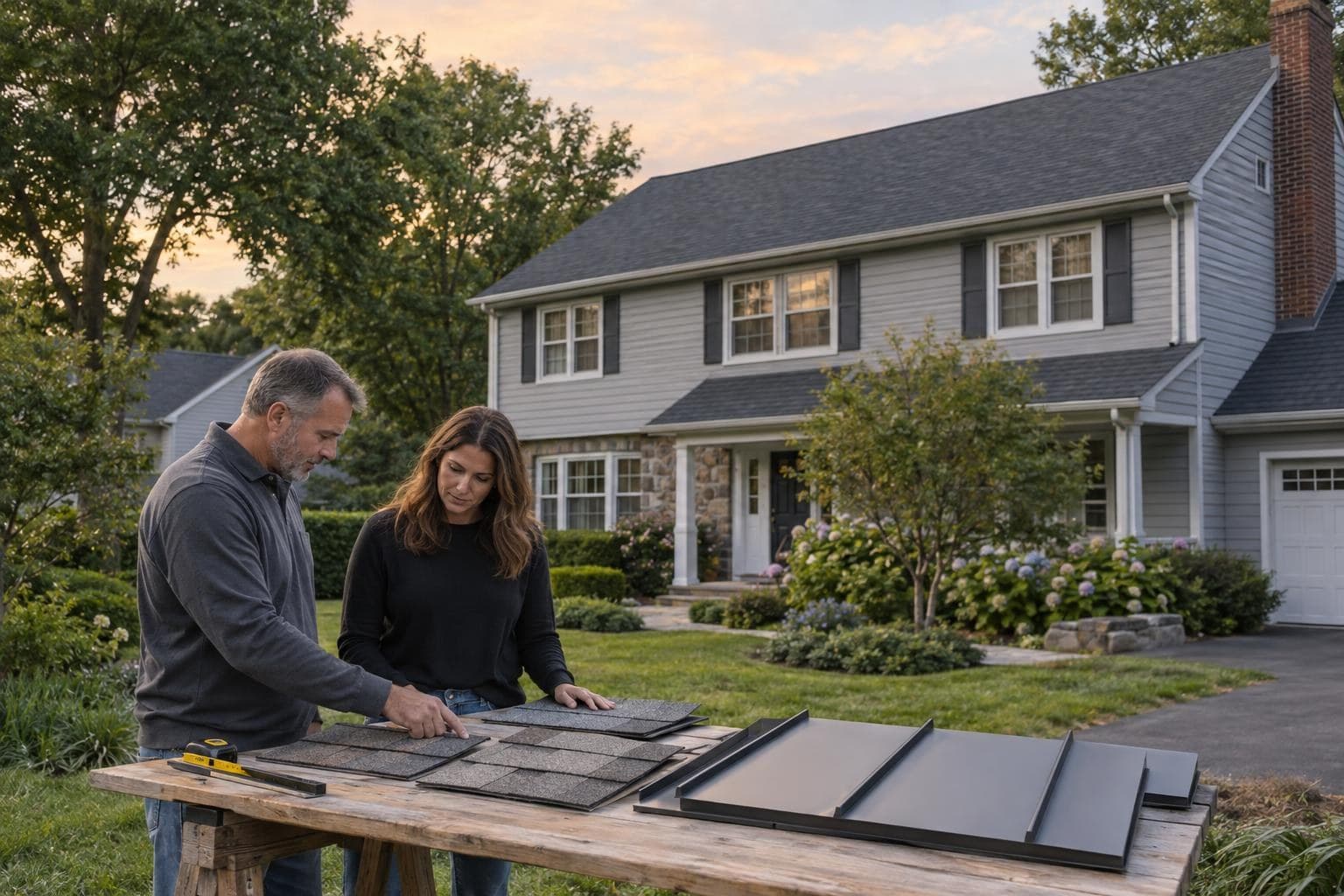
- Choose standing seam metal when your home has heavier weather exposure or you want a premium material option
- Pay close attention to flashing, valleys, eaves, ridges, and roof-to-wall transitions, because many leaks start there before the field shingles fail
Is Class 3 or Class 4 better for Connecticut?
Class 4 is better if you want more protection against storm wear and a possible insurance benefit. Class 3 is better if your budget is tighter and your roof exposure is more moderate. Check current Connecticut cost data for a roof-system comparison in Connecticut, then replace the range with an assembly-specific proposal based on measured conditions. That puts the upgrade at a meaningful but still manageable step up for many homeowners who plan to stay in the home and want more protection from the kind of weather Connecticut gets.
If you are considering a Class 4 impact-resistant shingle, ask your insurer whether it offers a premium discount and what documentation it requires. Discounts are set by individual carriers, not by a single statewide rule, so the savings and eligibility can vary by policy. A Class 4 rating does not establish a policy credit in Connecticut; the carrier and policy determine eligibility, documentation, and savings. That does not mean every policy gives the same result, but it is a real reason many Connecticut homeowners look hard at Class 4 instead of stopping at standard architectural shingles.
Is metal roofing worth it in Connecticut?
Standing seam metal is worth it if you want a premium roof for tough exposure and you are comfortable with the higher upfront cost. That is far above Class 3 and Class 4, so metal is usually not the value pick if your main goal is keeping replacement cost down. It is the better fit when you care more about material type, harsh weather performance, and a premium look.
Metal can make sense near the coast, on homes with more wind exposure, or where repeated wet weather tends to test weaker roofing systems. Still, the material alone does not solve every problem. Your roofer still has to get the details right at eaves, flashing, penetrations, valleys, and transitions. In Connecticut, those details matter because wind-driven rain and winter ice can find small installation mistakes fast.
Talk to a roofer today
Planning ranges, scope details, and a direct path to request a roofing quote.
What should shoreline homeowners in Connecticut choose?
Near the shoreline, Class 4 or standing seam metal usually makes the most sense because coastal exposure raises the stakes. If your home sees stronger gusts, heavier wind-driven rain, or more storm concern than an inland property, stepping up from Class 3 is often the smart move.
Insurance details matter here too. The Connecticut Insurance Department says homeowners policies cover damage caused by windstorm even when the cause is described as an "Act of God." It also says homeowners coverage applies regardless of how the windstorm is classified, including hurricane or tornado. For you, that means the label used for the storm does not by itself take wind coverage away. The Department also says a hurricane deductible may be imposed only under specific circumstances related to the storm, and that if your policy contains one, its application must comply with Connecticut law. The Department also says the percentage and dollar amount of the hurricane deductible will be listed on the declarations page if it applies to the policy. For you, the practical step is simple: review that page before storm season so you know what deductible would apply.
How much does a new roof cost in Connecticut?
Those numbers give you a clean way to compare value. If you are deciding between shingle grades, the jump from Class 3 to Class 4 is much smaller than the jump from Class 4 to metal.
- Before approving a roof-system comparison in Connecticut, have the bidder connect timing to roof complexity, crew access, material handling, weather, inspections, and concealed conditions.
Those tools help you line up material choice with roof size, complexity, and your likely budget range before you talk with a roofer whose credentials and written scope you checked.
What insurance rules should Connecticut homeowners know before replacing a roof?
The key thing to know is that wind claims and deductible rules are more specific than many homeowners realize. The Connecticut Insurance Department says insurance companies may offer a windstorm or hail deductible, and consumers may choose it in place of an overall policy deductible. It also says windstorm or hail deductibles may not be mandated by insurers in Connecticut. If your policy uses one, check the declarations page so you know whether it is a flat dollar amount or a percentage deductible.
You should also separate wind damage from flood damage in your planning. The Connecticut Insurance Department says damage from flooding is excluded from homeowners insurance, and separate flood policies can be purchased. It also says there is a 30-day waiting period before a flood insurance policy take effect. If roof leaks are tied to wind damage, that is one issue. If water enters because of flooding or overflow, that is treated differently under insurance.
How do you choose the right roofer in Connecticut?
Start by checking registration, then ask about experience with your roof type and keep your paperwork. The Department of Consumer Protection says all Home Improvement Contractors, New Home Construction Contractors, and Home Improvement Salespeople must be registered with the Department of Consumer Protection, and it tells consumers to verify licenses and registrations before hiring. The same source also says contractors are required to be registered before advertising or beginning home improvement work. For you, that means you should check state registration, ask for references, ask about experience with the kind of roofing work you need, and keep copies of contracts, receipts, permits, and written communication.
If you are comparing Class 3, Class 4, and metal, ask each local roofing contractor you have vetted how they handle ice-prone eaves, flashing upgrades, valley details, ventilation, and roof-to-wall transitions. In Connecticut, those details often matter as much as the material itself. A lower bid is not always the better value if it skips the parts of the job that protect your home during wind-driven rain, snow melt, and coastal storms.
So what is the best roof for Connecticut?
For most homeowners, the best roof for Connecticut is Class 4 because it gives you stronger impact resistance than Class 3 without the steep price jump to standing seam metal. Choose Class 3 when you need the most budget-friendly replacement and your exposure is fairly average. Choose standing seam metal when you want a premium material and your home faces tougher conditions, especially near the shoreline. If you are unsure, start with current local cost ranges on the Connecticut cost page and the calculator, then talk with a local roofer you have vetted about your roof pitch, storm exposure, and the weak points specific to your home.
Sources
Reviewed technical references for Connecticut
Related Connecticut roofing guides
Related services
Updated July 10, 2026
3D Roofs Editorial Team
Editorial Standards