Updated July 27, 2026

3D Roofs Editorial Team
Editorial Standards
If damage is isolated and the rest of your roof is still in solid shape, repair usually makes the most sense. For roof repair vs replacement in Connecticut, do not use a fixed damage percentage as the decision rule; compare the repairable area, roof condition, material availability, code requirements, and written scopes. In Connecticut, that decision matters more because your roof has to handle snow, ice, wind, rain, and coastal storm conditions. Those weather patterns can turn a small weak spot into a recurring leak if you only patch the symptom.
Should you repair or replace your roof in Connecticut?
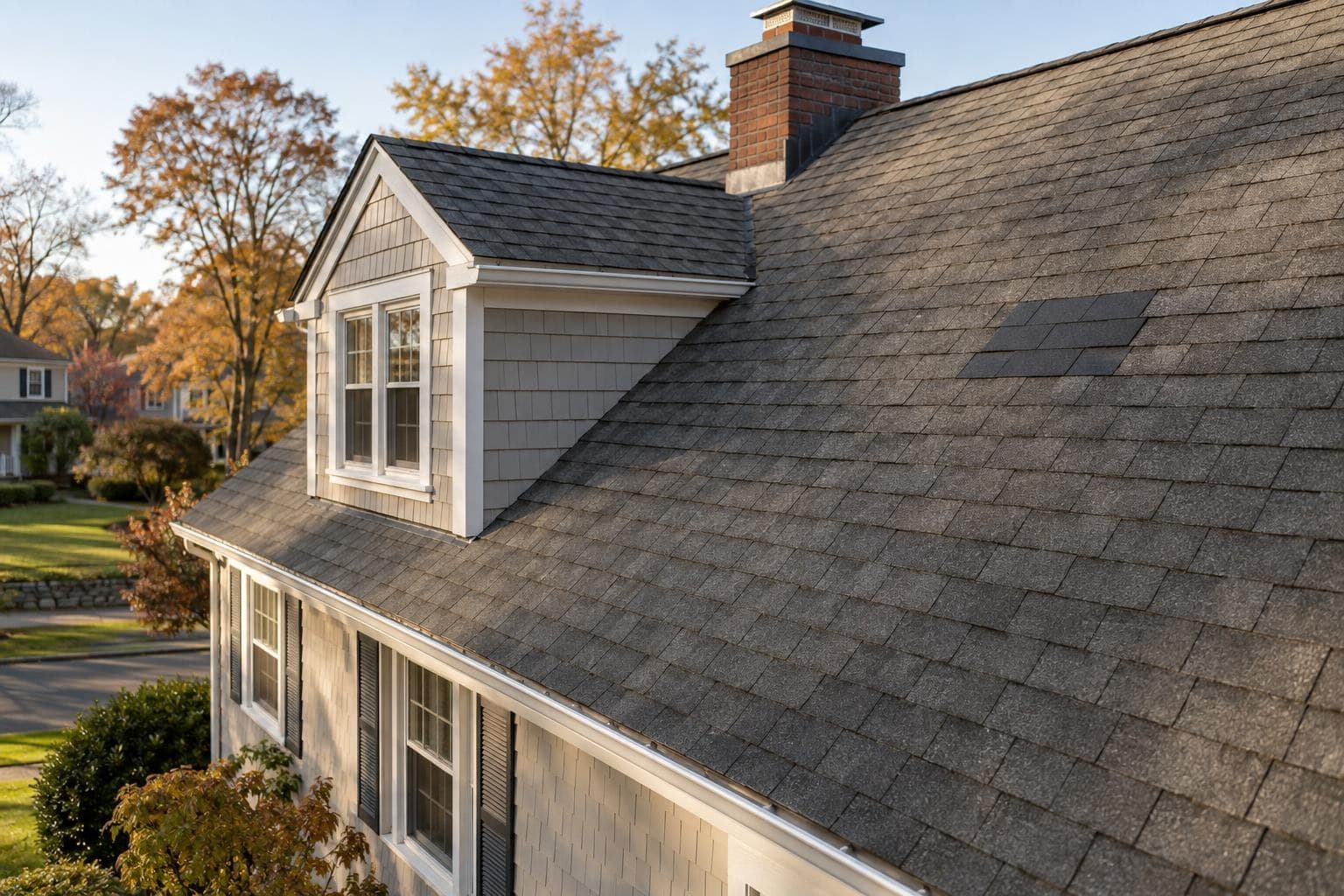
Start with the simplest answer: repair for isolated problems, replace for broad wear or storm damage across large sections. A repair is usually the smarter call when the issue is limited to a few shingles, one flashing area, a pipe boot, a valley detail, or a small leak source. For a repair-versus-replacement decision in Connecticut, compare a diagnosed repair scope with a measured replacement proposal; both should identify affected slopes, flashing, deck conditions, and exclusions.
Replacement becomes the smarter buy when multiple roof sections are failing at once, leaks are showing up in more than one area, shingles are losing grip or granules across many slopes, or repeated repairs are starting to stack up. Before approving a repair-versus-replacement decision in Connecticut, have the bidder connect timing to roof complexity, crew access, material handling, weather, inspections, and concealed conditions. If you want full local pricing, you can compare options on the Connecticut cost page and the calculator.
How much damage is too much for a repair?
If damage is limited to one spot, repair is usually enough. If it spreads across multiple planes, multiple leak points, or a large share of the roof surface, replacement is usually the safer call. Base the repair decision in Connecticut on mapped damage, remaining roof condition, material compatibility, water-control details, and repair history rather than a percentage shortcut.
- Choose repair when damage is isolated to a small section and surrounding materials still have life left.
- Lean toward replacement when shingles are cracked, lifted, missing, or worn across several areas.
- Replace sooner when leaks involve valleys, roof-to-wall transitions, ridge details, or widespread flashing failure.
- Be cautious with patchwork if one repair leads to another every season or after each major storm.
How does roof age affect the repair vs replacement decision?
Older roofs are usually poorer repair candidates because a fix only addresses one failed area, not the overall wear. Even when a repair is technically possible, it may not be the best value if the roof is near the end of its useful life or showing age in several places. On a newer roof with one clear problem, a targeted repair often works well. On an older roof with brittle shingles, weakened seal strips, or recurring leaks, replacement usually gives you a better outcome.
This is where Connecticut weather changes the math. Winter weather can push water back under shingles when ice builds up along eaves. Wind-driven rain can test flashing, ridge details, and older seal strips. In warmer months, storm seasons and humid weather can expose weak spots around penetrations, valleys, and roof-to-wall transitions. If your roof is already aging, those conditions can make a marginal roof fail faster.
Talk to a roofer today
Planning ranges, scope details, and a direct path to request a roofing quote.
Why does Connecticut weather push some roofs from repair to replacement?
Because Connecticut weather stresses the whole roofing system, not just the visible leak spot. Snow and ice can create backup under the lower edge of the roof. Wind-driven rain can work into small gaps that stay hidden until the next storm. Coastal exposure can increase the stakes even more, especially near the shoreline where hurricane-related deductibles and coastal exposure can matter more, so material choice and installation details become even more important.
That means a roof with isolated damage after one event may still be repairable, but a roof with repeated seasonal issues often needs more than a patch. If the same storm pattern keeps finding a new opening, replacement can be the more cost-effective answer because it updates underlayment, flashing details, and field shingles together.
What does a new roof cost in Connecticut in 2026?
Check current Connecticut cost data for a repair-versus-replacement decision in Connecticut, then replace the range with an assembly-specific proposal based on measured conditions. Those numbers help frame the repair-versus-replace choice: if you are facing a modest isolated fix, repair is often easy to justify. If you are paying for repeated repairs on an aging roof, the replacement number becomes easier to defend because you are buying a full reset instead of another temporary correction.
If impact resistance is part of your decision, a Class 4 shingle may be worth asking about. A Class 4 rating does not establish a policy credit in Connecticut; the carrier and policy determine eligibility, documentation, and savings. If you are considering a Class 4 impact-resistant shingle, ask your insurer whether it offers a premium discount and what documentation it requires. Discounts are set by individual carriers, not by a single statewide rule, so the savings and eligibility can vary by policy.
What should you know about insurance before deciding?
Check your deductible and the cause of loss before you choose repair or replacement. The Connecticut Insurance Department says homeowners policies cover damage caused by windstorm even when the cause is described as an "Act of God." It also says homeowners coverage applies regardless of how the windstorm is classified, including hurricane or tornado. For you, that means the label used for the storm does not by itself take wind coverage away.
You should also review your declarations page. The Connecticut Insurance Department says insurance companies may offer a windstorm or hail deductible, and consumers may choose it in place of an overall policy deductible. It also says windstorm or hail deductibles may not be mandated by insurers in Connecticut. The same Department says a hurricane deductible may be imposed only under specific circumstances related to the storm, and that if your policy contains one, its application must comply with Connecticut law. If your policy uses any of these deductibles, confirm whether it is a flat dollar amount or a percentage before you commit to the scope of work.
One more point matters if water got into the house. The Connecticut Insurance Department says damage from flooding is excluded from homeowners insurance, and separate flood policies can be purchased. It also says there is a 30-day waiting period before a flood insurance policy take effect. If roof leaks are tied to wind damage, that is one issue. If water enters because of flooding or overflow, that is treated differently under insurance.
How do you make the final call with confidence?
Use a simple filter: choose repair when the problem is isolated, the surrounding roof is still sound, and the roof is not showing broad age-related wear. Then compare that decision against current local cost ranges, your deductible, and whether a better material choice could reduce future headaches.
Before hiring, check state registration, ask for references, ask about experience with the kind of roofing work you need, and keep copies of contracts, receipts, permits, and written communication. If you are still deciding, review the Connecticut cost page and the calculator to compare material options and budget ranges, then talk with a roofer whose credentials and written scope you checked about whether your roof has a repair problem or a replacement problem.
Sources
Map the Connecticut roof condition by area
Record cause, consequence, distribution, and uncertainty for each slope or roof section. Distinguish covering, flashings, edges, penetrations, drainage, deck, attic, and appearance-only findings. Roof age and a single interior stain do not define the construction boundary by themselves. For a Connecticut property, use the property's elevation, distance from marine exposure, roof age, attic design, and construction history to define the decision.
Reviewed technical references for Connecticut
Related Connecticut roofing guides
Related services
Updated July 27, 2026
3D Roofs Editorial Team
Editorial Standards