Updated July 10, 2026

3D Roofs Editorial Team
Editorial Standards
There is no single best roof for every Delaware home. For a Delaware property, start with its actual weather exposure and roof geometry, then compare complete assemblies on water control, attachment, ventilation, repairability, local availability, warranty terms, and installed cost. The sections below use Delaware-specific guidance to show which questions matter before choosing a material. For a roof system comparison in Delaware, use the linked Delaware Department of Insurance, Storm Preparedness reference as the state-reference checkpoint and test the recommendation against the address's coastal wind where applicable, inland tree exposure, freeze-thaw cycles, drainage, and complex wall details.
What roof offers stronger impact resistance in Delaware weather?
Class 4 shingles are usually the best fit for Delaware weather because this state gets a mix of hurricanes, coastal storms, heavy rain, strong wind, and humidity. That matters because wind can lift shingles, rain can drive water under roof coverings, and damp conditions can keep roof surfaces wet longer. A stronger shingle system gives you more margin when storms hit and when aging materials start to weaken around flashing, penetrations, and other vulnerable areas.
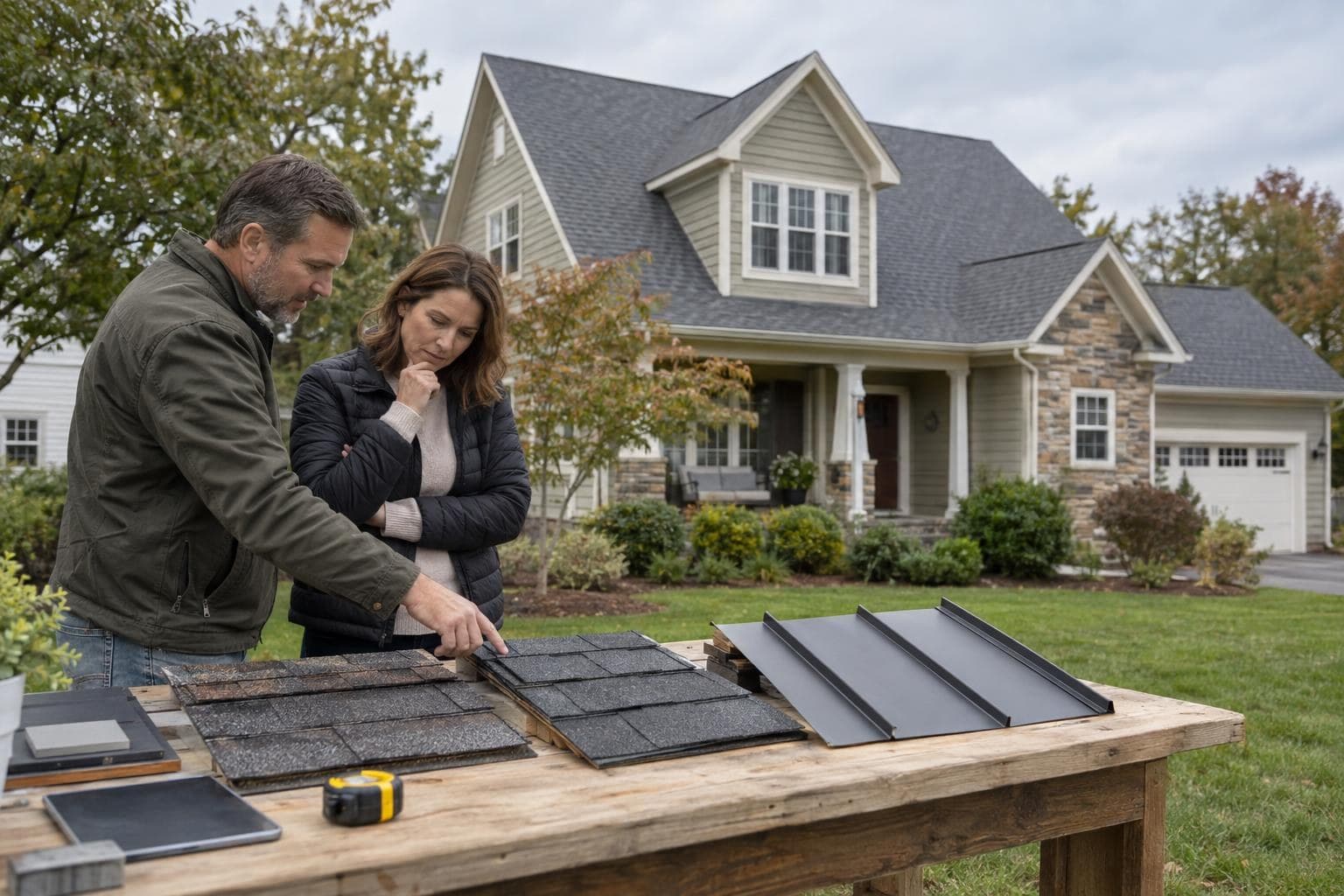
That does not mean every home needs the most expensive roof. If your budget is tighter, Class 3 can still be a practical choice. If you want a premium option and are comfortable with a much higher investment, standing seam metal is also worth a look. The right answer depends on what you want most: lower upfront cost, a stronger impact rating, or a longer-term premium upgrade.
Should you choose Class 3 or Class 4 shingles in Delaware?
Choose Class 3 if price is your main concern. Choose Class 4 if you want the better all-around match for Delaware storms. Check current Delaware cost data for a roof-system comparison in Delaware, then replace the range with an assembly-specific proposal based on measured conditions. That gap is meaningful, but it is not so large that Class 4 is out of reach for many homeowners comparing replacement options.
- Class 3: lower upfront cost, solid step up if you need to control the project budget
- Class 4: better fit if you want stronger impact resistance and a possible policy-specific premium credit
- Both: can work in Delaware, but installation quality, flashing details, and fast storm repairs still matter
For many Delaware homes, the real question is whether the extra cost for Class 4 is worth it. If you expect to stay in the house, want more storm-focused protection, or want to ask your carrier about an impact-resistant discount, Class 4 often comes out ahead on value.
Is a metal roof worth it in Delaware?
Standing seam metal can be worth it in Delaware if you want a premium roof and plan to keep the home long enough to justify the price. That is far above Class 3 and Class 4, so metal is usually not the default best buy for most homeowners shopping on price.
Where metal can make sense is on homes where you want a different look, a premium system, or a roof choice that feels like a long-term upgrade instead of a basic replacement. But if you are choosing strictly on Delaware weather and cost together, Class 4 shingles are often the more balanced answer.
Talk to a roofer today
Planning ranges, scope details, and a direct path to request a roofing quote.
How much should you expect to pay for a Delaware roof replacement?
Before approving a roof-system comparison in Delaware, have the bidder connect timing to roof complexity, crew access, material handling, weather, inspections, and concealed conditions.
Those numbers help frame the decision quickly. Class 4 is not a small jump from Class 3, but it is still much closer to Class 3 than to metal. That is a big reason many homeowners land there.
Can Class 4 shingles lower your insurance cost in Delaware?
Yes, they can, but you need to ask your carrier before you replace the roof. Delaware guidance on impact-resistant roofing says to ask your carrier whether they offer a discount for Class 4 rated shingles. It also says discounts are set by each insurance company, and the available savings, if any, can vary by policy and home.
A Class 4 rating does not establish a policy credit in Delaware; the carrier and policy determine eligibility, documentation, and savings. The practical move is simple: confirm the product rating, keep the product paperwork, and ask your carrier what documentation they want before the job starts or before the final paperwork is submitted.
What should you do after storm damage in Delaware?
Start with temporary protection, document everything, and do not rush into a full repair contract before your claim is reviewed. Delaware's storm preparedness guidance says, "The policy requires the policyholder to protect the property from further damage." That means you may need to cover roof openings, limit water entry, and keep records of what you spent.
State guidance also says you may need to make immediate temporary repairs after a storm, keep all bills and receipts, and "Do not contract for repairs, other than temporary repairs, prior to agreement with the claim adjuster or agent." It also says, "Do not be rushed into signing repair contracts." If there is visible damage, photograph it, keep old records and receipts, and make a list of structural issues. Delaware says the more information you have, the faster your claim generally can be settled.
How do you choose a roofer whose credentials and written scope you checked in Delaware?
Start by confirming basic registration details and reading the written scope before you sign. In Delaware, roofing falls under construction services, and the Delaware Department of Insurance says businesses that perform construction services must be registered with the Delaware Department of Labor's Office of Contractor Registration before work begins in the state. The Delaware Department of Insurance also says contractors conducting business activity in Delaware are required to register with and obtain a business license from the Delaware Division of Revenue.
- Ask your roofer for the exact business name they use for registration
- Confirm they appear in the state's contractor registry
- Confirm they hold a Delaware business license
- Review the written scope, materials, cleanup terms, and payment terms before signing
- After storm damage, do not let anyone pressure you into signing before your claim is reviewed
So, what is the best roof for Delaware homeowners?
For most homes, Class 4 shingles are the best roof for Delaware because they line up well with the state's mix of wind, rain, storm exposure, and humidity without pushing the project into metal-roof pricing. Class 3 is the right choice when you need to keep the replacement budget lower. Standing seam metal is a premium option when you want that upgrade and are comfortable paying much more upfront.
If you are comparing bids now, use Delaware weather as your filter, not just the base price. A cheaper roof can still work, but the better value often comes from choosing the material that fits your storm risk, your insurance goals, and how long you expect to own the home. For side-by-side local numbers, check the Delaware cost page and the calculator, then talk with a local roofer you have vetted about the best fit for your house.
Sources
Reviewed technical references for Delaware
Related Delaware roofing guides
Related services
Updated July 10, 2026
3D Roofs Editorial Team
Editorial Standards