Updated July 10, 2026

3D Roofs Editorial Team
Editorial Standards
There is no single best roof for every Idaho home. For a Idaho property, start with its actual weather exposure and roof geometry, then compare complete assemblies on water control, attachment, ventilation, repairability, local availability, warranty terms, and installed cost. The sections below use Idaho-specific guidance to show which questions matter before choosing a material. For a roof system comparison in Idaho, use the linked Idaho Department of Insurance, Home & Renters Claims reference as the state-reference checkpoint and test the recommendation against the address's elevation, snow and ice behavior, open-edge wind, solar intensity, and safe winter repair access.
What roof type is best for Idaho weather?
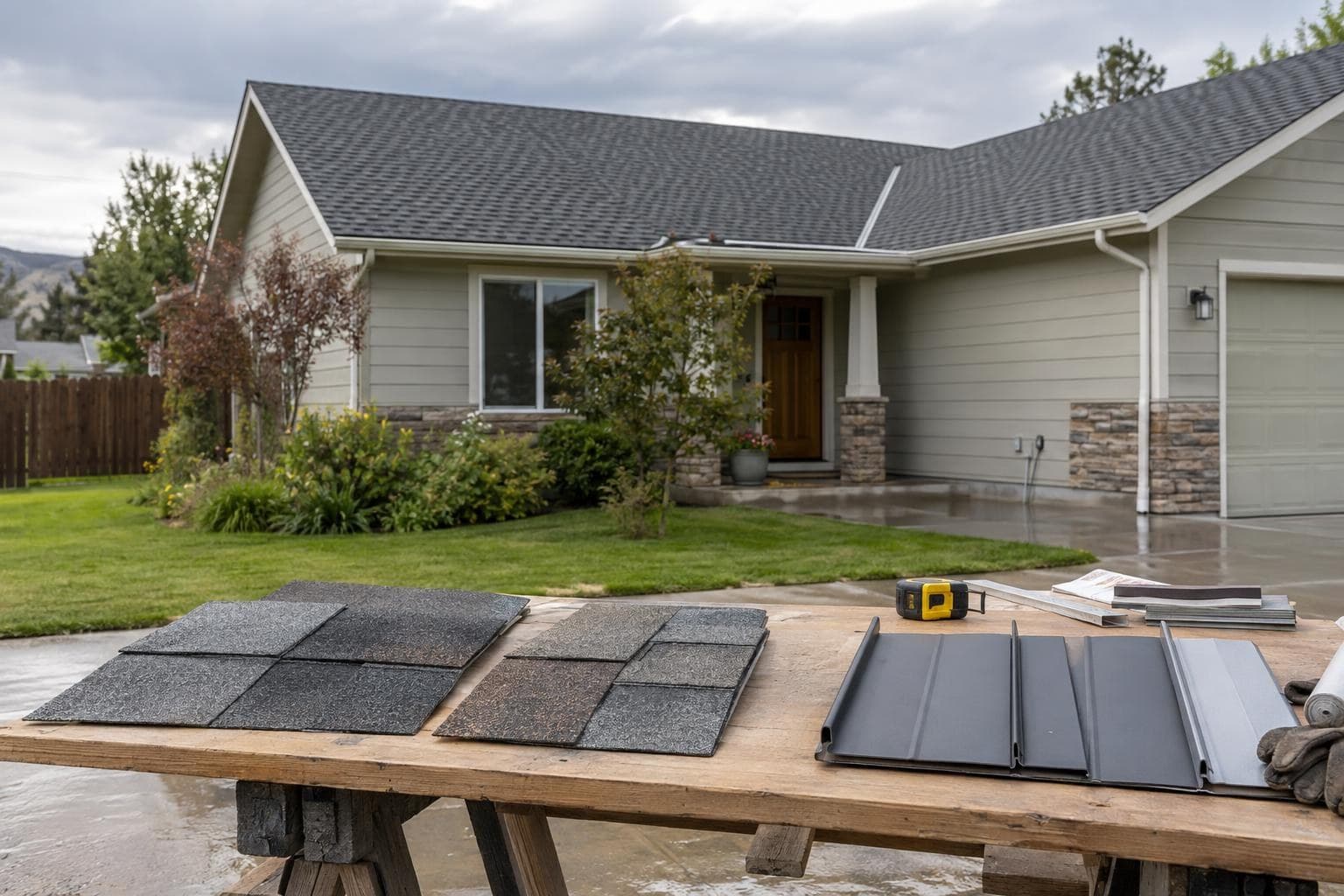
Class 4 is often the best overall fit for Idaho weather if you want the strongest balance of storm durability and price. Severe thunderstorms, high winds, and heavy precipitation all push you toward a tougher roof system. A Class 4 shingle gives you more impact resistance than Class 3, which matters when storms hit and debris lands on the roof. If your home is in a more rural area or wildfire exposure is a bigger concern, standing seam metal can be the better fit because material choice becomes more important when wildfire risk is part of the picture. If your main goal is keeping upfront cost lower while still getting a practical upgrade over basic options, Class 3 is the budget-minded choice.
How much do Class 3, Class 4, and metal roofs cost in Idaho?
Use the current Idaho cost page and calculator to plan a roof-system comparison in Idaho, then require the measured scope to explain any meaningful difference. Those numbers make the tradeoff clear. Class 4 costs more than Class 3, but the jump is still much smaller than the move to standing seam metal. Ask how pitch changes fall protection, staging, access, and production for a roof-system comparison in Idaho; the adjustment should come from the job plan, not a universal percentage.
Is Class 3 enough for Idaho?
Yes, Class 3 can be enough for Idaho if you want a cost-conscious replacement and your roof design, drainage, and flashing details are handled well. Idaho roofs do not fail only because of impact. Heavy precipitation from rain or snow can expose drainage and flashing weak points, and wind can loosen or lift materials. That means installation quality and maintenance still matter a lot. Regular cleanup, tree trimming, and quick repairs after a storm can help limit bigger damage later.
Talk to a roofer today
Planning ranges, scope details, and a direct path to request a roofing quote.
Why do many Idaho homeowners step up to Class 4?
Many Idaho homeowners step up to Class 4 because it is the clearest middle path between budget and stronger storm protection. That can make sense in a state where severe thunderstorms and high winds are common disaster threats. There is also a possible insurance angle. The Idaho sources provided do not give a state-specific rule on Class 4 roof discounts. If you are considering an impact-resistant roof, ask your carrier whether it offers a discount for a Class 4 rated product and what documentation it requires. Carriers set their own discounts, so you should confirm availability and terms directly with your insurer before you choose materials. Do not assume a statewide Class 4 credit in Idaho; ask the carrier to verify eligibility and paperwork for the exact product and policy.
When is standing seam metal the right choice in Idaho?
Standing seam metal is the right choice when wildfire exposure, snow performance, or long-term durability outweigh the higher upfront cost. Idaho weather includes wildfires, high winds, and heavy precipitation from rain or snow, and those conditions can point some homeowners toward metal. On homes where shedding snow and water efficiently is a big priority, or where you want a material that may be more appealing for rural wildfire-aware planning, standing seam metal deserves a serious look. The tradeoff is price.
How do you choose between Class 3, Class 4, and metal for your home?
- Choose Class 3 if your top priority is lower upfront cost and you still want a practical roof for Idaho weather.
- Choose Class 4 if you want stronger impact resistance for storm-prone conditions and want to ask your carrier about possible savings.
- Choose standing seam metal if wildfire concerns, snow shedding, and a premium material choice matter more than first cost.
- Choose based on your actual property conditions, such as nearby trees, exposure to wind, roof pitch, drainage details, and whether you live in a more rural area.
- Compare the roof price with your likely ownership horizon. A lower upfront number is not always the better value if you expect to stay in the home a long time.
What should you know about Idaho roof insurance claims before you replace the roof?
Start by documenting damage early and keeping your claim process organized. Idaho's insurance guidance tells homeowners to take photos or video of the initial damage, avoid throwing damaged items out before the adjuster advises you to do so, and mitigate the damage to keep the property from sustaining additional damage once a loss has occurred. It also says to keep all receipts for mitigation for possible reimbursement. For a roofing claim, that means you should document the roof damage early and save receipts for temporary protection work. When planning a roof-system comparison in Idaho, ask how roof shape, staging, weather, inspections, and concealed deck conditions affect both duration and labor.
You should also know that your adjuster may use outside experts and may discuss scope with your contractor. After a claim is filed, the Idaho Department of Insurance says the adjuster investigates the loss, reviews the policy, and may hire appraisers, engineers, or contractors to help evaluate damage. The guidance also says that if you have chosen a contractor, it is common for the claims adjuster to discuss the scope and estimate of damage with your chosen contractor and make a plan to move forward with repairs. That is one reason to have your local roofing contractor you have vetted document damage clearly and give you a written scope you can compare with the adjuster's scope.
Will insurance pay for a full matching roof in Idaho?
Not always. The Idaho Department of Insurance says your policy might not pay to match undamaged portions of items involved in your claim, including roof shingles, and that matching is often addressed in the policy provisions. If only one roof area is damaged, you should ask your adjuster to show you the policy language that addresses matching before you assume a full uniform replacement will be covered. You should also ask whether your policy provides coverage for Replacement Cost or Actual Cash Value. Idaho's consumer guidance says you should ask whether your policy provides coverage for Replacement Cost or Actual Cash Value. It explains that if your policy provides Replacement Cost coverage, it is common for the insurance company to pay the Actual Cash Value up front, then pay the depreciated amount once repairs are completed or damaged items are replaced. If your roof claim is covered, that payment structure can affect your out of pocket timing during the job.
How do you hire the right roofer in Idaho?
The smart move is to confirm that your roofer is registered through the state's Contractors Board, review whether any formal actions appear in the board's discipline resources, and read the contract closely before signing. Idaho also warns homeowners to be cautious when approached by anyone offering to assist with settlement of your claim or give advice about insurance coverage or your insurance claim. Idaho's contractors Board also says public adjusters who represent an insured in property claims are required to be licensed and bonded by the state of Idaho, and that reputable public adjusters typically will not also provide the repair work or act as the contractor nor engage in door to door solicitation. For you, that means keeping the roofing job and claim representation roles clear and making sure your local roofing contractor you have vetted gives you a written scope you can compare line by line.
What is the best roof for Idaho if you want the safest overall choice?
For most homeowners, the safest overall choice is Class 4. It lines up well with Idaho's mix of severe thunderstorms, high winds, and roof-damaging weather, while staying far closer to Class 3 pricing than metal pricing. If your budget is tighter, Class 3 is still a reasonable Idaho roof when paired with strong installation details and regular maintenance. If your home sits in a more rural area, faces higher wildfire concern, or you want a premium system for snow and weather exposure, standing seam metal may be worth the higher investment. If you want to compare your options against local pricing in more detail, check the Idaho cost page and the calculator, then talk through your roof layout and weather exposure with a qualified local roofing contractor.
Sources
Reviewed technical references for Idaho
Related Idaho roofing guides
Related services
Updated July 10, 2026
3D Roofs Editorial Team
Editorial Standards