Updated July 27, 2026

3D Roofs Editorial Team
Editorial Standards
If your roof damage is limited and the rest of the roof is still in solid shape, a repair usually makes sense. If damage is widespread, the roof is older, or Idaho weather has exposed weak spots across multiple areas, replacement is often the smarter long-term move. Replacement becomes worth comparing in Idaho when damage crosses multiple slopes, compatible materials are unavailable, deck or flashing work expands the scope, or repairs keep returning.
Should you repair or replace your roof in Idaho?
Start with the simplest answer: repair a roof when the issue is confined to one area and the surrounding materials still have life left in them. Replace a roof when the damage shows up in many sections, when repeated fixes are stacking up, or when the roof is near the end of its useful life. In Idaho, that call matters because weather can hit a roof from more than one angle. The state's insurance guidance highlights wildfires, severe thunderstorms, high winds, and heavy precipitation from rain or snow as common disaster threats. That means one missing section of shingles may be a repair, but wind lift on several slopes, leak paths around flashing, or broad wear after heavy precipitation can point to replacement.
How do you tell if damage is isolated or widespread?
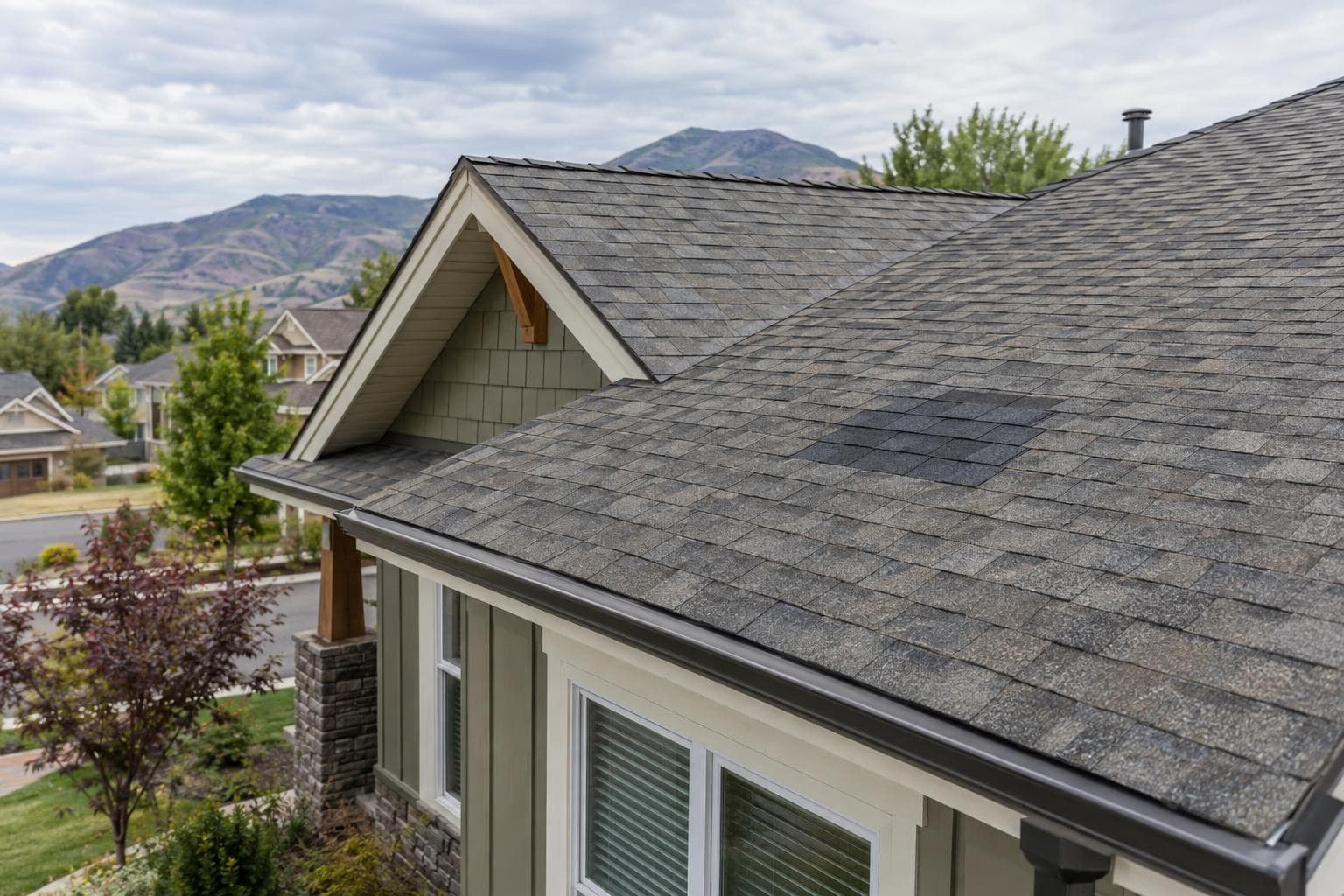
If damage is isolated to one small section, repair is usually the right first option. If you see problems across multiple planes, valleys, penetrations, or roof edges, you should lean toward replacement. Isolated damage often looks like a handful of missing shingles, one flashing failure, or a leak tied to a single roof feature. Widespread damage looks different: repeated patch areas, granule loss in many sections, lifted tabs on more than one slope, soft decking in several spots, or signs that water has moved beyond one entry point.
- A repair often works when the problem is limited to one area and materials around it are still sound
- Replacement becomes more likely when damage appears on several roof sections or keeps returning after prior fixes
- If a repair would leave you with many mismatched areas, ask how that affects both appearance and future maintenance
- For a repair-versus-replacement decision in Idaho, compare a diagnosed repair scope with a measured replacement proposal; both should identify affected slopes, flashing, deck conditions, and exclusions.
When is roof damage too widespread for a repair?
When the affected area is large on a Idaho roof, ask for repair and replacement scopes in writing and compare what each option fixes, what aging material remains, and how future work would be handled. The reason is simple. Once a large share of the roof is disturbed, you are paying for a lot of labor and material without getting the clean reset of a full new roof. Base the repair decision in Idaho on mapped damage, remaining roof condition, material compatibility, water-control details, and repair history rather than a percentage shortcut.
This rule is especially useful after Idaho wind and storm events. Wind can loosen or lift materials beyond the obvious missing pieces, and heavy precipitation can expose drainage and flashing weak points that are not visible from the ground. A roof can look like it has one leak, while the real issue is spread across a much larger section. Your roofer should document exactly how far the damage extends before you decide.
Talk to a roofer today
Planning ranges, scope details, and a direct path to request a roofing quote.
Does roof age change the answer?
Yes, age matters because an older roof is less likely to benefit from spot repairs. If your roof is aging and the field shingles, underlayment, flashing, and penetrations are all showing wear, a repair can turn into a temporary bandage. On a newer roof with one storm-hit area, repair is often worth it. On an older roof with brittle materials, recurring leaks, or broad surface wear, replacement is usually the better investment because you stop paying to patch components that are all wearing out together.
How does Idaho weather affect the repair vs. replacement decision?
Idaho weather pushes many homeowners toward replacement sooner than they expected when the roof already has multiple weak points. In practical terms, wind can loosen shingles and edge materials, heavy precipitation can find flashing and drainage problems, and wildfire risk can make roof material choice more important, especially in more rural areas. If your current roof has repeated storm repairs or weak details around vents, chimneys, valleys, and eaves, a full replacement can reduce the chance that the next weather event opens the roof up again.
Use the current Idaho cost page and calculator to plan a repair-versus-replacement decision in Idaho, then require the measured scope to explain any meaningful difference. When planning a repair-versus-replacement decision in Idaho, ask how roof shape, staging, weather, inspections, and concealed deck conditions affect both duration and labor. You can find broader local numbers on the Idaho cost page and use the calculator to compare scenarios for your home.
Will insurance pay for a repair or make you replace the roof?
Insurance does not automatically mean full replacement. For roof repair vs replacement in Idaho, confirm project-specific legal and coverage questions with the responsible state agency, insurer, or local building authority before signing. Idaho's consumer guidance says you should ask whether your policy provides coverage for Replacement Cost or Actual Cash Value. It explains that if your policy provides Replacement Cost coverage, it is common for the insurance company to pay the Actual Cash Value up front, then pay the depreciated amount once repairs are completed or damaged items are replaced. If your roof claim is covered, that payment structure can affect your out of pocket timing during the job.
- Document roof damage early with photos or video
- Mitigate the damage to keep the property from sustaining additional damage once a loss has occurred
- Keep all receipts for mitigation for possible reimbursement
- Do not assume matching will be covered for undamaged roof areas, ask your adjuster to show you the policy language that addresses matching
- It is common for the claims adjuster to discuss the scope and estimate of damage with your chosen contractor and make a plan to move forward with repairs
When does a replacement make more financial sense than another repair?
Replacement makes more financial sense when you are paying for repeated repairs, when a large section is compromised, or when a repair still leaves you with an aging roof that may fail in the next storm season. But if you are fixing one area this year and another area next year, you may be putting repair money into a roof that is still one bad storm away from a larger bill. In that case, replacement gives you a fresh system instead of a patchwork one.
Do not assume a statewide Class 4 credit in Idaho; ask the carrier to verify eligibility and paperwork for the exact product and policy. The Idaho sources provided do not give a state-specific rule on Class 4 roof discounts. If you are considering an impact-resistant roof, ask your carrier whether it offers a discount for a Class 4 rated product and what documentation it requires. Carriers set their own discounts, so you should confirm availability and terms directly with your insurer before you choose materials.
What should Idaho homeowners do before signing for roof work?
Before you commit to repair or replacement, get the damage documented clearly, compare the roofing scope to the insurance scope if there is a claim, and confirm that your roofer is registered through the state's Contractors Board. Idaho also warns homeowners to carefully read any contract before signing and to be cautious when approached by anyone offering to assist with settlement of your claim or give advice about insurance coverage or your insurance claim. If you want a strong starting point, ask your local roofing contractor you have vetted for a written scope that shows what is damaged now, what is still serviceable, and whether repair or replacement is the better value for your home.
Sources
Reviewed technical references for Idaho
Related Idaho roofing guides
Related services
Updated July 27, 2026
3D Roofs Editorial Team
Editorial Standards