Updated July 10, 2026

3D Roofs Editorial Team
Editorial Standards
There is no single best roof for every Nebraska home. For a Nebraska property, start with its actual weather exposure and roof geometry, then compare complete assemblies on water control, attachment, ventilation, repairability, local availability, warranty terms, and installed cost. The sections below use Nebraska-specific guidance to show which questions matter before choosing a material. For a roof system comparison in Nebraska, use the linked Nebraska Department of Insurance, After the Storm: Disaster Claims Process reference as the state-reference checkpoint and test the recommendation against the address's freeze-thaw cycles, snow or ice at eaves, warm-season wind or impact, tree debris, and attic moisture.
What roof is best for Nebraska weather?
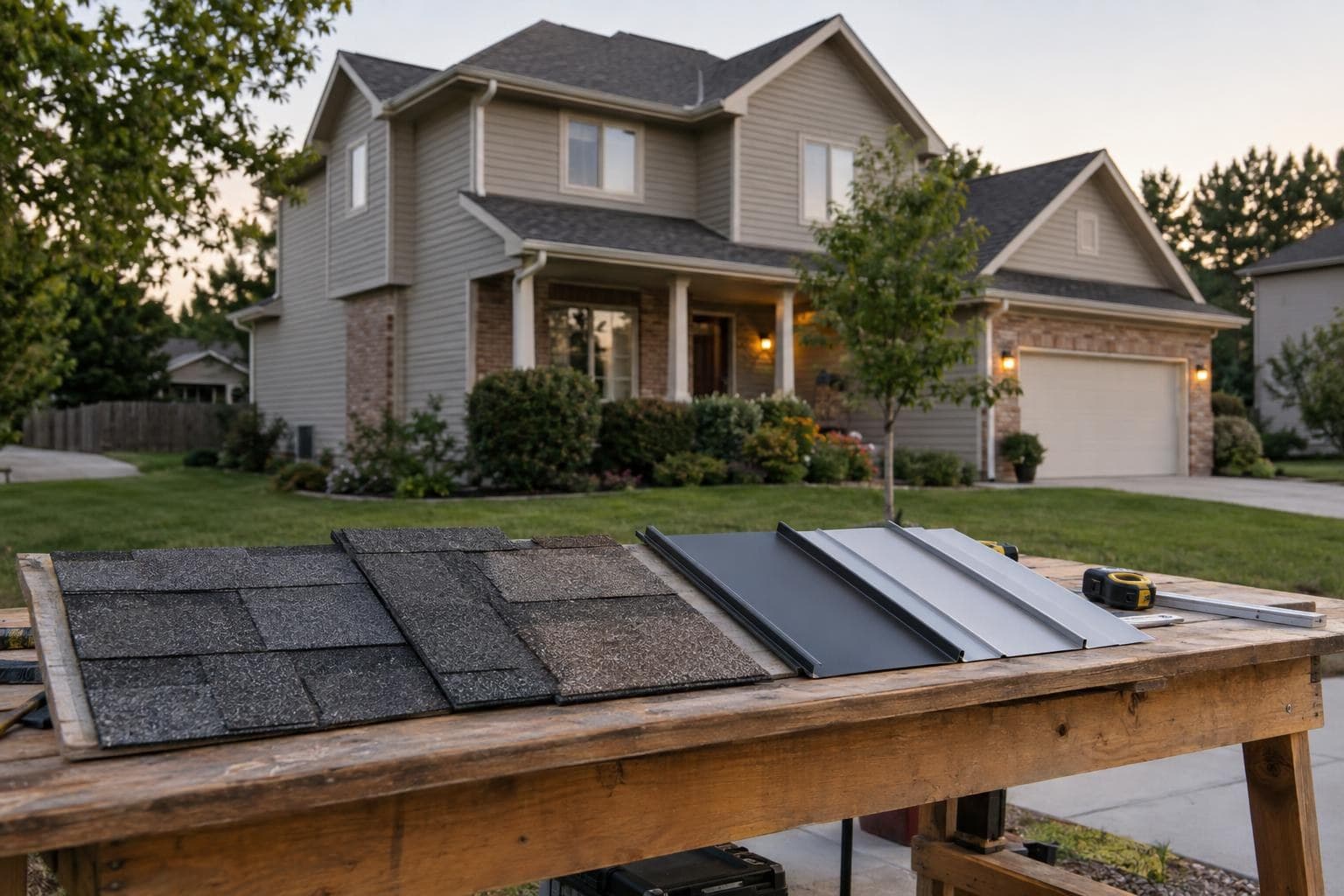
For most homes in Nebraska, Class 4 shingles are the best balance of price and storm protection. They are built for homeowners who deal with hail and wind often enough that impact resistance matters, but who do not want to jump all the way to metal pricing. Class 3 can still make sense if your budget is tighter. Standing seam metal can be a strong fit if you want a premium option and are comfortable with a much higher upfront cost.
- Choose Class 3 if you want the lowest current local cost ranges and a practical replacement after storm wear.
- Choose Class 4 if you want stronger impact resistance and you want to ask your carrier about possible savings.
- Choose standing seam metal if you want a premium material for severe weather exposure and the higher price fits your plans.
How do Class 3, Class 4, and metal compare on price in Nebraska?
The price gap is real, so your best roof may come down to how much extra protection you want to buy now. Check current Nebraska cost data for a roof-system comparison in Nebraska, then replace the range with an assembly-specific proposal based on measured conditions. Before approving a roof-system comparison in Nebraska, have the bidder connect timing to roof complexity, crew access, material handling, weather, inspections, and concealed conditions.
That means Class 4 sits in the middle. It costs more than Class 3, but the jump is far smaller than moving to standing seam metal. For many Nebraska homeowners, that middle ground is why Class 4 ends up being the practical answer.
Is Class 4 worth it in Nebraska?
Yes, Class 4 is often worth asking about in Nebraska because hail is one of the main reasons roofs get pushed from damage into leaks and early replacement. The Nebraska Department of Insurance says that when rebuilding, you should consider using materials that will resist damage such as impact resistant shingles or siding, and that insurance companies may offer discounts on insurance for these resistant materials. If you are considering a Class 4 roof, ask your carrier what discount, if any, applies to your specific policy, because carriers set their own discounts.
There is also a possible insurance angle. A Class 4 rating does not establish a policy credit in Nebraska; the carrier and policy determine eligibility, documentation, and savings. That does not mean every policy will save the same amount, and it does not mean Class 4 is automatically the cheapest long-term option for every home. It does mean you should compare the added roof cost against the protection you want and the discount your carrier may offer.
Talk to a roofer today
Planning ranges, scope details, and a direct path to request a roofing quote.
When is Class 3 the right roof for Nebraska?
Class 3 is the right roof when you need to control replacement cost and still want a material that makes sense for Nebraska weather. If you are replacing an older roof after storm wear, preparing to sell, or trying to stay within a firm budget, Class 3 can be a reasonable choice.
The tradeoff is simple. In a state that sees hail, strong wind, heavy rain, snow, ice, and sharp temperature changes, lower upfront cost may also mean less impact resistance than Class 4. If your area gets hit often enough that you expect future hail concerns, it is worth comparing the small step up to Class 4 before you decide.
Is a metal roof the best option for Nebraska storms?
Metal can be the best option for some Nebraska homes, but it is not the default best choice for most budgets. That is much higher than Class 3 or Class 4, so the decision usually depends on whether you want a premium material badly enough to justify the upfront cost.
If your home is highly exposed to wind and repeated storms, or you plan to stay put for a long time and want a different roofing system than asphalt, standing seam may be worth a serious look. If you mainly want stronger hail resistance without doubling your roof budget, Class 4 usually makes more sense.
What should you do after a Nebraska hail or wind storm?
The right move is to document damage quickly, use temporary protection if needed, and have your roofer inspect the full roofing system. Nebraska's weather can turn small storm hits into leaks if repairs wait too long. After a storm, your best move is to document what you see, stop further damage with temporary protection if needed, and have your roofer inspect the full roofing system, not just the obvious trouble spots.
- The Nebraska Department of Insurance says to report damages as soon as possible and keep a log of all communications, including names, dates, and topics discussed. It also says to take photos and videos and make a detailed list of damaged or destroyed items.
- The Nebraska Department of Insurance says you should make only temporary repairs to prevent additional losses, save receipts for reimbursement, and not make any permanent repairs until an adjuster inspects the damage.
- The Nebraska Department of Insurance says to be present during inspections, use trusted contractors, avoid paying in full upfront, and, in its words, "DO NOT SIGN ANYTHING UNTIL YOU TALK WITH YOUR INSURANCE COMPANY."
- The Nebraska Department of Insurance says claims may be paid in parts, including an initial emergency advance followed by payments for property and repairs. It also says structure-related payments may include your mortgage company and be released in stages.
How do you choose a roofer in Nebraska?
Start by confirming registration, then ask direct questions about the work. In Nebraska, contractor registration matters, but it is not a quality guarantee. The Nebraska Department of Labor says all contractors doing business in Nebraska must register with the Nebraska Department of Labor, and it also says registration does not ensure quality of work or protect against fraud. For you, that means you should confirm your roofer is registered, then still ask clear questions about scope, materials, cleanup, who will be on site, and how change orders will be handled.
You should also follow the Nebraska Department of Insurance guidance to use trusted contractors, be present during inspections, avoid paying in full upfront, and avoid signing anything before you talk with your insurance company. a roofer whose credentials and written scope you checked should be able to explain the difference between Class 3, Class 4, and metal in plain language, and show you how each option fits your home and budget.
How long does roof work take, and what do repairs cost?
Those are useful planning numbers if a Nebraska storm leaves you deciding between a short-term fix and a full replacement. If the damage is limited, a repair may buy time. If repeated hail, wind, or age have affected shingles, flashing, and gutters across the system, replacement may be the smarter move.
Those tools can help you compare Class 3, Class 4, and standing seam numbers before you talk through final scope with your roofer.
So which roof should you pick for your Nebraska home?
Pick Class 4 if you want the best mix of Nebraska storm protection and manageable cost. Pick Class 3 if your top goal is keeping upfront price down. Pick standing seam metal if you want a premium roofing system and the higher current planning prices fits your plans. For many Nebraska homeowners, the smartest move is to compare the added cost of Class 4 against your storm exposure and ask your insurance carrier whether a discount applies to your policy.
Sources
Reviewed technical references for Nebraska
Related Nebraska roofing guides
Related services
Updated July 10, 2026
3D Roofs Editorial Team
Editorial Standards