Updated July 27, 2026

3D Roofs Editorial Team
Editorial Standards
There is no single best roof for every Nevada home. For a Nevada property, start with its actual weather exposure and roof geometry, then compare complete assemblies on water control, attachment, ventilation, repairability, local availability, warranty terms, and installed cost. The sections below use Nevada-specific guidance to show which questions matter before choosing a material. For a roof system comparison in Nevada, use the linked Nevada Division of Insurance, How to File a Claim reference as the state-reference checkpoint and test the recommendation against the address's marine moisture, inland heat, wildfire debris, mountain snow, drainage, and vegetation at the address.
What roof offers stronger impact resistance in Nevada weather?
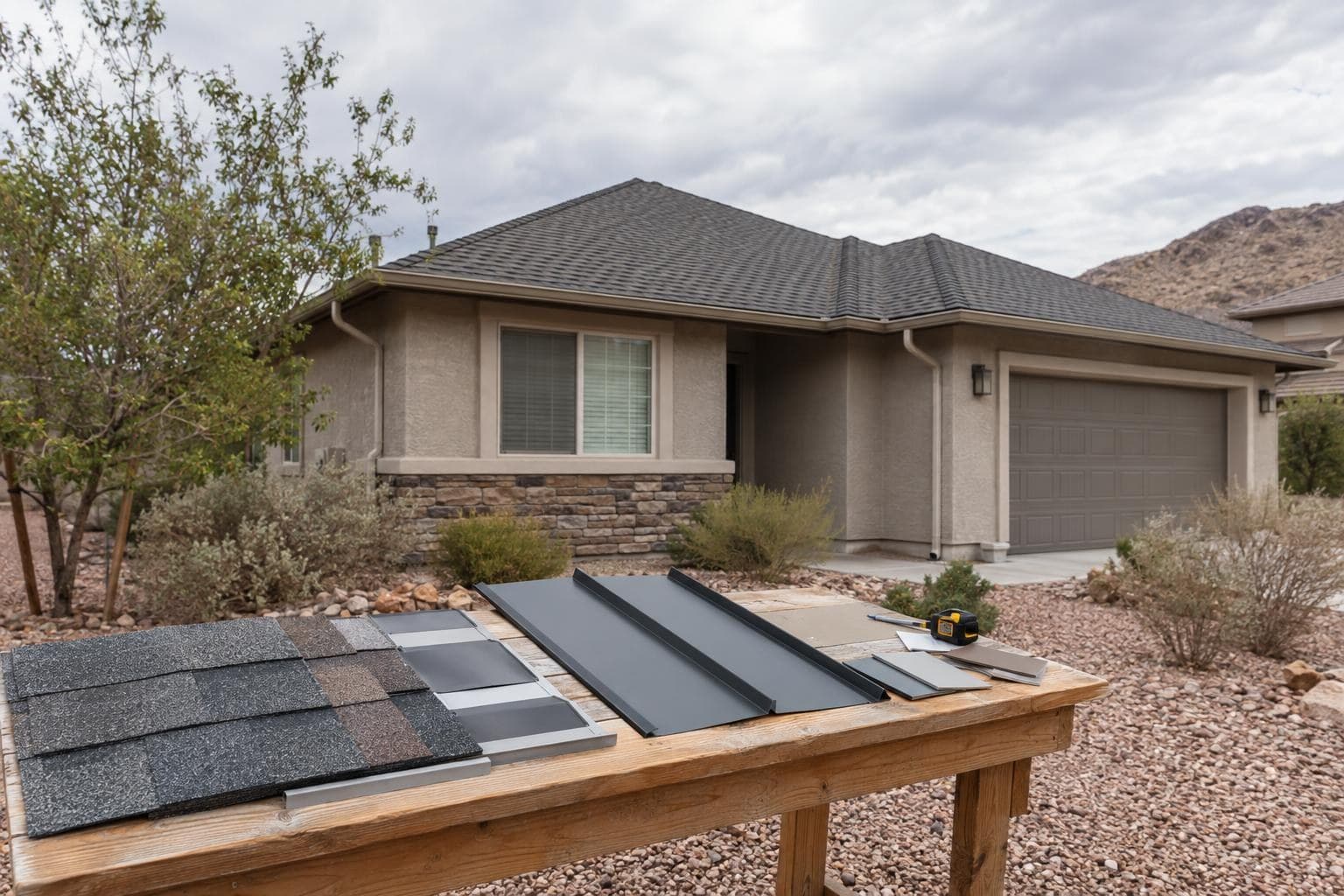
Class 4 shingles or standing seam metal are usually the strongest fits for Nevada weather, while Class 3 can still make sense if you want a lower replacement cost. Nevada roofs take a steady beating from intense sun, dry heat, and wind. Over time, UV exposure can age shingles, dry out roofing components, and wear down sealants. Wind can lift edges, move tiles, and turn small roof weaknesses into leaks. That means your choice is not just about how a roof looks on day one. It is about how well the system handles long stretches of sun exposure, heat stress, and wind pressure over time.
For many homes, the real decision comes down to tradeoffs. Class 3 gives you a lower entry price. Class 4 gives you added impact resistance, which matters if storms hit and you want a tougher shingle option. Standing seam metal gives you a completely different roofing category with a much higher up-front price. If you are trying to balance cost and protection, Class 4 often lands in the middle in a way that fits Nevada well.
Is Class 3 or Class 4 better for a Nevada home?
Class 4 is usually better if you want stronger protection and may qualify for an insurance discount, but Class 3 is still a practical choice if your main goal is keeping replacement cost down. That middle-ground price is why many Nevada homeowners start with Class 4 when they want an upgrade without moving into metal pricing.
- Choose Class 4 if you want impact resistance and want to ask your carrier about possible savings
- A Class 4 rating does not establish a policy credit in Nevada; the carrier and policy determine eligibility, documentation, and savings.
- Choose metal if budget is less of a concern and you want to compare a premium roofing system
One important point: if you are considering a Class 4 impact-resistant roof, ask your carrier whether it offers a homeowners insurance discount for that upgrade. Discounts are set by each carrier, and the state guidance does not give a Nevada-specific discount amount. a roofer whose credentials and written scope you checked can help you compare roof options, but your insurer decides eligibility and savings.
Is metal roofing worth it in Nevada?
Metal roofing can be worth it in Nevada if you want a premium system and you are comfortable with the much higher up-front cost. Installed price differences for a roof-system comparison in Nevada vary with roof geometry, assembly details, access, and local labor, so compare complete measured proposals instead of assuming a fixed multiple. For some homeowners, that is a clear no. For others, it is worth exploring because Nevada weather is hard on roofs in general, and they want to compare more than just asphalt.
The key is to treat metal as a separate buying decision, not just a simple upgrade from shingles. If your goal is the best value for storm readiness and budget control, Class 4 often gets more attention because it adds protection without jumping all the way to metal pricing. If your goal is a premium material category and you plan to stay in the home long enough to justify a higher initial investment, metal may still deserve a close look.
Talk to a roofer today
Planning ranges, scope details, and a direct path to request a roofing quote.
How much should you expect to pay for a Nevada roof?
You should expect Nevada roofing costs to vary mainly by material choice, roof size, and roof complexity. Before approving a roof-system comparison in Nevada, have the bidder connect timing to roof complexity, crew access, material handling, weather, inspections, and concealed conditions.
That helps frame the decision. If your roof damage is isolated, a repair may make sense. If the roof is already aging under Nevada sun and wind, a replacement may be the better use of money.
What should you do after wind or storm damage in Nevada?
Report the damage right away, protect the home from further damage, document everything, and do not rush into a repair contract before the adjuster examines the roof. For best roof for in Nevada, coverage depends on the policy language, cause of loss, exclusions, and the insurer's decision; verify those terms in your own documents. If you believe you have a claim, you should review your policy and immediately contact your agent to file and discuss the details of your claim. After damage, you should immediately report your claim to your insurance company or your local agent.
- Take photos of the damage right away
- Make temporary repairs or arrange for a licensed professional to do so
- Save all receipts for repairs and related expenses
- Do not dispose of damaged property until an insurance adjuster has reviewed it for your claim
- Remember that your insurance company will send an insurance adjuster to survey the damage at no cost to you
- Do not feel rushed or pushed to agree on a settlement
Nevada also says a policy provision requires that you prevent further damage or theft. The Nevada Division of Insurance says you should make temporary repairs or arrange for a licensed professional to do so, save all receipts for your repairs, take photos of the damage, and keep records of expenses and receipts if you need other lodging. It also says not to dispose of property until an insurance adjuster has reviewed it for your claim.
How do you avoid bad roofing decisions after a Nevada claim?
Wait for the adjuster inspection, insist on a written estimate, and check your roofer’s license status before work starts. Nevada consumer guidance says to always insist on a written estimate before repairs begin and do not sign any contracts before the adjuster has examined the damage. It also says not to pay a contractor the full amount up front or sign over your insurance settlement payment. If hidden damage is found after the original assessment, contact your insurance company to resolve the difference.
Nevada also says all businesses or individuals who construct or alter any building or other structure in Nevada must be licensed by the Nevada State Contractors Board, and contractors, including subcontractors and specialty contractors, must be licensed before submitting bids. The Nevada State Contractors Board also says roofing and siding fall under Classification C-15. For you, that means you should check your roofer’s license status, confirm the work matches the license classification, and review disciplinary history using the state’s license and disciplinary search tools. Nevada also warns that contracting without a license is a crime in Nevada.
So, what is the best roof for Nevada for most homeowners?
For most homeowners, Class 4 is the best balance of cost and protection in Nevada, Class 3 is the value pick, and standing seam metal is the premium option.
The right choice depends on how long you plan to stay, how much up-front cost you can carry, and how you want to balance Nevada sun, heat, and wind against budget. A local roofer you have vetted can walk your roof, explain the tradeoffs in plain terms, and help you compare the numbers. If you want to keep researching before you book an inspection, review the Nevada cost page and the calculator for full local pricing.
Sources
Match the assembly to the Nevada address
Confirm whether the address faces marine moisture, inland heat, wildfire debris, mountain snow, prolonged rain, or a combination of those conditions. Eliminate products that do not fit slope, structure, drainage, permit requirements, or exposure before comparing appearance and price. The recommended material should be connected to the roof geometry and the conditions observed during inspection. For a Nevada property, confirm whether the address faces marine moisture, inland heat, wildfire debris, mountain snow, prolonged rain, or a combination of those conditions. For a roof system comparison in Nevada, check the linked Nevada State Contractors Board, License Classifications reference for the state-level question while the property inspection addresses marine moisture, inland heat, wildfire debris, mountain snow, drainage, and vegetation at the address.
Reviewed technical references for Nevada
Related Nevada roofing guides
Related services
Updated July 27, 2026
3D Roofs Editorial Team
Editorial Standards