Updated July 10, 2026

3D Roofs Editorial Team
Editorial Standards
There is no single best roof for every New Hampshire home. For a New Hampshire property, start with its actual weather exposure and roof geometry, then compare complete assemblies on water control, attachment, ventilation, repairability, local availability, warranty terms, and installed cost. The sections below use New Hampshire-specific guidance to show which questions matter before choosing a material. For a roof system comparison in New Hampshire, use the linked New Hampshire Insurance Department, Homeowners and Renters Insurance reference as the state-reference checkpoint and test the recommendation against the address's cold eaves, freeze-thaw transitions, snow and rain drainage, masonry details, and attic moisture.
What roof material is best for New Hampshire weather?
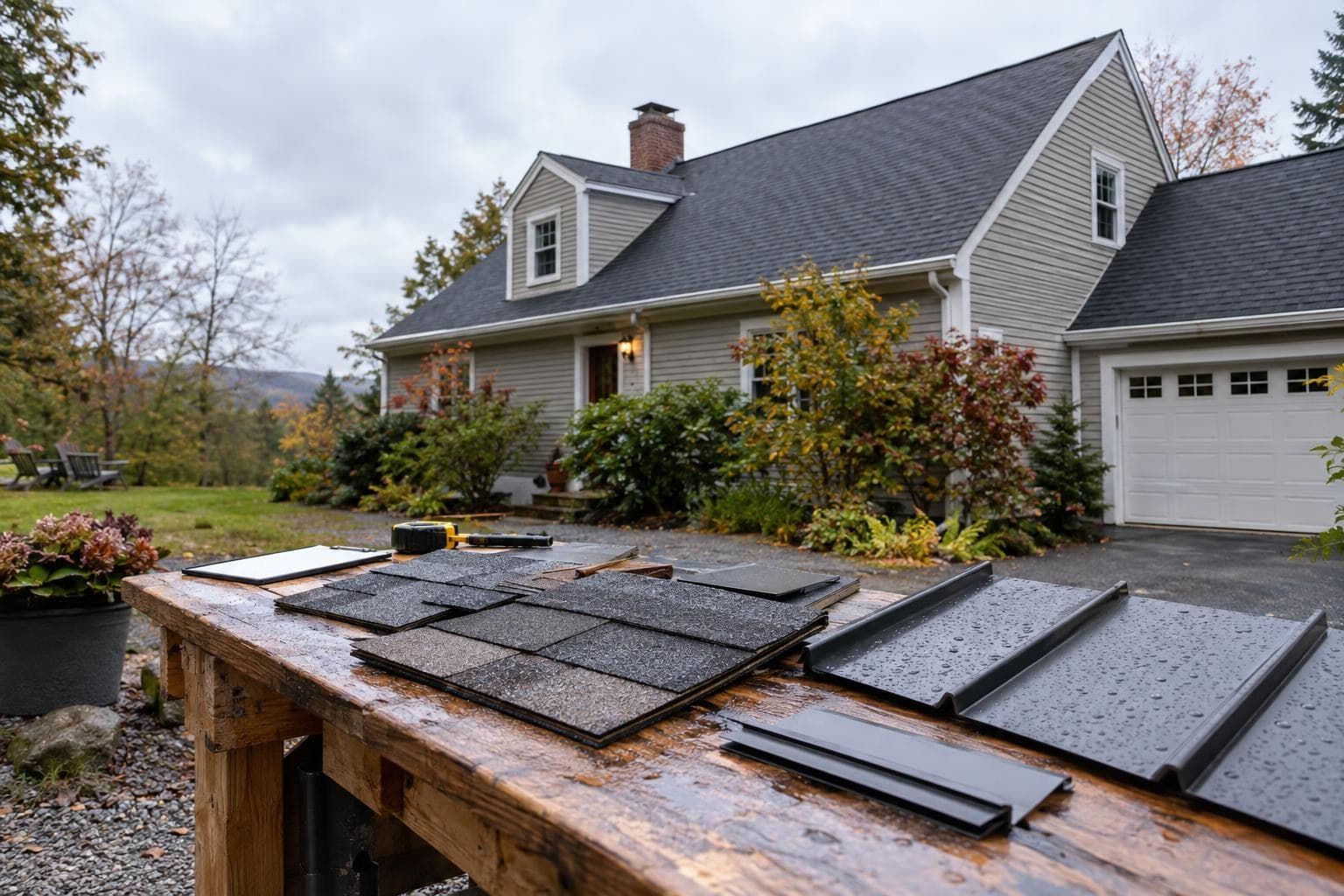
For most homeowners, Class 4 is the best fit for New Hampshire weather. The state’s climate puts steady stress on roofing systems, and that stress does not hit just one part of the roof. Snow and ice can hold moisture in place. Wind can damage roof coverings. Heavy rain can turn a small weakness into a leak. Seasonal temperature swings can wear on aging materials and vulnerable details. Class 4 gives you better impact resistance than Class 3 while staying far below the cost of standing seam metal. If you want the practical choice, start there.
- Choose Class 3 if your top priority is lower upfront cost.
- Choose Class 4 if you want stronger impact resistance and a possible policy-specific premium credit.
- Choose standing seam metal if you want a premium roof and accept a much higher current market pricing.
Is Class 3 or Class 4 better for a New Hampshire home?
Class 4 is better for most New Hampshire homes because it gives you more durability for weather that can be rough on roof surfaces and details. Class 3 still has a place. If your current priority is replacing an aging roof without stretching your budget too far, Class 3 can make sense. But if you expect to stay in the home and want a stronger hedge against storm wear, Class 4 is the better buy for many homeowners.
The current New Hampshire cost data make that comparison pretty clear. For an early budget on a roof-system comparison in New Hampshire, compare the New Hampshire cost page with a proposal that identifies measurements, products, accessories, and exclusions. That means the step up from Class 3 to Class 4 is meaningful, but it is still much smaller than the jump to metal. You are paying more upfront, but not moving into a completely different budget category.
Does metal roofing make sense in New Hampshire?
Yes, metal roofing can make sense in New Hampshire, but mostly if you want a premium roof and are comfortable paying for it. That is far above both Class 3 and Class 4. The appeal is straightforward: metal is a strong option for a climate with snow, ice, rain, and wind, and many homeowners like how standing seam systems handle shedding snow and water.
The tradeoff is cost. For many homes, spending roughly twice the Class 4 price is hard to justify when Class 4 already addresses the main weather concerns well. If you are planning to stay long term, want the look of metal, and have the budget for it, standing seam can be a good fit. If you are trying to maximize value per dollar, Class 4 is often the better answer.
Talk to a roofer today
Planning ranges, scope details, and a direct path to request a roofing quote.
How much does the best roof for New Hampshire cost?
The short answer is that the best-value option usually costs less than the premium option by a wide margin. The schedule for a roof-system comparison in New Hampshire should explain access, material staging, weather protection, inspections, and the process for discovered deck work. The proposal for a roof-system comparison in New Hampshire should price steep-slope access and slower material handling directly instead of hiding them in a standard percentage.
That is the easiest way to line up roof size, slope, and material choice before you talk with a local contractor whose credentials you verified.
Can Class 4 shingles help with insurance in New Hampshire?
Yes, they can, but you need to confirm the details with your insurer before you buy. When comparing a roof-system comparison in New Hampshire, use a written insurer response rather than a sales estimate for any impact-resistant roof credit. The state context also says that if you are considering Class 4 impact-resistant shingles, you should ask your insurer whether that roof material qualifies for any premium discount or underwriting benefit, because carriers set their own discounts and eligibility rules.
It also helps to know how roof claims work in New Hampshire. The New Hampshire Insurance Department says most homeowner policies cover damages to the dwelling caused by tornadoes or other wind damage. The department also says an insurer is only obligated to pay the cost of repairing the part of your roof that was damaged by a covered peril. If the entire roof needs replacing because of normal wear and tear, you will be responsible for paying the additional cost.
What insurance rules should New Hampshire homeowners know before replacing a roof?
You should know three things right away. First, a single valid claim cannot be the only reason for nonrenewal. The New Hampshire Insurance Department says the nonrenewal of a homeowner's insurance policy is not allowed if the nonrenewal is based solely on the insured having filed a single valid claim within any one previous or current policy term. Second, flood damage is generally not covered by a standard homeowners policy. The department says homeowners policies do not cover most flooding, and that you need a separate flood insurance policy to protect your home and belongings against flood damage. Third, if you have trouble with your insurer, you can file a complaint in writing with the department, and staff can answer insurance-related questions and provide guidance and information.
Those points matter because roof shopping is not just about materials. It is also about how storm damage, wear and tear, wind claims, and flood exposure fit into your overall risk. If your property has flood exposure, that is a separate issue from standard roof damage coverage and should be reviewed on its own.
How do you choose the right roofer in New Hampshire?
You should choose carefully and insist on clear paperwork before work starts. According to the New Hampshire Department of Justice, contractors do not need to be licensed in the state. That means you need to focus on basic consumer protection steps when comparing bids and deciding who will install your roof.
- Get at least three written, itemized estimates.
- Ask for references from past jobs and suppliers.
- Ask for proof of insurance.
- Check the roofer's address and phone number.
- Make sure you have a written contract before work starts or money changes hands.
- Confirm the contract includes the scope of work, materials, total price, and payment schedule.
- Be cautious with door-to-door sales pressure, large upfront deposits, full payment before completion, cash-only demands, payment app demands, or vague proposals.
So, what is the best roof for New Hampshire if you want the smartest buy?
Class 4 is the smartest buy for most New Hampshire homeowners. It matches the state’s mix of snow, ice, wind, rain, and temperature swings better than standard shingles, and it does that without pushing you into metal-roof pricing. Class 3 is your budget-conscious replacement option if the main goal is getting a solid new roof at a lower upfront cost.
If you are deciding today, start by comparing Class 3 and Class 4, then ask your insurer whether Class 4 qualifies for any discount or underwriting benefit. After that, use the New Hampshire cost page and the calculator to narrow the price range for your home, then talk with a roofer whose credentials and written scope you checked about slope, ventilation, flashing details, and the condition of the existing roof deck. That is how you turn a roof choice into a better long-term buy.
Sources
Reviewed technical references for New Hampshire
Related New Hampshire roofing guides
Related services
Updated July 10, 2026
3D Roofs Editorial Team
Editorial Standards