Updated July 27, 2026

3D Roofs Editorial Team
Editorial Standards
In New Hampshire, the right choice is usually simple: repair the roof when damage is isolated and the rest of the system still has solid life left, replace it when problems are widespread, the roof is older, or repairs would only buy you a short delay. Snow, ice, wind, heavy rain, and temperature swings can turn a small weak spot into a larger water problem, so the decision is not just about what you see from the ground. It is about how the whole roof is holding up.
Should you repair or replace your roof in New Hampshire?
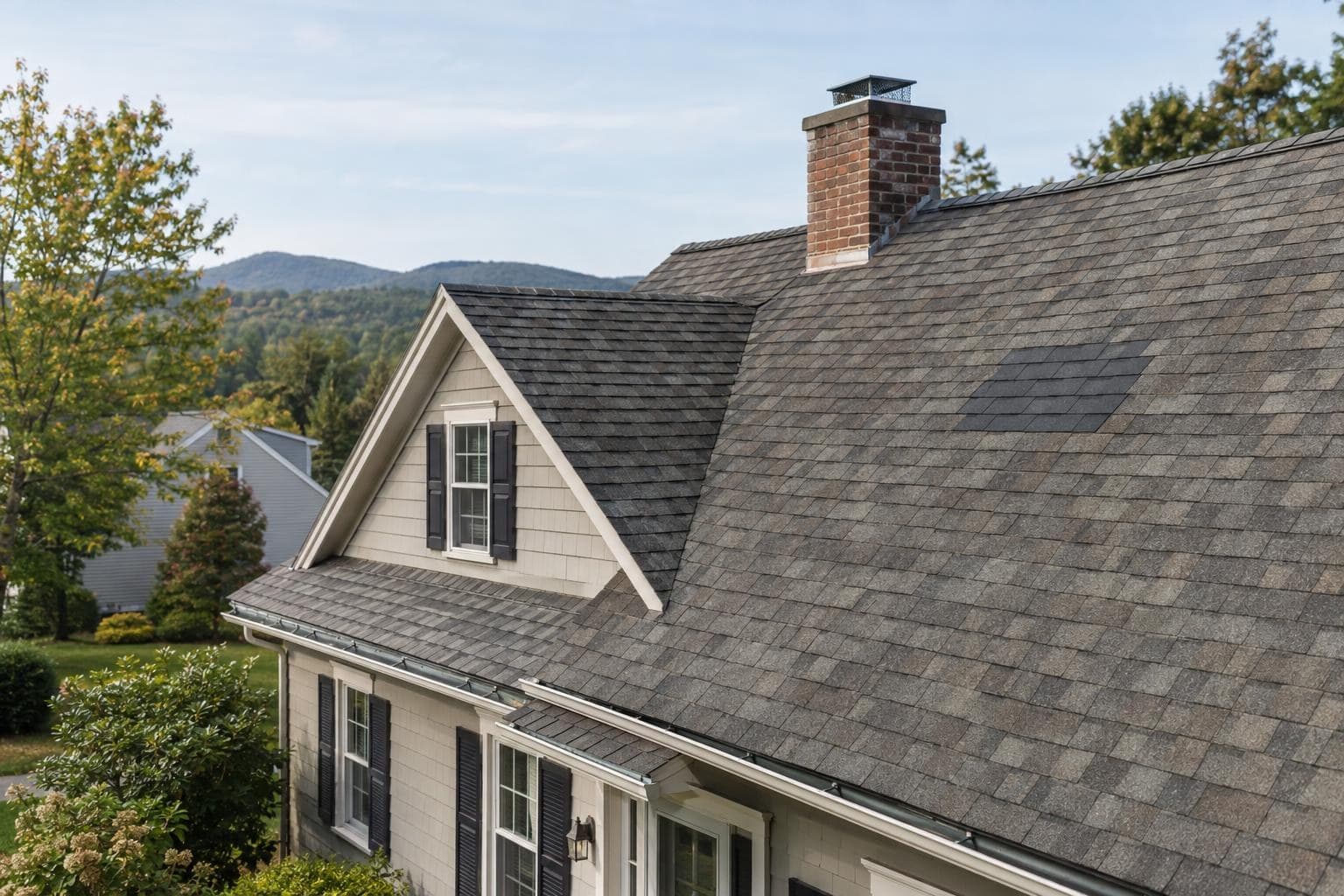
Repair is usually the better move when damage is limited to one area, such as a small section of missing shingles, lifted flashing, or a localized leak around a roof penetration. Replacement usually makes more sense when multiple slopes are failing, leaks are showing up in more than one place, or the roof has broad wear that keeps creating new trouble spots. In plain terms, if fixing one section leaves several other weak sections behind, replacement is often the smarter use of your money.
New Hampshire weather changes this call because roofs here deal with repeated freeze-thaw cycles, ice, snow load, wind, and heavy rain. Those conditions can stress shingles, flashing, roof penetrations, and attic ventilation over time. A roof that might be repairable in a milder climate can be closer to the edge here if water has already worked past aging materials or vulnerable details.
How do you tell if the damage is isolated or widespread?
Look at the pattern, not just the worst-looking spot. Isolated damage is usually one problem area tied to a clear cause, such as a few blown-off shingles, flashing damage at one chimney, or one leak around a vent boot. Widespread damage shows up as repeated issues across the roof, such as shingle loss on several slopes, granule loss in many areas, multiple leak points, sagging sections, recurring ice-dam related staining, or repairs that keep stacking up year after year.
- Repair often fits when one section is damaged and surrounding materials are still in good shape.
- Replacement often fits when damage appears on several roof planes or multiple components are aging at the same time.
- If water has gotten beneath aging materials in more than one area, the visible damage may be smaller than the real problem.
- If you have already paid for several repairs and new issues keep showing up, replacement can be the more cost-effective move.
When is roof damage too widespread for a repair?
For roof repair vs replacement in New Hampshire, do not use a fixed damage percentage as the decision rule; compare the repairable area, roof condition, material availability, code requirements, and written scopes. The reason is simple. Once the problem reaches that level, repair costs can pile up without giving you a dependable roof across the whole home.
This is not just about shingle count. Include flashing, underlayment condition where exposed, penetrations, ventilation-related moisture issues, and whether one damaged section is tied to broader aging. Base the repair decision in New Hampshire on mapped damage, remaining roof condition, material compatibility, water-control details, and repair history rather than a percentage shortcut.
Talk to a roofer today
Planning ranges, scope details, and a direct path to request a roofing quote.
How much does roof repair vs. replacement cost in New Hampshire?
Repairs are usually the lower-cost option up front. For a repair-versus-replacement decision in New Hampshire, compare a diagnosed repair scope with a measured replacement proposal; both should identify affected slopes, flashing, deck conditions, and exclusions. For an early budget on a repair-versus-replacement decision in New Hampshire, compare the New Hampshire cost page with a proposal that identifies measurements, products, accessories, and exclusions. The schedule for a repair-versus-replacement decision in New Hampshire should explain access, material staging, weather protection, inspections, and the process for discovered deck work.
That does not mean repair is always cheaper in the long run. If you are facing repeated leak calls, water damage risk, or a roof that is already near the end of its useful life, the lower up-front repair bill can turn into higher total spending.
Does roof age matter more than the current leak?
Yes, age matters because an older roof with a new leak is often warning you about the condition of the full system, not just one failed spot. If the roof is relatively newer and the problem is clearly limited, repair is usually worth considering. If the roof is older and showing wear in several places, a repair may only postpone replacement for a short time.
The key question is not whether the leak can be patched today. It is whether the surrounding materials still have enough life left to justify that patch. On an aging roof, the answer is often no, especially after New Hampshire winters have put repeated stress on seal lines, flashing joints, and vulnerable penetrations.
How does New Hampshire weather change the repair vs. replacement decision?
It makes hidden weakness more important. New Hampshire roofs deal with snow, ice, wind, heavy rain, and seasonal temperature swings. Wind can damage roof coverings, and water can become a bigger problem when it gets past aging materials or vulnerable details. That means a small visible repair can be enough on a healthy roof, but it can be the wrong move on a roof that has already been worn down across the system.
- After winter, check for signs that ice or water worked past flashing and penetrations.
- After wind events, look for missing tabs, creased shingles, and loosened ridge materials.
- If attic ventilation problems are contributing to moisture and roof wear, fixing the surface alone may not solve the real issue.
- If several seasons of weather exposure have weakened multiple details, replacement can give you a cleaner reset than repeated patchwork.
What if insurance is part of the decision?
Insurance may help with covered wind damage, but it does not turn every old roof into a full replacement claim. The New Hampshire Insurance Department says most homeowner policies cover damages to the dwelling caused by tornadoes or other wind damage. The department also says an insurer is only obligated to pay the cost of repairing the part of your roof that was damaged by a covered peril. If the entire roof needs replacing because of normal wear and tear, you will be responsible for paying the additional cost.
You should also know two other state points. The New Hampshire Insurance Department says the nonrenewal of a homeowner's insurance policy is not allowed if the nonrenewal is based solely on the insured having filed a single valid claim within any one previous or current policy term. And the department says homeowners policies do not cover most flooding, and that you need a separate flood insurance policy to protect your home and belongings against flood damage. If your property has flood exposure, that is a separate risk from roof damage.
Is Class 4 worth considering if you are replacing your roof?
It can be, especially if you want stronger impact resistance and a possible policy-specific premium credit, but you should confirm the details before you buy. When comparing a repair-versus-replacement decision in New Hampshire, use a written insurer response rather than a sales estimate for any impact-resistant roof credit.
The state guidance is to ask your insurer whether that roof material qualifies for any premium discount or underwriting benefit. Carriers set their own discounts and eligibility rules, so you should confirm the details with your insurer before you buy. If you are comparing materials, you can review local numbers on the New Hampshire cost page and use the calculator to map out the difference.
How should you choose a roofer in New Hampshire?
Move carefully and get everything in writing. According to the New Hampshire Department of Justice, contractors do not need to be licensed in the state. That means you should focus on basic consumer protection steps. Get at least three written, itemized estimates. Ask for references from past jobs and suppliers. Ask for proof of insurance. Check the roofer's address and phone number. Make sure you have a written contract before work starts or money changes hands, and confirm that it includes the scope of work, materials, total price, and payment schedule.
Be cautious if someone shows up door to door, pushes you to sign right away, asks for a large deposit upfront, wants full payment before completion, insists on cash or electronic payment apps like Zelle or Venmo, or gives a vague proposal. If you run into claim handling problems after roof damage, the New Hampshire Insurance Department says complaints should be submitted in writing to the department, and that staff can answer insurance-related questions and provide guidance and information.
What is the simplest way to make the call?
Do not use a fixed percentage as the deciding line for a New Hampshire roof; map damage by slope and component, then determine whether a targeted repair can leave a watertight, serviceable system. Either way, the goal is the same: spend once on the option that gives you a dependable roof, not a temporary fix that keeps bringing you back to the same problem.
Sources
Reviewed technical references for New Hampshire
Related New Hampshire roofing guides
Related services
Updated July 27, 2026
3D Roofs Editorial Team
Editorial Standards