Updated July 27, 2026

3D Roofs Editorial Team
Editorial Standards
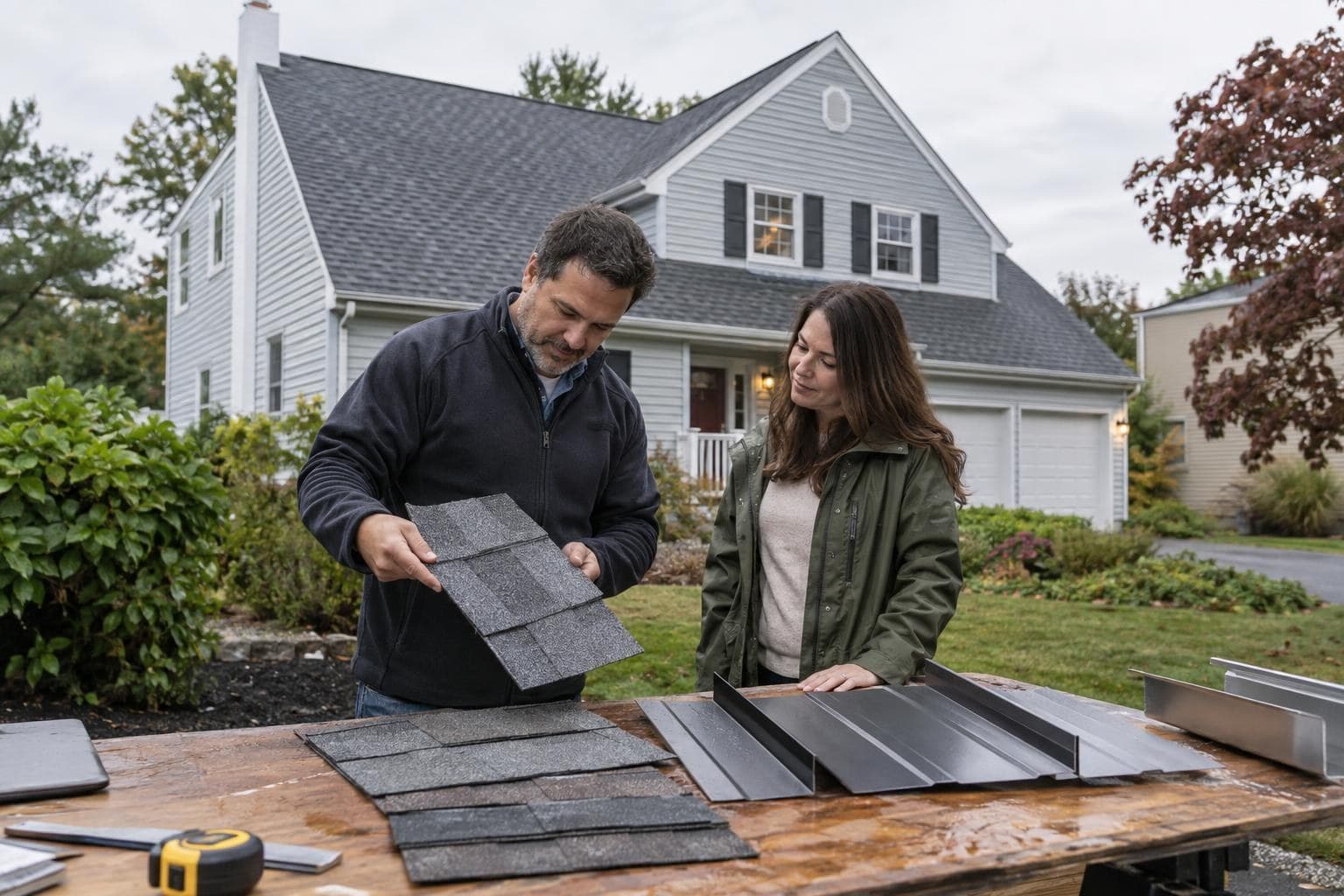
There is no single best roof for every New Jersey home. For a New Jersey property, start with its actual weather exposure and roof geometry, then compare complete assemblies on water control, attachment, ventilation, repairability, local availability, warranty terms, and installed cost. The sections below use New Jersey-specific guidance to show which questions matter before choosing a material. For a roof system comparison in New Jersey, use the linked New Jersey Department of Banking and Insurance, Preparing for Extreme Weather reference as the state-reference checkpoint and test the recommendation against the address's coastal wind where applicable, inland tree exposure, freeze-thaw cycles, drainage, and complex wall details.
What roof type is best for New Jersey weather?
Class 4 is the best all-around answer for many homeowners because New Jersey roofs take wear from wind-driven rain, storm gusts, hail, and seasonal temperature swings. Near the shore, storms can push wind and water hard against roof edges, flashing, and penetrations. Inland, repeated wet weather can expose weak spots around valleys, chimneys, and older shingles. That means your roofing decision is not just about shingles themselves. It is also about how the full roof system is handled around flashing, penetrations, valleys, and ventilation.
- Choose Class 3 if you want lower upfront cost and your roof does not face unusually harsh exposure.
- Choose Class 4 if you want added impact resistance and may benefit from an insurance discount.
- Choose standing seam metal if you want a premium roof material for strong weather exposure, especially where wind and water are frequent concerns.
Is Class 3 enough for a New Jersey home?
Yes, Class 3 is enough for many New Jersey homes, especially inland homes where budget matters most. Use the current New Jersey cost page and calculator to plan a roof-system comparison in New Jersey, then require the measured scope to explain any meaningful difference. That makes it the most affordable of the three options here, and it can be a practical replacement when your main goal is getting a solid new roof without stretching to a higher tier.
Class 3 makes the most sense when your current roof problems are age, normal wear, or isolated storm damage rather than repeated heavy hail concerns. It can also be the right move if you plan to stay cost-conscious and would rather put budget toward better flashing details, ventilation work, or replacing problem areas around chimneys and valleys. In New Jersey, repeated wet weather often exposes those weak spots before anything else.
When is Class 4 worth the extra cost in New Jersey?
Class 4 is worth the extra cost when you want stronger impact resistance and a better chance at lowering insurance costs. For many homeowners, that gap is reasonable if the roof sees regular storm exposure or you want to keep the next storm from turning into another repair cycle.
There is also an insurance angle. Do not assume a statewide Class 4 credit in New Jersey; ask the carrier to verify eligibility and paperwork for the exact product and policy. That does not mean every policy saves the same amount, and discounts and eligibility are set by the carrier. If you are considering a Class 4 impact-resistant shingle, ask your carrier whether it offers a discount for that upgrade. A qualified local roofing contractor can help you compare product options and gather the product documentation your carrier may ask for.
Talk to a roofer today
Planning ranges, scope details, and a direct path to request a roofing quote.
Is metal roofing the best choice near the New Jersey shore?
Often, yes, metal becomes a strong option near the shore because storms can push wind and water hard against roof edges, flashing, and penetrations. That is a major step up in cost, so it is usually chosen by homeowners who want the material benefits badly enough to justify the budget.
Metal can make sense when your home gets repeated exposure to harsh coastal weather, or when design preference matters as much as pure cost efficiency. But the material alone is not the whole story. In shore conditions, the quality of the roof layout and the handling of edges, flashing, and penetrations matter because that is where wind and water often test the system first. If your home is inland and your main concern is value, Class 4 may be the better buy.
How much should you expect to pay for a new roof in New Jersey?
When planning a roof-system comparison in New Jersey, ask how roof shape, staging, weather, inspections, and concealed deck conditions affect both duration and labor.
If you want a broader look at full local pricing, you can check the New Jersey cost page and the calculator. Those tools help you compare roof type, size, and complexity before you talk through final scope with your roofer.
What should you know about insurance and storm damage in New Jersey?
You should assume roof damage and water damage may not be handled the same way after a major storm. State guidance says most standard homeowners insurance policies cover losses caused by fire and lightning, smoke, windstorms or hail, but some policies may include a separate, optional wind/hail deductible, and/or a mandatory or optional hurricane deductible. For best roof for in New Jersey, coverage depends on the policy language, cause of loss, exclusions, and the insurer's decision; verify those terms in your own documents.
Flooding is different. State guidance says homeowners insurance policies exclude water damage caused by flood. It also says flooding is not covered under standard homeowners policies, and homeowners policies do not cover damage from flooding that accompanies a hurricane. If flood exposure is part of your risk, you may need separate flood insurance. State guidance says there is normally a 30-day waiting period before a new flood insurance policy becomes effective, and also says flood insurance is not effective until 30 days after it is sold. If you are thinking about adding flood coverage, do not wait until a storm is close.
How do you choose the right roofer and protect your claim?
Keep the process simple and document-focused. Ask your roofer to explain the full scope in writing, including what gets replaced, how flashing and ventilation will be handled, what cleanup is included, and who is responsible for protecting the home if weather hits during the job. That matters in New Jersey because weak points often show up around valleys, chimneys, flashing, and penetrations, not just across the open field of the roof.
You should also keep records from the start. State guidance says to report the loss immediately, take pictures of the damage, make a reasonable attempt to protect your property from further loss or damage, and keep receipts for any repairs. Because storm claims can involve outside help, it also matters to know who is working on the insurance side. New Jersey specifically says public adjusters must be licensed by the Department of Banking and Insurance, and if you choose to hire a public adjuster, make sure that they are licensed.
So, which roof should you buy for your New Jersey home?
Buy Class 3 if your top priority is lower upfront cost and your home does not take unusually hard weather. Buy Class 4 if you want the best mix of cost, impact resistance, and a possible policy-specific premium credit. Buy standing seam metal if your home faces stronger coastal exposure or you want a premium material and accept the higher price. For many homeowners, Class 4 lands in the sweet spot because it better matches New Jersey storm patterns without the cost jump to metal. If you want to narrow it down fast, start with your location, your storm history, and your budget, then compare your numbers on the New Jersey cost page and the calculator before you schedule your estimate.
Sources
Reviewed technical references for New Jersey
Related New Jersey roofing guides
Related services
Updated July 27, 2026
3D Roofs Editorial Team
Editorial Standards