Updated July 27, 2026

3D Roofs Editorial Team
Editorial Standards
If your roof damage is limited and the rest of the system is still in good shape, a repair usually makes sense. For roof repair vs replacement in New Jersey, do not use a fixed damage percentage as the decision rule; compare the repairable area, roof condition, material availability, code requirements, and written scopes. In New Jersey, that decision matters more because roofs here take wear from wind-driven rain, storm gusts, hail, and seasonal temperature swings. Near the shore, storms can push wind and water hard against roof edges, flashing, and penetrations. Inland, repeated wet weather can expose weak spots around valleys, chimneys, and older shingles.
Should you repair or replace your roof in New Jersey?
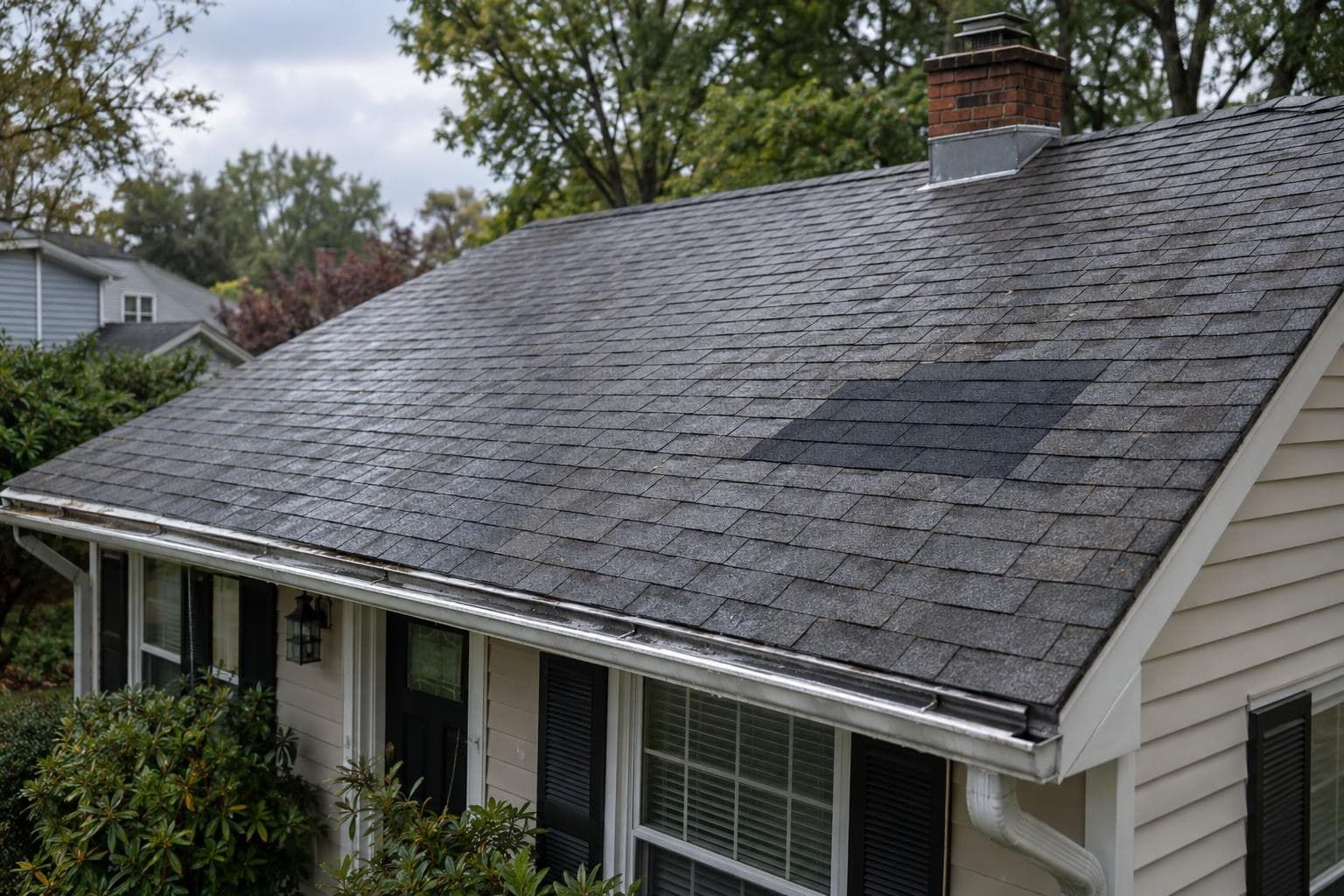
Start with the simplest answer: repair isolated damage, replace widespread damage. A small leak around flashing, a limited patch of missing shingles, or a problem confined to one area can often be fixed without tearing off the whole roof. But if multiple slopes show shingle loss, granule wear, soft decking, repeated leaks, or storm damage in several places, replacement usually gives you a cleaner, longer-term solution. For a repair-versus-replacement decision in New Jersey, compare a diagnosed repair scope with a measured replacement proposal; both should identify affected slopes, flashing, deck conditions, and exclusions.
How do you tell if roof damage is isolated or widespread?
The fastest way to judge it is to map the damage. If one section was hit by a branch, one pipe boot failed, or one valley is leaking, that is isolated. If you see damage on several roof planes, repeated ceiling stains in different rooms, shingle issues along multiple edges, or signs that water has moved beyond one entry point, that is widespread. In New Jersey, widespread damage can build quietly because wind-driven rain does not always enter at the exact spot where you first notice the leak inside. Water can get pushed under shingles, around flashing, or through penetrations, then travel before it shows up indoors.
- Signs damage is likely isolated: one visible problem area, one leak source, limited missing shingles, flashing failure at a single penetration
- Signs damage is likely widespread: multiple leak areas, damage on more than one slope, widespread shingle cracking or granule loss, recurring repairs, soft spots or water intrusion in several places
Does roof age change whether repair still makes sense?
Yes, age changes the math. Even if the current problem looks small, an older roof is more likely to have brittle shingles, worn seal strips, exposed fasteners, and weakened flashing details. That means one repair can turn into several over a short period. If your roof is already near the end of its service life, replacement is often the better use of money because you are not paying to patch a system that is already wearing out. If the roof is still relatively early in its life and the surrounding materials are holding up, repair is easier to justify.
Talk to a roofer today
Planning ranges, scope details, and a direct path to request a roofing quote.
When is roof damage too widespread for a repair?
That is not a law. It is a decision rule homeowners use because once damage spreads past a large section, patching starts to look uneven, costs add up, and the undamaged areas may not stay trouble-free for long. Replacement becomes worth comparing in New Jersey when damage crosses multiple slopes, compatible materials are unavailable, deck or flashing work expands the scope, or repairs keep returning.
In New Jersey, this rule matters because weather stress is often cumulative. A roof may have older wear from temperature swings and wet seasons, then a hail or wind event pushes it past the point where another spot repair is worth it.
How does New Jersey weather affect the repair versus replacement decision?
It pushes borderline roofs toward replacement faster than in milder conditions. Near the shore, storms can force wind and water against edges, flashing, and penetrations, which means weak details get tested hard. Seasonal temperature swings also matter because expansion and contraction can shorten the useful life of aging roofing materials. If your roof already has multiple weak areas, New Jersey weather gives those weak areas more chances to fail.
That does not mean every storm-damaged roof needs replacement. It means a repair has to be judged against the next round of wind-driven rain, gusts, hail, and freeze-thaw movement. If the roof has several vulnerable points today, a patch may only buy a short window before another leak appears.
What does roof replacement cost in New Jersey in 2026?
Use the current New Jersey cost page and calculator to plan a repair-versus-replacement decision in New Jersey, then require the measured scope to explain any meaningful difference. When planning a repair-versus-replacement decision in New Jersey, ask how roof shape, staging, weather, inspections, and concealed deck conditions affect both duration and labor. If you are comparing repair against replacement, use those numbers as the baseline, then weigh how many more repairs an aging roof is likely to need. You can also see fuller local pricing on the New Jersey cost page and use the calculator to compare materials and roof sizes.
Is it worth upgrading to Class 4 shingles in New Jersey?
If you are already replacing the roof and want better impact resistance, it can be worth asking about Class 4. Do not assume a statewide Class 4 credit in New Jersey; ask the carrier to verify eligibility and paperwork for the exact product and policy. Discounts and eligibility are set by the carrier, and your savings, if any, depend on your policy and underwriting. A qualified local roofing contractor can help you compare product options and gather the product documentation your carrier may ask for. This matters in New Jersey because hail and storm gusts are part of the wear pattern, so a tougher shingle may help you reduce future damage exposure.
How does insurance affect a repair or replacement claim in New Jersey?
Check your policy details before you assume what is covered. State guidance says most standard homeowners insurance policies cover losses caused by fire and lightning, smoke, windstorms or hail, but some policies may include a separate, optional wind/hail deductible, and/or a mandatory or optional hurricane deductible. For roof repair vs replacement in New Jersey, coverage depends on the policy language, cause of loss, exclusions, and the insurer's decision; verify those terms in your own documents.
Just as important, roof damage and flood damage are not handled the same way. State guidance says homeowners insurance policies exclude water damage caused by flood. It also says flooding is not covered under standard homeowners policies, and homeowners policies do not cover damage from flooding that accompanies a hurricane. If flood exposure is part of your risk, you may need separate flood insurance. State guidance says there is normally a 30-day waiting period before a new flood insurance policy becomes effective, and also says flood insurance is not effective until 30 days after it is sold. If you are thinking about adding flood coverage, do not wait until a storm is close.
What should you do before hiring a roofer after storm damage?
Keep the process simple and document-focused. Ask your roofer to explain the full scope in writing, including what gets replaced, how flashing and ventilation will be handled, what cleanup is included, and who is responsible for protecting the home if weather hits during the job. Because storm claims can involve outside help, it also matters to know who is working on the insurance side. New Jersey specifically says public adjusters must be licensed by the Department of Banking and Insurance, and if you choose to hire a public adjuster, make sure that they are licensed.
You should also keep photos, receipts, and a written record of any storm damage and temporary repairs, because state guidance says to report the loss immediately, take pictures of the damage, make a reasonable attempt to protect your property from further loss or damage, and keep receipts for any repairs. If standard coverage is not available, state guidance says consumers who are unsuccessful in obtaining coverage through a standard company may apply to the New Jersey Insurance Underwriting Association, known as the FAIR Plan. It says the FAIR Plan provides basic property coverage, but does not provide theft or personal liability coverage. State guidance also says you should consider the FAIR Plan only if you cannot obtain insurance from any other source.
What is the smartest choice for most New Jersey homeowners?
The smart choice is the one that fixes the real problem, not just the visible symptom. In New Jersey, weather exposure makes that line sharper because wind-driven rain, hail, storm gusts, and temperature swings tend to punish roofs that are already partly worn out. If you are on the fence, compare one solid repair against the replacement cost for your roof size, then decide whether you are buying time or buying peace of mind.
Sources
Reviewed technical references for New Jersey
Related New Jersey roofing guides
Related services
Updated July 27, 2026
3D Roofs Editorial Team
Editorial Standards