Updated July 10, 2026

3D Roofs Editorial Team
Editorial Standards
There is no single best roof for every South Carolina home. For a South Carolina property, start with its actual weather exposure and roof geometry, then compare complete assemblies on water control, attachment, ventilation, repairability, local availability, warranty terms, and installed cost. The sections below use South Carolina-specific guidance to show which questions matter before choosing a material. For a roof system comparison in South Carolina, use the linked South Carolina Department of Insurance, Severe Weather Recovery reference as the state-reference checkpoint and test the recommendation against the address's wind-driven rain, humid drying, tree debris, shaded slopes, and coastal exposure where it applies.
What roof offers stronger impact resistance in South Carolina weather?
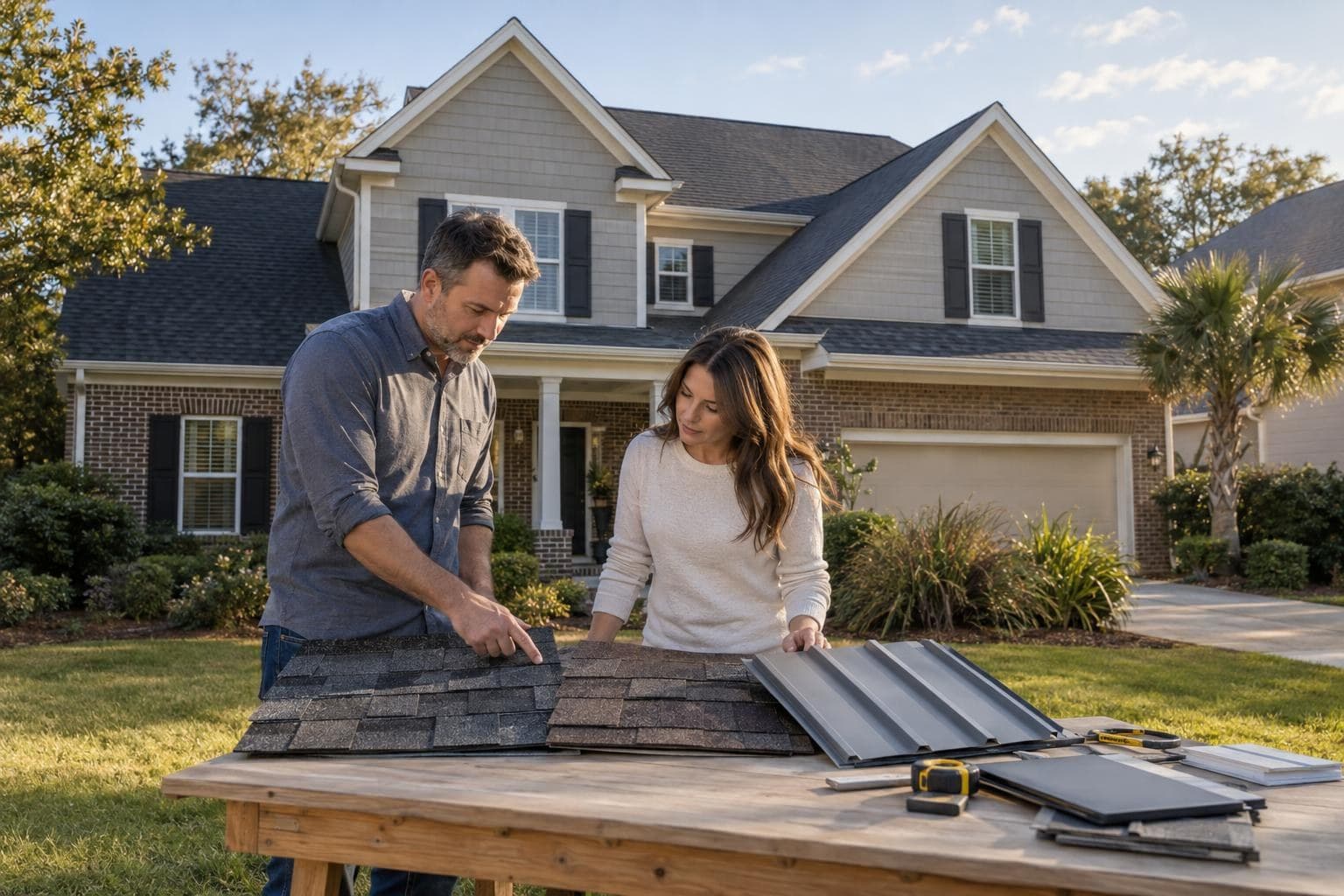
Class 4 asphalt usually gives you the best overall fit for South Carolina weather. South Carolina roofs have to handle severe storms, wind-driven rain, and long periods of heat and humidity. In practical terms, that can mean lifted shingles, flashing problems, leaks that spread quickly if they are not covered, and moisture-related wear that builds over time. For you, that means regular roof checks matter, especially after major weather. Class 4 is built for homeowners who want a tougher shingle roof without jumping all the way to metal pricing. If your main goal is value, Class 3 is still a strong option. If your main goal is premium long-term performance, standing seam metal is the upgrade path.
Is Class 3 or Class 4 better for South Carolina?
Class 4 is better if you want more impact resistance and the possibility of an insurance discount, while Class 3 is better if upfront price matters most. Check current South Carolina cost data for a roof-system comparison in South Carolina, then replace the range with an assembly-specific proposal based on measured conditions. That price gap is meaningful, but not huge compared with the potential benefit of a tougher roof in a storm-heavy state. A Class 4 rating does not establish a policy credit in South Carolina; the carrier and policy determine eligibility, documentation, and savings. If you are considering an impact-resistant roof, ask your carrier whether it offers a discount for a Class 4 rated product. Discounts and underwriting rules can vary by carrier, so you should confirm the product requirements and any savings directly with your insurer before you choose materials.
- Choose Class 3 if you want the lower entry price and dependable asphalt performance.
- Choose Class 4 if you want stronger impact resistance and want to check for a policy-specific premium credit.
- Choose based on your storm exposure, budget, and how long you expect to keep the home.
Is a metal roof worth it in South Carolina?
A standing seam metal roof is worth it if you want a premium material and plan to stay put long enough to value the higher upfront investment. That is far above Class 3 and Class 4, so metal is not usually the first choice for pure budget value. It is the choice for homeowners who want a different ownership experience, less concern about shingle wear over time, and a roof system many buyers see as an upgrade. If your budget is tighter, Class 4 often lands in the sweet spot.
Talk to a roofer today
Planning ranges, scope details, and a direct path to request a roofing quote.
What is the cheapest good roof for South Carolina?
Class 3 is the cheapest good roof for most South Carolina homeowners. It is the value pick when you need a full replacement without stretching to Class 4 or metal. The tradeoff is simple: you save money upfront, but you give up some of the added impact resistance that may matter after severe storms.
How much does roof repair or replacement cost in South Carolina?
Before approving a roof-system comparison in South Carolina, have the bidder connect timing to roof complexity, crew access, material handling, weather, inspections, and concealed conditions. If you want to compare your home to statewide pricing, the South Carolina cost page and the calculator are the best next step.
What should you do after storm damage to your roof in South Carolina?
Take photos, prevent more damage if the area is safe, and file your claim right away. The South Carolina Department of Insurance says that after a storm, if the area is safe, you should take photos of the damage and then take steps to mitigate any further damage. The example it gives is covering a hole in your roof with a tarp to help prevent more interior damage. The South Carolina Department of Insurance also says to immediately file a claim with your insurance company. It also says to keep all photos and receipts because they will be useful in processing your claim.
- Photograph the roof damage and any interior damage you can safely document.
- Take steps to prevent more damage, such as covering an opening if it is safe to do so.
- File your claim right away.
- Keep photos and receipts for claim processing.
- If you have claim or coverage questions, the South Carolina Department of Insurance says its Office of Consumer Services can help answer your questions about property insurance or other types of insurance.
How do you choose the right roofer for a South Carolina roof replacement?
Choose a roofer whose credentials and written scope you checked whose work matches the roofing scope your project requires. South Carolina has a residential specialty contractor registration category for roofers. The South Carolina Department of Insurance says a residential specialty contractor includes roofers doing the installation, alteration, and repair of materials that form a watertight, weather resistant surface for roofs and decks, including accessories, flashing, valleys, gravel stops, and roof insulation panels above the roof deck. The South Carolina Department of Insurance also says this registration applies when undertakings exceed five hundred dollars (an amount that must be confirmed for the written scope). A smart way to vet your roofer is to confirm they fit the roofing scope you need, check the state's licensee lookup or license verification resources, and make sure the work you are hiring for matches the scope the state describes.
So what is the best roof for South Carolina for your home?
For most homeowners, Class 4 is the best roof for South Carolina because it lines up well with the state's real weather risks and still stays far below metal on price. Choose Class 3 if your main goal is keeping replacement cost lower. Choose standing seam metal if you want a premium roof and the higher upfront price fits your plans. If you are unsure, start with your budget, ask how long you expect to stay in the home, and check with your insurer about any Class 4 product requirements or discounts. That process usually makes the right choice clear.
Sources
- Insurance Institute for Business & Home Safety: Roof 101
- Asphalt Roofing Manufacturers Association: Residential Asphalt Roofing Manual: Ventilation Best Practices
- South Carolina Department of Insurance, Severe Weather Recovery
- South Carolina Residential Builders Commission, Residential Specialty Contractor Registration
Reviewed technical references for South Carolina
Related South Carolina roofing guides
Related services
Updated July 10, 2026
3D Roofs Editorial Team
Editorial Standards