Updated July 10, 2026

3D Roofs Editorial Team
Editorial Standards
There is no single best roof for every Wisconsin home. For a Wisconsin property, start with its actual weather exposure and roof geometry, then compare complete assemblies on water control, attachment, ventilation, repairability, local availability, warranty terms, and installed cost. The sections below use Wisconsin-specific guidance to show which questions matter before choosing a material. For a roof system comparison in Wisconsin, use the linked Wisconsin Office of the Commissioner of Insurance, After a Storm Hits reference as the state-reference checkpoint and test the recommendation against the address's freeze-thaw cycles, snow or ice at eaves, warm-season wind or impact, tree debris, and attic moisture.
What roof type is best for Wisconsin weather?
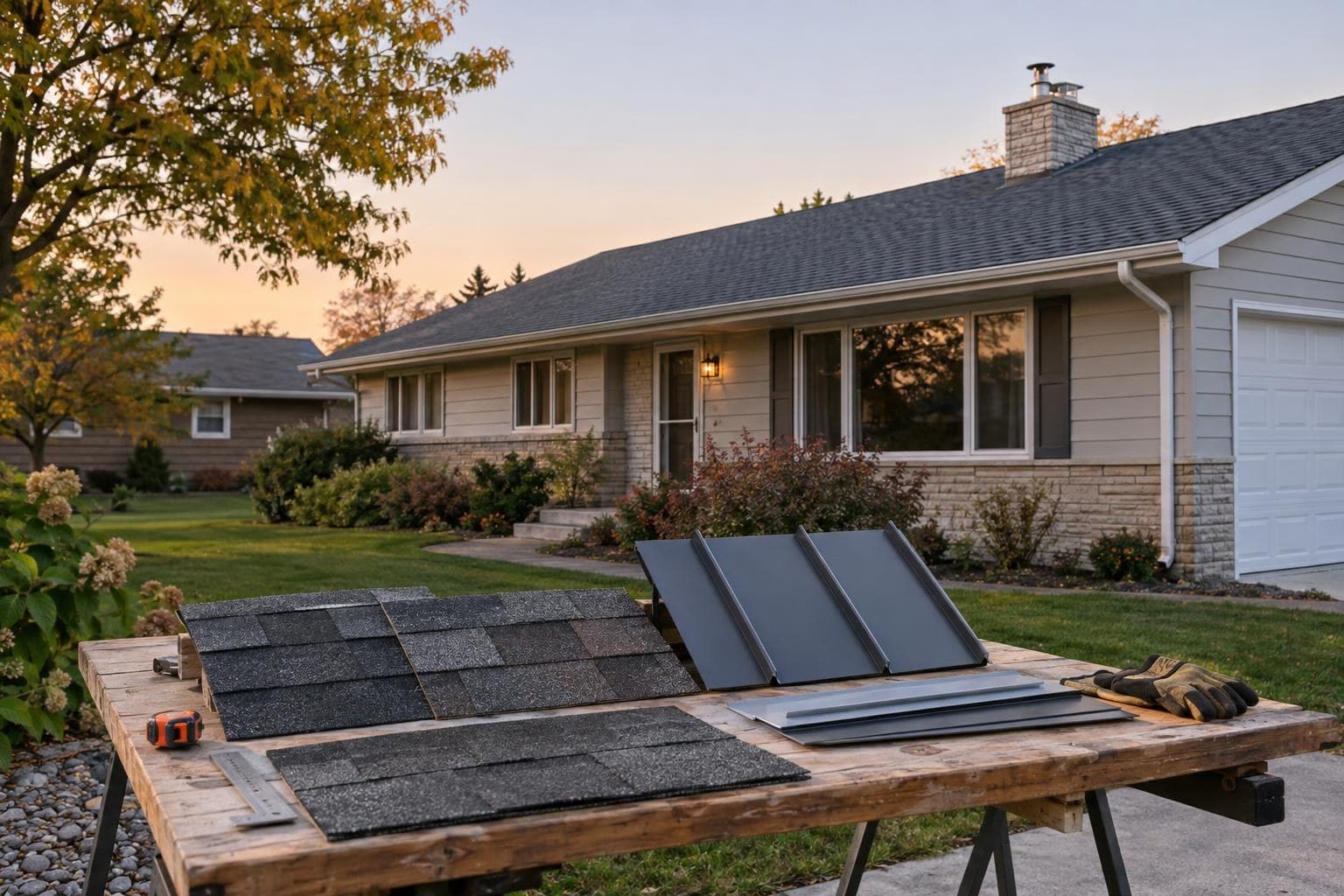
Class 4 shingles are often the best overall fit for Wisconsin weather because they are built for tougher impact performance while staying far closer in price to asphalt than metal. That matters in a state where snow and ice can stress shingles, flashing, and roof edges, and where wind and hail can loosen or remove roofing materials. Once that happens, rain can work into those weak spots and turn a small issue into interior damage. If your main goal is the lowest upfront replacement cost, Class 3 is a practical option. If your main goal is a premium long-term material and you are comfortable paying much more upfront, standing seam metal is the premium path.
How do Class 3, Class 4, and metal compare on price in Wisconsin?
The price gap is real, so your decision usually starts there. Check current Wisconsin cost data for a roof-system comparison in Wisconsin, then replace the range with an assembly-specific proposal based on measured conditions. In plain terms, Class 4 is a step up from Class 3, but still nowhere near the cost of standing seam metal.
- Before approving a roof-system comparison in Wisconsin, have the bidder connect timing to roof complexity, crew access, material handling, weather, inspections, and concealed conditions.
Is Class 4 worth it in Wisconsin?
Yes, for many Wisconsin homeowners, Class 4 is worth the extra cost because the upgrade from Class 3 is moderate compared with the added storm focus. Wisconsin gets heavy winter weather, summer storms, wind, and hail. That means you are not just buying shingles, you are buying more margin against the kind of damage that often starts small and gets worse when rain follows. There is also a possible insurance angle. A Class 4 rating does not establish a policy credit in Wisconsin; the carrier and policy determine eligibility, documentation, and savings. If you are considering impact-resistant shingles, ask your carrier whether it offers a discount for a Class 4 roof, and confirm eligibility, documentation requirements, and how the roof product must be identified on your policy.
Talk to a roofer today
Planning ranges, scope details, and a direct path to request a roofing quote.
When is Class 3 the right roof choice in Wisconsin?
Class 3 can be the practical choice when controlling upfront cost matters most. Use the current Wisconsin cost page and a measured proposal for the actual comparison rather than carrying a static per-square-foot figure into the decision. Lower upfront cost does not change the freeze-thaw, snow, ice, wind, and hail the assembly still has to manage, so compare the deck, underlayment, ventilation, flashing, and attachment details before deciding whether an upgrade is worthwhile.
Is a metal roof better for snow and storms in Wisconsin?
Standing seam metal can be a strong choice for snow and storms in Wisconsin, but it is not automatically the best value for every home. The main tradeoff is cost. If you want a premium roofing material and plan around that budget, metal belongs on your shortlist. If you are trying to get the best mix of weather readiness and price, Class 4 is often the more practical answer. The right choice comes down to whether you want to pay much more upfront for metal, or stay in asphalt pricing while upgrading impact resistance.
What roof problems are most common in Wisconsin?
The most common Wisconsin roof problems start when weather opens weak spots. Freeze-thaw cycles, heavy winter weather, summer storms, and wind all put stress on the roof system. Snow and ice can stress shingles, flashing, and roof edges. Wind and hail can loosen or remove roofing materials. Rain can then work into those weak spots and turn a small issue into interior damage. That is why material choice matters, but it is also why fast repairs matter.
How fast can a roof be replaced in Wisconsin?
If a storm just hit, speed matters, but so does documentation. After a storm, notify your insurance agent or insurance company right away to begin the claim process. Make a list of damaged items for your adjuster, take photographs of the damage, keep swatches of damaged material when possible, and keep all receipts that document repair or replacement costs.
What should you do after storm damage in Wisconsin?
Start your claim right away, document everything, and do not throw damaged material away before the adjuster agrees. You should not throw out damaged property without the claim adjuster’s agreement. If local officials require disposal for safety reasons, photos and swatches can help support your claim. It also helps to know that some water losses are not covered by a standard homeowners policy. Most homeowners policies do not cover flooding or seepage through the foundation. A separate flood insurance policy is necessary for that coverage. Damage from sewer backup or sump pump overflow is not covered by standard homeowners insurance or flood insurance, and requires a special endorsement on your homeowners policy.
How do you hire the right roofer in Wisconsin?
Take your time, avoid pressure, and ask direct questions about permits and claim documentation. In Wisconsin, roofing and other residential exterior work often ties into dwelling contractor credential rules. State guidance says no person may obtain a building permit for a one- and two-family dwelling unless that person holds a Dwelling Contractor certification or Dwelling Contractor Restricted certification, and holds or engages a person who holds a Dwelling Contractor Qualifier certification. When you talk with a roofer whose credentials and written scope you checked, ask who will pull the permit if one is needed, ask for the business name you should look up with the state, and ask how they handle documentation for your adjuster. If you have a specific complaint about your insurance, state guidance says to refer it first to the insurance company or agent involved. If you do not receive satisfactory answers, you can contact OCI.
So, which roof should you choose for your Wisconsin home?
Choose Class 4 if you want the best balance of price and storm readiness for Wisconsin. Choose Class 3 if keeping upfront cost down is the priority. Choose standing seam metal if you want a premium material and are comfortable with a much higher upfront investment. That is often the sweet spot. If you want to compare your home, roof shape, and pitch in more detail, check the Wisconsin cost page and the calculator for full local pricing.
Sources
- Insurance Institute for Business & Home Safety: Roof 101
- Asphalt Roofing Manufacturers Association: Residential Asphalt Roofing Manual: Ventilation Best Practices
- Wisconsin Office of the Commissioner of Insurance, After a Storm Hits
- Wisconsin Department of Safety and Professional Services, Dwelling Contractor
Reviewed technical references for Wisconsin
Related Wisconsin roofing guides
Related services
Updated July 10, 2026
3D Roofs Editorial Team
Editorial Standards