Updated July 27, 2026

3D Roofs Editorial Team
Editorial Standards
If your roof damage is limited, a repair usually makes sense. If damage is spread across large sections, the roof is older, or Wisconsin weather has been working on weak spots for years, replacement is often the better value. The goal is simple: spend the least amount of money that still gives you a dependable roof. In Wisconsin, that decision gets tougher because freeze-thaw cycles, heavy winter weather, summer storms, and wind can turn a small roof problem into a bigger one faster than many homeowners expect.
Should you repair or replace your roof in Wisconsin?
Repair is the right choice when the problem is isolated and the rest of the roof is still in solid shape. Replacement is the better choice when damage is widespread, repeated repairs are stacking up, or the roof is old enough that patching one area just leaves the next weak spot waiting. Wisconsin roofs are exposed to freeze-thaw cycles, heavy winter weather, summer storms, and wind. Snow and ice can stress shingles, flashing, and roof edges. Wind and hail can loosen or remove roofing materials. Rain can then work into those weak spots and turn a small issue into interior damage. That means a roof that looks repairable from the ground can sometimes have broader wear once your roofer gets a close look.
What counts as isolated damage vs. widespread damage?
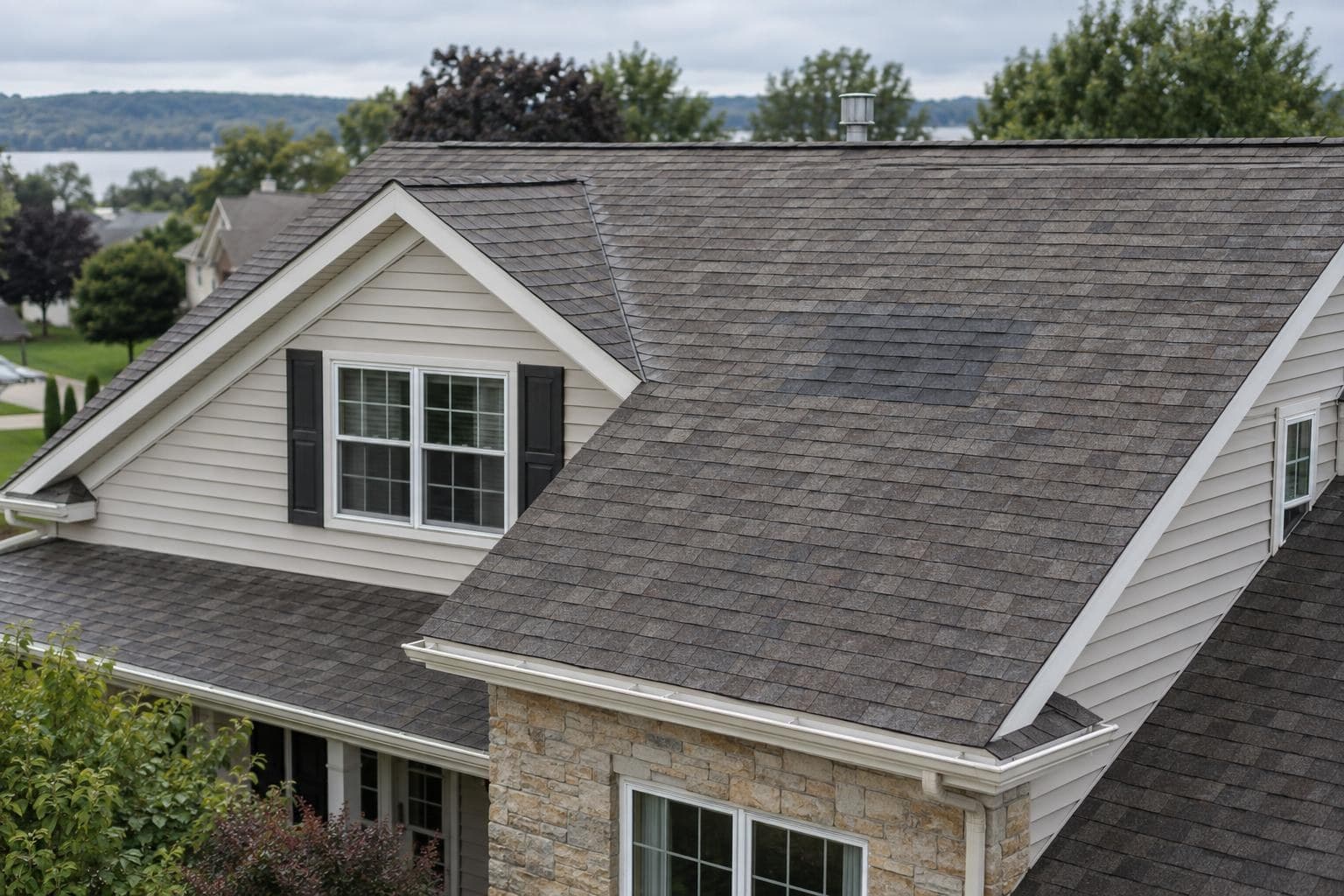
Isolated damage means the issue is limited to one area and has a clear cause, like a few missing shingles after wind, localized flashing damage, or one small leak around a vent. Widespread damage means the roof is failing in multiple places or across multiple slopes. That can look like shingle loss in several sections, repeated leaks, hail marks across broad areas, curling or cracking shingles throughout, soft decking in more than one spot, or roof edges that are breaking down around the home. When damage shows up in several places, a repair may only buy you a little time.
- Good repair candidates: a small number of damaged shingles, one problem area around flashing, a localized leak, or storm damage limited to a single section
- Common replacement signs: damage on multiple slopes, recurring leaks, widespread granule loss, visible aging across the roof, or decking issues in more than one area
- If water has already made it inside, the roof problem may be larger than the stain you can see on the ceiling
When is roof damage too widespread for a repair?
For roof repair vs replacement in Wisconsin, do not use a fixed damage percentage as the decision rule; compare the repairable area, roof condition, material availability, code requirements, and written scopes. Once a large share of the roof needs work, patching starts to lose its value. You are paying to fix old roofing around damaged sections, and that older roofing may not hold up much longer in Wisconsin weather. If your roofer finds damage spread over more than roughly a third of the roof surface, it is usually smart to compare repair cost against the value of starting over with a full system.
Talk to a roofer today
Planning ranges, scope details, and a direct path to request a roofing quote.
How much does roof repair vs. replacement cost in Wisconsin?
For a repair-versus-replacement decision in Wisconsin, compare a diagnosed repair scope with a measured replacement proposal; both should identify affected slopes, flashing, deck conditions, and exclusions. Replacement is a much bigger project, but it may save you from repeated repair bills if the roof is worn out. Check current Wisconsin cost data for a repair-versus-replacement decision in Wisconsin, then replace the range with an assembly-specific proposal based on measured conditions. Before approving a repair-versus-replacement decision in Wisconsin, have the bidder connect timing to roof complexity, crew access, material handling, weather, inspections, and concealed conditions.
How does roof age affect the decision?
The older the roof, the less sense it usually makes to keep repairing it. Even when one leak looks small, age often means the surrounding shingles, sealants, and flashing are not far behind. In Wisconsin, that matters because repeated freezing and thawing can open up small cracks, loosen fasteners, and wear down roof edges over time. A newer roof with one storm-damaged section is often worth repairing. An older roof with general wear plus a fresh storm hit is often a replacement conversation. Age does not decide the job by itself, but it changes how much life you are likely to get from a repair.
Why does Wisconsin weather push some roofs from repair to replacement?
Because Wisconsin weather does not just cause one-time damage, it keeps testing every weak point after that. Snow and ice add stress. Freeze-thaw cycles can widen small openings. Wind can lift roofing materials that already lost adhesion. Hail can bruise or crack shingles. Then rain finds a path in. That pattern is why a roof with scattered issues after a storm may be a poor repair candidate, especially if those issues sit on top of older wear. What starts as a few missing shingles can turn into leaks, stained ceilings, wet insulation, or damaged decking if the broader roof system is already tired.
When is a full replacement the smarter financial move?
Replacement is the smarter financial move when repairs are becoming frequent, damage covers a large share of the roof, or you are putting money into a roof that may still need replacement soon. It is also worth looking at replacement if you want a tougher shingle after hail or wind exposure. If you are considering impact-resistant shingles, ask your carrier whether it offers a discount for a Class 4 roof. A Class 4 rating does not establish a policy credit in Wisconsin; the carrier and policy determine eligibility, documentation, and savings. Discounts are set by the insurance carrier, so you should confirm eligibility, documentation requirements, and how the roof product must be identified on your policy.
What should you do after storm damage in Wisconsin?
Start the claim process right away, document everything, and do not throw damaged materials away before the adjuster agrees. After a storm, notify your insurance agent or insurance company right away to begin the claim process. Make a list of damaged items for your adjuster, take photographs of the damage, keep swatches of damaged material when possible, and keep all receipts that document repair or replacement costs. You should not throw out damaged property without the claim adjuster’s agreement. If local officials require disposal for safety reasons, photos and swatches can help support your claim.
It also helps to know where insurance usually stops. Most homeowners policies do not cover flooding or seepage through the foundation. A separate flood insurance policy is necessary for that coverage. Damage from sewer backup or sump pump overflow is not covered by standard homeowners insurance or flood insurance, and requires a special endorsement on your homeowners policy. If you have a specific complaint about your insurance, state guidance says to refer it first to the insurance company or agent involved. If you do not receive satisfactory answers, you can contact OCI.
How do you hire the right roofer for a repair or replacement?
Take your time, ask direct questions, and make sure you understand who is handling permits and documentation. In Wisconsin, roofing and other residential exterior work often ties into dwelling contractor credential rules. State guidance says no person may obtain a building permit for a one- and two-family dwelling unless that person holds a Dwelling Contractor certification or Dwelling Contractor Restricted certification, and holds or engages a person who holds a Dwelling Contractor Qualifier certification. After a storm, the state also tells you to take your time, step back if you feel pressured to sign quickly, and check for complaints before you hire. When you talk with a roofer whose credentials and written scope you checked, ask who will pull the permit if one is needed, ask for the business name you should look up with the state, and ask how they handle documentation for your adjuster.
How long does a roof replacement take in Wisconsin?
That timing matters when you are comparing another patch against a full replacement. If your roof is actively leaking or showing damage in several areas, a short replacement window can be easier to live with than multiple repair visits spread over time. In older homes, roof work can also overlap with lead-safe renovation concerns when paint-disturbing work affects pre-1978 housing, so it is worth asking questions early if that applies to your home.
What is the simplest way to make the decision?
If damage is small, isolated, and the roof still has solid life left, repair it. In Wisconsin, weather makes delayed decisions more expensive because weak spots rarely stay small for long. A local roofer you have vetted can inspect the full roof system, show you whether the issue is isolated or widespread, and help you compare a short-term repair bill against a longer-term replacement plan using the latest local cost data.
Sources
Reviewed technical references for Wisconsin
Related Wisconsin roofing guides
Related services
Updated July 27, 2026
3D Roofs Editorial Team
Editorial Standards