Updated July 27, 2026

3D Roofs Editorial Team
Editorial Standards
No, you should plan on paying your deductible yourself. The Florida-specific facts here do not create a rule about deductible waiving, so the safest answer is the national reality: in an insurance claim, the deductible is the homeowner's responsibility. If a roofing deal sounds like your deductible will somehow disappear, slow down and ask for the numbers in writing.
Can a roofer waive your deductible in Florida?
The direct answer is that you should not count on it. For can roofer waive deductible in Florida, confirm project-specific legal and coverage questions with the responsible state agency, insurer, or local building authority before signing. They do not say a roofer can erase your deductible. That means the practical takeaway is simple: treat the deductible as your out-of-pocket share of the claim, and make sure your contract shows exactly what you are paying and what the insurer is paying.
Why do homeowners ask about deductible waiving?
Because roof claims can still leave you with real costs, even when insurance helps. For current Florida planning prices related to can roofer waive deductible, use the cost guide and calculator, then compare the contractor's property-specific written scope. On a replacement, 2026 market pricing in Florida starts much higher. That is why offers that promise to make your deductible problem go away can sound tempting. The smarter move is to compare the scope of work, material options, and total contract price, not just the sales pitch.
- For can roofer waive deductible in Florida, ask the contractor to put the expected working days and weather plan in writing; timing depends on roof size, material, access, crew scheduling, and conditions found after tear-off.
- For can roofer waive deductible in Florida, treat a steep or difficult-to-access roof as a scope variable that the contractor should measure and price explicitly.
What should you do if a deductible offer sounds too good to be true?
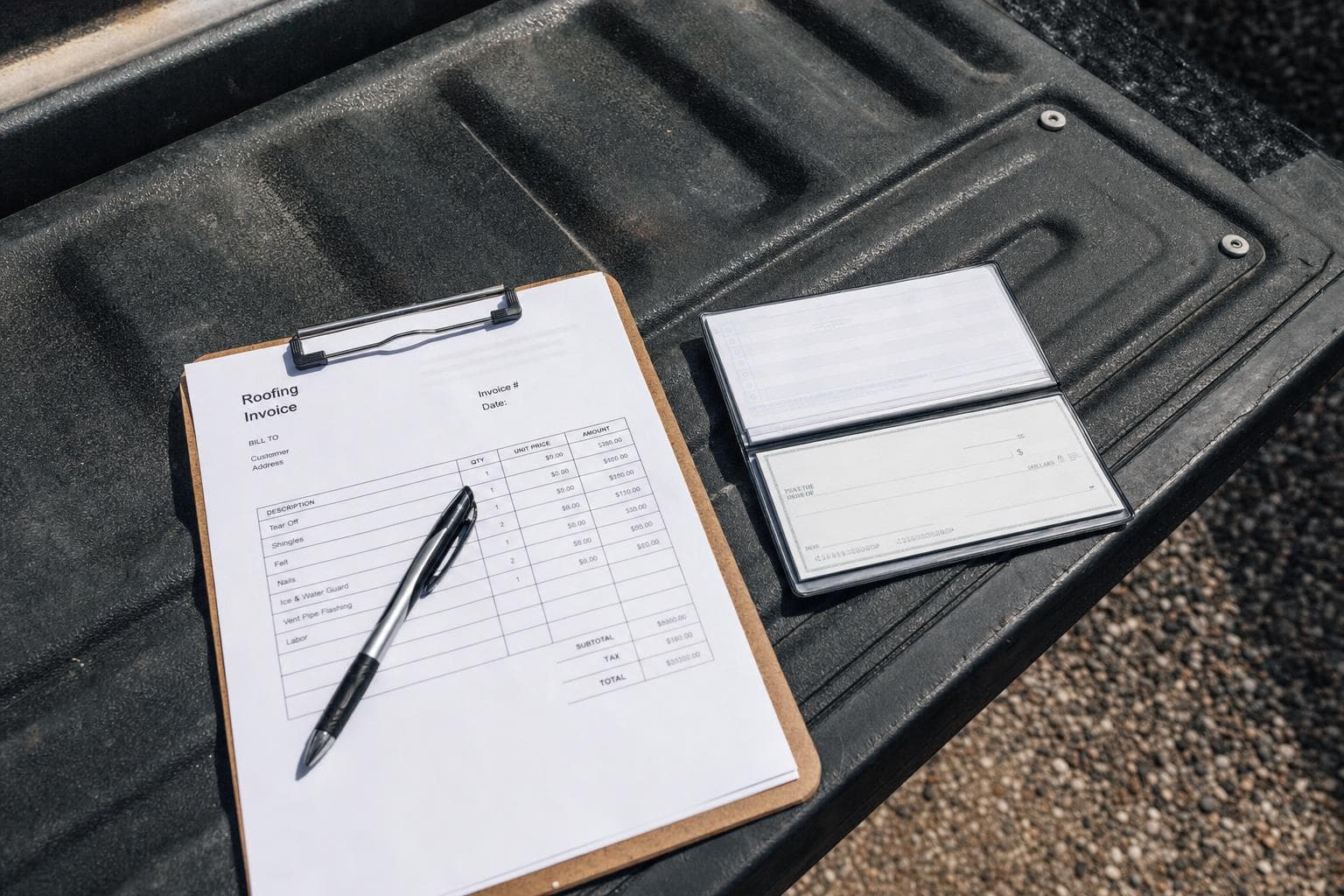
Ask for a line-by-line written proposal and compare it to the insurance scope. You want to see the roof system, tear-off details, underlayment, flashing, ventilation, permit, cleanup, and any upgrade charges spelled out clearly. If numbers are vague, allowances are missing, or upgrades appear to cancel out your deductible in a roundabout way, stop and get another opinion from a roofing contractor you are considering. You are trying to buy a roof that meets code and protects your home, not just a low-looking out-of-pocket number.
Talk to a roofer today
Planning ranges, scope details, and a direct path to request a roofing quote.
Does Florida law say anything else that matters for your roof claim?
Yes. Florida builds to the Florida Building Code, and in Miami-Dade and Broward counties the High-Velocity Hurricane Zone carries the toughest wind-resistance roofing rules in the country. In that zone, shingles, tile, underlayment, and fasteners must carry the right approval for the area, and installs follow stricter fastening and underlayment standards. Your roofer has to pull a permit and meet the code for your area, so confirm that they do. This matters because a cheap-looking deal is not a bargain if the roof system or installation does not match local requirements.
Do you always have to replace the whole roof after storm damage in Florida?
No, not always. Florida changed the old rule many homeowners still hear about. Until 2022, the state's 25% rule generally forced a full replacement if more than 25% of the roof was repaired or replaced in a year. SB 4-D changed that. If your roof was built to the 2007 Florida Building Code or later, roughly permitted on or after March 1, 2009, only the repaired section has to be brought up to current code, not the entire roof. That can make the difference between a repair bill and a full tear-off, so ask where your roof falls before you assume replacement is required.
Could a better roof lower your insurance premium instead of chasing a deductible deal?
Yes. Florida law requires insurers to give premium credits for verified wind-resistant features. Under Statute 627.0629, insurers must provide credits for features documented on the state's Uniform Mitigation Verification form, OIR-B1-1802. That means your roof choice and installation details can matter long after the job is finished. If you are already replacing the roof, it often makes more sense to focus on code-rated attachment, sealed deck details, and approved products than to chase a sales promise about the deductible.
- A hip roof shape can help
- A sealed roof deck can help
- Code-rated shingle attachment can help
- For can roofer waive deductible in Florida, any insurance credit depends on the carrier, policy, address, and exact product; get the amount and documentation requirements from the insurer in writing.
- Get the wind-mitigation inspection after the roof work so you can capture the credit you are owed
Which roof materials make the most sense in Florida?
The answer depends on your exposure to wind, rain, sun, humidity, and salt air. Florida roofs live and die by wind and water. Hurricanes and tropical systems drive wind uplift and wind-driven rain that find weak fasteners, seams, and edges, especially near the coast. Constant sun, heat, humidity, and heavy summer rain also age shingles fast, and salt air is hard on metal and flashing. In that environment, wind-rated and impact-resistant materials deserve a serious look, especially if they carry the right Florida Product Approval or Miami-Dade Notice of Acceptance for your county.
If you want the broadest pricing snapshot, full local pricing lives on the Florida cost page and the calculator. Use those to compare common systems side by side, then ask your roofer how each option will perform for your location and how it may score on the wind-mitigation form.
How can you protect yourself before you sign a roofing contract?
Start by verifying the roofer and the scope. Florida does license roofers at the state level, and you can verify status and complaint history through the Department of Business and Professional Regulation. Then confirm current general-liability and workers'-compensation insurance, ask for real local references, and ask about experience with your area's code and wind-mitigation requirements. Most of all, make sure the contract explains what is being installed, what approvals the materials carry for your county, who is pulling the permit, and what you owe out of pocket.
- Confirm the contract price in writing
- Match the contract scope to the insurance scope
- Ask what product approvals apply in your county
- Confirm permit responsibility
- Ask how the installation will support a wind-mitigation inspection
- Treat your deductible as your responsibility unless you have clear written proof saying otherwise
What is the bottom line on deductible waiving in Florida?
The bottom line is simple: do not shop for a roof by asking who will make your deductible disappear. Shop by asking who will give you a code-compliant roof, a clear contract, and the best long-term value for your claim dollars. In Florida, that means paying attention to local code, especially in the High-Velocity Hurricane Zone, knowing that repairs may be possible under the updated rule, and making the most of wind-mitigation credits after the work is done. If you compare proposals the right way, you are far more likely to end up with a roof that protects your home and a claim process that makes sense.
Sources reviewed
- Citizens Property Insurance Corporation (state insurer of last resort)
- Florida Office of Insurance Regulation (wind-mitigation premium discounts)
- Georgia Attorney General Consumer Protection Division: Beware of Roofers Scamming Storm Victims
- Illinois Department of Financial and Professional Regulation: Find a Licensed Roofer: State Law and Consumer Guidance
- Arizona Department of Insurance and Financial Institutions: Homeowners Insurance
Plan with current pricing
Related services
Updated July 27, 2026
3D Roofs Editorial Team
Editorial Standards