Updated July 27, 2026

3D Roofs Editorial Team
Editorial Standards
Illinois sits squarely in hail country. Warm-season thunderstorms drive hail and damaging straight-line winds that bruise shingles and strip granules, and that single fact is why Class 4 impact-resistant shingles come up so often when homeowners here price a roof. They cost more than standard asphalt, but in a state where hail is a recurring threat, they can be a reasonable upgrade when the product, installed price, and policy-specific insurer answer support it. Here is what you are actually buying, and how to decide.
What 'Class 4' actually means
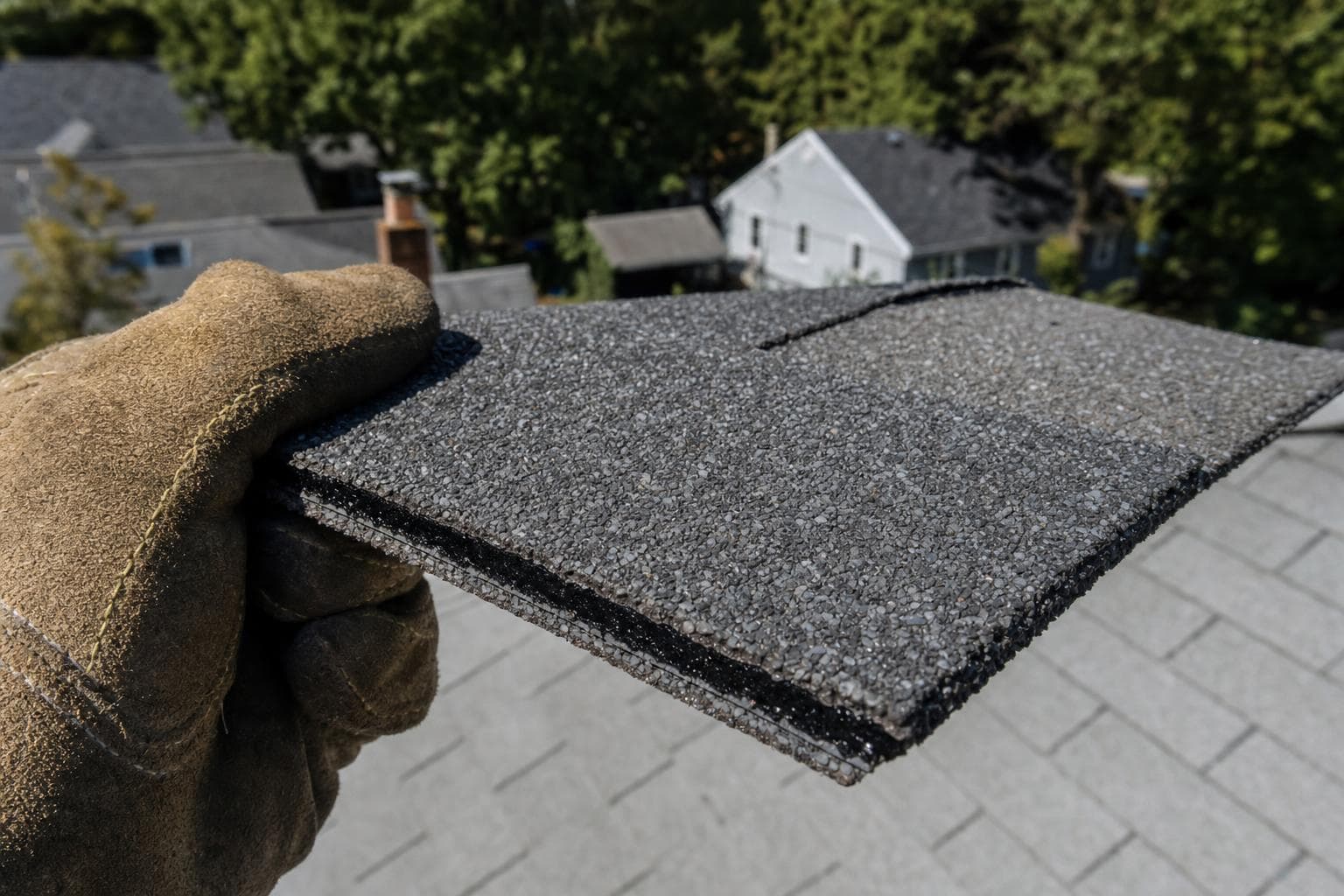
Class 4 is the top of four impact ratings under UL Standard 2218. To earn it, a shingle has to survive a steel ball dropped from a set height without the mat cracking, a stand-in for hail impact. It is not a marketing label; it is a tested classification. The practical payoff is resistance to the puncture and mat fracture that quietly ends an asphalt roof's life early, which is exactly the failure Illinois hail tends to cause.
What it costs over standard asphalt
Use the current Illinois cost page and calculator to plan an impact-resistant shingle decision in Illinois, then require the measured scope to explain any meaningful difference. Set that against the cost and hassle of a hail claim, a deductible, and a roof that fails years early, and in Illinois the premium often looks like cheap insurance rather than a splurge.
The insurance credit to ask about
Many Illinois carriers offer a premium credit for an impact-resistant roof, since a Class 4 roof is less likely to generate a hail claim. The catch is that there is no fixed statewide discount: each carrier sets its own, and some offer none. So before you count the credit toward the upgrade, call your insurer and ask exactly what they credit for a UL 2218 Class 4 roof, and whether they want documentation of the shingle rating after installation.
Talk to a roofer today
Planning ranges, scope details, and a direct path to request a roofing quote.
The honest limits
- For class 4 shingles in Illinois, treat Class 4 as a laboratory impact classification for the exact product, not a promise that the installed roof will resist every hail event or avoid damage.
- Impact resistance does not change your deductible, and many Illinois policies now carry a percentage-based wind and hail deductible, so know that number before you ever file.
- The rating protects the shingle, not the flashing, vents, or gutters around it, those still take hail and still need inspection after a storm.
- A Class 4 shingle installed poorly is still a poorly installed roof; the upgrade only pays off with the right underlayment, ventilation, and flashing.
Is it right for your roof?
If your home sits on an exposed lot, you have filed hail damage before, or you simply plan to stay long enough that a second hail event is likely, Class 4 is usually the smart spend in Illinois. If your roof is well-sheltered and your budget is tight, quality standard asphalt with strong install details can still serve you. The deciding question is simple: how likely is the next hailstorm to find your roof, and how much is avoiding that claim worth to you?
What the impact rating can and cannot tell you
UL 2218 is a product impact test, not a promise that a finished roof cannot be damaged. A Class 4 listing tells you that the named product met the highest classification in that test method. It does not grade the deck, flashing, fastener placement, ventilation, or workmanship, and it does not decide whether an insurer will cover cosmetic marks or offer a credit. Ask for the exact manufacturer and product line so you can verify the listing instead of accepting 'Class 4' as a generic sales label. For the Illinois Class 4 decision, verify the named product and written insurer answer together; neither a generic rating nor an assumed credit completes the decision. For a Class 4 shingle option in Illinois, use the linked IDFPR – Roofing Contractor licensing reference as the state-reference checkpoint and test the recommendation against the address's freeze-thaw cycles, snow or ice at eaves, warm-season wind or impact, tree debris, and attic moisture.
- Put the exact shingle manufacturer, product line, color, and impact classification in the proposal.
- Compare the required nail pattern, starter, hip and ridge products, underlayment, and deck repairs as one installed system.
- Ask your insurer in writing whether this exact product qualifies for a credit and what documentation must be submitted.
- Read the policy and product warranty for cosmetic-damage language, exclusions, transfer rules, and required maintenance.
- Confirm local availability for future repairs; a discontinued or hard-to-match shingle can turn a small repair into a larger decision.
- For the Illinois Class 4 decision, attach the exact certification and the insurer's written eligibility answer to the bid comparison.
How to decide whether the upgrade fits a Illinois roof
Illinois roofs see temperature swings, hail, straight-line wind, snow, and ice, so a sound deck and careful edge, valley, and ventilation details matter across seasons. Compare the verified upgrade price with the roof's current condition, your likely ownership horizon, product availability, and any insurer credit you have actually been quoted. If the deck, flashing, ventilation, or installation plan is weak, spending more on the surface product will not correct those weaknesses. The useful question is not whether Class 4 is always worth it; it is whether this tested product improves the complete scope for this roof at a price you understand.
Sources
Related reading and source material
Verify the exact Class 4 product for Illinois
Class 4 is a product classification under a defined impact test, not a generic description of every architectural shingle. Put the manufacturer, product line, color, field-shingle classification, and compatible hip and ridge products in the Illinois proposal. Keep package labels or certification records needed by the manufacturer or insurer, and do not treat the rating as a promise that every real storm will leave no cosmetic or functional damage. For a Class 4 shingle option in Illinois, check the linked IDFPR – License Lookup (verify a roofer) reference for the state-level question while the property inspection addresses freeze-thaw cycles, snow or ice at eaves, warm-season wind or impact, tree debris, and attic moisture.
Compare the complete shingle assembly in Illinois
The upgrade does not correct weak decking, incomplete flashing, poor starter or ridge attachment, or an unsuitable ventilation plan. Compare the Class 4 option with the standard option on identical tear-off, underlayment, edge metal, flashings, fasteners, ventilation, deck repair, and workmanship. The price difference should represent the tested product and required companion materials, not two different Illinois roof scopes. For a Class 4 shingle option in Illinois, keep the linked IDFPR – Roofing Contractor licensing reference in the project file and document how the roof's freeze-thaw cycles, snow or ice at eaves, warm-season wind or impact, tree debris, and attic moisture affect this decision.
Ask the Illinois insurer about the named product
The carrier decides whether it recognizes the exact product, what credit or documentation may apply, and how cosmetic damage is treated. Get that answer in writing before assigning financial value to the classification. A contractor can supply product records and describe construction, but it should not guarantee coverage, premium treatment, or the outcome of a future claim. For a Illinois property, evaluate freeze-thaw transitions, snow and ice at eaves, warm-season wind and impact, tree debris, and attic moisture at the property.
Reviewed technical references for Illinois
Related Illinois roofing guides
Related services
Updated July 27, 2026
3D Roofs Editorial Team
Editorial Standards