Updated July 27, 2026

3D Roofs Editorial Team
Editorial Standards
Yes, homeowners insurance may cover a roof replacement in Colorado when a storm causes functional damage. The key issue is usually not the age of the roof by itself, but whether hail, wind, or another covered event damaged the roof enough to affect how it sheds water and protects your home. If the problem is normal wear, aging, poor maintenance, or an old leak that got worse over time, coverage is much less likely. In Colorado, that storm-versus-wear question matters a lot because roofs here face demanding exposure from hail, high winds, intense sun, snow load, and freeze-thaw cycles.
When does insurance cover a roof replacement in Colorado?
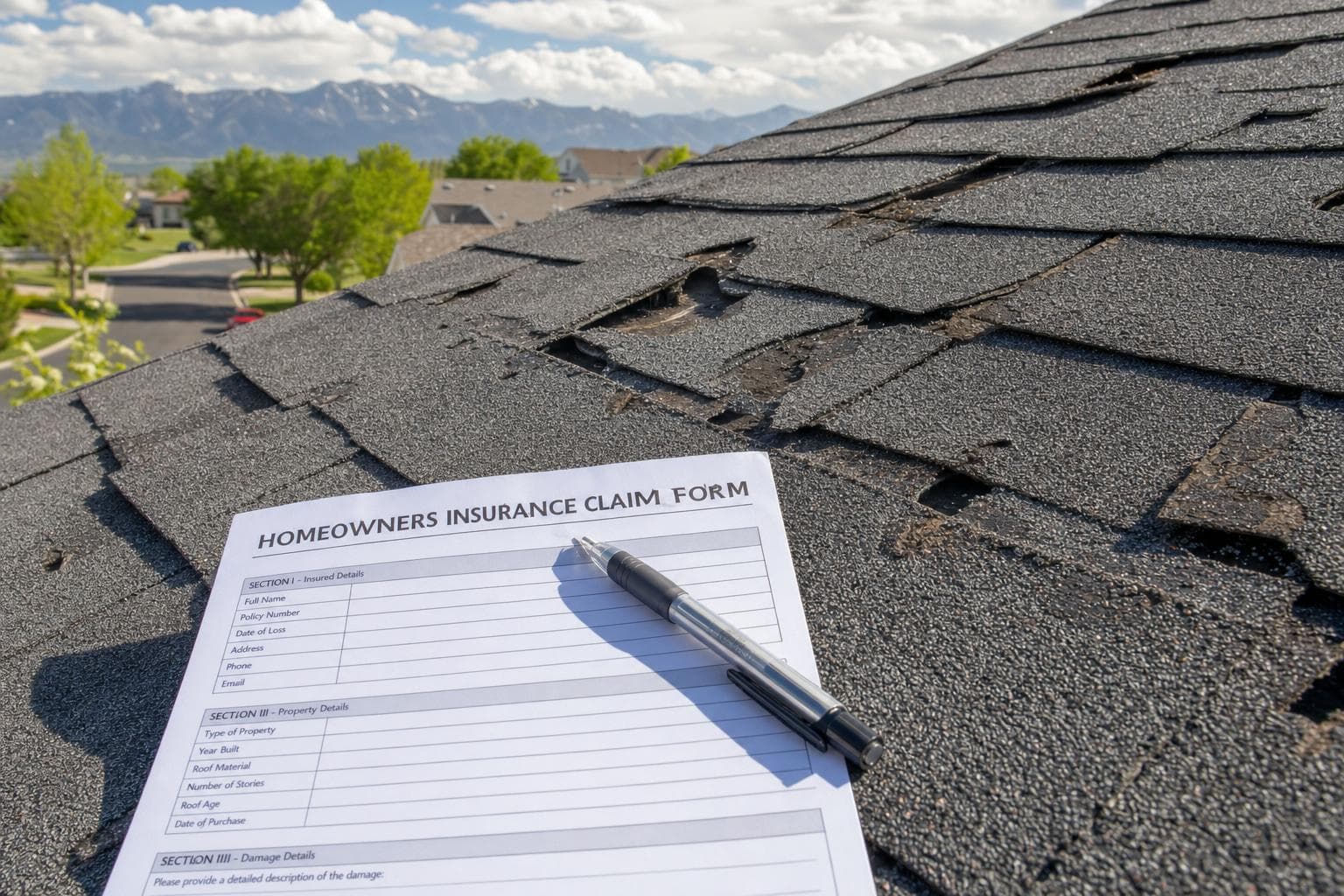
Insurance usually covers replacement when a covered storm causes functional damage that repair will not reasonably solve. Functional damage means the roofing system was harmed in a way that affects performance, such as punctures, torn or lifted shingles, broken seals, damaged flashing, or hail impact that compromises the roof's ability to keep water out. Cosmetic marks alone may not lead to a full replacement. On many Colorado homes, hail leaves bruising, granule loss, and punctures, while chinook and foothill winds can peel shingles and underlayment at edges and ridges. Your carrier will usually look for evidence that the roof was damaged by a covered event, not simply worn out from age, sun exposure, or neglect.
What roof damage is usually not covered?
Normal wear and tear is usually not covered. That includes roofs nearing the end of life, gradual deterioration from Colorado's strong UV exposure, maintenance issues, long-term seepage, and older flashing or seal failures that happened over time instead of in one storm event. Even in a storm-prone state, insurers often separate sudden damage from pre-existing condition. That means a hailstorm may be covered, but brittle shingles, longstanding granule loss, or cracked sealant from years of weathering may not be. If only part of the roof has storm damage, the claim may involve repair instead of full replacement, depending on what the adjuster finds and what your policy says.
How do you tell the difference between storm damage and wear?
The practical answer is documentation. A roofing contractor you are considering can inspect the roof for signs of recent functional damage, and your carrier's adjuster will make its own coverage decision. You want photos, notes on where damage appears, and a clear explanation of whether the issue is isolated storm impact or broad age-related decline. In Colorado, hail damage can show up as bruising or punctures, while wind damage often appears as lifted, creased, or missing shingles near ridges and edges. Wear usually looks more uniform across the roof and matches long-term aging, UV exposure, and repeated freeze-thaw stress. If you suspect damage after a storm, it helps to act quickly so the condition is documented before later weather changes the evidence.
Talk to a roofer today
Planning ranges, scope details, and a direct path to request a roofing quote.
Do you still have to pay your deductible?
Yes, you still have to pay your deductible on an insurance-funded roofing job. Under Colorado's residential roofing law, a Colorado roofing contractor cannot pay, waive, rebate, or even promise to pay, waive, or rebate all or part of your insurance deductible on an insurance-funded job. Your contract has to state this in writing. If someone offers a free roof by covering your deductible or by inflating the estimate to hide it, that is a red flag. You should expect your deductible to remain your responsibility even when the claim is approved.
How does the roof insurance claim process usually work?
- Step one: after hail or wind, schedule an inspection so you can learn whether there is likely functional damage or only wear.
- text":""},{
What should you document before opening a Colorado roof claim?
Start with the storm date and time, photographs taken safely from the ground, interior leak locations, damaged exterior components, and any emergency work needed to keep water out. Save weather alerts, invoices, receipts, and before-and-after photographs of temporary protection. Do not discard damaged material until the insurer has had a reasonable opportunity to inspect it. A contractor can document roof conditions and construction scope, but your insurer decides whether the event and resulting damage are covered under the policy.
Can matching or code requirements turn a repair into a larger scope?
A repair can become more complicated when the existing product is unavailable, the proposed patch cannot integrate correctly, or current local requirements affect the work. None of those conditions automatically guarantees full replacement. Ask the contractor to identify the exact material, repair boundary, installation conflict, or code section in writing. Then ask the insurer how the policy handles matching, discontinued materials, ordinance-or-law coverage, and access needed to complete a covered repair. Keeping the technical question separate from the coverage decision prevents a vague disagreement from replacing evidence.
What should the contractor handle, and what belongs with the adjuster?
The contractor should measure the roof, photograph conditions, identify damaged components, explain repairability, and prepare a construction scope with quantities and material details. The adjuster or insurer evaluates coverage, exclusions, depreciation, deductibles, and payment under your policy. Let each party stay in that role. If the two estimates differ, request a line-by-line explanation and supporting documents rather than accepting a promise that someone will simply make the claim work.
What if the roof needs emergency protection before the adjuster arrives?
Protect the home from additional water entry without destroying evidence or committing to permanent work you have not approved. Photograph the opening, surrounding roof, interior water, and damaged belongings before temporary protection when it is safe to do so. Keep the tarp or dry-in invoice and ask the contractor to describe exactly what was covered, what material was removed, and whether the area remains accessible for inspection. Notify the insurer promptly and ask what documentation it wants. Emergency protection can be a reasonable loss-control step, but it does not decide whether the underlying damage is covered or whether the permanent scope should be repair or replacement.
Before authorizing permanent work, compare the insurer estimate with the contractor's scope by roof area, slopes, components, and quantities. Resolve missing flashing, ventilation, decking allowances, permit items, and material specifications in writing so a total-price disagreement does not hide a scope difference.
Keep the final approved scope with the contract, invoices, and completion photographs.
Sources reviewed
- Colorado Division of Insurance / DORA (action to lower homeowners rates; resilient roofs)
- Colorado General Assembly, SB26-155 (Strengthen Colorado Homes; resilient roof discounts)
- Georgia Attorney General Consumer Protection Division: Beware of Roofers Scamming Storm Victims
- Illinois Department of Financial and Professional Regulation: Find a Licensed Roofer: State Law and Consumer Guidance
- Arizona Department of Insurance and Financial Institutions: Homeowners Insurance
Related services
Updated July 27, 2026
3D Roofs Editorial Team
Editorial Standards