Updated July 27, 2026

3D Roofs Editorial Team
Editorial Standards
Yes, homeowners insurance may cover a roof replacement in Florida when a covered storm causes functional damage. For does insurance cover roof replacement in Florida, coverage depends on the policy language, cause of loss, exclusions, and the insurer's decision; verify those terms in your own documents. In Florida, that line matters because roofs are exposed to wind, wind-driven rain, sun, heat, humidity, and heavy summer rain.
When does homeowners insurance cover a Florida roof replacement?
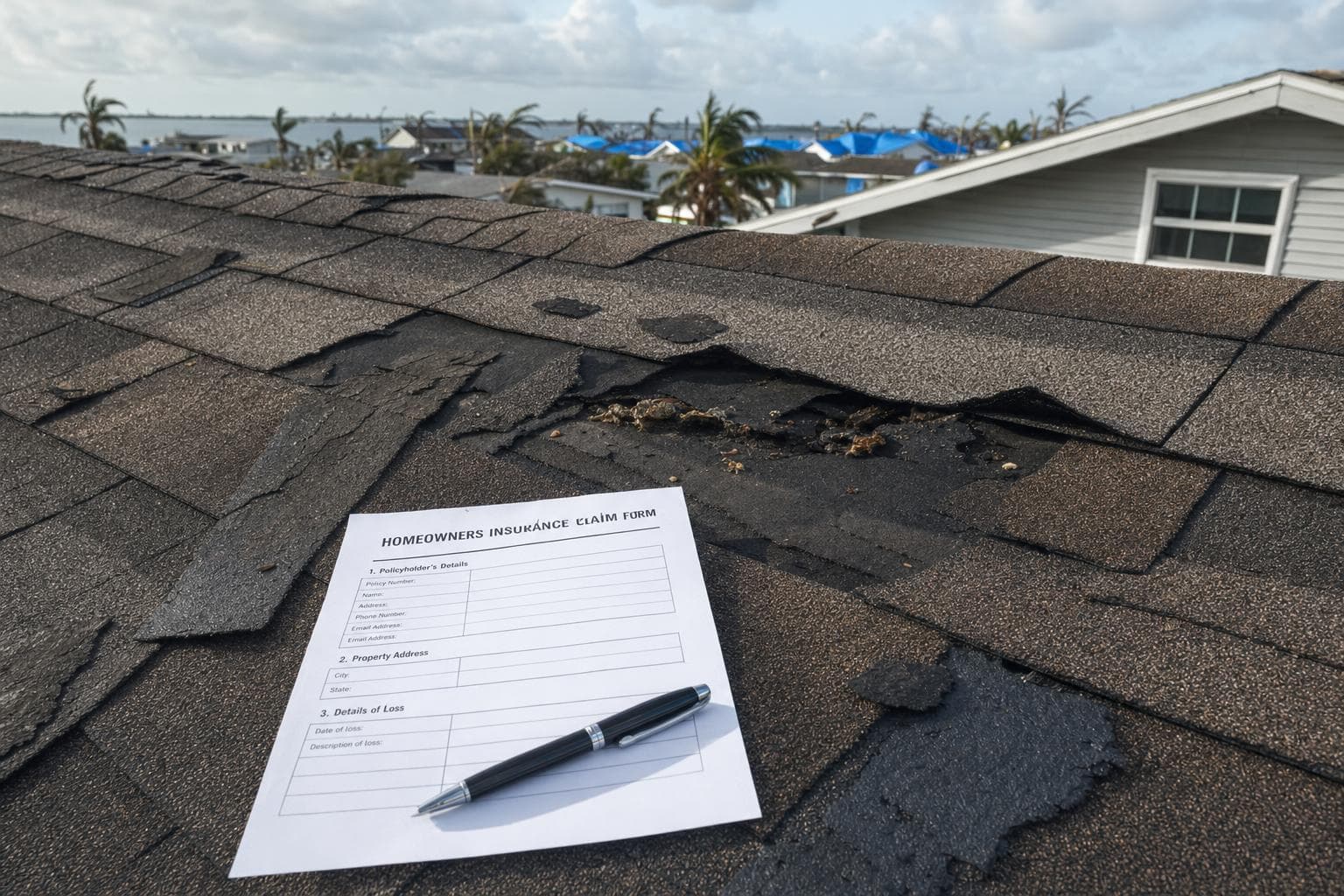
It typically covers replacement when a storm leaves the roof unable to do its job. Think missing shingles from wind uplift, torn metal panels, displaced tiles, punctures, lifted seams, or damage that lets water in because the storm created an opening. What matters most is functional damage, not just appearance. If your roof still sheds water and the issue is mostly age, granule loss, algae, fading, or general wear, that is usually not an insurance claim.
What counts as storm damage versus wear and tear?
Storm damage is sudden and tied to a specific event. Wear and tear builds slowly over time. In Florida, that distinction can be hard because the climate speeds up roof aging. Florida roofs live and die by wind and water. Hurricanes and tropical systems drive wind uplift and wind-driven rain that find any weak fastener, seam, or edge, and that risk runs highest near the coast. On top of that, near-constant sun, heat, humidity, and heavy summer rain age shingles and grow algae faster than in most of the country, and salt air along the shore is hard on metal and flashing. The right roof for your home depends on how exposed you are to all of it.
- Usually points toward storm damage: a new leak right after a named storm or wind event, shingles creased or missing, lifted flashing, torn ridge caps, dented metal components, broken tile from impact, or a section peeled back by wind.
- Usually points toward wear: brittle shingles, uniform granule loss, long-term sealant failure, widespread aging, recurring leaks at old details, rust from years of exposure, algae streaks, or issues your roofer can trace to maintenance or age rather than one event.
- Mixed cases happen. A storm can damage an already aging roof. In that situation, your carrier will usually focus on what the storm actually changed and whether the roof suffered functional damage.
Will insurance pay for a repair instead of a full replacement?
Yes, often it will if the damage is limited and the roof can be restored to function. For current Florida planning prices related to does insurance cover roof replacement, use the cost guide and calculator, then compare the contractor's property-specific written scope. A full replacement is more likely when storm damage is widespread, when key roof components are compromised across multiple slopes, or when repair cannot restore proper performance. If you want a broader sense of current replacement costs, full local pricing lives on the Florida cost page and the calculator.
Talk to a roofer today
Planning ranges, scope details, and a direct path to request a roofing quote.
Does Florida law ever affect whether a section can be repaired?
Yes. Florida rules can make the difference between a repair and a replacement. Until 2022, Florida's "25% rule" generally forced a full roof replacement if more than 25% of the roof was repaired or replaced in a year. SB 4-D changed that: if your roof was built to the 2007 Florida Building Code or later, roughly, permitted on or after March 1, 2009, now only the repaired section has to be brought up to current code, not the entire roof. That can reduce how often a partial loss turns into a full replacement. It is worth asking your roofer when your current roof was permitted and how that affects the repair scope.
How much does a Florida roof replacement cost if insurance does not cover it?
For does insurance cover roof replacement in Florida, treat a steep or difficult-to-access roof as a scope variable that the contractor should measure and price explicitly. For does insurance cover roof replacement in Florida, ask the contractor to put the expected working days and weather plan in writing; timing depends on roof size, material, access, crew scheduling, and conditions found after tear-off. Those are market pricing ranges, not a promise of what your roof will cost, but they give you a realistic baseline when you compare a claim payout, your deductible, and any out-of-pocket upgrade.
How do deductibles affect what insurance pays?
Your deductible comes out first, so it directly changes whether a claim makes financial sense. If the repair or replacement cost is close to your deductible, the claim payment may be small or there may be no payment at all. If the storm damage is severe, the deductible still reduces the insurer's share, but the claim may still be worth pursuing because the remaining covered amount is much larger. Before you file, it helps to have your roofer document the damage and give you a scope so you can compare the likely covered cost against your deductible.
What does the roof insurance claim process usually look like?
It usually starts with documentation, then an insurance inspection, then a coverage decision. First, protect the home from more damage if you safely can. Next, have a roofing contractor you are considering inspect the roof and document the functional damage with notes and photos. Then file the claim with your carrier and be ready for an adjuster visit. Your roofer can often meet the adjuster to point out storm-related damage and explain the repair or replacement scope. After that, the carrier decides what is covered, applies your deductible, and issues payment based on the policy terms.
- Step 1: Stop active leaking if possible and save receipts for emergency protection work.
- Step 2: Get a roof inspection focused on functional storm damage, not just cosmetic issues.
- Step 3: File the claim and provide photos, dates, and any storm details you have.
- Step 4: Meet the adjuster at the property, ideally with your roofer present.
- Step 5: Review the scope carefully. If the carrier allows only a repair, ask whether that scope fully restores function and complies with local code.
- Step 6: If approved, schedule the work and keep all paperwork from start to finish.
Does code matter during a Florida roof replacement?
Yes, a lot. Florida builds to the Florida Building Code, and Miami-Dade and Broward counties sit in the High-Velocity Hurricane Zone, which carries the toughest wind-resistance roofing rules in the United States. In the HVHZ, every shingle, tile, underlayment, and fastener has to carry a Miami-Dade Notice of Acceptance or Florida Product Approval rated for that zone, and installs follow stricter fastening and underlayment standards. Whoever roofs your home has to pull a permit and meet the code for your area, so confirm they do.
Can a new roof lower your insurance premium in Florida?
Yes, it can if the roof includes verified wind-resistant features. Florida law, Statute 627.0629, requires home insurers to give premium credits for verified wind-resistant features, things like a hip roof shape, a sealed roof deck, and code-rated shingle attachment. A licensed inspector documents them on the state's Uniform Mitigation Verification form, OIR-B1-1802, and the windstorm savings can be substantial. If you are replacing or upgrading a roof, get the wind-mitigation inspection afterward so you actually capture the credit you are owed. For does insurance cover roof replacement in Florida, any insurance credit depends on the carrier, policy, address, and exact product; get the amount and documentation requirements from the insurer in writing.
The practical takeaway is simple: if your Florida roof was damaged by a storm and the damage affects function, insurance may cover a repair or replacement. If the roof is failing because it is worn out, coverage is much less likely. Start with a documented inspection, compare the expected scope against your deductible, and make sure any approved work meets Florida code. If you end up paying out of pocket, use 2026 market pricing as your baseline and compare materials carefully. For a more local view of replacement costs, check the Florida cost page and the calculator.
Sources reviewed
- Citizens Property Insurance Corporation (state insurer of last resort)
- Florida Office of Insurance Regulation (wind-mitigation premium discounts)
- Georgia Attorney General Consumer Protection Division: Beware of Roofers Scamming Storm Victims
- Illinois Department of Financial and Professional Regulation: Find a Licensed Roofer: State Law and Consumer Guidance
- Arizona Department of Insurance and Financial Institutions: Homeowners Insurance
Plan with current pricing
Related services
Updated July 27, 2026
3D Roofs Editorial Team
Editorial Standards