Updated July 27, 2026

3D Roofs Editorial Team
Editorial Standards
Yes, homeowners insurance may cover roof replacement in Pennsylvania when a storm causes sudden, functional damage. For does insurance cover roof replacement in Pennsylvania, coverage depends on the policy language, cause of loss, exclusions, and the insurer's decision; verify those terms in your own documents. If shingles were lifted by wind, flashing was damaged, or hail left damage that affects how the roof performs, you may have a claim. If the roof is simply aging, losing granules, or nearing the end of its life, that is usually a maintenance issue, not an insurance issue.
When does homeowners insurance cover a roof replacement in Pennsylvania?
It usually covers a roof replacement when a covered weather event causes real damage that affects the roof’s ability to keep water out. Pennsylvania roofs deal with a little of everything. Pennsylvania's insurance Department says weather here can be unpredictable, from thunderstorms to snowstorms. That mix can mean wind-lifted shingles, water intrusion around flashing and roof penetrations, gutter overflow, and added stress from snow and ice. Tree limbs and outdoor debris can also become a problem during storms. In this kind of climate, roof life often comes down to drainage, attic ventilation, flashing details, and staying ahead of small maintenance issues before the next storm hits.
The key distinction is functional storm damage versus wear. Functional damage means the roof system was changed by a storm in a way that can let water in or shorten the roof’s service life. That can include missing shingles after wind, damaged metal panels, punctures from debris, or flashing pulled loose around vents, chimneys, or valleys. Wear and tear is different. Curling from age, long-term granule loss, brittle shingles, old repairs failing, and slow leaks from neglected details are usually handled as homeowner maintenance.
How can you tell the difference between storm damage and normal wear?
Storm damage is tied to a sudden event, while wear shows up gradually. After a storm, look for clear, recent changes such as blown-off shingles, creased tabs, bent flashing, fallen branches, fresh leaks, or dents on metal components. Normal wear tends to look more even and spread out, such as aging shingles, faded surfaces, or long-standing deterioration around penetrations.
- Storm-related damage often appears right after high wind, hail, heavy snow, or falling debris.
- Wear usually shows up over time and may affect the whole roof more evenly.
- For current Pennsylvania planning prices related to does insurance cover roof replacement, use the cost guide and calculator, then compare the contractor's property-specific written scope.
- A full replacement may make more sense if storm damage is widespread across key roof areas.
- Standing seam, architectural shingles, and impact-resistant options all have different 2026 market pricing, so product choice affects the claim discussion if replacement is approved.
What should you do right after roof storm damage in Pennsylvania?
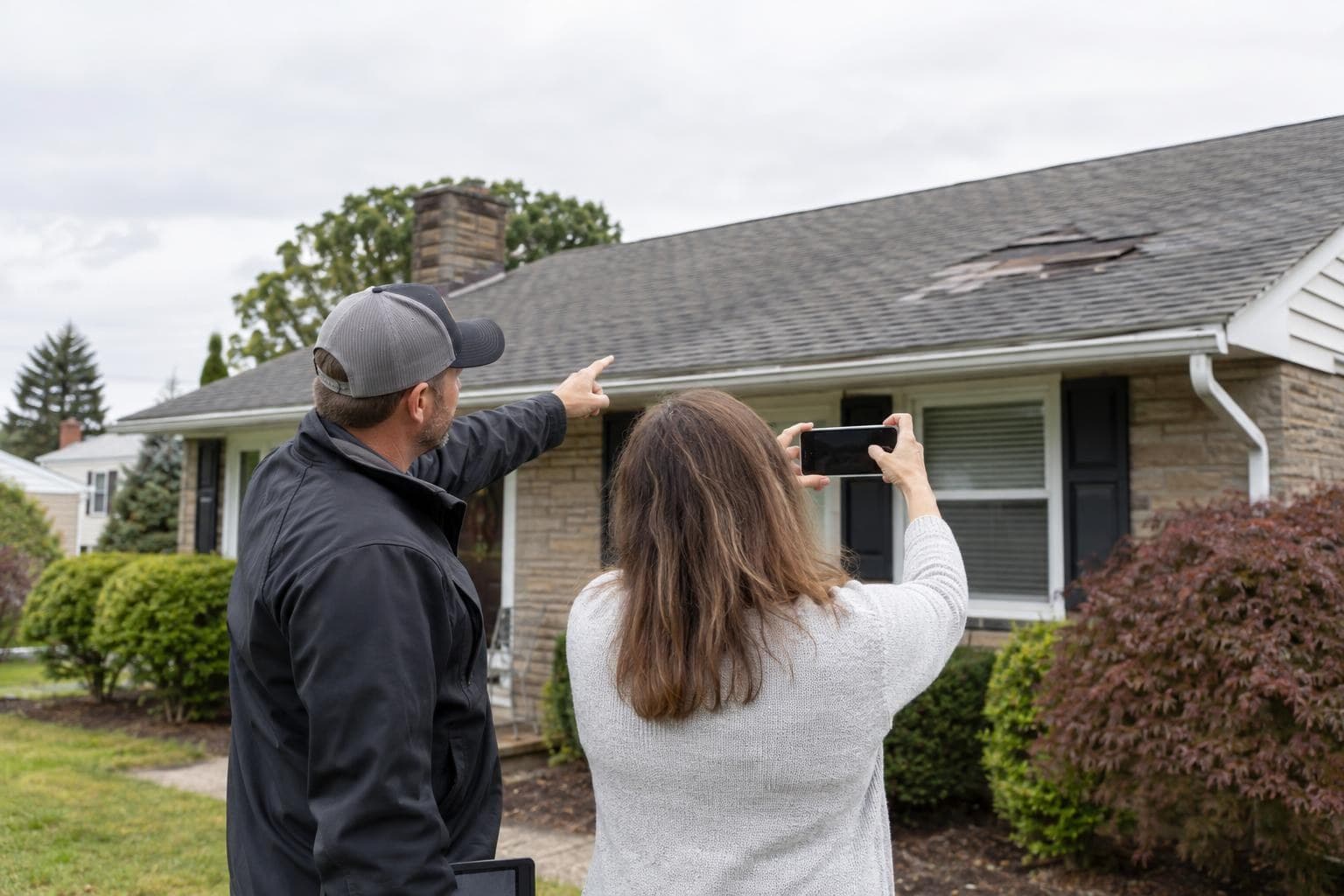
First, document the damage before cleanup or permanent repairs. Pennsylvania’s insurance guidance says that after a storm, you should take pictures or videos of the damage before you clean up or make repairs. After documenting, make immediate repairs that are necessary to prevent further damage, but do not make permanent repairs until your insurance company approves them. Keep all receipts for any money you spend related to the damage.
That means your first steps are practical. Take photos of missing shingles, interior water spots, damaged gutters, flashing, and any fallen limbs or debris. If water is getting in, arrange temporary protection so the problem does not get worse. Save receipts for emergency materials or service calls. Then contact your carrier and arrange for a roof inspection so the cause and scope can be reviewed while the evidence is still fresh.
Talk to a roofer today
Planning ranges, scope details, and a direct path to request a roofing quote.
Will you have to pay a deductible for roof replacement?
Yes, in most cases you will pay your deductible before insurance pays the covered portion of the claim. Your deductible is your share of the loss, and it directly affects whether filing makes financial sense. If damage is minor and the repair cost is close to your deductible, you may choose not to file. If the roof has broad storm damage and replacement is needed, the deductible is still part of the math, but the claim may be much more worthwhile.
Roof type also changes the budget. For does insurance cover roof replacement in Pennsylvania, treat a steep or difficult-to-access roof as a scope variable that the contractor should measure and price explicitly. For does insurance cover roof replacement in Pennsylvania, ask the contractor to put the expected working days and weather plan in writing; timing depends on roof size, material, access, crew scheduling, and conditions found after tear-off. If you are comparing whether to repair or replace, these 2026 market pricing figures give you a realistic frame of reference, and you can find broader local numbers on the Pennsylvania cost page and the calculator.
How does the roof insurance claim process usually work?
It usually follows a simple path: document the damage, prevent further loss, file the claim, meet the adjuster, review the scope, and decide whether to move forward. Your roofer can help you understand the damaged areas and the repair or replacement scope, but the carrier decides what your policy covers. The main thing is to keep good records and make decisions based on the written scope, not guesses.
- Review your policy before storm season. The state tells homeowners to keep their homeowners policy up to date and check with their insurance provider annually to make sure they have the right coverage. It specifically says to ask if damage from floods and wind is covered under your policy. That matters for roofing because not every weather event is handled the same way under every policy.
- Take photos and videos before cleanup or permanent repairs.
- Make immediate repairs needed to prevent further damage, but wait on permanent work until the insurance company approves it.
- Keep receipts for anything you spend because of the damage.
- Find out the total cost of repairs before agreeing to any settlement. Pennsylvania's insurance Department says you do not have to rush a settlement.
- If you disagree with the offer, you can negotiate. If your claim is denied, check your policy, appeal to your insurance company’s claim manager, and contact the Consumer Help Center if questions remain.
What if the insurance company only approves a repair, not a full replacement?
That can happen, and you do not have to accept the first number without understanding it. Pennsylvania guidance says you should try to find out the total cost of repairs before agreeing to any settlement. It also says you can negotiate, and if you disagree with the insurance company’s offer, be ready to discuss it further. In real terms, that means comparing the carrier’s scope against the actual damaged areas, the affected accessories, and whether a spot repair will truly restore function.
If your roof has isolated damage, a repair may be the right answer. If the damage is spread across many slopes or key water-shedding parts of the system, a replacement may be the more practical path. The important part is having a clear written scope and knowing what your roofer sees on the roof, what the adjuster included, and where those two views differ.
Should you choose a Class 4 roof after an insurance claim?
It can be a smart upgrade if you want more impact resistance and your budget supports it. In Pennsylvania, if you are considering an impact-resistant roof, ask your insurer whether it offers a discount for a Class 4 rated product. Discounts and underwriting rules can vary by carrier, so the key step is to confirm eligibility, required documentation, and whether the carrier recognizes the specific roofing product your roofer proposes.
There can be another benefit beyond durability. For does insurance cover roof replacement in Pennsylvania, any insurance credit depends on the carrier, policy, address, and exact product; get the amount and documentation requirements from the insurer in writing. That does not mean every policy qualifies, but it is worth asking before you choose materials. Based on 2026 market pricing, Class 4 costs more upfront than Class 3, so the better value depends on your budget, your insurer’s rules, and how long you plan to stay in the home.
How do you avoid roofing scams after a Pennsylvania storm?
Slow down, compare estimates, and get everything in writing. Pennsylvania warns that natural disasters can attract dishonest solicitors and says you should be wary of anyone who knocks at your door, including contractors and public adjusters who may try to take advantage of you. For roofing work, that is a reminder to slow down, compare estimates, and get the full scope in writing before you sign anything.
A smart first check is contractor registration. The Attorney General says the Home Improvement Consumer Protection Act requires all contractors who perform at least an amount that must be confirmed for the written scope worth of home improvements per year to register with the Attorney General’s Office. The Insurance Department also tells homeowners to ask for the contractor’s Home Improvement Contractor number and verify that information through the Attorney General’s contractor search or by calling 1-888-520-6680. The Attorney General also says registration under HICPA is not an endorsement, recommendation or approval of the contractor’s competency or skill. So do not stop there. Get more than one estimate, check references, get the scope and total cost in writing, do not sign blank sections, and do not pay in full before the work is completed.
Pennsylvania roofing costs
Sources reviewed
- Pennsylvania Insurance Department, Natural Disaster Insurance Guide
- Pennsylvania Office of Attorney General, Home Improvement Contractor Registration
- Georgia Attorney General Consumer Protection Division: Beware of Roofers Scamming Storm Victims
- Illinois Department of Financial and Professional Regulation: Find a Licensed Roofer: State Law and Consumer Guidance
- Arizona Department of Insurance and Financial Institutions: Homeowners Insurance
Related services
Updated July 27, 2026
3D Roofs Editorial Team
Editorial Standards