Updated July 27, 2026

3D Roofs Editorial Team
Editorial Standards
Yes, Texas homeowners insurance can cover a roof replacement when a covered storm causes functional damage. For does insurance cover roof replacement in Texas, coverage depends on the policy language, cause of loss, exclusions, and the insurer's decision; verify those terms in your own documents. If your roof was damaged by hail, wind, or a major storm event, the key question is not whether the roof looks rough from the ground. The real question is whether the storm caused damage that affects how the roof performs.
When does homeowners insurance cover a roof in Texas?
Insurance usually covers your Texas roof when a covered event, like hail or wind, causes sudden functional damage. In Texas, that distinction matters because roofs take a heavy beating from heat, UV exposure, hail, and in some areas hurricane-driven wind and rain. North and Central Texas sit in hail country, where spring storms can drive granule loss and bruising. Across the state, long heat and sun exposure can age shingles faster than in cooler climates. Along the Gulf coast, wind uplift and wind-driven rain add another layer of risk. Your claim tends to turn on whether the damage came from one covered event or from years of normal deterioration.
What counts as functional storm damage versus wear and tear?
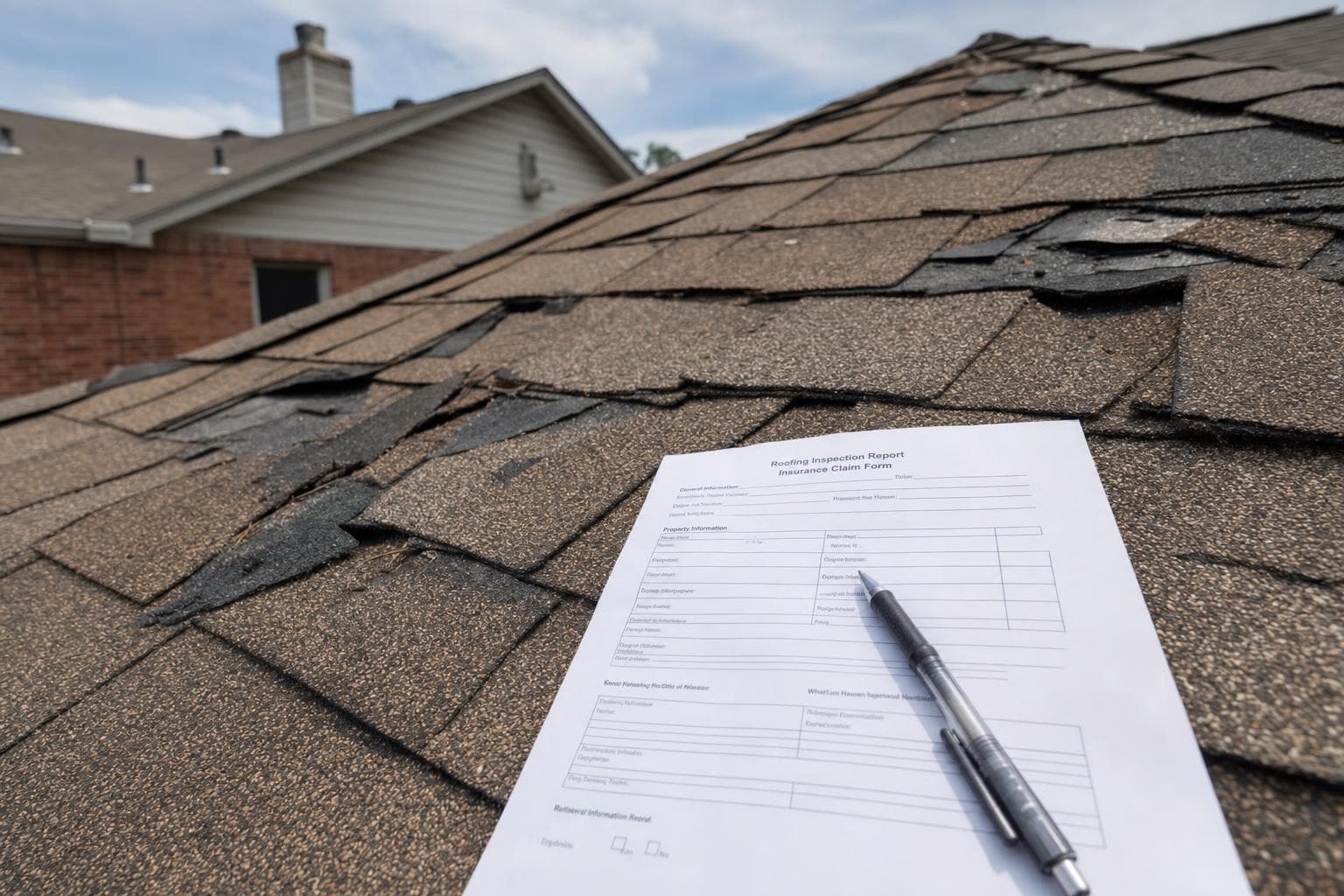
Functional storm damage means the roof system was harmed in a way that can shorten its service life or let water in. Wear and tear means the roof is getting old, drying out, losing granules over time, or showing gradual decline from normal exposure. A storm claim is stronger when the damage lines up with a specific weather event and the problems are consistent with hail strikes, lifted or creased shingles, punctures, broken seal strips, displaced flashing, or other issues that affect performance. A weak claim is one where the roof mainly shows age, brittle shingles, long-term sun damage, past patching, or widespread deterioration that is not tied to one event.
- Covered claims are usually tied to sudden hail or wind damage that affects the roof's function.
- Non-covered issues are usually old age, deferred maintenance, and gradual wear from heat and sun.
- A roof can have both storm damage and wear. In that case, your insurer may focus on what the storm actually caused, not every problem on the roof.
Will insurance pay for a full roof replacement or just a repair?
It depends on the extent of the covered damage. If the storm damage is limited, your insurer may pay for repair work. For current Texas planning prices related to does insurance cover roof replacement, use the cost guide and calculator, then compare the contractor's property-specific written scope. If the covered damage is broad enough that repair is not the practical fix, the claim may support a full replacement. If you want a deeper look at local numbers, you can compare the full Texas cost page and the calculator for current 2026 market pricing.
Talk to a roofer today
Planning ranges, scope details, and a direct path to request a roofing quote.
Do you have to pay your deductible on a Texas roof claim?
Yes, you have to pay your deductible, and your roofer cannot legally pay it for you. In Texas, it is a crime for a contractor to waive, rebate, or absorb your insurance deductible (Business and Commerce Code Sec. 27.02). Texas insurance-claim roofing contracts must state in writing that you are responsible for paying the deductible. If someone offers a free roof by eating your deductible, treat that as a red flag, not a deal.
Can your roofer handle the insurance claim for you?
No, the roofer doing the work cannot also act as your claims adjuster. Texas law (Insurance Code Sec. 4102.163) bars a contractor from acting as a public adjuster, negotiating or settling your claim, on a job they are also doing. The Texas Supreme Court upheld this in 2024. Your roofer can inspect the roof, document visible conditions, explain the scope of work, and answer questions about materials. But if a roofer offers to handle the whole claim with your insurance company, that crosses a legal line.
How does the roof insurance claim process work in Texas?
The claim flow is straightforward. First, document what you can safely see after the storm, such as missing shingles, dents, interior leaks, or debris impact. Then contact your insurer to open the claim. Next, have a roofing contractor you are considering inspect the roof and give you a written scope of what they found. After that, the insurer reviews the loss and decides whether the damage is covered, and whether the right fix is repair or replacement. For does insurance cover roof replacement in Texas, ask the contractor to put the expected working days and weather plan in writing; timing depends on roof size, material, access, crew scheduling, and conditions found after tear-off.
Texas also puts your insurer on a clock. Hail and wind claims fall under Insurance Code Chapter 542A (from HB 1774). Your insurer generally has to accept or reject the claim within 15 business days of getting everything it needs to finalize the loss, with a possible extension, and a little more time after a declared catastrophe. If a weather claim ever heads to court, you have to give the insurer written notice at least 61 days first.
What should you do before filing a roof claim?
Start by confirming whether there is a real storm case before you assume insurance will buy a new roof. A good first step is to look for signs of recent hail or wind damage and compare them against the age and condition of the roof. You also want to read your deductible and understand what you would owe if the claim is approved. Then get a clear inspection and written scope from a roofing contractor you are considering. In Texas, that matters because there is no statewide roofing license, so you need to judge a roofer on what you can actually verify, like a real local track record, manufacturer certifications, and a written scope that spells out tear-off, decking, underlayment, flashing, ventilation, and cleanup.
Are impact-resistant shingles worth it for insurance savings in Texas?
Sometimes, yes, but you should treat the insurance discount as a possible bonus, not a guarantee. Class 4 shingles are worth comparing on Texas homes with meaningful hail exposure. For does insurance cover roof replacement in Texas, any insurance credit depends on the carrier, policy, address, and exact product; get the amount and documentation requirements from the insurer in writing. But Texas does not set one statewide credit amount, and a Class 4 rating does not make a roof damage-proof or tell you how a policy handles cosmetic damage. Ask your carrier in writing whether the exact product qualifies for a credit, which part of the premium is affected, and what documentation it requires.
What is the bottom line if you think your Texas roof claim should be covered?
If a storm caused functional damage, your policy may cover repair or replacement. If the roof is simply old, worn out, or heat-aged, it usually will not. Your next move is to document the damage, review your deductible, and get a clear inspection from a roofing contractor you are considering who stays in the proper lane on claim communication. If replacement is the right path, you can use 2026 market pricing to set expectations, then compare your options on the Texas cost page and the calculator before you move ahead.
Sources reviewed
- Texas Windstorm Insurance Association (coverage eligibility)
- Texas Department of Insurance: What to know about insurance and your roof
- Georgia Attorney General Consumer Protection Division: Beware of Roofers Scamming Storm Victims
- Illinois Department of Financial and Professional Regulation: Find a Licensed Roofer: State Law and Consumer Guidance
- Arizona Department of Insurance and Financial Institutions: Homeowners Insurance
Plan with current pricing
Related services
Updated July 27, 2026
3D Roofs Editorial Team
Editorial Standards