Updated July 10, 2026

3D Roofs Editorial Team
Editorial Standards
Yes, homeowners insurance in Utah usually covers roof replacement when your roof has sudden, functional damage from a covered event, not when it is simply worn out. The key question is not whether the roof looks old. It is whether wind, wind-driven rain, falling branches or trees, heavy snow weight, ice, or another covered event caused real damage that affects how the roof performs. In Utah, that matters because your roof can take stress from wind, wind-driven rain, falling branches or trees, heavy snow weight, ice, freeze-thaw cycles, and long periods of sun exposure.
When does homeowners insurance cover a roof replacement in Utah?
It covers replacement when storm or impact damage is serious enough that repair is not the right fix. Insurance is usually built for sudden accidental loss, not gradual aging. So if a storm creases shingles, tears off roofing, opens seams, or causes leaks tied to a specific weather event, that is the kind of loss that can lead to a covered replacement. Utah consumer guidance also notes that collapse due to the weight of ice or snow is covered under most standard homeowners policies, which reflects the kind of winter roof stress Utah homeowners have to plan for. By contrast, long-term wear from sun exposure, repeated freeze-thaw movement, or an old roof reaching the end of its life is usually not an insurance event.
What is the difference between storm damage and normal wear?
Storm damage is sudden and functional. Wear is gradual and expected. That is the simplest way to separate the two. Functional damage means the roofing system can no longer do its job correctly, even if the damage is not dramatic from the street. Examples can include shingles that are torn, lifted, creased, punctured, or missing after wind, or damage tied to a branch strike or snow-related failure. Wear usually shows up as general aging, fading, brittleness, granule loss over time, or issues spread evenly across the roof with no clear storm cause. In Utah, long periods of sun exposure and freeze-thaw cycles can age a roof, but that kind of decline is usually a maintenance issue, not a claim.
Will insurance cover a leaking roof in Utah?
It may, if the leak came from a covered event. A leak by itself does not decide the claim. What caused the leak does. If wind damage, storm impact, or snow-related failure opened the roof system and water came in, that may be covered. If the leak came from old flashing, worn shingles, neglected maintenance, or a roof already at the end of its service life, coverage is less likely. After storms, quick documentation and temporary dry-in matter because added interior damage can complicate the claim. The Utah Insurance Department tells homeowners to make repairs necessary to prevent further damage, such as covering broken windows, leaking roofs, and damaged walls. It also says, "Do not have permanent repairs made until your insurance company has inspected the property and you have reached an agreement on the cost of repairs." Save receipts, including temporary repair receipts covered by your policy.
Talk to a roofer today
Planning ranges, scope details, and a direct path to request a roofing quote.
How much does a roof replacement cost in Utah if insurance does not pay?
If your claim is denied or falls below your deductible, the replacement cost comes down to your roofing material and roof complexity. Use the current Utah cost page and calculator to plan an insurance-related roof project in Utah, then require the measured scope to explain any meaningful difference. For an insurance-related roof project in Utah, begin with documented damage, the policy deductible, and a property-specific repair or replacement scope. When planning an insurance-related roof project in Utah, ask how roof shape, staging, weather, inspections, and concealed deck conditions affect both duration and labor.
Do you still pay a deductible on a roof insurance claim?
Yes, in most cases you pay your deductible, and that amount can decide whether filing makes sense. Your deductible is the part of the covered loss you handle before insurance pays the rest under your policy terms. If the damage is minor and the repair cost is close to your deductible, a claim may not help much. If the damage is widespread and points to full replacement, the math can look very different. The practical move is to get the roof documented clearly, compare the likely repair or replacement scope to your deductible, and then decide how to proceed.
What should you do right after storm damage in Utah?
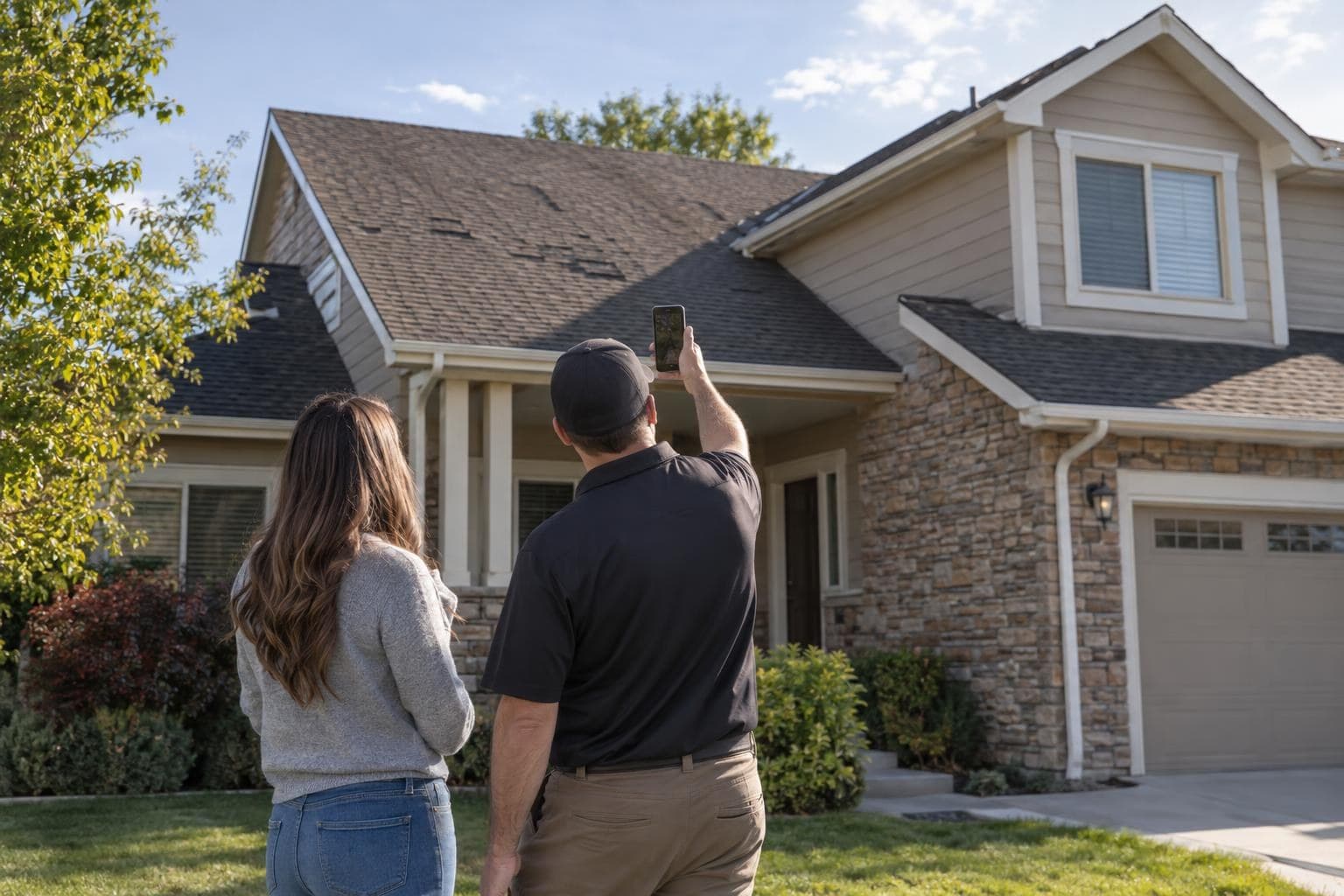
Start by documenting the damage, preventing more water intrusion, and lining up an inspection. Take photos of the roof, gutters, downspouts, siding, windows, ceilings, attic moisture, and any fallen branches or debris. Note the date of the storm and what you observed. Then make temporary repairs necessary to prevent further damage, not permanent ones. That can include dry-in steps for active leaks. Keep every receipt. In Utah, this matters because the Utah Insurance Department says you should make temporary repairs to stop additional damage, but you should hold off on permanent repairs until the insurance company has inspected the property and you have reached an agreement on the cost of repairs.
How does the roof insurance claim process usually work?
- You notice storm-related damage or a leak tied to a weather event.
- You document the condition with photos, notes, and receipts for temporary protection.
- You contact your insurer and open a claim.
- A qualified local roofing contractor inspects the roof and helps identify the functional damage and likely scope.
- The insurance company arranges its inspection and evaluates cause, coverage, and repair versus replacement.
- If the claim is approved, the scope and payment follow your policy terms and deductible.
- Once scope and cost are agreed, your roofer completes the permanent work.
What if the claim stalls or the settlement feels wrong?
Utah gives you a path to push back. The Utah Insurance Department says home claims information for Utah includes laws on "Timely payment of claims" and "Unfair claim settlement practices." It also lists Rule R590-190, "Unfair Property, Liability and Title Claims Settlement Practices," and says this includes homeowner policies. If your claim starts to stall or the handling seems off, you have state-backed standards to point to and you can contact the Utah Insurance Department for assistance. If you have a dispute with your insurer about the amount or terms of the claim settlement, the department says you can contact the department for assistance. The department also says it does not have the authority of a court to settle disputes of unwilling parties, or to order or enforce payment of individual claims, but that many problems are successfully resolved during its regulatory investigation.
Can your premium go up just for asking about a roof claim?
Utah identifies some protections tied to certain claims or inquiries. The Utah Insurance Department lists "31A-19a-212 Premium increases prohibited for certain claims or inquiries" as part of its home claims information for Utah. That means Utah identifies protections tied to certain claims or inquiries, even though the page says the listed laws are not meant to be inclusive of all claims-related statutes. If you are worried about whether to report damage, ask your insurer how your policy handles claims and inquiries, and keep your questions clear and documented.
Should you upgrade to a Class 4 roof after a claim?
It can be worth asking, especially if hail or wind-driven debris is part of your risk. Do not assume a statewide Class 4 credit in Utah; ask the carrier to verify eligibility and paperwork for the exact product and policy. In Utah, the next step is simple: ask your insurer whether it offers a discount for a Class 4 impact-resistant roof. Discounts, if any, are set by the carrier, and your eligibility depends on the insurer's rules and your specific product documentation. If you are replacing the roof after storm damage, ask your roofer for the exact product rating paperwork and confirm with your insurer before you count on any savings.
If you think your Utah roof has storm damage, the smartest move is to focus on cause, documentation, and timing. Insurance usually helps with sudden functional damage, not age and wear. Protect the home from more damage, avoid permanent repairs before inspection and agreement, and keep your paperwork organized. Then compare the likely scope to your deductible and decide whether filing makes sense. If you need to budget for the work either way, check the Utah cost page and the calculator, then have a local contractor whose credentials you verified inspect the roof and walk you through the next step.
Sources
Reviewed technical references for Utah
Related Utah roofing guides
Related services
Updated July 10, 2026
3D Roofs Editorial Team
Editorial Standards