Updated July 27, 2026

3D Roofs Editorial Team
Editorial Standards
If the damage is isolated, a repair often makes sense. If the damage is spread across the roof, the roof is older, or repairs would touch a large share of the system, replacement is usually the better long-term call. In South Dakota, that choice matters because your roof has to handle hail, severe storms, high winds, temperature swings, snow, ice, and strong sun over time. That mix can shorten shingle life, loosen flashing, damage gutters, and turn small leaks into bigger interior problems if repairs wait.
Should you repair or replace your roof in South Dakota?
Repair first if the problem is limited to one area and the rest of the roof is still in solid shape. Replace if the damage is widespread, if leaks are showing up in more than one area, or if the roof is simply too worn for a patch to buy you much time. A good way to think about it is simple: pay for a repair when it solves the problem, pay for a replacement when a repair only delays it.
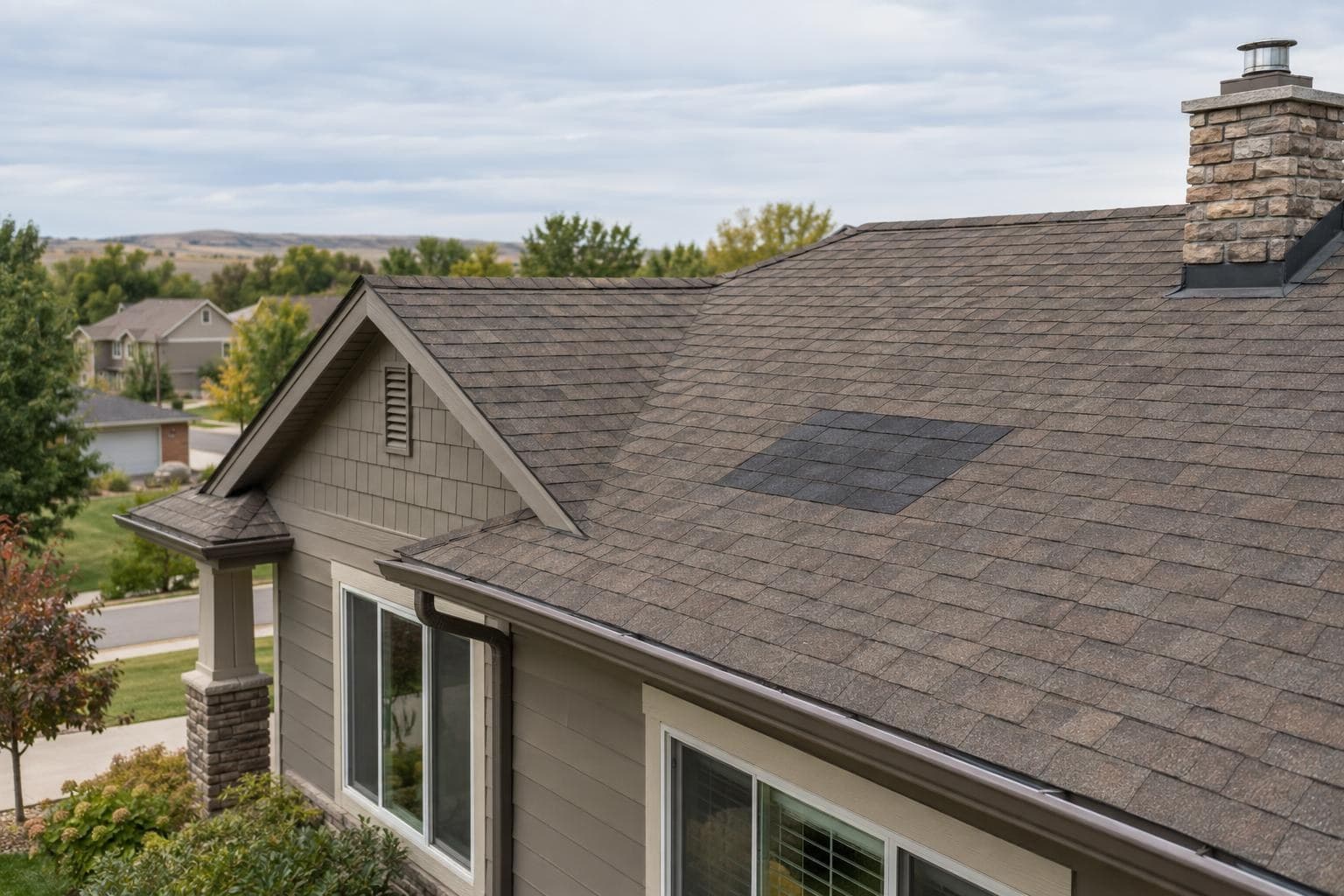
- Repair usually fits missing shingles in one section, a small flashing failure, minor wind damage, or a leak tied to one clear trouble spot.
- Replacement usually fits broad hail bruising, repeated leaks, curling or brittle shingles across many slopes, or storm damage that affects shingles, flashing, and roof edges together.
- For a repair-versus-replacement decision in South Dakota, compare a diagnosed repair scope with a measured replacement proposal; both should identify affected slopes, flashing, deck conditions, and exclusions.
- The schedule for a repair-versus-replacement decision in South Dakota should explain access, material staging, weather protection, inspections, and the process for discovered deck work.
How much damage is too much for a repair?
For roof repair vs replacement in South Dakota, do not use a fixed damage percentage as the decision rule; compare the repairable area, roof condition, material availability, code requirements, and written scopes. It is a practical decision point. Once repairs spread across a large share of the roof, you can end up paying for multiple patch areas on aging materials, and the finished roof may still have weak spots that show up in the next storm season.
In South Dakota, that threshold matters because weather often does not damage just one shingle tab or one pipe boot. Hail, high winds, snow, ice, and strong sun over time can create damage in clusters across several slopes. If your roofer finds granule loss, creased shingles, lifted edges, damaged flashing, and gutter impact marks in several areas, a repair can become a short-term fix with long-term cost attached.
Does roof age change the repair versus replacement decision?
Yes, age changes the call because older roofing materials usually do not respond as well to spot repairs. Even when a repair is possible, matching older shingles can be difficult, and the surrounding areas may already be near the end of their usable life. If your roof is younger and the damage is clearly limited, repair is often worth doing. If your roof is older and showing wear beyond the leak area, replacement is usually the cleaner investment.
This is especially true in South Dakota, where repeated temperature swings, strong sun, hail, and winter weather can age roofing faster than homeowners expect. A roof can look acceptable from the ground but still have brittle shingles, loosened flashing, and storm wear that show up during an inspection. If a repair fixes today's leak but leaves the rest of the roof vulnerable, replacement can save you from paying twice.
Talk to a roofer today
Planning ranges, scope details, and a direct path to request a roofing quote.
How does South Dakota weather change the decision?
It pushes many borderline roofs toward replacement sooner. Your roof in South Dakota has to handle hail, severe storms, high winds, temperature swings, snow, ice, and strong sun over time. After a major storm, demand can spike quickly, which is why it helps to document damage early and move carefully when you pick your roofer.
- After hail, look for damage across multiple slopes, not just the slope you can see best from the yard.
- After high winds, check whether missing shingles are isolated or part of a wider pattern of lifted and creased tabs.
- After snow and ice, watch for leaks around flashing, penetrations, valleys, and roof edges.
- If your attic or ceiling shows water in more than one area, assume the roof problem may be broader than a single patch.
What does replacement cost in South Dakota in 2026?
For an early budget on a repair-versus-replacement decision in South Dakota, compare the South Dakota cost page with a proposal that identifies measurements, products, accessories, and exclusions. Those numbers help frame the decision: if you are facing repeated repairs on a roof with widespread storm wear, putting that money toward a full replacement can be the stronger value.
Use those numbers to compare the cost of one more repair against the cost of resetting the whole system with materials that better fit your home and exposure.
Should you upgrade to Class 4 if you replace the roof?
Often, yes, if hail is part of why you are replacing. Class 4 costs more upfront than Class 3, but in a state with severe storms and hail exposure, many homeowners consider it because of the extra impact resistance. When comparing a repair-versus-replacement decision in South Dakota, use a written insurer response rather than a sales estimate for any impact-resistant roof credit. If you are considering impact-resistant shingles, ask your insurance carrier whether it offers a discount for a Class 4 roof and what documentation it requires. Discounts and eligibility are set by the carrier, so you should confirm the details before you choose materials.
What should you do after a storm before you sign anything?
Move quickly to document damage, but do not rush the hiring decision. South Dakota Consumer Protection says residents should be vigilant of transient contractor scams following severe weather. The state urges you to take your time, do your due diligence, and contact the Division of Consumer Protection when in doubt.
- Take photos of shingles, gutters, downspouts, interior stains, and any debris on the ground.
- Ask for a written estimate and a written contract before work starts.
- Keep a copy of the final signed contract and read it carefully before signing.
- Make sure project changes are handled with a Change Order signed by both parties.
- Ask that any guarantees be written into the contract.
- Ask about the contractor’s tax license. The South Dakota Department of Revenue says any person entering into a contract for construction services or engaging in services that include the construction, building, installation, or repair of a fixture to real property must have a South Dakota contractor’s tax license. State consumer guidance also tells homeowners to ask for sales tax license.
- If a permit is required, make sure it is obtained.
- Pay by check, keep copies of your paperwork, and do not make final payment until the work is finished to your satisfaction. South Dakota Consumer Protection says you should make final payments only after the work is completed. It also says not to sign completion papers or make the final payment until the work is completed to your satisfaction, and to avoid on-the-spot cash payments by paying by check to the contracting company and not an individual.
What is the simplest way to make the right call?
Choose repair when the issue is small, isolated, and the rest of the roof still has life left. The goal is not the cheapest invoice today. It is the option that actually solves the problem and protects your home through the next round of wind, hail, snow, and sun.
Sources
Reviewed technical references for South Dakota
Related South Dakota roofing guides
Related services
Updated July 27, 2026
3D Roofs Editorial Team
Editorial Standards