Updated July 27, 2026

3D Roofs Editorial Team
Editorial Standards
If your roof damage is isolated, a repair often makes sense. For roof repair vs replacement in Vermont, do not use a fixed damage percentage as the decision rule; compare the repairable area, roof condition, material availability, code requirements, and written scopes. In Vermont, that decision matters more because roofs take repeated winter stress. Snow can sit on a roof for long stretches, and freeze-thaw cycles can work water into weak spots around shingles, flashings, valleys, skylights, chimneys, and penetrations. Ice buildup near eaves can back water up under roofing materials. Wind-driven rain and seasonal temperature swings can also shorten the life of older roofs and expose installation problems faster.
Should you repair or replace a damaged roof in Vermont?
Replace when the roof has broad wear, multiple leak points, or damage across a large share of the surface. Repair when the issue is limited to one area and the rest of the roof still has solid life left. A small section with a few missing shingles, one flashing problem, or a localized leak can often be fixed without replacing the whole system. For a repair-versus-replacement decision in Vermont, compare a diagnosed repair scope with a measured replacement proposal; both should identify affected slopes, flashing, deck conditions, and exclusions.
The bigger risk in Vermont is repairing a roof that is already failing in several places. Winter weather tends to exploit every weak seam. A patch may stop today's leak, but it may not solve the moisture path that freeze-thaw cycles reopen later. When you plan a repair or replacement, it helps to ask your roofer how the system will handle ventilation, drainage, flashing transitions, and winter weather.
How do you tell if damage is isolated or widespread?
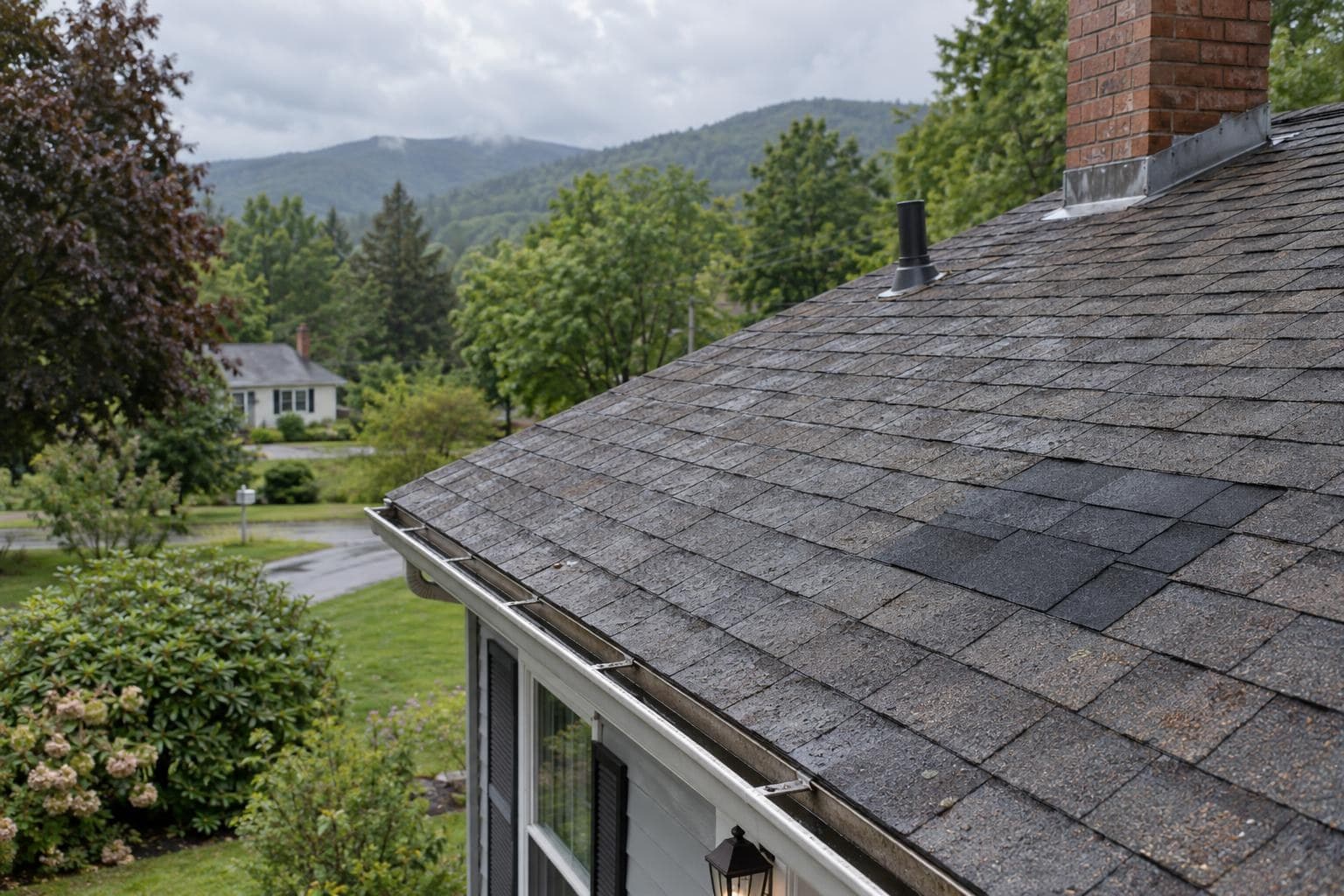
Isolated damage is limited to one section and usually ties back to a specific event or detail, such as a few lifted shingles, a problem around one chimney, or a leak near one skylight. Widespread damage shows up in several roof planes or at multiple details at once, such as granule loss across large areas, repeated leaks in different rooms, soft decking, failing valleys, or flashing trouble at more than one penetration.
- Repair usually makes sense when damage is confined to one area, the surrounding shingles still seal well, and there are no signs the deck or underlayment is failing in other sections.
- Replacement usually makes more sense when you see recurring leaks, repeated repair history, broad shingle wear, or multiple vulnerable spots that Vermont winter conditions are likely to keep stressing.
- If water has backed up near the eaves from ice buildup, ask whether the damage is truly local or part of a larger drainage and edge protection problem.
When is roof damage too widespread for a repair?
Base the repair decision in Vermont on mapped damage, remaining roof condition, material compatibility, water-control details, and repair history rather than a percentage shortcut. That is not a law. It is a useful way to avoid spending repair money on a roof that is already too far gone in too many places.
Do not use a fixed percentage as the deciding line for a Vermont roof; map damage by slope and component, then determine whether a targeted repair can leave a watertight, serviceable system. A repair can still be the right move below that threshold, but once you are near it, replacement often gives you a more reliable result.
Talk to a roofer today
Planning ranges, scope details, and a direct path to request a roofing quote.
How much does roof repair cost compared with replacement in Vermont?
Replacement costs more up front, but it may stop the cycle of repeated service calls and interior water damage. Check current Vermont cost data for a repair-versus-replacement decision in Vermont, then replace the range with an assembly-specific proposal based on measured conditions. Before approving a repair-versus-replacement decision in Vermont, have the bidder connect timing to roof complexity, crew access, material handling, weather, inspections, and concealed conditions.
If you are comparing options, the real question is not just today's invoice. It is whether a repair buys meaningful life or only delays a replacement that is already coming. For broader local pricing detail, check the Vermont cost page and the calculator.
Does roof age change the repair vs replacement decision?
Yes, age changes the call because older roofs are more likely to have hidden brittleness, worn seal strips, tired flashings, and multiple weak points. Even if the visible damage looks local, an older roof may not respond well to spot work. Newer roofs with one clear problem are stronger candidates for repair, while aging roofs with recurring issues are stronger candidates for replacement.
In Vermont, age matters even more because seasonal temperature swings and winter moisture exposure can expose installation problems faster. If your roofer finds brittle shingles, widespread granule loss, repeated fastener problems, or moisture around several roof details, replacement may save you from chasing leaks through another winter.
How does Vermont weather change the decision?
Vermont weather pushes many borderline roofs from repair into replacement. Snow sitting for long periods, freeze-thaw cycles, ice buildup near eaves, and wind-driven rain all increase the odds that a small weakness turns into a bigger leak path. That does not mean every damaged roof needs replacement. It means a patch has to be judged against the next winter, not just the next rainfall.
- A repair is more likely to hold when the problem is clearly identified and the surrounding system is still in good shape.
- Replacement is more likely to pay off when weak ventilation, poor drainage, aging valleys, or repeated flashing failures are already part of the roof's story.
- If you are replacing, ask about details that matter in winter: ventilation, drainage paths, flashing transitions, and how edge areas will handle ice buildup and backed-up water.
Should you choose Class 3, Class 4, or standing seam metal if you replace?
Choose based on budget, roof design, and how long you plan to stay in the home. Class 3 is the lower-cost replacement path in the latest local cost data. Class 4 costs more but may make sense if you want impact-resistant shingles and want to ask your insurer about possible savings. A Class 4 rating does not establish a policy credit in Vermont; the carrier and policy determine eligibility, documentation, and savings. Standing seam metal is the premium-priced option and can be a fit for homeowners focused on a long-term system and a specific look.
If you are considering a Class 4 impact-resistant shingle, ask your insurer whether it offers any premium discount or underwriting preference for that material. Carriers set their own discounts and eligibility rules, so the savings, if any, can vary by policy and property.
What should you know about insurance and hiring a roofer in Vermont?
Start by understanding what your policy covers, then confirm your roofer is registered with the state and get the scope in writing. For roof repair vs replacement in Vermont, coverage depends on the policy language, cause of loss, exclusions, and the insurer's decision; verify those terms in your own documents. If you want protection from those risks, you need to talk to your insurance agent about separate coverage available in your area.
The Vermont's Department of Financial Regulation also says a home inventory, along with photos and proof of ownership, makes it easier to file an accurate, detailed insurance claim if your home is damaged or destroyed, and it can help determine how much coverage you need. Keeping that record before a storm hits puts you in a stronger position after roof damage. If you are confused about what your homeowners policy covers after roof damage, Vermont's Department of Financial Regulation says you can contact the Vermont Insurance Department directly for help, or file a complaint through the department if you run into a problem with your insurer.
On the contractor side, Vermont requires residential contractors to register with the state. Registration for Residential Contractors has been required since April 1, 2023, under Act 182, and the Vermont Office of Professional Regulation (OPR) oversees unlawful and unprofessional conduct by individuals and businesses required to register. The state is also direct about the limits of that oversight: OPR does not have authority to seek money damages or restitution for homeowners, mediate disputes, or inspect construction quality. For you, that means a smart first step is to look up your roofer in the state's Find a Professional tool to confirm they are registered, and to still do your own homework beyond that: get a detailed written contract, the full material list, and a clear cleanup and payment schedule before you sign. If a dispute comes up over money or coverage, Vermont points consumers to the Attorney General's Consumer Assistance Program for help beyond OPR's jurisdiction.
How long does a roof replacement take, and when should you act?
A short repair delay can turn into interior damage once snow and ice get involved. Replacement becomes worth comparing in Vermont when damage crosses multiple slopes, compatible materials are unavailable, deck or flashing work expands the scope, or repairs keep returning.
Sources
Reviewed technical references for Vermont
Related Vermont roofing guides
Related services
Updated July 27, 2026
3D Roofs Editorial Team
Editorial Standards