Updated July 27, 2026

3D Roofs Editorial Team
Editorial Standards
If your Virginia roof has damage, the right call is usually simple: repair isolated problems, replace widespread or aging roofing, and move faster when weather has already turned a weak spot into an active risk. When the affected area is large on a Virginia roof, ask for repair and replacement scopes in writing and compare what each option fixes, what aging material remains, and how future work would be handled.
Should you repair or replace your roof in Virginia?
You should usually repair a roof when the damage is limited to a small area and the rest of the system is still doing its job. You should usually replace it when damage shows up across multiple sections, when leaks keep returning, or when the roof is old enough that another repair only delays a bigger bill. In Virginia, that decision matters because changing conditions across the year can turn one missing shingle, one flashing gap, or one soft spot into a larger leak. Rain, wind, humidity, and storm activity can all shorten the life of roofing materials or push water into vulnerable roof areas.
When is a roof repair the smarter choice?
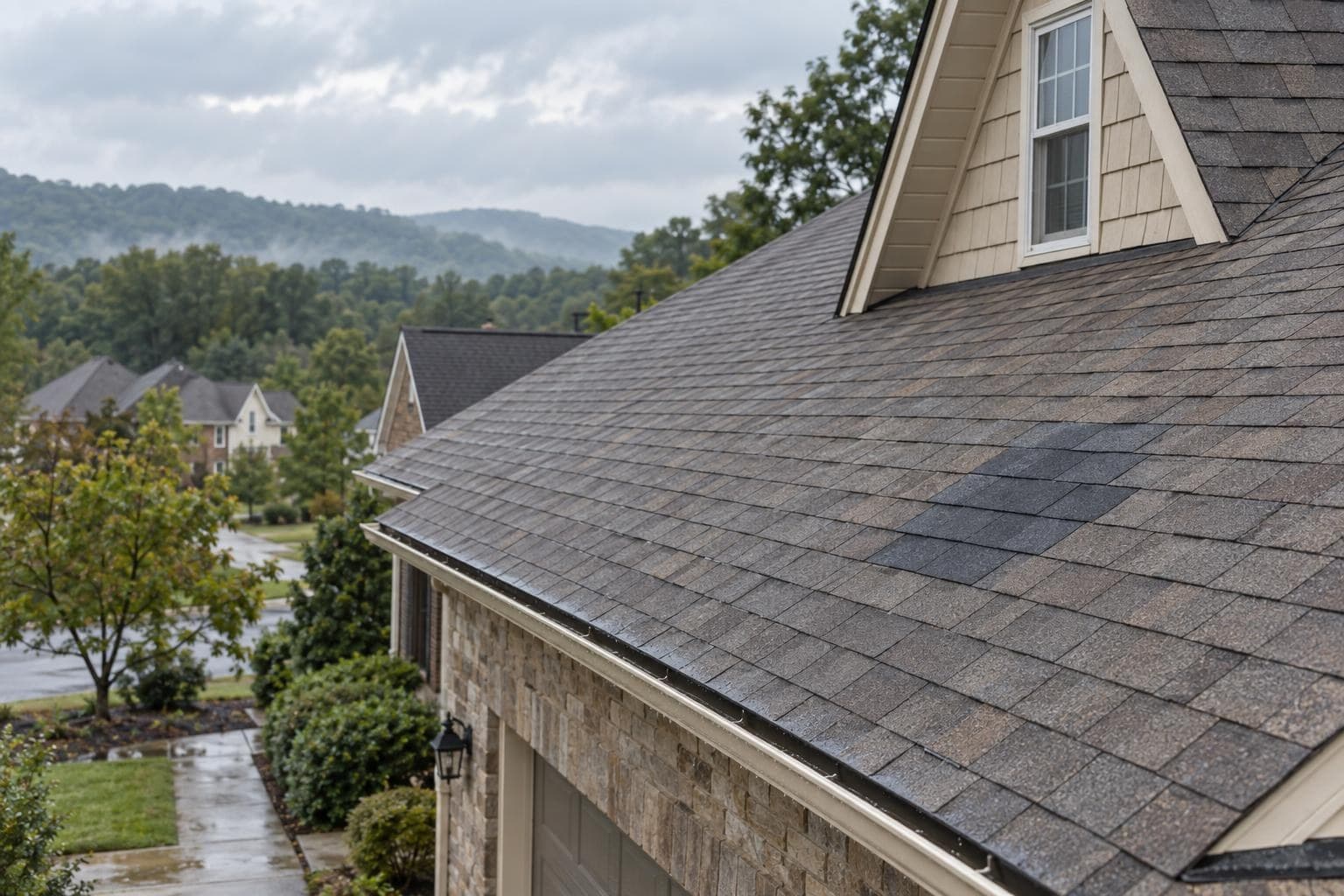
A repair is the smarter choice when the issue is isolated and the rest of the roof still has useful life left. That usually means a small leak around flashing, a limited patch of missing shingles, minor wind damage on one slope, or a problem that can be fixed without disturbing large sections of the roof. For a repair-versus-replacement decision in Virginia, compare a diagnosed repair scope with a measured replacement proposal; both should identify affected slopes, flashing, deck conditions, and exclusions. If your roof is otherwise sound, a targeted repair can buy you time and protect your home without the cost of a full tear-off.
- Damage is limited to one area
- The roof is not near the end of its service life
- The leak source is clear and reachable
- Shingles and matching materials are still available
- You have not had repeat repairs in the same zone
When is roof replacement the better investment?
Replacement is the better investment when the roof has widespread damage, repeated leaks, or age-related wear across multiple sections. If repairs are stacking up, a new roof often gives you a cleaner fix and better value than patching one problem after another. Replacements also make more sense after major storm damage, especially when wind has lifted shingles in several areas or when water has worked under the roofing system. When planning a repair-versus-replacement decision in Virginia, ask how roof shape, staging, weather, inspections, and concealed deck conditions affect both duration and labor.
Use the current Virginia cost page and calculator to plan a repair-versus-replacement decision in Virginia, then require the measured scope to explain any meaningful difference.
Talk to a roofer today
Planning ranges, scope details, and a direct path to request a roofing quote.
When is roof damage too widespread for a repair?
Base the repair decision in Virginia on mapped damage, remaining roof condition, material compatibility, water-control details, and repair history rather than a percentage shortcut. The reason is simple. Once damage spreads across a large share of the roof, you are no longer fixing one defect. You are trying to extend a system that is failing in multiple places. At that point, patching can leave you with mismatched materials, more weak spots, and a higher chance of another leak after the next storm.
This is not a law. It is a homeowner decision rule that helps you avoid spending good money on a roof that is already telling you it is near the end. If damage is close to that line, ask your roofer to show you exactly which sections are compromised, what can be repaired, and what problems may still remain if you do not replace the whole roof.
How does the age of your roof change the decision?
Age changes the decision because older roofs usually fail as a system, not just at one spot. If your roof is already showing broad granule loss, curling shingles, repeated leak history, or soft areas from trapped moisture, another repair may only cover up the next issue. A newer roof with one storm-hit section is a stronger repair candidate. An older roof with several problem areas is often a replacement candidate, even if only one leak is active today. In Virginia, humid conditions can make it important to catch roof damage early, before trapped moisture leads to bigger repair needs.
How does Virginia weather affect repair vs. replacement?
Virginia weather pushes the decision toward replacement faster when damage is already spread out or water has had time to get in. In hurricane-prone or coastal weather patterns, wind can damage shingles and flashing, while heavy rain can push water into vulnerable roof areas. That means a roof with lifted tabs, loose flashing, or exposed underlayment is at more risk here than it might be in a drier, calmer pattern. Humidity also raises the cost of waiting, because moisture that stays trapped can turn a minor repair issue into decking or interior damage.
- Wind can loosen shingles beyond the area you first notice
- Heavy rain can turn small openings into active leaks
- Humidity can keep moisture trapped under roofing materials
- Storm seasons can expose weak spots before you are ready to deal with them
What if the damage came from a storm or insurance claim?
If storm damage is involved, protect the home first, document everything, and do not rush into a major repair contract before the claim damage is set. Virginia’s consumer guidance says you should make necessary temporary repairs as soon as possible to protect your property from further damage, including boarding up openings and patching holes in walls or roofs. It also says most homeowners policies cover the reasonable costs of emergency clean-up and temporary repairs. Take photographs before cleanup and keep receipts for your expenses.
For roof repair vs replacement in Virginia, ask the insurer and state insurance regulator for the current notice, proof-of-loss, inspection, acknowledgment, and decision deadlines that apply to the claim. The state’s guidance also tells you to obtain written estimates before repairs begin, and not to sign any contracts for major repair until the company representative has determined how much damage there is and how much the company will pay. Review your policy carefully after a storm because some homeowners policies contain a special deductible for wind or hurricane losses, separate from other deductibles on the policy.
Should you upgrade materials if you replace the roof?
Yes, if you are replacing anyway, this is the right time to compare better impact performance and long-term value. Do not assume a statewide Class 4 credit in Virginia; ask the carrier to verify eligibility and paperwork for the exact product and policy. If you are considering impact-resistant roofing materials, ask your insurer about any available Class 4 discount before you choose the product. Discounts are set by individual carriers and policy terms, so they can vary. The key step for you is to confirm with your carrier what proof they require and whether the specific roof system you are considering qualifies.
How should you make the final call?
Make the final call by looking at the whole roof, not just the leak you can see. If the damage is isolated, the roof still has solid life left, and a repair solves the actual cause, repair is usually the right move. Do not use a fixed percentage as the deciding line for a Virginia roof; map damage by slope and component, then determine whether a targeted repair can leave a watertight, serviceable system. In Virginia, weather makes delay more expensive, so it pays to act before rain, wind, and humidity turn a manageable problem into a major one. Get written estimates, confirm your roofer’s business is properly licensed through the state lookup, and compare the repair cost with what a full replacement buys you in protection and predictability.
Sources
Reviewed technical references for Virginia
Related Virginia roofing guides
Related services
Updated July 27, 2026
3D Roofs Editorial Team
Editorial Standards