Updated July 27, 2026

3D Roofs Editorial Team
Editorial Standards
Here's the uncomfortable statistic behind roof warranties: the overwhelming majority of roof failures in the first decade are installation errors, not defective shingles. Now notice which warranty came free and long ('lifetime!') and which one came short and quiet. The two-warranty system makes sense once you see what each party is actually promising, and the gap between them is where homeowners get stranded.
The material warranty: the manufacturer's promise
It covers manufacturing defects, shingles that fail prematurely as products. 'Lifetime' typically means a strong early window (often 10–15 years of better coverage) and prorated value after, shrinking as the roof ages. It does not cover installation errors, storm damage, or wear. Two traps: registration (enhanced tiers often require the install be registered, sometimes by a credentialed contractor, confirm it happened), and proration math that makes a year-22 'lifetime' claim worth a fraction of a roof.
The workmanship warranty: the installer's promise
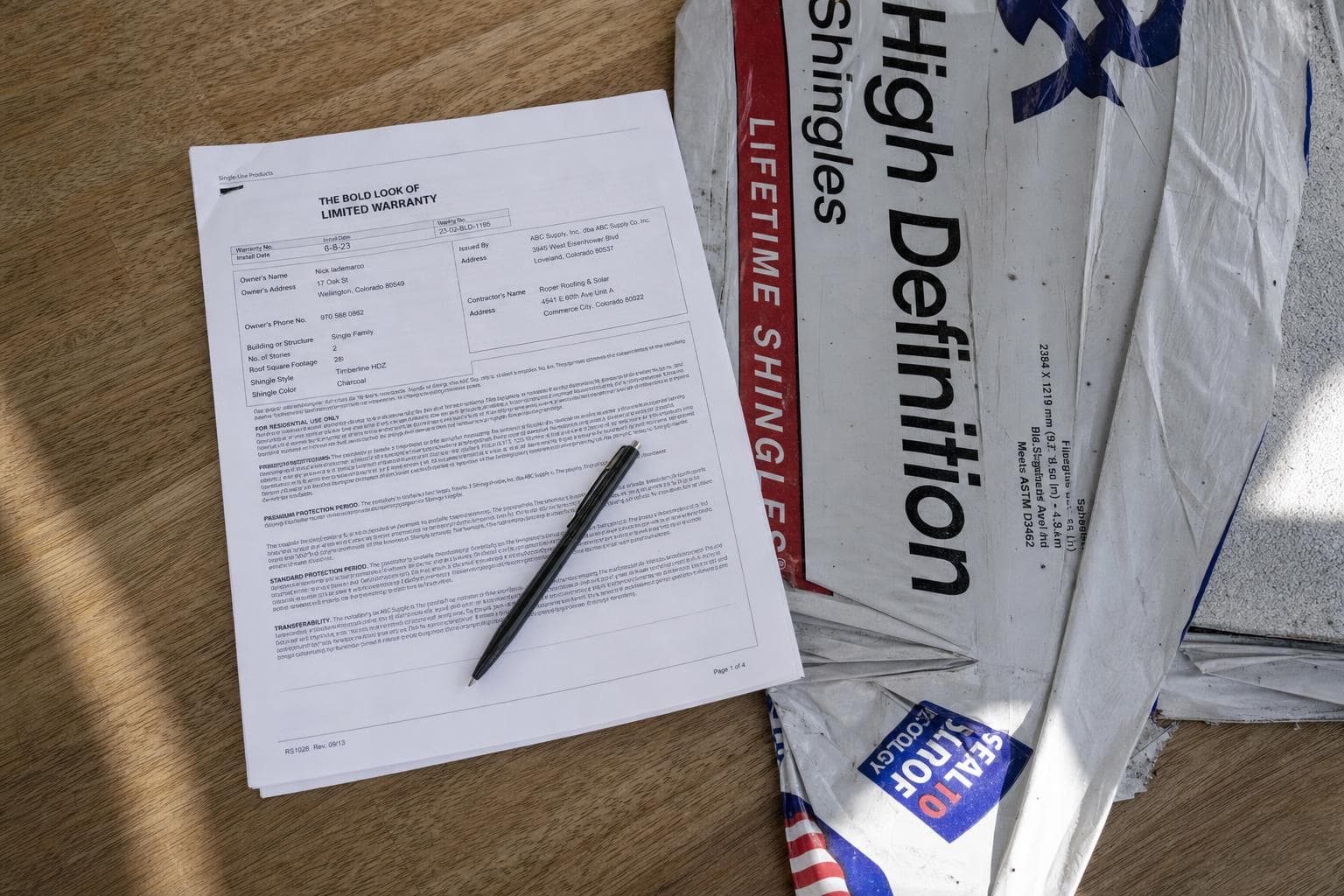
A workmanship warranty may address qualifying installation defects under the contractor's written terms; it does not automatically cover every leak or resulting cost. Flashing woven wrong, nails high or overdriven, valleys cut short, boots seated badly: all workmanship, all invisible on day one, all excluded from the material warranty. The length varies wildly, from one year to ten-plus. Length matters less than the issuer: a ten-year promise from a company that won't exist in three is worth less than five years from an outfit with deep local roots.
The gaps between them
- Storm damage, neither warranty covers it; that's insurance. Three systems, not two.
- Maintenance neglect, clogged valleys and unsealed penetrations void coverage under both.
- Foot traffic and trades, the satellite installer who cracked your shingles is covered by neither.
- Enhanced warranty tiers may require specified components, registration, installer credentials, inspection, and timing. Verify the exact program terms before selecting products.
- Transferability, both warranties have transfer rules and windows that matter when you sell. Read them before listing.
Talk to a roofer today
Planning ranges, scope details, and a direct path to request a roofing quote.
Questions that pin it down
- 1Which material warranty tier does this exact installation qualify for, and who registers it?
- 2How many years of workmanship coverage, covering what, voided by what?
- 3Is any of this insured or backed beyond your company's existence?
- 4What does the transfer process look like if I sell?
- 5Can I see both documents before signing, not summaries, the documents?
Map each promise to the party responsible for it
A roof can carry several different promises at once: the manufacturer may address a qualifying product defect, the contractor may address installation workmanship, and an enhanced system program may add requirements or administration. Those are not interchangeable. Ask who receives the notice, who inspects the problem, which costs can be excluded, and whether labor, tear-off, disposal, accessories, and interior damage are treated separately.
- Get the manufacturer, product line, warranty name, and registration responsibility in writing.
- Read the contractor's workmanship term, response process, exclusions, and transfer language as a separate document.
- Confirm required system components, approved installers, ventilation, deck condition, and maintenance obligations.
- Ask how storm damage, foot traffic, later penetrations, repairs by others, and color variation are handled.
- Keep the signed scope, invoices, product labels, photos, permits, inspection results, and warranty confirmations together.
Use the warranty to test the scope before installation
The most valuable warranty review happens before the old roof comes off. Compare the proposed assembly with the written eligibility requirements and resolve conflicts while materials and details can still be changed. A long headline term does not answer who pays for diagnosis or access, how coverage changes over time, or whether workmanship is included. Those practical questions are more useful than the largest number on the brochure.
Sources
The manufacturer warrants the shingle. The installer warrants the roof. Confuse the two and you'll discover the difference during a rainstorm.
Related reading and source material
Turn the sales conversation into a comparable scope: Roof warranty workmanship vs. material
Require measurements, diagnosis, products, accessories, deck terms, flashings, ventilation or enclosure coordination, permits, cleanup, payment milestones, changes, exclusions, and warranties in writing. Another qualified contractor should be able to understand and price the same work. Apply that record to the roof warranty workmanship vs. material decision and identify which property finding or written term would change the answer.
Verify completion before releasing final payment: Roof warranty workmanship vs. material
Collect permit closeout where applicable, final photographs, product records, invoices, payment documentation, warranties, maintenance instructions, and correction of punch-list work. Separate manufacturer and workmanship coverage.
Before acting on roof warranty workmanship vs. material, reconcile the roof evidence, measurements, written scope, products, concealed-work rules, permits, payment terms, exclusions, and completion documents. State which condition or new finding would change the recommendation so the decision remains auditable after work begins.
Additional reviewed references
Related roofing resources
For roof warranty workmanship vs. material, compare the same roof measurements, water-control details, concealed-work rules, permits, payment terms, exclusions, and closeout requirements. Preserve the property evidence and source records behind the recommendation so a later contractor, insurer, inspector, or owner can understand why the decision was made.
Related services
Updated July 27, 2026
3D Roofs Editorial Team
Editorial Standards