Updated July 27, 2026

3D Roofs Editorial Team
Editorial Standards
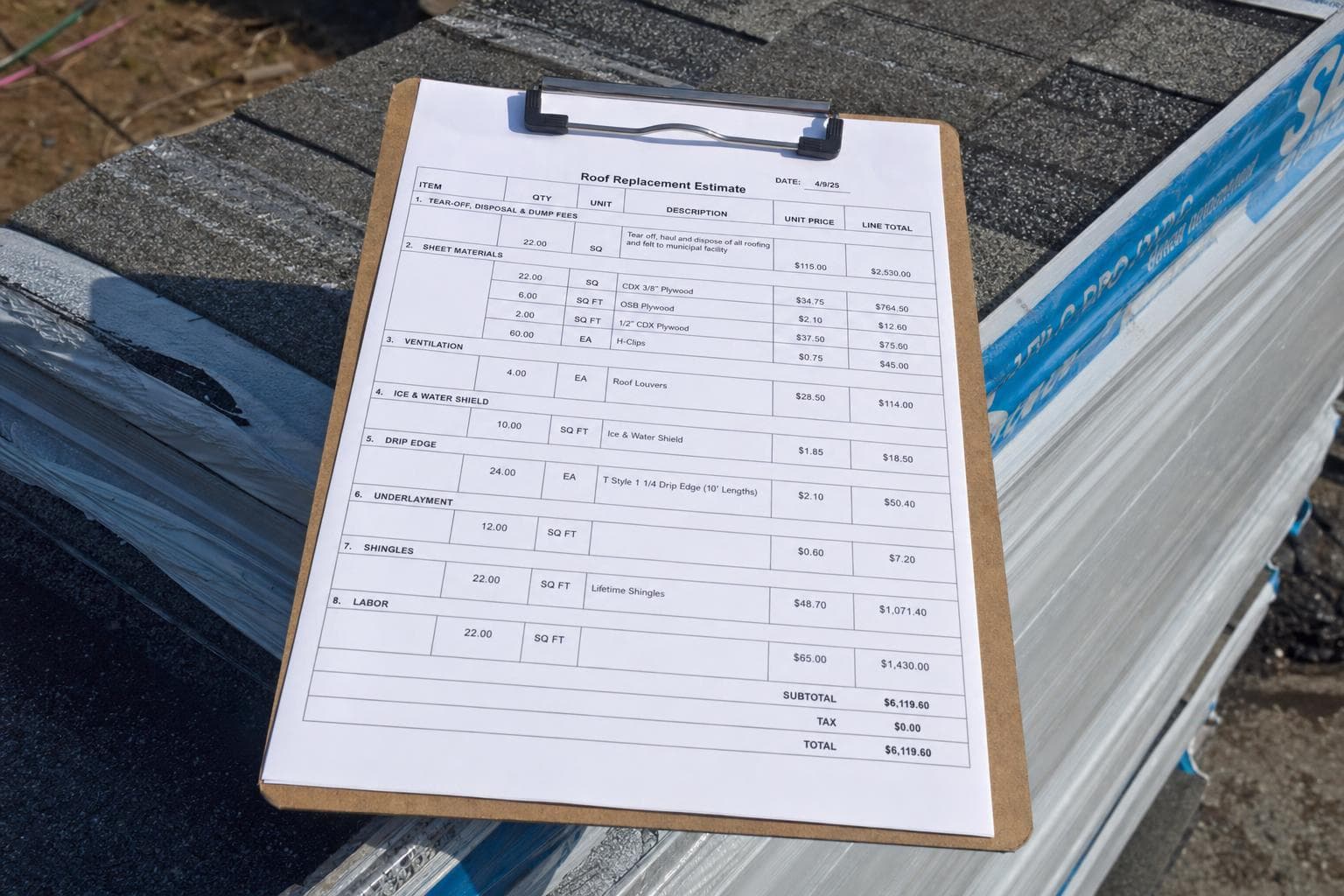
A roof replacement estimate isn't really a price, it's a description of a roof that doesn't exist yet. The more precisely it describes that roof, the fewer surprises live between signing and final walkthrough. Here's the full anatomy of a complete estimate, and what each line is quietly deciding about the next 25 years.
The structure lines
- Tear-off and disposal, layers removed, dumpster, and dump fees. An overlay is a different scope from tear-off and can affect inspection access, weight, detailing, appearance, warranty, code, and future removal. Confirm whether it is allowed and appropriate for the property.
- Decking inspection and unit price, a per-sheet price for replacing rot found at tear-off. The single most important line for preventing change-order shock.
- Permit, who pulls it and that it's included. No permit, no final inspection, problems at resale.
The waterproofing lines
- Underlayment, type and brand; synthetic is the modern standard. This is the roof's second chance when water gets past the shingles.
- Ice and water shield, where it goes (eaves, valleys, penetrations) and how far up. Climate and code decide; the estimate should say.
- Drip edge, new metal at eaves and rakes, color-matched. Small line, big fascia-rot prevention.
- Flashing, new versus reused at every wall, chimney, and skylight, named individually. 'Reuse existing where serviceable' is where leaks hide.
The system lines
- The shingle itself, manufacturer, line, class, and color. 'Architectural shingles' without a name is a blank check.
- Starter strips and ridge caps, real system components, not cut-up field shingles, if you want the wind rating honored.
- Ventilation, exhaust and intake, what's installed or corrected. The line that decides whether your new shingles age on schedule or cook from below.
- Accessories, pipe boots (spec the upgraded ones), vents replaced not painted, satellite mounts handled.
Talk to a roofer today
Planning ranges, scope details, and a direct path to request a roofing quote.
The accountability lines
- Material warranty, manufacturer's coverage tier and whether the install qualifies for the enhanced version.
- Workmanship warranty, the installer's own coverage, in years, in writing. This is the one that handles leaks.
- Cleanup, magnetic nail sweep, gutter clean-out, debris haul-off.
- Deposits and progress payments depend on the contractor, contract, and applicable law; tie payments to clear, written milestones instead of assuming a universal percentage.
- Timeline and weather plan, start window, duration, and how an open roof gets protected if weather turns.
Reading the silences
What an estimate omits is the budget for what goes wrong. No decking price means the rot negotiation happens with your roof open. No ventilation line means the problem that aged your last roof transfers to this one. If the product is not named, the contractor retains broad substitution discretion. Require manufacturer, line, classification, color, and substitution approval in writing. The fix costs nothing: ask for the missing line in writing and watch how the contractor responds, that reaction is itself information.
Turn the interview into a comparable written scope
A good answer in the kitchen is useful only if it appears in the proposal. After each contractor visit, compare the written documents line by line: product names, quantities, tear-off, deck assumptions, flashing, ventilation, protection, cleanup, permits, payment timing, change orders, and warranties. If one proposal is silent, do not assume the missing work is included. Ask for the revision before choosing a price or signing an authorization. For the replacement-estimate review, circle every unanswered exclusion and require a written revision before treating the total as comparable.
- Verify the business identity, license where required, insurance, local address, and who will supervise the crew.
- Require exact product lines and system components instead of broad terms such as 'architectural shingle.'
- Define decking unit prices, change-order approval, and the evidence you will receive before concealed work proceeds.
- Put start conditions, material delivery, property protection, cleanup, inspections, and final payment in the contract.
- Separate manufacturer coverage, contractor workmanship responsibility, and any third-party warranty administration.
- For the replacement-estimate review, list unresolved exclusions separately so a blank line cannot become a surprise change order.
Compare exclusions before comparing totals
A replacement estimate should describe the work from site protection through final cleanup. Look for measurements, tear-off, disposal, deck inspection and repair pricing, underlayment, flashing, ventilation, starter and ridge products, edge metal, penetrations, accessories, permits, inspections, payment milestones, and warranty responsibility. It should also name exclusions and the change-order process for concealed conditions. If an item is missing, ask for a written revision before treating it as included or comparing the total with another bid.
Sources
The estimate is the roof, written down. If it's vague on paper, it'll be vague on your house.
Related reading and source material
Turn the sales conversation into a comparable scope: What is included in a roof replacement estimate
Require measurements, diagnosis, products, accessories, deck terms, flashings, ventilation or enclosure coordination, permits, cleanup, payment milestones, changes, exclusions, and warranties in writing. Another qualified contractor should be able to understand and price the same work. Apply that record to the what is included in a roof replacement estimate decision and identify which property finding or written term would change the answer.
Additional reviewed references
Related roofing resources
Related services
Updated July 27, 2026
3D Roofs Editorial Team
Editorial Standards